Kirjojen hintavertailu. Mukana 12 595 353 kirjaa ja 12 kauppaa.

Kirjailija

Shirley Brice Heath

Kirjat ja teokset yhdessä paikassa: 16 kirjaa, julkaisuja vuosilta 1993-2016, suosituimpien joukossa Socially Responsible Literacy. Vertaile teosten hintoja ja tarkista saatavuus suomalaisista kirjakaupoista.

16 kirjaa

Kirjojen julkaisuhaarukka 1993-2016.

Socially Responsible Literacy

Socially Responsible Literacy

Paula M. Selvester; Deborah G. Summers; Shirley Brice Heath

Teachers' College Press
2012
nidottu
This book offers a new vision for teaching literacy to adolescents that moves beyond reading for its own sake and toward reading as a way to motivate students to connect with their world. The authors draw on the voices of adolescent readers to discover how teachers can encourage their students to explore their identities, face injustices, and contribute to their communities. Readers learn how to incorporate the core issues of a socially responsible pedagogy into their own curricula to support strong literacy skills across the content areas. Each chapter includes reflection questions that move the reader toward personal and professional development, along with classroom applications that provide specific strategies and ideas for engaging literacy projects.This dynamic book:Outlines a socially responsible pedagogy that will assist teachers in creating meaningful experiences to motivate even the most disengaged students.Takes a critical approach to teaching and learning that recognises the importance of explicitly addressing issues of power and identity. Examines effective school-wide models that promote a climate of responsibility toward the larger society.
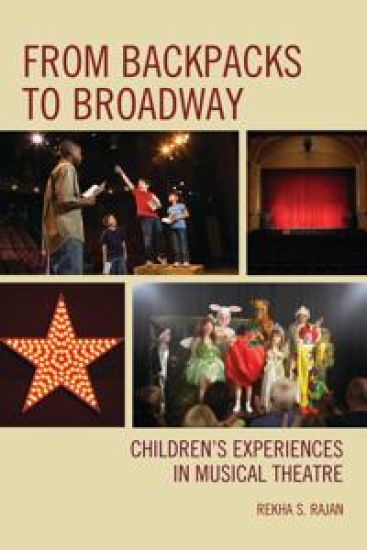
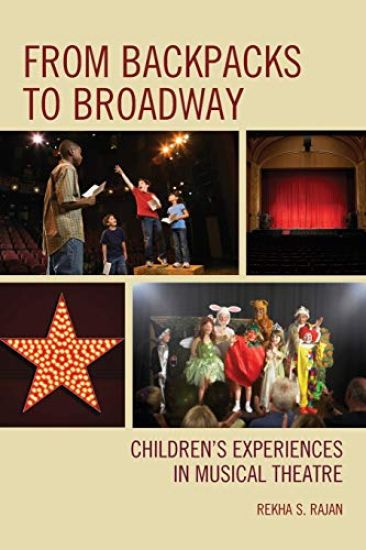
From Backpacks to Broadway

From Backpacks to Broadway

Rekha S. Rajan; Shirley Brice Heath

Rowman Littlefield
2016
sidottu
Musical theater is a dynamic, collaborative art form, which encompasses music, theater, dance, and the visual arts. Traditionally associated with adult performers, musicals also have roles designated specifically for children. How then does involvement in musical theater support children’s learning through the performing arts? What do children value from their musical theater experiences and how do these experiences influence children’s personal, social, and artistic lives? Based on a decade of research, this book explores these questions through children’s participation as singers, actors, and dancers, in school-based, community, and professional musical theater. By valuing children’s voices as important in understanding experience, Rajan constructs a framework of musical theater participation, and applies broader educational implications to highlight the unique characteristics of musical theater in children’s lives.
From Backpacks to Broadway

From Backpacks to Broadway

Rekha S. Rajan; Shirley Brice Heath

Rowman Littlefield
2016
nidottu
Musical theater is a dynamic, collaborative art form, which encompasses music, theater, dance, and the visual arts. Traditionally associated with adult performers, musicals also have roles designated specifically for children. How then does involvement in musical theater support children’s learning through the performing arts? What do children value from their musical theater experiences and how do these experiences influence children’s personal, social, and artistic lives? Based on a decade of research, this book explores these questions through children’s participation as singers, actors, and dancers, in school-based, community, and professional musical theater. By valuing children’s voices as important in understanding experience, Rajan constructs a framework of musical theater participation, and applies broader educational implications to highlight the unique characteristics of musical theater in children’s lives.
Handbook of Research on Teaching Literacy Through the Communicative and Visual Arts
In an era characterized by the rapid evolution of the concept of literacy, the Handbook of Research on Teaching Literacy Through the Communicative and Visual Arts focuses on multiple ways in which learners gain access to knowledge and skills. The handbook explores the possibilities of broadening current conceptualizations of literacy to include the full array of the communicative arts (reading, writing, speaking, listening, viewing) and to focus on the visual arts of drama, dance, film, art, video, and computer technology. The communicative and visual arts encompass everything from novels and theatrical performances to movies and video games. In today's world, new methods for transmitting information have been developed that include music, graphics, sound effects, smells, and animations. While these methods have been used by television shows and multimedia products, they often represent an unexplored resource in the field of education. By broadening our uses of these media, formats, and genres, a greater number of students will be motivated to see themselves as learners. In 64 chapters, organized in seven sections, teachers and other leading authorities in the field of literacy provide direction for the future: I. Theoretical Bases for Communicative and Visual Arts Teaching Paul Messaris, Section Editor II. Methods of Inquiry in Communicative and Visual Arts Teaching Donna Alvermann, Section Editor III. Research on Language Learners in Families, Communities, and Classrooms Vicki Chou, Section Editor IV. Research on Language Teachers: Conditions and Contexts Dorothy Strickland, Section Editor V. Expanding Instructional Environments: Teaching, Learning, and Assessing the Communicative and Visual Arts Nancy Roser, Section Editor VI. Research Perspectives on the Curricular, Extracurricular, and Policy Perspectives James Squire, Section Editor VII. Voices from the Field Bernice Cullinan and Lee Galda, Section Editors The International Reading Association has compiled in the Handbook of Research on Teaching Literacy Through the Communicative and Visual Arts an indispensable set of papers for educators that will enable them to conceptualize literacy in much broader contexts than ever before. The information contained in this volume will be extremely useful in planning literacy programs for our students for today and tomorrow.
Cultural Transformations

Cultural Transformations

Shirley Brice Heath

Harvard Educational Publishing Group
2013
nidottu
In what ways can teachers build on youth culture to improve learning opportunities in the classroom? In this fascinating and highly readable collection, Korina M. Jocson brings together more than two dozen scholars, artists, educators, and youth workers to illustrate how nondominant youth can be engaged through various social justice arts projects. These projects range not only in type (media, digital art, playwriting, and hip-hop) but also location (California, Wisconsin, New Mexico, Cuba, and Australia, among others) to reflect the wide range of possibilities for tapping into contemporary youth culture. The projects described are part of an emerging field that examines the benefits of youth participation in literary, digital media, and civics-related projects within schools and in a variety of informal environments.
Cultural Transformations

Cultural Transformations

Shirley Brice Heath

Harvard Educational Publishing Group
2013
sidottu
In what ways can teachers build on youth culture to improve learning opportunities in the classroom? In this fascinating and highly readable collection, Korina M. Jocson brings together more than two dozen scholars, artists, educators, and youth workers to illustrate how nondominant youth can be engaged through various social justice arts projects. These projects range not only in type (media, digital art, playwriting, and hip-hop) but also location (California, Wisconsin, New Mexico, Cuba, and Australia, among others) to reflect the wide range of possibilities for tapping into contemporary youth culture. The projects described are part of an emerging field that examines the benefits of youth participation in literary, digital media, and civics-related projects within schools and in a variety of informal environments.
A Reason to Read

A Reason to Read

Eileen Landay; Shirley Brice Heath

Harvard Educational Publishing Group
2012
nidottu
A Reason to Read is the culminating work of the ArtsLiteracy Project, an ambitious and wide-ranging collaborative that aims to promote literacy through rich and sustained instruction in the arts. At the heart of the book is the “Performance Cycle,” a flexible framework for curriculum and lesson planning that can be adapted to all content areas and age groups. Each of the book’s main chapters delineates and explores a particular component of the cycle. A practical, readable, and inspiring book, A Reason to Read will be of immeasurable help to school teachers, education leaders, and all who have a stake in promoting literacy and the arts in today’s schools.
A Reason to Read

A Reason to Read

Eileen Landay; Shirley Brice Heath

Harvard Educational Publishing Group
2012
sidottu
A Reason to Read is the culminating work of the ArtsLiteracy Project, an ambitious and wide-ranging collaborative that aims to promote literacy through rich and sustained instruction in the arts. At the heart of the book is the “Performance Cycle,” a flexible framework for curriculum and lesson planning that can be adapted to all content areas and age groups. Each of the book’s main chapters delineates and explores a particular component of the cycle. A practical, readable, and inspiring book, A Reason to Read will be of immeasurable help to school teachers, education leaders, and all who have a stake in promoting literacy and the arts in today’s schools.
Words at Work and Play

Words at Work and Play

Shirley Brice Heath

Cambridge University Press
2012
sidottu
Childhood and family life have changed significantly in recent decades. What is the nature of these changes? How have they affected the use of time, space, work and play? In what ways have they influenced face-to-face talk and the uses of technology within families and communities? Eminent anthropologist Shirley Brice Heath sets out to find answers to these and similar questions, tracking the lives of 300 black and white working-class families as they reshaped their lives in new locations, occupations and interpersonal alignments over a period of thirty years. From the 1981 recession through the economic instabilities and technological developments of the opening decade of the twenty-first century, Shirley Brice Heath shows how families constantly rearrange their patterns of work, language, play and learning in response to economic pressures. This outstanding study is a must-read for anyone interested in family life, language development and social change.
Words at Work and Play

Words at Work and Play

Shirley Brice Heath

Cambridge University Press
2012
pokkari
Childhood and family life have changed significantly in recent decades. What is the nature of these changes? How have they affected the use of time, space, work and play? In what ways have they influenced face-to-face talk and the uses of technology within families and communities? Eminent anthropologist Shirley Brice Heath sets out to find answers to these and similar questions, tracking the lives of 300 black and white working-class families as they reshaped their lives in new locations, occupations and interpersonal alignments over a period of thirty years. From the 1981 recession through the economic instabilities and technological developments of the opening decade of the twenty-first century, Shirley Brice Heath shows how families constantly rearrange their patterns of work, language, play and learning in response to economic pressures. This outstanding study is a must-read for anyone interested in family life, language development and social change.
Bedtime Stories and Book Reports

Bedtime Stories and Book Reports

Patricia A. Edwards; Shirley Brice Heath

Teachers' College Press
2010
nidottu
Bedtime Stories and Book Reports is the right book at the right time… The editors have gathered an impressive group of researchers and practitioners to provide insights into working with families in productive and empowering ways. . . . Happy reading!” —Patricia A. Edwards, president, International Reading Association, 2010-2011. “The fundamental ideological orientation of the volume’s authors is to set right the prevailing parents-as-problem orientation sometimes put forward by school administrators, teachers, and policymakers.” —From the Afterword by Shirley Brice Heath, professor emerita, Stanford University. “Children can't reach their full potential for literacy development without the participation of parents. The editors have brought together an excellent group of authors who provide new information and a hopeful look at family literacy. This is a must-read.” —Lesley Morrow, Graduate School of Education, Rutgers University. This book brings together the newest research on parent involvement and family literacy—two strands of research that rarely exist in conversation with one another. The discussion highlights how race, class, gender, and history serve as potent factors that shape children’s school experiences. Each chapter offers portraits of real families and schools that illustrate parents’ awareness of their children’s school progress, their perceptions of teachers, and their involvement in teaching their children life lessons that extend beyond school achievement. Translating theory into action, this resource: Extends conversations about parent involvement and family literacy across time and multiple spaces—home, school, church, and community; Challenges accepted notions by listening to parents’ counter-stories of how they are involved with their children both in and out of school; Highlights the significance of race, class, gender, religion, sexual preference, and history in literacy learning and schooling.
On Ethnography

On Ethnography

Shirley Brice Heath; Brian V. Street

Teachers' College Press
2008
nidottu
The authors weave together narratives of practice and theory that draw on their own field work and that of a novice ethnographer. Their stories take us outside the usual progression of how-to-do-ethnography, which moves from research question to data collection and analysis to publication. Readers learn of the motivations and mishaps behind the authors' own classic ethnographic studies of language, multimodal literacies, and community practices. The authors use their stories to illustrate the power of curiosity, connection, and continuity in ethnographic pursuits. Keeping language and literacy the central concern, this volume offers practical ways for ethnographers to sustain their attention to a constant comparative perspective and to patterns of co-occurrence in language structures, uses, and values. Appropriate for new and experienced researchers, this readable volume: Illustrates three primary learning environments for the work of ethnographers: self-directed learning, informal communities of learners, and instructional settings within formal education. Stresses that "doing ethnography" involves engagement with public life and cannot be separated out as an academic activity. Includes examples of ethnographic studies in Australia, Iran, South Africa, the United Kingdom, and the United States.
Handbook of Research on Teaching Literacy Through the Communicative and Visual Arts, Volume II

Handbook of Research on Teaching Literacy Through the Communicative and Visual Arts, Volume II

James Flood; Shirley Brice Heath; Diane Lapp

Routledge Member of the Taylor and Francis Group
2007
sidottu
The Handbook of Research on Teaching Literacy Through the Communicative and Visual Arts, Volume II brings together state-of-the-art research and practice on the evolving view of literacy as encompassing not only reading, writing, speaking, and listening, but also the multiple ways through which learners gain access to knowledge and skills. It forefronts as central to literacy education the visual, communicative, and performative arts, and the extent to which all of the technologies that have vastly expanded the meanings and uses of literacy originate and evolve through the skills and interests of the young.A project of the International Reading Association, published and distributed by Routledge/Taylor & Francis. Visit http://www.reading.org for more information about Internationl Reading Associationbooks, membership, and other services.
Handbook of Research on Teaching Literacy Through the Communicative and Visual Arts, Volume II

Handbook of Research on Teaching Literacy Through the Communicative and Visual Arts, Volume II

James Flood; Shirley Brice Heath; Diane Lapp

Routledge Member of the Taylor and Francis Group
2007
nidottu
The Handbook of Research on Teaching Literacy Through the Communicative and Visual Arts, Volume II brings together state-of-the-art research and practice on the evolving view of literacy as encompassing not only reading, writing, speaking, and listening, but also the multiple ways through which learners gain access to knowledge and skills. It forefronts as central to literacy education the visual, communicative, and performative arts, and the extent to which all of the technologies that have vastly expanded the meanings and uses of literacy originate and evolve through the skills and interests of the young.A project of the International Reading Association, published and distributed by Routledge/Taylor & Francis. Visit http://www.reading.org for more information about Internationl Reading Associationbooks, membership, and other services.
Handbook of Research on Teaching Literacy Through the Communicative and Visual Arts

Handbook of Research on Teaching Literacy Through the Communicative and Visual Arts

James Flood; Diane Lapp; Shirley Brice Heath

Routledge Member of the Taylor and Francis Group
2004
nidottu
In an era characterized by the rapid evolution of the concept of literacy, the Handbook of Research on Teaching Literacy Through the Communicative and Visual Arts focuses on multiple ways in which learners gain access to knowledge and skills. The handbook explores the possibilities of broadening current conceptualizations of literacy to include the full array of the communicative arts (reading, writing, speaking, listening, viewing) and to focus on the visual arts of drama, dance, film, art, video, and computer technology. The communicative and visual arts encompass everything from novels and theatrical performances to movies and video games. In today's world, new methods for transmitting information have been developed that include music, graphics, sound effects, smells, and animations. While these methods have been used by television shows and multimedia products, they often represent an unexplored resource in the field of education. By broadening our uses of these media, formats, and genres, a greater number of students will be motivated to see themselves as learners. In 64 chapters, organized in seven sections, teachers and other leading authorities in the field of literacy provide direction for the future: I. Theoretical Bases for Communicative and Visual Arts Teaching Paul Messaris, Section Editor II. Methods of Inquiry in Communicative and Visual Arts Teaching Donna Alvermann, Section Editor III. Research on Language Learners in Families, Communities, and Classrooms Vicki Chou, Section Editor IV. Research on Language Teachers: Conditions and Contexts Dorothy Strickland, Section Editor V. Expanding Instructional Environments: Teaching, Learning, and Assessing the Communicative and Visual Arts Nancy Roser, Section Editor VI. Research Perspectives on the Curricular, Extracurricular, and Policy Perspectives James Squire, Section Editor VII. Voices from the Field Bernice Cullinan and Lee Galda, Section Editors The International Reading Association has compiled in the Handbook of Research on Teaching Literacy Through the Communicative and Visual Arts an indispensable set of papers for educators that will enable them to conceptualize literacy in much broader contexts than ever before. The information contained in this volume will be extremely useful in planning literacy programs for our students for today and tomorrow.
Identity and Inner-city Youth

Identity and Inner-city Youth

Shirley Brice Heath; Milbrey Wallin McLaughlin

Teachers' College Press
1993
nidottu
What do effective youth organizations offer inner-city youngsters that schools do not? This book suggests that educators can learn much from inner-city social and youth organizations, which reach at-risk youngsters by developing a sense of family that many of them fail to get at home. Addressing a variety of issues—collaboration across organizations, the role of gangs in social control, the historical roles of ethnicity and gender in youth organizations—Heath and McLaughlin describe frames for identity that extend beyond ethnicity and gender.