Kirjojen hintavertailu. Mukana 12 390 323 kirjaa ja 12 kauppaa.

Kirjailija

Shivkumar V. Iyer

Kirjat ja teokset yhdessä paikassa: 8 kirjaa, julkaisuja vuosilta 2018-2024, suosituimpien joukossa Simulation nichtlinearer Schaltungen in der Leistungselektronik mit Python. Vertaile teosten hintoja ja tarkista saatavuus suomalaisista kirjakaupoista.

8 kirjaa

Kirjojen julkaisuhaarukka 2018-2024.

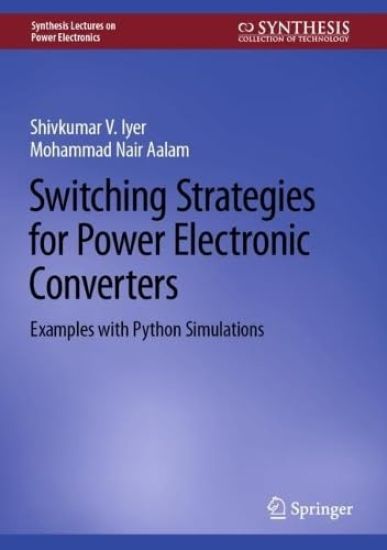
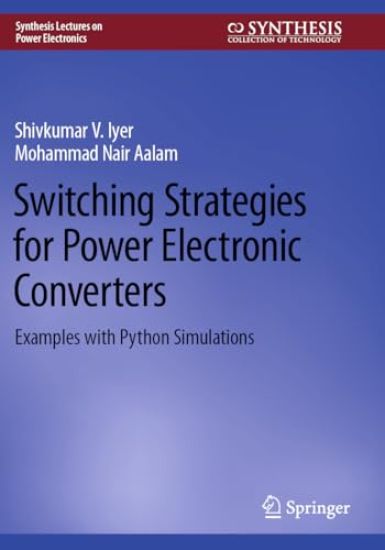
Switching Strategies for Power Electronic Converters

Switching Strategies for Power Electronic Converters

Shivkumar V. Iyer; Mohammad Nair Aalam

Springer International Publishing AG
2024
nidottu
This book provides a concise introduction to switching strategies for power electronics. It provides an in-depth examination of this one concept giving a newcomer a complete immersive experience which has both the depth that is needed to gain confidence yet is simple to understand. The authors examine the basic operation of power electronic systems from scratch and with the help of simulations, how these systems can be constructed. The approach used treats power electronics similar to puzzles and rather than merely presenting them and describing how they work, explore why they came to have the construction they have, and how they could potentially be modified. The authors make extensive use of simulations, with every theory and every result accompanied by a simulation. All simulations are performed by the free and open source Python programming language and the free and open source circuit simulator Python Power Electronics.
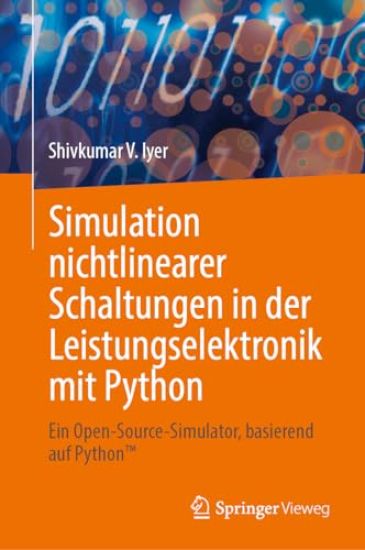
Simulation nichtlinearer Schaltungen in der Leistungselektronik mit Python
Dieses Buch bietet eine eingehende Diskussion zur Schaltungssimulation, indem es grundlegende elektrische Schaltungstheorie mit Python-Programmierung kombiniert. Es schließt eine Informationslücke, indem es die Entwicklung von Python Power Electronics beschreibt, einer Open-Source-Software zur Simulation von Schaltungen, und ihre Anwendung anhand eines Beispiels zeigt. Im Gegensatz zu typischen Büchern über Schaltungstheorie, die beschreiben, wie Schaltungen mathematisch gelöst werden können, gefolgt von Beispielen zur Simulation unter Verwendung spezifischer kommerzieller Software, verfolgt dieses Buch einen anderen Ansatz. Der Autor beschreibt zunächst jeden Aspekt der Open-Source-Software im Kontext nichtlinearer Leistungselektronikschaltungen. Dies dient als Grundlage für angehende oder praktizierende Ingenieure, um die Entwicklung von Open-Source-Software für verschiedene Zwecke voranzutreiben. Durch die explizite Demonstration des Betriebs der Software mittels Algorithmen vereint dieses Buch die Gebiete Elektrotechnik und Softwaretechnologie.
Modellierung und Python-Simulation von Magneten für Anwendungen in der Leistungselektronik
Dieses Buch beschreibt die Rolle des Magnetismus in der Elektrotechnik, ausgehend von den grundlegendsten physikalischen Gesetzen, die in Simulationsmodelle umgewandelt wurden. Dadurch können Elektrotechnikstudierende durch Beispiele und Übungen lernen. Der Autor entmystifiziert ein Thema, das viele Elektroingenieure als selbstverständlich betrachten, und gibt den Lesern Werkzeuge an die Hand, um zu verstehen, wie jede magnetische Komponente funktioniert. Er beschreibt magnetische Bauteile wie Induktoren und Transformatoren in einfach verständlicher Sprache. Mathematische Gleichungen im Zusammenhang mit den grundlegenden physikalischen Gesetzen werden im Detail erläutert, ebenso wie die physikalische Bedeutung der Gleichungen. Jede Anwendung wird durch eine Simulation unterstützt. Alle Simulationen werden unter Verwendung kostenloser und quelloffener Software auf Python-Basis durchgeführt, was den Inhalt dieses Buches universell zugänglich macht.
Switching Strategies for Power Electronic Converters

Switching Strategies for Power Electronic Converters

Shivkumar V. Iyer; Mohammad Nair Aalam

Springer International Publishing AG
2023
sidottu
This book provides a concise introduction to switching strategies for power electronics. It provides an in-depth examination of this one concept giving a newcomer a complete immersive experience which has both the depth that is needed to gain confidence yet is simple to understand. The authors examine the basic operation of power electronic systems from scratch and with the help of simulations, how these systems can be constructed. The approach used treats power electronics similar to puzzles and rather than merely presenting them and describing how they work, explore why they came to have the construction they have, and how they could potentially be modified. The authors make extensive use of simulations, with every theory and every result accompanied by a simulation. All simulations are performed by the free and open source Python programming language and the free and open source circuit simulator Python Power Electronics.
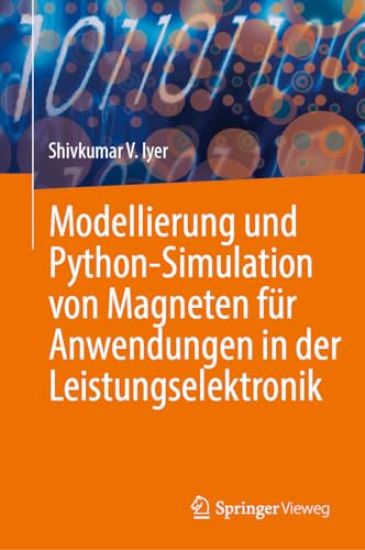
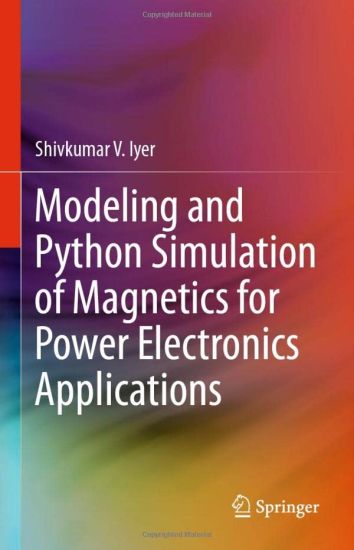
Modeling and Python Simulation of Magnetics for Power Electronics Applications
This book describes the role of magnetism in electrical engineering, starting from the most basic laws of physics, converted into simulation models such that electrical engineering students can learn by example and practice. The author demystifies a topic that many electrical engineers take for granted, providing readers the tools to be able to understand how any magnetic component works. He describes magnetic components like inductors and transformers in simple understandable language. Mathematical equations related to the basic laws of physics are described in detail along with the physical significance of the equations. Every application is supported by a simulation. All simulations are performed using free and open source software based on Python making the material in this book universally accessible.
Modeling and Python Simulation of Magnetics for Power Electronics Applications
This book describes the role of magnetism in electrical engineering, starting from the most basic laws of physics, converted into simulation models such that electrical engineering students can learn by example and practice. The author demystifies a topic that many electrical engineers take for granted, providing readers the tools to be able to understand how any magnetic component works. He describes magnetic components like inductors and transformers in simple understandable language. Mathematical equations related to the basic laws of physics are described in detail along with the physical significance of the equations. Every application is supported by a simulation. All simulations are performed using free and open source software based on Python making the material in this book universally accessible.
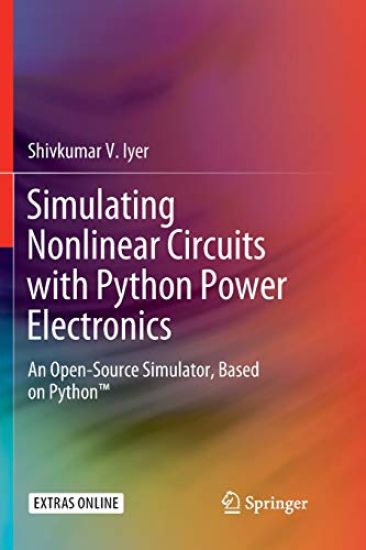
Simulating Nonlinear Circuits with Python Power Electronics

Simulating Nonlinear Circuits with Python Power Electronics

Shivkumar V. Iyer

Springer International Publishing AG
2019
nidottu
This book provides readers with an in-depth discussion of circuit simulation, combining basic electrical engineering circuit theory with Python programming. It fills an information gap by describing the development of Python Power Electronics, an open-source software for simulating circuits, and demonstrating its use in a sample circuit. Unlike typical books on circuit theory that describe how circuits can be solved mathematically, followed by examples of simulating circuits using specific, commercial software, this book has a different approach and focus. The author begins by describing every aspect of the open-source software, in the context of non-linear power electronic circuits, as a foundation for aspiring or practicing engineers to embark on further development of open source software for different purposes. By demonstrating explicitly the operation of the software through algorithms, this book brings together the fields of electrical engineering and software technology.
Simulating Nonlinear Circuits with Python Power Electronics

Simulating Nonlinear Circuits with Python Power Electronics

Shivkumar V. Iyer

Springer International Publishing AG
2018
sidottu
This book provides readers with an in-depth discussion of circuit simulation, combining basic electrical engineering circuit theory with Python programming. It fills an information gap by describing the development of Python Power Electronics, an open-source software for simulating circuits, and demonstrating its use in a sample circuit. Unlike typical books on circuit theory that describe how circuits can be solved mathematically, followed by examples of simulating circuits using specific, commercial software, this book has a different approach and focus. The author begins by describing every aspect of the open-source software, in the context of non-linear power electronic circuits, as a foundation for aspiring or practicing engineers to embark on further development of open source software for different purposes. By demonstrating explicitly the operation of the software through algorithms, this book brings together the fields of electrical engineering and software technology.