Kirjojen hintavertailu. Mukana 12 595 353 kirjaa ja 12 kauppaa.

Kirjailija

Shlomo Giora Shoham

Kirjat ja teokset yhdessä paikassa: 5 kirjaa, julkaisuja vuosilta 2003-2005, suosituimpien joukossa Mytho-Empiricism of Gnosticism. Vertaile teosten hintoja ja tarkista saatavuus suomalaisista kirjakaupoista.

5 kirjaa

Kirjojen julkaisuhaarukka 2003-2005.

Society and the Absurd

Society and the Absurd

Shlomo Giora Shoham

LIVERPOOL UNIVERSITY PRESS
2005
nidottu
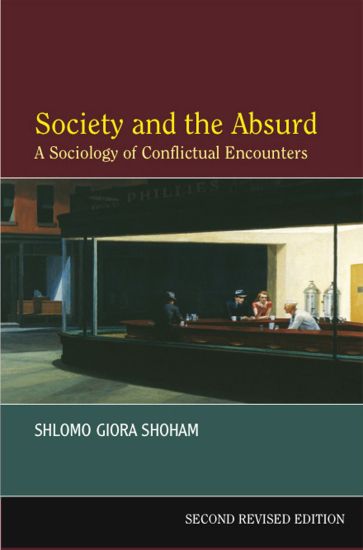
There is an unbridgeable controversy between the functionalist sociologist who anchors his theories on society and the group, and the existentialist who bathes his thoughts on the individual. Durkheim and Parsons, as well as many contemporary American sociologists, are adjustment based in the sense that all those individuals who rock the boat even if they are creative innovators would be labelled deviant or mad. The existentialists, from Kierkegaard to Buber, regard the individual as the focus of life; they see philosophy and society as at best a curbing control-structure and at worst coercing, stigmatizing and ostracizing. The present volume treads in the giant footsteps of Albert Camus who saw the absurd as the conflictual encounter between the individual and society. Society and the Absurd attempts to overcome this deep sociological controversy by investigating absurdity through the prism of an interdisciplinary theory of personality.
Myth of Tantalus

Myth of Tantalus

Shlomo Giora Shoham

Sussex Academic Press
2005
nidottu
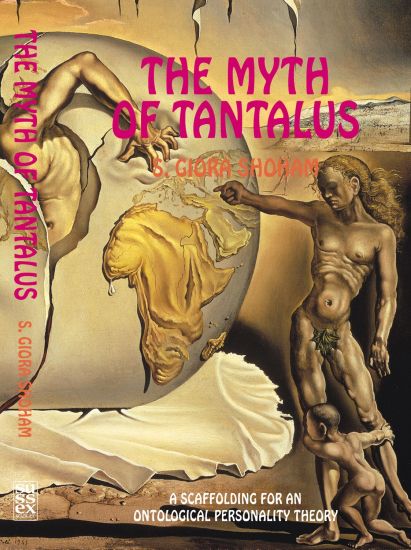
These psychological dynamics are presented by way of the developmental and relationship experiences we have with the outside world -- alternations between conflict and a striving to revert back to earlier developmental phases. At any given moment of our lives there is a gap between our desires for participation and our subjectively defined distance from our participatory aims. This gap is denoted the Tantalus Ratio, after the Olympian demigod. Transcendental longings and quests are explored in their actual structuring of the human personality. This new Theory of Personality also explores the mytho-empirical manifestation of the normative sacrifice of the young, denoted as the Isaac Syndrome. The author pays homage to Albert Camus' The Myth of Sisyphus by recognising the absurd drudgeries of man's existence, the maddening routines, the point-lessness of being, the silence of god, and the cruelty of man to man. Examples from literature and myth demonstrate that if man can find a creative modus vivendi with his pitiful 'stone' burden, then the vicissitudes of existence can become punctuated with meaning, satisfaction and even happiness. Like Camus, the author concludes that it is only through creative rebellion that man can find authenticity.
Mytho-Empiricism of Gnosticism

Mytho-Empiricism of Gnosticism

Shlomo Giora Shoham

LIVERPOOL UNIVERSITY PRESS
2003
sidottu
A learning experience of the first order, encyclopedically rich in its coverage, Shoham puts myth, religion, literature and psychology into an easily understandable analytic perspective. This book traces the influence of Gnosis in European culture.
Art, Crime and Madness

Art, Crime and Madness

Shlomo Giora Shoham

Sussex Academic Press
2003
sidottu
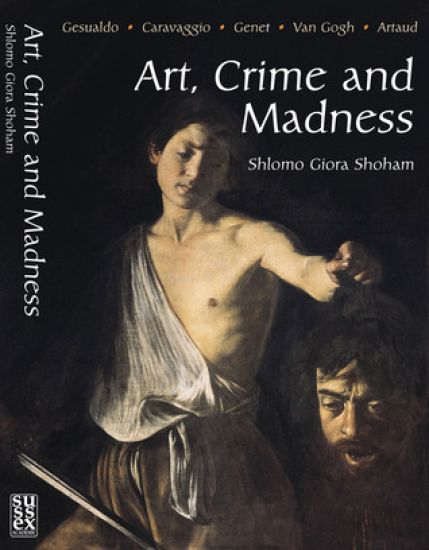
Art, Crime and Madness explores the relationship between creative innovation, deviance and morbidity. To innovate, one has to be able to view the medium and the object of creativity in a different, hitherto unexplored manner. The essence of art is creative innovation, coupled with an ability, in varying degrees, to transcend the boundaries of consciousness. But this 'ability' is also the prerogative of the mentally deranged. Likewise, the criminal and the deviant are more likely to transcend normative barriers while creating, hence the wide range of criminal and deviant behaviour in society. Although the inverse hypothesis does not hold -- the mere existence of deviance or morbidity does not predispose the individual to creativity -- nevertheless criminal and mad behaviour are often very innovative. This thesis is illustrated by historical case histories of creative deviance and genius madness, and contemporary observations. The painter Michelangelo Merisi Caravaggio killed a man while still a teenager, and a second victim during a ball game.In his lifetime he was considered degenerate, but today he is considered the greatest painter of the Italian Settecento, and his portrait adorns the Hundred-Thousand Lira note. Jean Genet the homosexual thief was born out of wedlock and as a teenager he transgressed almost all the paragraphs of the French criminal code. But he became a famous French playwright, the mouthpiece for criminals and deviants. His plays built up a philosophical apology for the raison d'etre of the criminal group.
Art, Crime and Madness

Art, Crime and Madness

Shlomo Giora Shoham

LIVERPOOL UNIVERSITY PRESS
2003
nidottu
Art, Crime and Madness explores the relationship between creative innovation, deviance and morbidity. To innovate, one has to be able to view the medium and the object of creativity in a different, hitherto unexplored manner. The essence of art is creative innovation, coupled with an ability, in varying degrees, to transcend the boundaries of consciousness. But this 'ability' is also the prerogative of the mentally deranged. Likewise, the criminal and the deviant are more likely to transcend normative barriers while creating, hence the wide range of criminal and deviant behaviour in society. Although the inverse hypothesis does not hold -- the mere existence of deviance or morbidity does not predispose the individual to creativity -- nevertheless criminal and mad behaviour are often very innovative. This thesis is illustrated by historical case histories of creative deviance and genius madness, and contemporary observations. The painter Michelangelo Merisi Caravaggio killed a man while still a teenager, and a second victim during a ball game. In his lifetime he was considered degenerate, but today he is considered the greatest painter of the Italian Settecento, and his portrait adorns the Hundred-Thousand Lira note. Jean Genet the homosexual thief was born out of wedlock and as a teenager he transgressed almost all the paragraphs of the French criminal code. But he became a famous French playwright, the mouthpiece for criminals and deviants. His plays built up a philosophical apology for the raison d'etre of the criminal group.