Kirjojen hintavertailu. Mukana 12 390 323 kirjaa ja 12 kauppaa.

Kirjailija

Shreya Atrey

Kirjat ja teokset yhdessä paikassa: 4 kirjaa, julkaisuja vuosilta 2019-2026, suosituimpien joukossa Anti-Racism as a Legal Principle. Vertaile teosten hintoja ja tarkista saatavuus suomalaisista kirjakaupoista.

4 kirjaa

Kirjojen julkaisuhaarukka 2019-2026.

Anti-Racism as a Legal Principle

Anti-Racism as a Legal Principle

Shreya Atrey

Oxford University Press
2026
sidottu
Is there anything like a principle of anti-racism in law? Anti-Racism as a Legal Principle shows that while racial discrimination law is often perceived to be anti-racist, it is only so in a liberal or cultural, but not transformative, sense. Racial discrimination law is effective only against a narrow range of interpersonal or individual racism, thus leaving intact structural racism and the drivers of racial disadvantage. This book argues that anti-racism must be recognized as a legal principle in order to effectively confront and address the full extent of structural racism. Shreya Atrey presents a theoretical account of anti-racism as a legal principle and locates it within the legal doctrine of British, comparative (Canadian, Indian and South African), and international law. It shows how the personal, material, evidential, and remedial scope of racial discrimination law across these contexts is limited in the absence of anti-racism as a legal principle. It also shows how, occasionally, anti-racism is genuinely embraced when structural racism (how state and state-like entities racialize to instate a framework of racial disadvantage) is addressed in a broad-based and intersectional way (as opposed to individual, incremental or piecemeal way). Ultimately, Anti-Racism as a Legal Principle shows that law, especially racial discrimination law, can and indeed should be anti-racist by committing to address structural racism in a transformative sense.
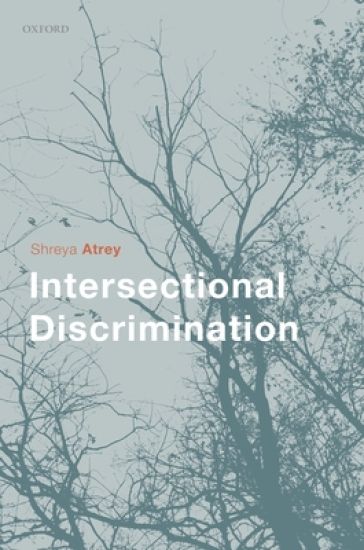
Intersectional Discrimination

Intersectional Discrimination

Shreya Atrey

Oxford University Press
2025
nidottu
This book examines the concept of intersectional discrimination and why it has been difficult for jurisdictions around the world to redress it in discrimination law. 'Intersectionality' was coined by Kimberlé Crenshaw in 1989. Thirty years since its conception, the term has become a buzzword in sociology, anthropology, feminist studies, psychology, literature, and politics. But it remains marginal in the discourse of discrimination law, where it was first conceived. Traversing its long and rich history of development, the book explains what intersectionality is as a theory and as a category of discrimination. It then explains what it takes for discrimination law to be reimagined from the perspective of intersectionality in reference to comparative laws in the US, UK, South Africa, Canada, India, and the jurisprudence of the European Courts (CJEU and ECtHR) and international human rights treaty bodies.
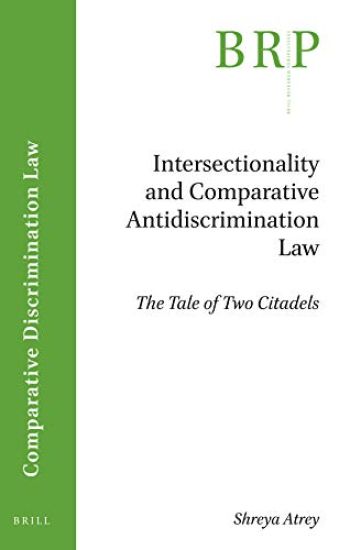
Intersectionality and Comparative Antidiscrimination Law
This volume in the Brill Research Perspectives in Comparative Discrimination Law addresses intersectionality from the lens of comparative antidiscrimination law. The term ‘intersectionality’ was coined by Kimberlé Williams Crenshaw in 1989. As a field, intersectionality has a longer history, of nearly two hundred years. Meanwhile, comparative antidiscrimination law as a field may be just over a few decades old. Thus, intersectionality’s tryst with antidiscrimination law is a fairly recent one. Developed as a critique of antidiscrimination law, intersectionality has had a significant influence on it. Yet, intersectionality’s logic does not seem to have infiltrated the logic of antidiscrimination law completely. Comparative antidiscrimination law continues to develop with intersectionality in sight, but rarely, in step. On the occasion of the 30th anniversary of Crenshaw’s seminal article that coined the term in the context of antidiscrimination law, Shreya Atrey explores this irony. Her article provides a meta-narrative of the development of the two fields with the purpose of showing what appear to be orthogonal trajectories.
Intersectional Discrimination

Intersectional Discrimination

Shreya Atrey

Oxford University Press
2019
sidottu
This book examines the concept of intersectional discrimination and why it has been difficult for jurisdictions around the world to redress it in discrimination law. 'Intersectionality' was coined by Kimberlé Crenshaw in 1989. Thirty years since its conception, the term has become a buzzword in sociology, anthropology, feminist studies, psychology, literature, and politics. But it remains marginal in the discourse of discrimination law, where it was first conceived. Traversing its long and rich history of development, the book explains what intersectionality is as a theory and as a category of discrimination. It then explains what it takes for discrimination law to be reimagined from the perspective of intersectionality in reference to comparative laws in the US, UK, South Africa, Canada, India, and the jurisprudence of the European Courts (CJEU and ECtHR) and international human rights treaty bodies.