Kirjojen hintavertailu. Mukana 12 390 323 kirjaa ja 12 kauppaa.

Kirjailija

Shyam Ranganathan

Kirjat ja teokset yhdessä paikassa: 6 kirjaa, julkaisuja vuosilta 2018-2026, suosituimpien joukossa Life After Death. Vertaile teosten hintoja ja tarkista saatavuus suomalaisista kirjakaupoista.

6 kirjaa

Kirjojen julkaisuhaarukka 2018-2026.

Life After Death

Life After Death

Steven B. Cowan; Graham Oppy; David Apolloni; Shyam Ranganathan; Joshua R. Farris

BLOOMSBURY PUBLISHING PLC
2026
sidottu
All major religions in history have offered hope of some kind of afterlife to answer the perennial interest in the question of life after death. This volume brings together renowned experts in the philosophy of religion, Graham Oppy, David Apolloni, Shyam Ranganathan, Joshua Farris and Steven B. Cowan, to present four key starting points in the life after death debate.Providing a lively and collaborative dialogue between leaders in the field, each thinker defends a particular view of the afterlife and critically interacts with the alternative perspectives. They focus on the positions of No Life After Death, the Immortality of the Soul, Reincarnation and Resurrection, with each chapter drawing on views from naturalism, antiquity, Christianity, Judaism, Islam, Buddhism, Jainism and Yogacara. This engagement moves the current debate forward to consider global perspectives whilst the clear and accessible structure allows for a developed exploration of the central issues at stake.Incorporating views spanning secular and religious spheres in both the east and west, this comprehensive guide will be welcomed by students and scholars of contemporary philosophy of religion and comparative philosophy.
Moral Philosophy and De-Colonialism

Moral Philosophy and De-Colonialism

Shyam Ranganathan

BLOOMSBURY PUBLISHING PLC
2026
sidottu
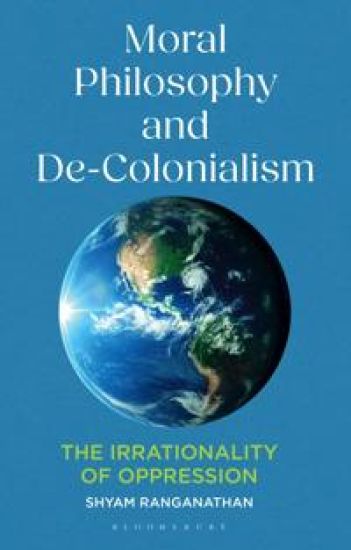
This groundbreaking book, Moral Philosophy and De-Colonialism: The Irrationality of Oppression, argues that colonialism is fundamentally irrational and incompatible with the public practice of moral philosophy—the reason-based exploration of right choices and good outcomes. Moral Philosophy allows participants to make their own ethical decisions, which colonialism denies.Drawing on South Asian moral philosophy that colonization renders invisible, Ranganathan argues that all irrationality and oppression stems from interpretation: a confusion of thought with attitudes toward thoughts that impose perspectives as explanations. Indigenous traditions use explication: explanation in terms of thought itself (not attitudes toward thoughts). The historical origins of interpretation lie in the Linguistic Account of Thought (LAT), which confuses what can be thought with culturally encoded attitudes. Rejected in ancient South Asia and controversial in ancient China but acclaimed in the West (Eurocentric thinking with ancient Greek origins), the West became a global colonizing tradition. Its successes—including normative theories of autonomy and freedom—result from colonially appropriating Indigenous capital and epistemic labor. Indigenous thinking follows Linguistic Externalism (LE): thought as the disciplinary use of semantic expression. While LAT promotes anthropocentric, communitarian ethics, LE allows Indigenous people to acknowledge diverse persons including the Earth, treating learning as logic-based inquiry rather than cultural competence. The book explores LAT's basis for genocide and White Supremacy's 2000-year institutionalization of Secularism ² (defining the Western as secular, the BIPOC as religious). It illustrates how originally free people adopted colonization by cooperating with the colonizer, hoping for good outcomes, gambling away procedural justice and explication. Colonization stems not from stated values but from the metaethical choice to interpret, creating a rational obligation to decolonize. Drawing from Western, Chinese, and Indian traditions while making contributions to the philosophies of AI, science, race, reason, religion, language, thought, and translation, this book makes visible the Indigenous foundations of moral philosophy and all inquiry, along with the colonial origins of irrationality.
Moral Philosophy and De-Colonialism

Moral Philosophy and De-Colonialism

Shyam Ranganathan

BLOOMSBURY PUBLISHING PLC
2026
nidottu
This groundbreaking book, Moral Philosophy and De-Colonialism: The Irrationality of Oppression, argues that colonialism is fundamentally irrational and incompatible with the public practice of moral philosophy—the reason-based exploration of right choices and good outcomes. Moral Philosophy allows participants to make their own ethical decisions, which colonialism denies.Drawing on South Asian moral philosophy that colonization renders invisible, Ranganathan argues that all irrationality and oppression stems from interpretation: a confusion of thought with attitudes toward thoughts that impose perspectives as explanations. Indigenous traditions use explication: explanation in terms of thought itself (not attitudes toward thoughts). The historical origins of interpretation lie in the Linguistic Account of Thought (LAT), which confuses what can be thought with culturally encoded attitudes. Rejected in ancient South Asia and controversial in ancient China but acclaimed in the West (Eurocentric thinking with ancient Greek origins), the West became a global colonizing tradition. Its successes—including normative theories of autonomy and freedom—result from colonially appropriating Indigenous capital and epistemic labor. Indigenous thinking follows Linguistic Externalism (LE): thought as the disciplinary use of semantic expression. While LAT promotes anthropocentric, communitarian ethics, LE allows Indigenous people to acknowledge diverse persons including the Earth, treating learning as logic-based inquiry rather than cultural competence. The book explores LAT's basis for genocide and White Supremacy's 2000-year institutionalization of Secularism ² (defining the Western as secular, the BIPOC as religious). It illustrates how originally free people adopted colonization by cooperating with the colonizer, hoping for good outcomes, gambling away procedural justice and explication. Colonization stems not from stated values but from the metaethical choice to interpret, creating a rational obligation to decolonize. Drawing from Western, Chinese, and Indian traditions while making contributions to the philosophies of AI, science, race, reason, religion, language, thought, and translation, this book makes visible the Indigenous foundations of moral philosophy and all inquiry, along with the colonial origins of irrationality.
Yoga – Anticolonial Philosophy

Yoga – Anticolonial Philosophy

Shyam Ranganathan

JESSICA KINGSLEY PUBLISHERS
2024
pokkari
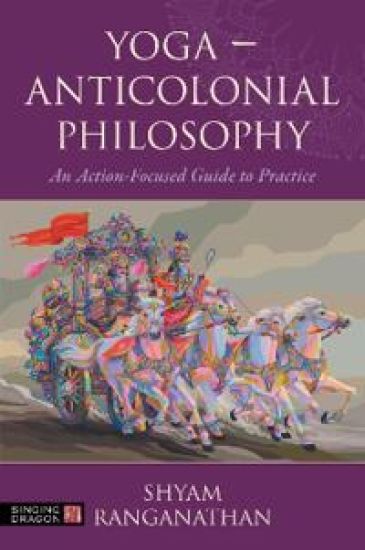
Providing a decolonial, action-focused account of Yoga philosophy, this practical work from Dr. Shyam Ranganathan, pioneering scholar in the field of Indian moral philosophy, focuses on the South Asian tradition to explore what Yoga was like prior to colonization. It challenges teachers and trainees to reflect on the impact of Western colonialism on Yoga as well as understand Yoga as the original decolonial practice in a way that is accessible. Each chapter takes the reader through a journey of sources and traditions, beginning with an investigation into the colonial -Platonic and Aristotelian- approaches to pedagogy in colonized yoga spaces, through contrary, ancient philosophies of South Asia, such as Jainism, Buddhism, Sankhya, and various forms of Vedanta, to sources of Yoga, including the Upanisads, Yoga Sutra, Bhagavad Gita and Hatha Yoga Pradipika. With discussions of the precolonial philosophy of Yoga, its relationship to social justice, and modern postural yoga's relationship with colonial trauma, this is a comprehensive guide for any yoga teacher or trainee to activate and synergize their practice. Supplementary online resources bring the text to life, making this the perfect text for yoga teacher trainings.
Hinduism

Hinduism

Shyam Ranganathan

Routledge
2018
sidottu
Hinduism: A Contemporary Philosophical Investigation explores Hinduism and the distinction between the secular and religious on a global scale. According to Ranganathan, a careful philosophical study of Hinduism reveals it as the microcosm of philosophical disagreements with Indian resources, across a variety of topics, including: ethics, logic, the philosophy of thought, epistemology, moral standing, metaphysics, and politics. This analysis offers an original and fresh diagnosis of studying Hinduism, colonialism, and a global rise of hyper-nationalism, as well as the frequent acrimony between scholars and practitioners of Hindu traditions.This text is appropriate for use in undergraduate and graduate courses on Hinduism, and Indian philosophy, and can be used as an advanced introduction to the problems of philosophy with South Asian resources.
Hinduism

Hinduism

Shyam Ranganathan

Routledge
2018
nidottu
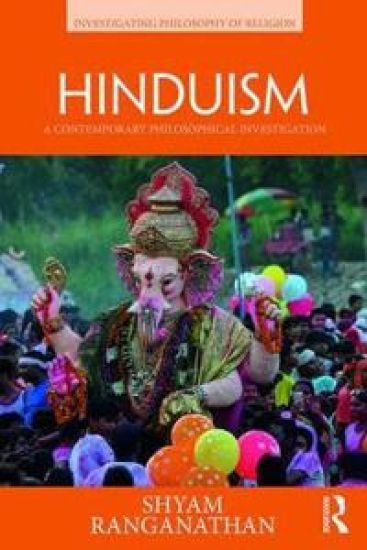
Hinduism: A Contemporary Philosophical Investigation explores Hinduism and the distinction between the secular and religious on a global scale. According to Ranganathan, a careful philosophical study of Hinduism reveals it as the microcosm of philosophical disagreements with Indian resources, across a variety of topics, including: ethics, logic, the philosophy of thought, epistemology, moral standing, metaphysics, and politics. This analysis offers an original and fresh diagnosis of studying Hinduism, colonialism, and a global rise of hyper-nationalism, as well as the frequent acrimony between scholars and practitioners of Hindu traditions.This text is appropriate for use in undergraduate and graduate courses on Hinduism, and Indian philosophy, and can be used as an advanced introduction to the problems of philosophy with South Asian resources.