Kirjojen hintavertailu. Mukana 12 595 353 kirjaa ja 12 kauppaa.
Kirjailija
Siddhartha Bhattacharyya
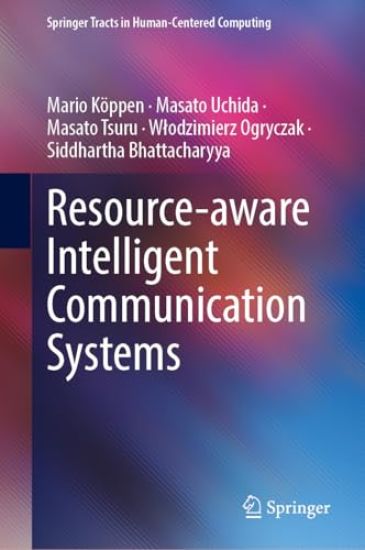
Kirjat ja teokset yhdessä paikassa: 10 kirjaa, julkaisuja vuosilta 2013-2026, suosituimpien joukossa Resource-Aware Intelligent Communication Systems. Vertaile teosten hintoja ja tarkista saatavuus suomalaisista kirjakaupoista.
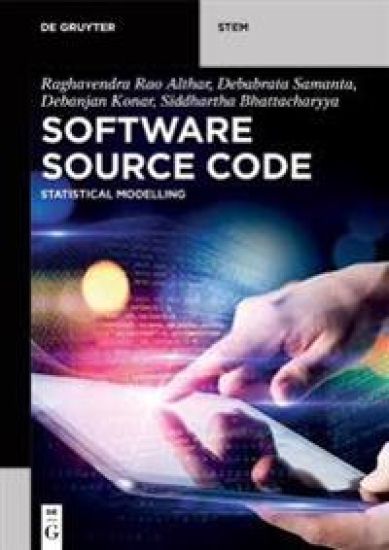
This book will focus on utilizing statistical modelling of the software source code, in order to resolve issues associated with the software development processes. Writing and maintaining software source code is a costly business; software developers need to constantly rely on large existing code bases. Statistical modelling identifies the patterns in software artifacts and utilize them for predicting the possible issues.
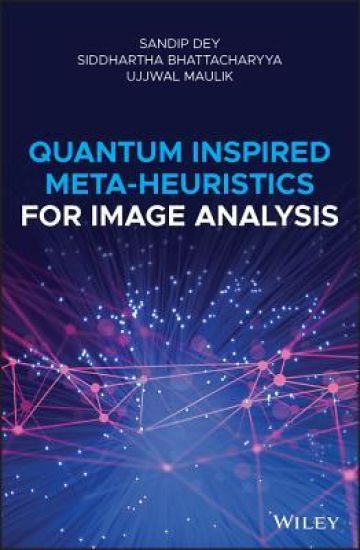
Introduces quantum inspired techniques for image analysis for pure and true gray scale/color images in a single/multi-objective environment This book will entice readers to design efficient meta-heuristics for image analysis in the quantum domain. It introduces them to the essence of quantum computing paradigm, its features, and properties, and elaborates on the fundamentals of different meta-heuristics and their application to image analysis. As a result, it will pave the way for designing and developing quantum computing inspired meta-heuristics to be applied to image analysis. Quantum Inspired Meta-heuristics for Image Analysis begins with a brief summary on image segmentation, quantum computing, and optimization. It also highlights a few relevant applications of the quantum based computing algorithms, meta-heuristics approach, and several thresholding algorithms in vogue. Next, it discusses a review of image analysis before moving on to an overview of six popular meta-heuristics and their algorithms and pseudo-codes. Subsequent chapters look at quantum inspired meta-heuristics for bi-level and gray scale multi-level image thresholding; quantum behaved meta-heuristics for true color multi-level image thresholding; and quantum inspired multi-objective algorithms for gray scale multi-level image thresholding. Each chapter concludes with a summary and sample questions. Provides in-depth analysis of quantum mechanical principlesOffers comprehensive review of image analysisAnalyzes different state-of-the-art image thresholding approachesDetailed current, popular standard meta-heuristics in use todayGuides readers step by step in the build-up of quantum inspired meta-heuristicsIncludes a plethora of real life case studies and applicationsFeatures statistical test analysis of the performances of the quantum inspired meta-heuristics vis-à-vis their conventional counterparts Quantum Inspired Meta-heuristics for Image Analysis is an excellent source of information for anyone working with or learning quantum inspired meta-heuristics for image analysis.
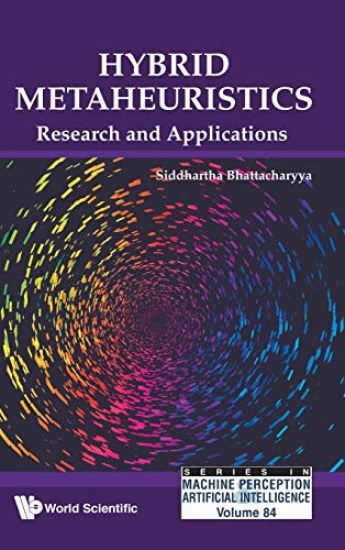
A metaheuristic is a higher-level procedure designed to select a partial search algorithm that may lead to a good solution to an optimization problem, especially with incomplete or imperfect information.This unique compendium focuses on the insights of hybrid metaheuristics. It illustrates the recent researches on evolving novel hybrid metaheuristic algorithms, and prominently highlights its diverse application areas. As such, the book helps readers to grasp the essentials of hybrid metaheuristics and to address real world problems.The must-have volume serves as an inspiring read for professionals, researchers, academics and graduate students in the fields of artificial intelligence, robotics and machine learning.Related Link(s)
This book explains efficient solutions for segmenting the intensity levels of different types of multilevel images. The authors present hybrid soft computing techniques, which have advantages over conventional soft computing solutions as they incorporate data heterogeneity into the clustering/segmentation procedures.This is a useful introduction and reference for researchers and graduate students of computer science and electronics engineering, particularly in the domains of image processing and computational intelligence.
The communication field is evolving rapidly in order to keep up with society’s demands. As such, it becomes imperative to research and report recent advancements in computational intelligence as it applies to communication networks.The Handbook of Research on Recent Developments in Intelligent Communication Application is a pivotal reference source for the latest developments on emerging data communication applications. Featuring extensive coverage across a range of relevant perspectives and topics, such as satellite communication, cognitive radio networks, and wireless sensor networks, this book is ideally designed for engineers, professionals, practitioners, upper-level students, and academics seeking current information on emerging communication networking trends.
This book explains efficient solutions for segmenting the intensity levels of different types of multilevel images. The authors present hybrid soft computing techniques, which have advantages over conventional soft computing solutions as they incorporate data heterogeneity into the clustering/segmentation procedures.This is a useful introduction and reference for researchers and graduate students of computer science and electronics engineering, particularly in the domains of image processing and computational intelligence.
Quantum Inspired Computational Intelligence: Research and Applications explores the latest quantum computational intelligence approaches, initiatives, and applications in computing, engineering, science, and business. The book explores this emerging field of research that applies principles of quantum mechanics to develop more efficient and robust intelligent systems. Conventional computational intelligence—or soft computing—is conjoined with quantum computing to achieve this objective. The models covered can be applied to any endeavor which handles complex and meaningful information.
Proper analysis of image and multimedia data requires efficient extraction and segmentation techniques. Among the many computational intelligence approaches, the soft computing paradigm is best equipped with several tools and techniques that incorporate intelligent concepts and principles. This book is dedicated to object extraction, image segmentation, and edge detection using soft computing techniques with extensive real-life application to image and multimedia data. The authors start with a comprehensive tutorial on the basics of brain structure and learning, and then the key soft computing techniques, including evolutionary computation, neural networks, fuzzy sets and fuzzy logic, and rough sets. They then present seven chapters that detail the application of representative techniques to complex image processing tasks such as image recognition, lighting control, target tracking, object extraction, and edge detection. These chapters follow a structured approach with detailed explanations of the problems, solutions, results, and conclusions. This is both a standalone textbook for graduates in computer science, electrical engineering, system science, and information technology, and a reference for researchers and engineers engaged with pattern recognition, image processing, and soft computing.
Proper analysis of image and multimedia data requires efficient extraction and segmentation techniques. Among the many computational intelligence approaches, the soft computing paradigm is best equipped with several tools and techniques that incorporate intelligent concepts and principles. This book is dedicated to object extraction, image segmentation, and edge detection using soft computing techniques with extensive real-life application to image and multimedia data. The authors start with a comprehensive tutorial on the basics of brain structure and learning, and then the key soft computing techniques, including evolutionary computation, neural networks, fuzzy sets and fuzzy logic, and rough sets. They then present seven chapters that detail the application of representative techniques to complex image processing tasks such as image recognition, lighting control, target tracking, object extraction, and edge detection. These chapters follow a structured approach with detailed explanations of the problems, solutions, results, and conclusions. This is both a standalone textbook for graduates in computer science, electrical engineering, system science, and information technology, and a reference for researchers and engineers engaged with pattern recognition, image processing, and soft computing.