Kirjojen hintavertailu. Mukana 12 595 353 kirjaa ja 12 kauppaa.

Kirjailija

Sidney Dekker

Kirjat ja teokset yhdessä paikassa: 31 kirjaa, julkaisuja vuosilta 2010-2026, suosituimpien joukossa Safety Differently. Vertaile teosten hintoja ja tarkista saatavuus suomalaisista kirjakaupoista.

31 kirjaa

Kirjojen julkaisuhaarukka 2010-2026.

Being a Crisis Chaplain: Delivering Help and Healing in Critical Scenarios
Being a Crisis Chaplain delivers the essential elements of crisis chaplaincy, outlining the process of responding to crises with clarity and compassion. Drawing from real-world experiences and research, this is a concise but comprehensive toolkit for navigating the delicate aftermath of crises.Chapters explore ways to triage emotional, cognitive, and spiritual needs, from the raw shock and grief to complex feelings of guilt and helplessness. With practical guidance for recognizing and mitigating long-term mental health issues such as post-traumatic stress disorder, this book also emphasizes the importance of self-care for chaplains, ensuring they can sustain their vital work without succumbing to secondary trauma. The reader will develop an understanding of what a crisis chaplain does and how to act in a safe, compassionate, and humane manner in any type of crisis or disaster.This book is for professionals on the front line of natural and human disasters and crises, including emergency responders, safety practitioners, chaplains, pastoral carers, religious leaders, and counsellors.
Being a Crisis Chaplain

Being a Crisis Chaplain

Sidney Dekker; Lance Mergard

TAYLOR FRANCIS LTD
2025
sidottu
Being a Crisis Chaplain delivers the essential elements of crisis chaplaincy, outlining the process of responding to crises with clarity and compassion. Drawing from real-world experiences and research, this is a concise but comprehensive toolkit for navigating the delicate aftermath of crises.Chapters explore ways to triage emotional, cognitive, and spiritual needs, from the raw shock and grief to complex feelings of guilt and helplessness. With practical guidance for recognizing and mitigating long-term mental health issues such as post-traumatic stress disorder, this book also emphasizes the importance of self-care for chaplains, ensuring they can sustain their vital work without succumbing to secondary trauma. The reader will develop an understanding of what a crisis chaplain does and how to act in a safe, compassionate, and humane manner in any type of crisis or disaster.This book is for professionals on the front line of natural and human disasters and crises, including emergency responders, safety practitioners, chaplains, pastoral carers, religious leaders, and counsellors.
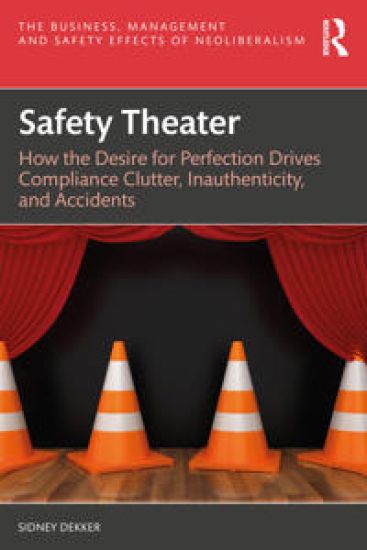
Safety Theater

Safety Theater

Sidney Dekker

TAYLOR FRANCIS LTD
2025
nidottu
How is it possible that the desire for a perfectly safe world with perfectly safe workplaces helps generate the opposite? Safety Theater shows how our desire for perfection drives compliance clutter, inauthentic relationships with work-as-done, and new kinds of accidents. Written by the leading global voice on safety innovation today, Safety Theater takes us back to the Enlightenment and its aspiration toward a perfectible world through rationality and science, and explains how, by separating severity from injury rates two centuries later, we now hit our targets but miss the point. This hopeful, forward-looking book is the final volume in a three-part series on the effects of "neoliberalism," which promotes the role of the private sector in the economy.Showcasing a more caring kind of capitalism—where free markets are free in a frame; where horizontal coordination replaces hierarchical control; where shareholders are not the only stakeholders; and where value and prosperity are assessed in terms other than merely economic ones—the book platforms much of what is now known as "safety differently," and also allows us to think differently about our capacity to manage complexity (including its possible drift toward failure) and see our fellow human beings as resources for solutions, not as problems to control. Safety Theater introduces the socio-economic success and value system that distinguish Rhineland economies from Anglo ones. It explains how complexity can never be governed through hierarchy and compliance, but necessarily requires trust and horizontal coordination; offers a vision of humanity richer than Anglo-style capitalism can offer; and examines how Rhineland thinking values tripartite consultation (between workers, employers, and government) in ways that can help stem the worst effects of free market policymaking on the compliance clutter and drift into failure, as detailed in the previous two volumes in this trilogy.Sidney Dekker’s work—from his debut Field Guide to Understanding Human Error in 2001 to his recent Random Noise—always challenges readers to embrace more humane, empowering ways to think about work and its quality and safety. In Safety Theater, Dekker extends his reach once again, writing for all managers, board members, organization leaders, consultants, practitioners, researchers, lecturers, students, and investigators curious to understand the genuine nature of organizational and safety performance.
Safety Theater

Safety Theater

Sidney Dekker

TAYLOR FRANCIS LTD
2025
sidottu
How is it possible that the desire for a perfectly safe world with perfectly safe workplaces helps generate the opposite? Safety Theater shows how our desire for perfection drives compliance clutter, inauthentic relationships with work-as-done, and new kinds of accidents. Written by the leading global voice on safety innovation today, Safety Theater takes us back to the Enlightenment and its aspiration toward a perfectible world through rationality and science, and explains how, by separating severity from injury rates two centuries later, we now hit our targets but miss the point. This hopeful, forward-looking book is the final volume in a three-part series on the effects of "neoliberalism," which promotes the role of the private sector in the economy.Showcasing a more caring kind of capitalism—where free markets are free in a frame; where horizontal coordination replaces hierarchical control; where shareholders are not the only stakeholders; and where value and prosperity are assessed in terms other than merely economic ones—the book platforms much of what is now known as "safety differently," and also allows us to think differently about our capacity to manage complexity (including its possible drift toward failure) and see our fellow human beings as resources for solutions, not as problems to control. Safety Theater introduces the socio-economic success and value system that distinguish Rhineland economies from Anglo ones. It explains how complexity can never be governed through hierarchy and compliance, but necessarily requires trust and horizontal coordination; offers a vision of humanity richer than Anglo-style capitalism can offer; and examines how Rhineland thinking values tripartite consultation (between workers, employers, and government) in ways that can help stem the worst effects of free market policymaking on the compliance clutter and drift into failure, as detailed in the previous two volumes in this trilogy.Sidney Dekker’s work—from his debut Field Guide to Understanding Human Error in 2001 to his recent Random Noise—always challenges readers to embrace more humane, empowering ways to think about work and its quality and safety. In Safety Theater, Dekker extends his reach once again, writing for all managers, board members, organization leaders, consultants, practitioners, researchers, lecturers, students, and investigators curious to understand the genuine nature of organizational and safety performance.
Restorative Just Culture

Restorative Just Culture

Sidney Dekker

TAYLOR FRANCIS LTD
2025
nidottu
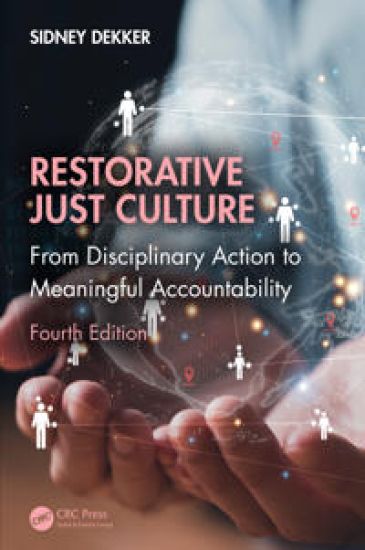
In the world of work, accountability can often translate into punishment. This book explores trust, learning, and accountability in the aftermath of incidents. Fully updated, the fourth edition of Restorative Just Culture covers restorative justice, challenging conventional notions of blame and retribution to create a “just culture” in the workplace.Whether you’re grappling with the fallout of an incident or seeking to foster a culture of trust and compassion, this book offers invaluable insights and practical guidance. This fascinating title challenges the traditional concept of accountability and urges the reader to consider not just who broke the rules, but who was harmed and what their needs are. Written by a pioneer in the field, this book draws from extensive case studies and fresh insights. Through narratives and thought-provoking analysis, the author explores the transformative power of restorative justice and the complexities of human error in organizational settings. New to this edition are new chapters, updates to criminalizing human error, a section on forgiveness, coverage of implementing restorative justice in an organization and much more. The reader of this book can reevaluate how they see their workplace culture and how it can be made safer and fairer.Restorative Just Culture: From Disciplinary Action to Meaningful Accountability, Fourth Edition is a must-read for professionals in health and safety, business and management, and others with accountability in professional environments.
Restorative Just Culture

Restorative Just Culture

Sidney Dekker

TAYLOR FRANCIS LTD
2025
sidottu
In the world of work, accountability can often translate into punishment. This book explores trust, learning, and accountability in the aftermath of incidents. Fully updated, the fourth edition of Restorative Just Culture covers restorative justice, challenging conventional notions of blame and retribution to create a “just culture” in the workplace.Whether you’re grappling with the fallout of an incident or seeking to foster a culture of trust and compassion, this book offers invaluable insights and practical guidance. This fascinating title challenges the traditional concept of accountability and urges the reader to consider not just who broke the rules, but who was harmed and what their needs are. Written by a pioneer in the field, this book draws from extensive case studies and fresh insights. Through narratives and thought-provoking analysis, the author explores the transformative power of restorative justice and the complexities of human error in organizational settings. New to this edition are new chapters, updates to criminalizing human error, a section on forgiveness, coverage of implementing restorative justice in an organization and much more. The reader of this book can reevaluate how they see their workplace culture and how it can be made safer and fairer.Restorative Just Culture: From Disciplinary Action to Meaningful Accountability, Fourth Edition is a must-read for professionals in health and safety, business and management, and others with accountability in professional environments.
Random Noise

Random Noise

Georgina Poole; Sidney Dekker

TAYLOR FRANCIS LTD
2024
nidottu
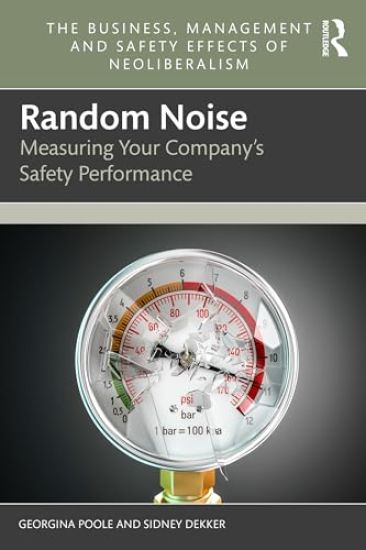
In the realm of safety management, this book embarks on a profound exploration of how the political economy was reshaped in the last two decades. Much like privatization, deregulation, and financialization altered the economic landscape, this narrative unveils how safety management has been affected by the intertwined dynamics of asset underinvestment, privatization, self-regulation, workplace flexibilization, and market-driven policies.This book, the second installment of a thought-provoking trilogy on the consequences of neoliberalism, mirrors the political economy's promotion of the private sector's role in the economy. Just as neoliberalism amplified and accelerated the mechanisms of human-made disasters in complex systems, this narrative lays bare the heightened potential for safety misfortunes when governed by market-driven principles.As the story unfolds, the book delves into the concept of 'synoptic legibility' in safety management, akin to how the political economy distilled its essence into privatization and deregulation. The authors scrutinize the consequences of translating safety measures into rigid targets, unveiling how this shift can distort the integrity of safety metrics and inadvertently harm individuals. Drawing parallels with historical blunders such as England's window tax, the book contemplates the precarious nature of equating simplified metrics with safety achievements. Much like the political economy's 'acceptable risk' renegotiations, it examines how the pursuit of safety through metrics and surveillance can lead to 'manufactured insecurity,' eroding trust, autonomy, and professionalism.In Random Noise, Poole and Dekker extend this reach once again, writing for all managers, board members, organization leaders, consultants, practitioners, researchers, lecturers, students, and investigators curious to understand the genuine nature of organizational and safety performance.
Random Noise

Random Noise

Georgina Poole; Sidney Dekker

TAYLOR FRANCIS LTD
2024
sidottu
In the realm of safety management, this book embarks on a profound exploration of how the political economy was reshaped in the last two decades. Much like privatization, deregulation, and financialization altered the economic landscape, this narrative unveils how safety management has been affected by the intertwined dynamics of asset underinvestment, privatization, self-regulation, workplace flexibilization, and market-driven policies.This book, the second installment of a thought-provoking trilogy on the consequences of neoliberalism, mirrors the political economy's promotion of the private sector's role in the economy. Just as neoliberalism amplified and accelerated the mechanisms of human-made disasters in complex systems, this narrative lays bare the heightened potential for safety misfortunes when governed by market-driven principles.As the story unfolds, the book delves into the concept of 'synoptic legibility' in safety management, akin to how the political economy distilled its essence into privatization and deregulation. The authors scrutinize the consequences of translating safety measures into rigid targets, unveiling how this shift can distort the integrity of safety metrics and inadvertently harm individuals. Drawing parallels with historical blunders such as England's window tax, the book contemplates the precarious nature of equating simplified metrics with safety achievements. Much like the political economy's 'acceptable risk' renegotiations, it examines how the pursuit of safety through metrics and surveillance can lead to 'manufactured insecurity,' eroding trust, autonomy, and professionalism.In Random Noise, Poole and Dekker extend this reach once again, writing for all managers, board members, organization leaders, consultants, practitioners, researchers, lecturers, students, and investigators curious to understand the genuine nature of organizational and safety performance.
Compliance Capitalism

Compliance Capitalism

Sidney Dekker

Taylor Francis Ltd
2021
sidottu
In this book, Sidney Dekker sets out to identify the market mechanisms that explain how less government paradoxically leads to greater compliance burdens. This book gives shape and substance to a suspicion that has become widespread among workers in almost every industry: we have to follow more rules than ever—and still, things can go spectacularly wrong.Much has been privatized and deregulated, giving us what is sometimes known as ‘new public management,’ driven by neoliberal, market-favoring policies. But, paradoxically, we typically have more rules today, not fewer. It’s not the government: it’s us. This book is the first of a three-part series on the effects of ‘neoliberalism,’ which promotes the role of the private sector in the economy. Compliance Capitalism examines what aspects of the compliance economy, what mechanisms of bureaucratization, are directly linked to us having given free markets a greater reign over our political economy. The book steps through them, picking up the evidence and levers for change along the way.Dekker’s work has always challenged readers to embrace more humane, empowering ways to think about work and its quality and safety. In Compliance Capitalism, Dekker extends his reach once again, writing for all managers, board members, organization leaders, consultants, practitioners, researchers, lecturers, students, and investigators curious to understand the genuine nature of organizational and safety performance.
Compliance Capitalism

Compliance Capitalism

Sidney Dekker

Taylor Francis Ltd
2021
nidottu
In this book, Sidney Dekker sets out to identify the market mechanisms that explain how less government paradoxically leads to greater compliance burdens. This book gives shape and substance to a suspicion that has become widespread among workers in almost every industry: we have to follow more rules than ever—and still, things can go spectacularly wrong.Much has been privatized and deregulated, giving us what is sometimes known as ‘new public management,’ driven by neoliberal, market-favoring policies. But, paradoxically, we typically have more rules today, not fewer. It’s not the government: it’s us. This book is the first of a three-part series on the effects of ‘neoliberalism,’ which promotes the role of the private sector in the economy. Compliance Capitalism examines what aspects of the compliance economy, what mechanisms of bureaucratization, are directly linked to us having given free markets a greater reign over our political economy. The book steps through them, picking up the evidence and levers for change along the way.Dekker’s work has always challenged readers to embrace more humane, empowering ways to think about work and its quality and safety. In Compliance Capitalism, Dekker extends his reach once again, writing for all managers, board members, organization leaders, consultants, practitioners, researchers, lecturers, students, and investigators curious to understand the genuine nature of organizational and safety performance.
Foundations of Safety Science

Foundations of Safety Science

Sidney Dekker

Routledge
2019
nidottu
How are today’s ‘hearts and minds’ programs linked to a late-19th century definition of human factors as people’s moral and mental deficits? What do Heinrich’s ‘unsafe acts’ from the 1930’s have in common with the Swiss cheese model of the early 1990’s? Why was the reinvention of human factors in the 1940’s such an important event in the development of safety thinking? What makes many of our current systems so complex and impervious to Tayloristic safety interventions? ‘Foundations of Safety Science’ covers the origins of major schools of safety thinking, and traces the heritage and interlinkages of the ideas that make up safety science today.Features Offers a comprehensive overview of the theoretical foundations of safety science Provides balanced treatment of approaches since the early 20th century, showing interlinkages and cross-connections Includes an overview and key points at the beginning of each chapter and study questions at the end to support teaching use Uses an accessible style, using technical language where necessary Concentrates on the philosophical and historical traditions and assumptions that underlie all safety approaches
Foundations of Safety Science

Foundations of Safety Science

Sidney Dekker

Routledge
2019
sidottu
How are today’s ‘hearts and minds’ programs linked to a late-19th century definition of human factors as people’s moral and mental deficits? What do Heinrich’s ‘unsafe acts’ from the 1930’s have in common with the Swiss cheese model of the early 1990’s? Why was the reinvention of human factors in the 1940’s such an important event in the development of safety thinking? What makes many of our current systems so complex and impervious to Tayloristic safety interventions? ‘Foundations of Safety Science’ covers the origins of major schools of safety thinking, and traces the heritage and interlinkages of the ideas that make up safety science today.Features Offers a comprehensive overview of the theoretical foundations of safety science Provides balanced treatment of approaches since the early 20th century, showing interlinkages and cross-connections Includes an overview and key points at the beginning of each chapter and study questions at the end to support teaching use Uses an accessible style, using technical language where necessary Concentrates on the philosophical and historical traditions and assumptions that underlie all safety approaches
The Field Guide to Human Error Investigations
This title was first published in 2002: This field guide assesses two views of human error - the old view, in which human error becomes the cause of an incident or accident, or the new view, in which human error is merely a symptom of deeper trouble within the system. The two parts of this guide concentrate on each view, leading towards an appreciation of the new view, in which human error is the starting point of an investigation, rather than its conclusion. The second part of this guide focuses on the circumstances which unfold around people, which causes their assessments and actions to change accordingly. It shows how to "reverse engineer" human error, which, like any other componant, needs to be put back together in a mishap investigation.
The Safety Anarchist

The Safety Anarchist

Sidney Dekker

Routledge
2017
nidottu
Work has never been as safe as it seems today. Safety has also never been as bureaucratized as it is today. Over the past two decades, the number of safety rules and statutes has exploded, and organizations themselves are creating ever more internal compliance requirements. At the same time, progress on safety has slowed to a crawl. Many incident- and injury rates have flatlined. Worse, excellent safety performance on low-consequence events tends to increase the risk of fatalities and disasters. Bureaucracy and compliance now seem less about managing the safety of the workers we are responsible for, and more about managing the liability of the people they work for. We make workers do a lot that does nothing to improve their success locally. Paradoxically, such tightening of safety bureaucracy robs us of exactly the source of human insight, creativity and resilience that can tell us how success is actually created, and where the next accident may well happen. It is time for Safety Anarchists: people who trust people more than process, who rely on horizontally coordinating experiences and innovations, who push back against petty rules and coercive compliance, and who help recover the dignity and expertise of human work.
The Safety Anarchist

The Safety Anarchist

Sidney Dekker

Routledge
2017
sidottu
Work has never been as safe as it seems today. Safety has also never been as bureaucratized as it is today. Over the past two decades, the number of safety rules and statutes has exploded, and organizations themselves are creating ever more internal compliance requirements. At the same time, progress on safety has slowed to a crawl. Many incident- and injury rates have flatlined. Worse, excellent safety performance on low-consequence events tends to increase the risk of fatalities and disasters. Bureaucracy and compliance now seem less about managing the safety of the workers we are responsible for, and more about managing the liability of the people they work for. We make workers do a lot that does nothing to improve their success locally. Paradoxically, such tightening of safety bureaucracy robs us of exactly the source of human insight, creativity and resilience that can tell us how success is actually created, and where the next accident may well happen. It is time for Safety Anarchists: people who trust people more than process, who rely on horizontally coordinating experiences and innovations, who push back against petty rules and coercive compliance, and who help recover the dignity and expertise of human work.
The Field Guide to Human Error Investigations
This title was first published in 2002: This field guide assesses two views of human error - the old view, in which human error becomes the cause of an incident or accident, or the new view, in which human error is merely a symptom of deeper trouble within the system. The two parts of this guide concentrate on each view, leading towards an appreciation of the new view, in which human error is the starting point of an investigation, rather than its conclusion. The second part of this guide focuses on the circumstances which unfold around people, which causes their assessments and actions to change accordingly. It shows how to "reverse engineer" human error, which, like any other componant, needs to be put back together in a mishap investigation.
Safety Differently

Safety Differently

Sidney Dekker

CRC Press
2017
sidottu
The second edition of a bestseller, Safety Differently: Human Factors for a New Era is a complete update of Ten Questions About Human Error: A New View of Human Factors and System Safety. Today, the unrelenting pace of technology change and growth of complexity calls for a different kind of safety thinking. Automation and new technologies have resulted in new roles, decisions, and vulnerabilities whilst practitioners are also faced with new levels of complexity, adaptation, and constraints. It is becoming increasingly apparent that conventional approaches to safety and human factors are not equipped to cope with these challenges and that a new era in safety is necessary. In addition to new material covering changes in the field during the past decade, the book takes a new approach to discussing safety. The previous edition looked critically at the answers human factors would typically provide and compared/contrasted them with current research and insights at that time. The edition explains how to turn safety from a bureaucratic accountability back into an ethical responsibility for those who do our dangerous work, and how to embrace the human factor not as a problem to control, but as a solution to harness. See What‘s in the New Edition: New approach reflects changes in the field Updated coverage of system safety and technology changes Latest human factors/ergonomics research applicable to safety Organizations, companies, and industries are faced with new demands and pressures resulting from the dynamics and nature of the modern marketplace and from the development and introduction of new technologies. This new era calls for a different kind of safety thinking, a thinking that sees people as the source of diversity, insight, creativity, and wisdom about safety, not as the source of risk that undermines an otherwise safe system. It calls fo
Second Victim

Second Victim

Sidney Dekker

CRC Press
2017
sidottu
How do people cope with having "caused" a terrible accident? How do they cope when they survive and have to live with the consequences ever after? We tend to blame and forget professionals who cause incidents and accidents, but they are victims too. They are second victims whose experiences of an incident or adverse event can be as traumatic as that of the first victims. Yet information on second victimhood and its relationship to safety, about what is known and what organizations might need to do, is difficult to find. Thoroughly exploring an emerging topic with great relevance to safety culture, Second Victim: Error, Guilt, Trauma, and Resilience examines the lived experience of second victims. It goes through what we know about trauma, guilt, forgiveness, and injustice and how these might be felt by the second victim. The author discusses how to conduct investigations of incidents that do not alienate second victims or make them feel even worse. It explores the importance support and resilience and where the responsibilities for creating it may lie. Drawing on his unique background as psychologist, airline pilot, and safety specialist, and his own experiences with helping second victims from a variety of backgrounds, Sidney Dekker has written a powerful, moving account of the experience of the second victim. It forms compelling reading for practitioners, risk managers, human resources managers, safety experts, mental health workers, regulators, the judiciary, and many other professionals. Dekker provides a strong theoretical background to promote understanding of the situation of the second victim and solid practical advice about how to deal with trauma that continues after an event leading to preventable harm or even avoidable death of a patient, consumer, or colleague. Listen to Sidney Dekker speak about his book
The End of Heaven

The End of Heaven

Sidney Dekker

Routledge
2017
nidottu
In this unique book, Sidney Dekker tackles a largely unexplored dilemma. Our scientific age has equipped us ever better to explain why things go wrong. But this increasing sophistication actually makes it harder to explain why we suffer. Accidents and disasters have become technical problems without inherent purpose. When told of a disaster, we easily feel lost in the steely emptiness of technical languages of engineering or medicine. Or, in our drive to pinpoint the source of suffering, we succumb to the hunt for a scapegoat, possibly inflicting even greater suffering on others around us. How can we satisfactorily deal with suffering when the disaster that caused it is no more than the dispassionate sum of utterly mundane, imperfect human decisions and technical failures? Broad in its historical sweep and ambition, The End of Heaven is also Dekker's most personal book to date.
The End of Heaven

The End of Heaven

Sidney Dekker

Routledge
2017
sidottu
In this unique book, Sidney Dekker tackles a largely unexplored dilemma. Our scientific age has equipped us ever better to explain why things go wrong. But this increasing sophistication actually makes it harder to explain why we suffer. Accidents and disasters have become technical problems without inherent purpose. When told of a disaster, we easily feel lost in the steely emptiness of technical languages of engineering or medicine. Or, in our drive to pinpoint the source of suffering, we succumb to the hunt for a scapegoat, possibly inflicting even greater suffering on others around us. How can we satisfactorily deal with suffering when the disaster that caused it is no more than the dispassionate sum of utterly mundane, imperfect human decisions and technical failures? Broad in its historical sweep and ambition, The End of Heaven is also Dekker's most personal book to date.