Kirjojen hintavertailu. Mukana 12 390 323 kirjaa ja 12 kauppaa.

Kirjailija

Siegfried Gohr

Kirjat ja teokset yhdessä paikassa: 2 kirjaa, julkaisuja vuosilta 2020-2026, suosituimpien joukossa Georg Baselitz: Akademie Rousseau. Vertaile teosten hintoja ja tarkista saatavuus suomalaisista kirjakaupoista.

2 kirjaa

Kirjojen julkaisuhaarukka 2020-2026.

Ernst Wilhelm Nay

Ernst Wilhelm Nay

Siegfried Gohr

DCV
2026
sidottu
Ernst Wilhelm Nay (b. Berlin, 1902; d. Cologne, 1968) was one of the most interesting painters of European modernism. Spanning the decades from the 1930s to his death in Cologne in 1968, his output encompasses paintings as well as an abundance of works on paper. The new monograph surveys all periods in Nay's oeuvre, from the " Fishermen paintings" to the striking late pictures, which leave no doubt about the artist's outstanding gift for color. Nay's evolution is embedded in the history and ideas of his time, on which he reflected in lectures, writings, and notes. The volume unlocks a wide spectrum of fresh insights into Nay's life and art.
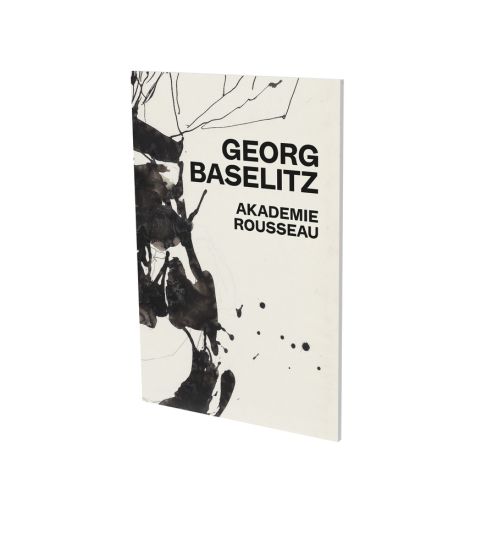
Georg Baselitz: Akademie Rousseau

Georg Baselitz: Akademie Rousseau

Siegfried Gohr; Georg Baselitz; Nicole Hackert

Snoeck Verlagsgesellschaft mbH
2020
pokkari
"There is a remarkable painting in the Picasso room at Kunstmuseum in Basel: a full-length portrait of Guillaume Apollinaire with his muse, Marie Laurencin. It was Henri Rousseau who ­painted this wonderful picture. Only I had remembered it as a self-portrait of Rousseau with ­Madame Rousseau. Marie Laurencin was Apollinaire's muse, and Cl mence Rousseau was Rousseau's muse. As it happens, Franz Marc painted a portrait of Rousseau for Der Blaue Reiter, and Picasso also had a self-portrait by Henri. There's a quite intimate photograph, taken by Andr Gom s, of Picasso holding Rousseau's self-portrait in his right hand and the portrait of Rousseau's wife in his left hand. Picasso, that constructor of novel objects and ­audacious paintings, loved Rousseau, the painter of things in rigidified grace. Even Rousseau's gaze in his self-portrait is stiff, directed at his own work, in which objects that we ourselves are familiar with look different--Gothic, Byzantine, somehow not the way we are used to seeing them. (...)" --Georg Baselitz