
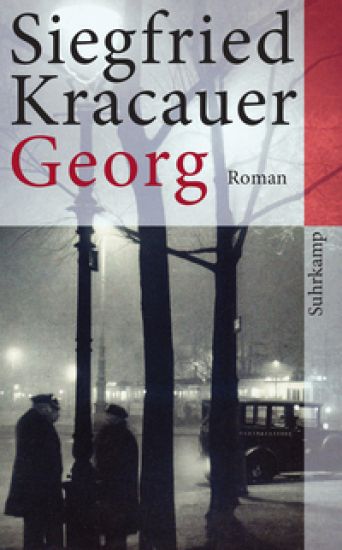
Kirjailija
Siegfried Kracauer
Kirjat ja teokset yhdessä paikassa: 31 kirjaa, julkaisuja vuosilta 1979-2026, suosituimpien joukossa Georg. Vertaile teosten hintoja ja tarkista saatavuus suomalaisista kirjakaupoista.
31 kirjaa
Kirjojen julkaisuhaarukka 1979-2026.
Sbornik obedinjaet kriticheskie zamechanija, filosofskie razmyshlenija, a takzhe realnyj opyt v oblasti fotografii odnogo iz veduschikh intellektualov Vejmarskoj respubliki - Zigfrida Krakauera. Esse, napisannye v 1927-1933 i 1951 godakh, pomeschajut fotografiju v kontekst massovoj kultury, gorodskoj zhizni, mira kino, a takzhe voprosov pamjati i istorii. Zavershaetsja sbornik seriej fotografij Krakauera dlja gipoteticheskogo proekta "Curriculum Vitae v fotografijakh" s kommentariem Marii Tsinfert. Vsem etim tekstam predshestvuet statja professora Monrealskogo universiteta, literaturoveda i istorika idej Filippa Depua "Krakauer - teoretik fotograficheskogo mediuma". Perevod: Aleksandr Filippov-Chekhov, Aleksej Shestakov, Anna
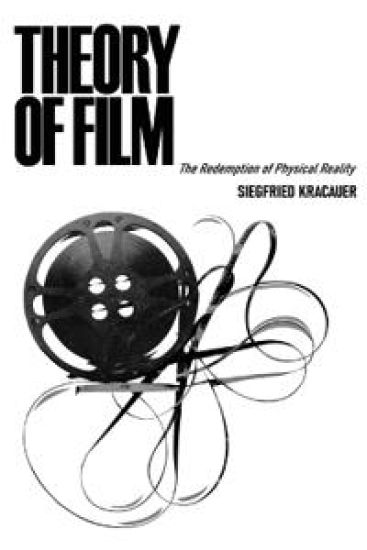
This significant study is certain to be the standard work on the subject for many years to come. It demonstrates once and for all that motion pictures differ radically from the traditional arts, and that good plays or novels rarely make good films. Dr. Kracauer is concerned with film as a photographic medium uniquely equipped to capture and reveal the everyday world as it exists before our eyes. "If film is an art," he writes, "it is an art with a difference. It fulfills itself in rendering 'the ripple of leaves, ' . . . street crowds, involuntary gestures, and other fleeting impressions."Dr. Kracauer covers every aspect of black-and-white film. He discusses its background in still photography, the problems inherent in historical and fantasy films, the novel as a cinematic form, experimental films, documentaries, the role of the actor, the uses of dialogue and sound, the contribution of music, and the part played by the spectator.The final chapter focuses on the wider implications of the medium. There Dr. Kracauer sets the cinema "in the perspective of something more general-an approach to the world, a mode of human existence," and thus shows how it reflects the condition of modern man, the moral temper of our society. Theory of Film is an intellectual experience which reaches far beyond film into the realm of general aesthetics and philosophy.

Siegfried Kracauer (1889-1966) var en ledende intellektuell i sin samtid, arkitekt, kultur.sosiolog, forfatter, film- og litteraturkritiker - og en dyptloddende og underholdende essayist. Han var en pionér i forståelsen av populærkulturen og framholdt at kulturens overflatefenomener avslører sannheter om samfunnets skjulte strukturer. Han var kulturredaktør i Frankfurter Zeitung fra 1922-1933, og hans analyser av Weimarrepublikken har en forbløffende aktualitet. I 1933 flyktet han fra Nazi-Tyskland og levde etter 1941 i USA, der han markerte seg som banebrytende filmteoretiker og historiefilosof. Weimar essays består av to bøker: Masseornamentet og Gater i Berlin og andre steder og er Kracauers eget utvalg av tekster fra 1920-1933. Temaene spenner vidt, fra fotografi og film, arkitektur og byplanlegging, reise og dans, krim, biografier og bestselgere, vitenskap og religion, atspredelse og kjedsomhet - til byer og gater, kafeer og barer, varmehaller og arbeidskontorer, julemarkeder og kinoer, mystiske ting og merkelige mennesker. Kracauer skriver klokt, ironisk, morsomt, krast kritisk og med varm menneskelighet. Weimar essays er oversatt av Arild Linneberg og Janne Sund, som også har skrevet innledning: «Rettferdighetens mirakuløse ankomst. En guide til Siegfried Kracauer med et kart over hans tenkning».

Ideas, talks and some scattered observations
Siegfried Kracauer
Konstanz University Press
2022
sidottu
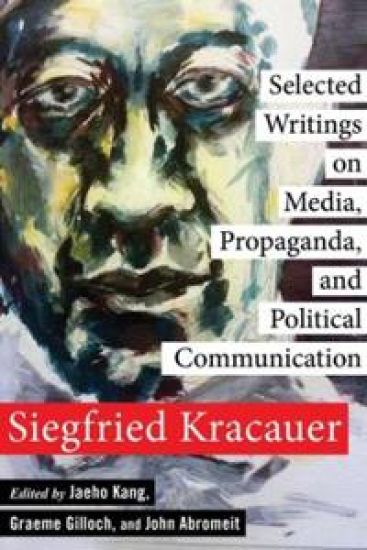
Selected Writings on Media, Propaganda, and Political Communication
Siegfried Kracauer
Columbia University Press
2022
pokkari
Siegfried Kracauer stands out as one of the most significant theorists and critics of the twentieth century, acclaimed for his analyses of film and popular culture. However, his writing on propaganda and politics has been overshadowed by the works of his contemporaries and colleagues associated with the Frankfurt School.This book brings together a broad selection of Kracauer’s work on media and political communication, much of it previously unavailable in English. It features writings spanning more than two decades, from studies of totalitarian propaganda written in the 1930s to wartime work on Nazi newsreels and anti-Semitism through to examinations of American and Soviet political messaging in the early Cold War period. These varied texts illuminate the interplay among politics, mass culture, and the media, and they encompass Kracauer’s core concerns: the individual and the masses, the conditions of cultural production, and the critique of modernity.The introduction and afterword explore the significance of Kracauer’s contributions to critical theory, film and media studies, and the analysis of political communication both in his era and the present day. At a time when demagoguery and bigotry loom over world politics, Kracauer’s inquiries into topics such as the widespread appeal of fascist propaganda and the relationship of new media forms and technologies to authoritarianism are strikingly relevant.
Selected Writings on Media, Propaganda, and Political Communication
Siegfried Kracauer
Columbia University Press
2022
sidottu
Siegfried Kracauer stands out as one of the most significant theorists and critics of the twentieth century, acclaimed for his analyses of film and popular culture. However, his writing on propaganda and politics has been overshadowed by the works of his contemporaries and colleagues associated with the Frankfurt School.This book brings together a broad selection of Kracauer’s work on media and political communication, much of it previously unavailable in English. It features writings spanning more than two decades, from studies of totalitarian propaganda written in the 1930s to wartime work on Nazi newsreels and anti-Semitism through to examinations of American and Soviet political messaging in the early Cold War period. These varied texts illuminate the interplay among politics, mass culture, and the media, and they encompass Kracauer’s core concerns: the individual and the masses, the conditions of cultural production, and the critique of modernity.The introduction and afterword explore the significance of Kracauer’s contributions to critical theory, film and media studies, and the analysis of political communication both in his era and the present day. At a time when demagoguery and bigotry loom over world politics, Kracauer’s inquiries into topics such as the widespread appeal of fascist propaganda and the relationship of new media forms and technologies to authoritarianism are strikingly relevant.
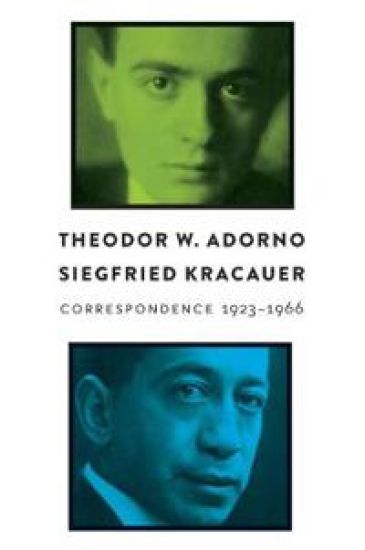
Theodor W. Adorno and Siegfried Kracauer were two of the most influential philosophers and cultural critics of the 20th century. While Adorno became the leading intellectual figure of the Frankfurt School, Kracauer’s writings on film, photography, literature and the lifestyle of the middle classes opened up a new and distinctive approach to the study of culture and everyday life in modern societies.This volume brings together for the first time the long-running correspondence between these two major figures of German intellectual culture. As left-wing German Jews who were forced into exile with the rise of Nazism, Adorno and Kracauer shared much in common, but their worldviews were in many ways markedly different. These differences become clear in a correspondence that ranges over a great diversity of topics, from the nature of criticism and the meaning of utopia to the work of their contemporaries, including Bloch, Brecht and Benjamin. Where Kracauer embraced the study of new mass media, above all film, Adorno was much more sceptical. This is borne out in his sharp criticism of Kracauer’s study of the composer Offenbach, which Adorno derided as musically illiterate, as well as his later criticism of Kracauer’s Theory of Film. Exposing the very different ways that both men were grappling intellectually with the massive transformations of the 20th century, these letters shed fresh light on the principles shaping their work at the same time as they reveal something of the intellectual brilliance and human frailties of these two towering figures of 20th century thought. This unique volume will be of great value to anyone interested in critical theory and in 20th century intellectual and cultural history.


De Caligari a Hitler ce titre celebre caracterise en un significatif raccourci la periode la plus riche de l'histoire du septieme art allemand. En 1919, Le Cabinet du Dr Caligari ouvrait, en effet, l'ere de l' ecran demoniaque et en 1933 Hitler brisait net le sonore.Entre ces deux dates, l'expressionnisme temoigna des tourments de l'ame germanique tandis que le realisme analysait une societe en crise. Rarement le cinema fut plus profondement enracine dans la vie culturelle, politique et sociale d'un peuple.Siegfried Kracauer devint en 1920 le critique cinematographique de la Frankfurter Zeitung et il y demeura jusqu'en 1933. C'est dire qu'il a suivi pas a pas le developpement du cinema dans son pays.Theoricien de l'esthetique, historien, philosophe, il entreprend d'etudier la propagande et les films nazis lorsqu'il arrive aux Etats-Unis, ce qui le conduit a remonter le courant et a ecrire une etude psychologique fouillee qu'il publie en 1947: From Caligari to Hitler. Ce texte, le premier qui utilise en cette matiere les conquetes du marxisme liees a celles de la psychanalyse, montre que le septieme art, mieux que tout autre moyen d'expression, revele dans sa verite complexe la mentalite d'une nation. Immediatement, ce livre monumental s'imposa comme un classique.
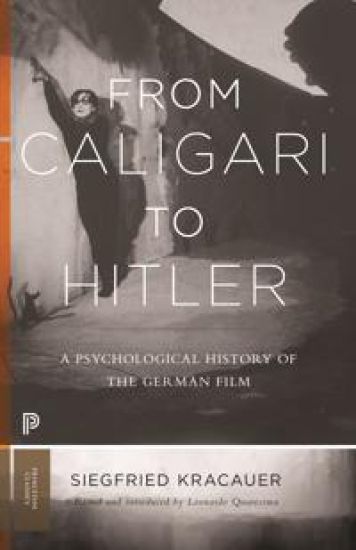
An essential work of the cinematic history of the Weimar Republic by a leading figure of film criticismFirst published in 1947, From Caligari to Hitler remains an undisputed landmark study of the rich cinematic history of the Weimar Republic. Prominent film critic Siegfried Kracauer examines German society from 1921 to 1933, in light of such movies as The Cabinet of Dr. Caligari, M, Metropolis, and The Blue Angel. He explores the connections among film aesthetics, the prevailing psychological state of Germans in the Weimar era, and the evolving social and political reality of the time. Kracauer makes a startling (and still controversial) claim: films as popular art provide insight into the unconscious motivations and fantasies of a nation.With a critical introduction by Leonardo Quaresima which provides context for Kracauer’s scholarship and his contributions to film studies, this Princeton Classics edition makes an influential work available to new generations of cinema enthusiasts.

La biographie d'Offenbach est avant tout celle d'une epoque: telle est la conviction qui sous-tend le propos de Siegfried Kracauer dans un ouvrage devenu classique depuis sa premiere parution en 1937. Protagoniste de ces pages admirables, autant que le musicien et son cercle, autant que l'operette elle-meme, forme clef d'une nouvelle sensibilite et phenomene culturel unique: la societe du Second Empire dans son ensemble, avec sa noblesse divisee, son aristocratie financiere, sa population d'artistes, de bohemiens, de journalistes et de lorettes, l'emergence des masses, l'importance prise par les salons, theatres, cafes et passages, la celebration mercantile des expositions universelles. Sur ce fond, vient se detacher la personnalite d'Offenbach, personnage humoral et contradictoire, dont Kracauer analyse, en meme temps que les espoirs et les triomphes, la conscience malheureuse d'intellectuel en exil: reflet de bien d'autres anxietes que l'histoire ne devait que trop verifier. Precedant les textes et les projets de Walter Benjamin, Jacques Offenbach ou le secret du Second Empire fut l'un des premiers ouvrages a explorer la typologie du flaneur et de l'homme des boulevards, amorcant une reflexion dont nous n'avons pas fini d'epuiser les richesses.
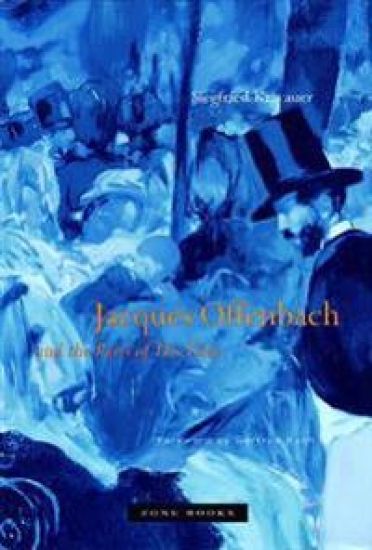
A biography of composer Jacques Offenbach that is also a social and cultural history of Second Empire Paris.Siegfried Kracauer's biography of the composer Jacques Offenbach is a remarkable work of social and cultural history. First published in German in 1937 and in English translation in 1938, the book uses the life and work of Offenbach as a focal point for a broad and penetrating portrayal of Second Empire Paris. Offenbach's immensely popular operettas have long been seen as part of the larger historical amnesia and escapism that pervaded Paris in the aftermath of 1848. But Kracauer insists that Offenbach's productions must be understood as more than glittering distractions. The fantasy realms of such operettas as La Belle Helene were as one with the unreality of Napoleon III's imperial masquerade, but they also made a mockery of the pomp and pretense surrounding the apparatuses of power. At the same time, Offenbach's dreamworlds were embedded with a layer of utopian content that can be seen as an indictment of the fraudulence and corruption of the times. This edition includes Kracauer's preface to the original German edition as well as a critical foreword by Gertrud Koch.
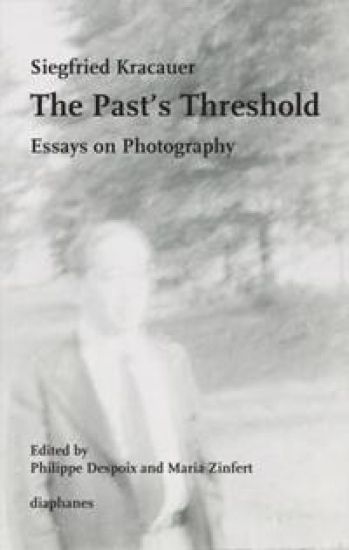
Siegfried Kracauer was one of the foremost representatives of the Frankfurt School of critical theory, and his influence is felt in the work of many of the period's preeminent thinkers, including Theodor W. Adorno, who once claimed he owed more to Kracauer than any other intellectual. The Past's Threshold brings together for the first time Kracauer's essays on photography that he wrote between 1927 and 1933 as a journalist for the Frankfurter Zeitung, as well as an essay that appeared in the Magazine of Art after the eminent emigre's exile to America. The essays show Kracauer as a pioneering theorist of photography in addition to his more widely known work on film. A foreword by Philippe Despoix offers insights into Kracauer's theories and their historical context. Kracauer. Photographic Archive collects previously unpublished photography by Siegfried and Elisabeth, "Lili," Kracauer. While neither Kracauer nor his wife trained in photography, their portraits, city views, and landscapes evince impressive skill, while simultaneously shedding light on the Kracauers' close working relationship, from their marriage in Germany to their postwar years in the United States.

Il s'agit ici de ce que Walter Benjamin appelait, dans un compte rendu qu'il fit a l'epoque de l'ouvrage, une contribution a la sociologie des employes, d'un style et d'une methode bien differents cependant. L'auteur circonscrit d'abord son objet d'etude par les donnees statistiques et les premieres etudes de specialistes puis il mene en dix semaines une enquete de terrain a Berlin: il etudie minutieusement les conditions d'habitat, de transport et de travail (des usines aux bureaux de placement) des employes, dont il dit la proletarisation progressive. Il mene des entretiens avec les employes et les employeurs il participe a leurs loisirs (le cinema surtout, le sport aussi) et s'immisce dans leur intimite en depouillant la correspondance privee de quelques-uns d'entre eux. L'etude volontairement totalisante des employes reunit et rejoint les themes qui ont toujours interesse l'auteur, et auxquels il avait deja reflechi. Termine a la fin de 1929, le manuscrit est publie en une serie de dix articles dans le journal auquel Kracauer collabore, le Frankfurter Zeitung. Le livre parait dans les mois suivants. En mai 1933, il vient rejoindre le bucher de livres denonces comme subversifs par les nazis.Siegfried Kracauer (1889-1966) devient, apres des etudes d'architecture, journaliste, critique de cinema et ecrivain. Eclectique, il est notamment l'auteur du Voyage et la danse (2008), Jacques Offenbach ou le secret du Second Empire (1994), De Caligari a Hitler (1984), Theorie du film (1960), ainsi que de l'Histoire: des avant-dernieres choses (2006).
Theory of Film: The Redemption of Physical Reality
Siegfried Kracauer
Literary Licensing, LLC
2012
sidottu
Theory of Film: The Redemption of Physical Reality is a book written by Siegfried Kracauer, a German film critic and philosopher. Originally published in 1960, the book is considered a classic in the field of film theory and analysis.In this book, Kracauer explores the relationship between film and reality, arguing that film has the ability to redeem physical reality by capturing and preserving it in a way that is unique to the medium. He examines the ways in which film can reveal hidden aspects of reality and provide insight into the human experience.Kracauer also delves into the technical aspects of film, discussing the use of camera angles, lighting, and editing to create meaning and emotion. He analyzes specific films from both Hollywood and European cinema, including Fritz Lang's Metropolis and Jean Renoir's The Rules of the Game.Overall, Theory of Film: The Redemption of Physical Reality is a thought-provoking and influential work that continues to be studied and referenced in the field of film theory.This scarce antiquarian book is a facsimile reprint of the old original and may contain some imperfections such as library marks and notations. Because we believe this work is culturally important, we have made it available as part of our commitment for protecting, preserving, and promoting the world's literature in affordable, high quality, modern editions, that are true to their original work.
Theory of Film: The Redemption of Physical Reality
Siegfried Kracauer
Literary Licensing, LLC
2012
nidottu