Kirjojen hintavertailu. Mukana 12 595 353 kirjaa ja 12 kauppaa.

Kirjailija

Siegfried Mews

Kirjat ja teokset yhdessä paikassa: 3 kirjaa, julkaisuja vuosilta 1997-2018, suosituimpien joukossa Günter Grass and His Critics. Vertaile teosten hintoja ja tarkista saatavuus suomalaisista kirjakaupoista.

3 kirjaa

Kirjojen julkaisuhaarukka 1997-2018.

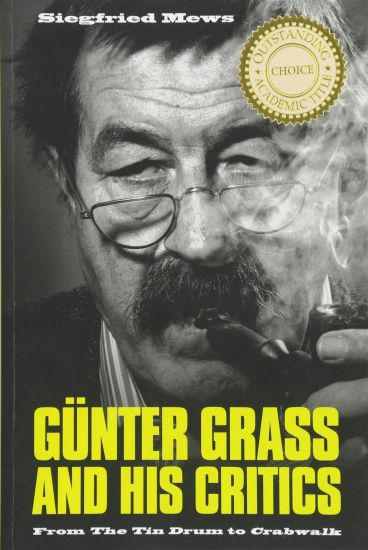
Günter Grass and His Critics

Günter Grass and His Critics

Siegfried Mews

Camden House Inc
2018
pokkari
A comprehensive narrative overview and analysis of the criticism of the controversial German author's works. When the Swedish Academy announced that Günter Grass had been awarded the 1999 Nobel Prize for Literature, it singled out his first novel The Tin Drum (1959, English translation 1963) as a seminal work that had signaled thepostwar rebirth of German letters, auguring "a new beginning after decades of linguistic and moral destruction." Nearly fifty years after its publication, the novel's significance has been generally acknowledged: it is the uncontested favorite among Grass's works of fiction on the part of reading public and critics alike, yet its canonical status tends to obscure the decidedly mixed and even hostile reactions it initially elicited. Along with The Tin Drum, Grass's impressive body of literary work since the 1950s has spawned a cottage industry of Grass criticism, making a reliable guide through the thicket of sometimes contradictory readings a definite desideratum. SiegfriedMews fills this lacuna in Grass scholarship by way of a detailed but succinct, descriptive as well as analytical and evaluative overview of the scholarship from 1959 to 2005. Grass's politically motivated interventions in publicdiscourse have kept him highly visible, blurring the boundaries between politics and aesthetics. Mews therefore examines not only academic criticism but also the daily and weekly press (and other news media), providing additionalinsight into the reception of Grass's works. Siegfried Mews is Emeritus Professor of German at the University of North Carolina at Chapel Hill.
Günter Grass and His Critics

Günter Grass and His Critics

Siegfried Mews

Camden House Inc
2008
sidottu
A comprehensive narrative overview and analysis of the criticism of the controversial German author's works. When the Swedish Academy announced that Günter Grass had been awarded the 1999 Nobel Prize for Literature, it singled out his first novel The Tin Drum (1959, English translation 1963) as a seminal work that had signaled thepostwar rebirth of German letters, auguring "a new beginning after decades of linguistic and moral destruction." Nearly fifty years after its publication, the novel's significance has been generally acknowledged: it is the uncontested favorite among Grass's works of fiction on the part of reading public and critics alike, yet its canonical status tends to obscure the decidedly mixed and even hostile reactions it initially elicited. Along with The Tin Drum, Grass's impressive body of literary work since the 1950s has spawned a cottage industry of Grass criticism, making a reliable guide through the thicket of sometimes contradictory readings a definite desideratum. SiegfriedMews fills this lacuna in Grass scholarship by way of a detailed but succinct, descriptive as well as analytical and evaluative overview of the scholarship from 1959 to 2005. Grass's politically motivated interventions in publicdiscourse have kept him highly visible, blurring the boundaries between politics and aesthetics. Mews therefore examines not only academic criticism but also the daily and weekly press (and other news media), providing additionalinsight into the reception of Grass's works. Siegfried Mews is Professor of German at the University of North Carolina at Chapel Hill.
A Bertolt Brecht Reference Companion

A Bertolt Brecht Reference Companion

Siegfried Mews

Greenwood Press
1997
sidottu
Bertolt Brecht has been perceived as an ardent proponent of social change, an avid advocate of a just world that he defined in terms of socialism, and an adamant foe of capitalism for whose demise he hoped. He is justly regarded as one of the great innovators of theater theory and practice in the 20th century, and his influence has extended to Latin America and Asia. This reference book surveys Brecht's enormous contribution to world drama. Chapters by expert contributors assess his dramatic innovations, his poetry and prose, and topics of special interest to Brecht studies.With the centennial of his birth approaching in 1998, Bertolt Brecht's controversial reception in general and in the United States in particular, is coming into clearer focus. One of the great dramatists of the 20th century, Brecht has been viewed as an ardent proponent of social change, an avid advocate of a just world that he defined in terms of socialism, and an adamant foe of capitalism for whose demise he hoped. With the opening of the Berlin Wall in 1989, the political and economic milieu of Europe has changed drastically, and socialist writers are now being studied from a fresh perspective.This volume surveys and assesses Brecht's enormous contribution to the arts. Chapters by expert contributors explore his innovative dramatic theory and theatrical practice. Though best known for his contribution to the stage, Brecht also wrote poetry and prose fiction, and his poems and prose are examined in this work. Brecht's influence is also considered, and chapters examine topics of special interest, such as Brecht and film, the role of music in his works, feminist and Marxist approaches to his writings, the problem of translating Brecht into English, and the reception and appropriation of his plays and dramatic theory in various countries. While the chapters are historical in focus, the contributors also demonstrate the continuing relevance of Brecht in general and the Brechtian theater in particular in the 1990s.