Kirjojen hintavertailu. Mukana 12 390 323 kirjaa ja 12 kauppaa.

Kirjailija

Silvia Montiglio

Kirjat ja teokset yhdessä paikassa: 8 kirjaa, julkaisuja vuosilta 2010-2025, suosituimpien joukossa The Spell of Hypnos. Vertaile teosten hintoja ja tarkista saatavuus suomalaisista kirjakaupoista.

8 kirjaa

Kirjojen julkaisuhaarukka 2010-2025.

Schadenfreude and its Wicked Delights in Ancient Greece

Schadenfreude and its Wicked Delights in Ancient Greece

Silvia Montiglio

Oxford University Press
2025
sidottu
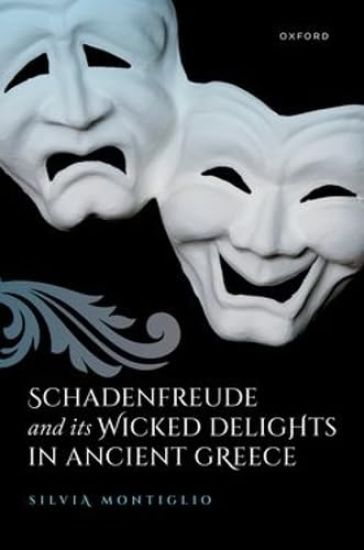
Schadenfreude, "pleasure in other people's misfortunes", is an emotion that pervades Greek texts and pervaded Greek communities. Many of their salient characteristics provided the ideal terrain for schadenfreude: competitiveness, a fierce attachment to honor and reputation, the neat partition between friends and enemies, and the exposure of people's lives to the public eye. This book draws on the major literary genres--epic, archaic poetry, tragedy, comedy, historiography, oratory, and philosophy--and on sources describing a variety of cultural practices and beliefs--symposiastic entertainments, sport competitions, curses, the fear of fortune and of the gods, punishments on earth and in the underworld--to tease out the specific configurations of schadenfreude in ancient Greece from the archaic period to roughly the second century CE. Among the emotion's striking features are its tendency to take a loud voice, as mockery or laughter, its being often released in public, and subsequently its damaging force and the intensity with which it was feared. While we tend to think of schadenfreude as a passive, private, unexpressed, and unconfessed emotion, the Greeks often endowed it with an active power. They were also freer to show it because they ignored the love commandment; on the contrary, to rejoice in an enemy's misfortune was common practice and even met with approval. But at the same time, Greek authors ask the questions: when is schadenfreude acceptable? How much of it? Shouldn't we refrain from displaying it, if not from feeling it, in certain cases, for instance at the expense of a dead individual, even if the individual was an enemy? This book seeks to map the Greek answers to these and related questions.
Musaeus' Hero and Leander

Musaeus' Hero and Leander

Silvia Montiglio

TAYLOR FRANCIS LTD
2022
nidottu
This book offers a new English translation of Musaeus' poem Hero and Leander, with the original Greek on the facing page, a substantial introduction and a detailed commentary.The tragic romance of Hero and Leander has had and still has a great appeal, inspiring countless writers, painters, sculptors, and musicians. The Introduction aims at situating the poem within its literary tradition and cultural context as well as at drawing its major themes and describing the salient features of its style. Because Hero and Leander enjoyed an immense and uninterrupted popularity, the Introduction also devotes a large section to the poem’s reception in literature, which crosses paths with the reception of the other main ancient poetic treatment of the legend, Ovid’s Heroides 18 and 19. The commentary, which follows the Greek text and its translation, is addressed to a variety of readers: the student and the scholar of Greek literature, as well as those of other literatures in which the poem has been inspirational. This work has no precedent in the English language.This new translation will be of interest to students and scholars of Greek and late antique literature, as well as those working on mythology and classical reception.
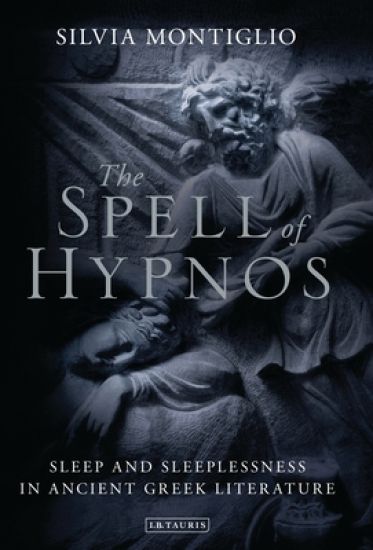
The Spell of Hypnos

The Spell of Hypnos

Silvia Montiglio

Bloomsbury Academic
2020
nidottu
Sleep was viewed as a boon by the ancient Greeks: sweet, soft, honeyed, balmy, care-loosening, as the Iliad has it. But neither was sleep straightforward, nor safe. It could be interrupted, often by a dream. It could be the site of dramatic intervention by a god or goddess. It might mark the transition in a narrative relationship, as when Penelope for the first time in weeks slumbers happily through Odysseus' vengeful slaughter of her suitors. Silvia Montiglio's imaginative and comprehensive study of the topic illuminates the various ways in which writers in antiquity used sleep to deal with major aspects of plot and character development. The author shows that sleeplessness, too, carries great weight in classical literature. Doom hangs by a thread as Agamemnon - in Iphigenia in Aulis - paces, restless and sleepless, while around him everyone else dozes on. Exploring recurring tropes of somnolence and wakefulness in the Iliad, the Odyssey, Athenian drama, the Argonautica and ancient novels by Xenophon, Chariton, Heliodorus and Achilles Tatius, this is a unique contribution to better understandings of ancient Greek writing.
Musaeus' Hero and Leander

Musaeus' Hero and Leander

Silvia Montiglio

CRC Press Inc
2020
sidottu
This book offers a new English translation of Musaeus' poem Hero and Leander, with the original Greek on the facing page, a substantial introduction and a detailed commentary.The tragic romance of Hero and Leander has had and still has a great appeal, inspiring countless writers, painters, sculptors, and musicians. The Introduction aims at situating the poem within its literary tradition and cultural context as well as at drawing its major themes and describing the salient features of its style. Because Hero and Leander enjoyed an immense and uninterrupted popularity, the Introduction also devotes a large section to the poem’s reception in literature, which crosses paths with the reception of the other main ancient poetic treatment of the legend, Ovid’s Heroides 18 and 19. The commentary, which follows the Greek text and its translation, is addressed to a variety of readers: the student and the scholar of Greek literature, as well as those of other literatures in which the poem has been inspirational. This work has no precedent in the English language.This new translation will be of interest to students and scholars of Greek and late antique literature, as well as those working on mythology and classical reception.
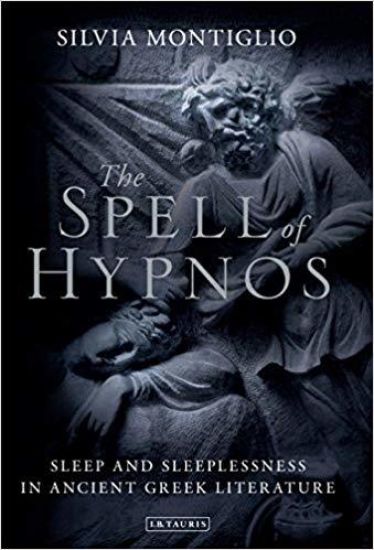
The Spell of Hypnos

The Spell of Hypnos

Silvia Montiglio

I.B. Tauris
2015
sidottu
Sleep was viewed as a boon by the ancient Greeks: sweet, soft, honeyed, balmy, care-loosening, as the Iliad has it. But neither was sleep straightforward, nor safe. It could be interrupted, often by a dream. It could be the site of dramatic intervention by a god or goddess. It might mark the transition in a narrative relationship, as when Penelope for the first time in weeks slumbers happily through Odysseus' vengeful slaughter of her suitors. Silvia Montiglio's imaginative and comprehensive study of the topic illuminates the various ways in which writers in antiquity used sleep to deal with major aspects of plot and character development. The author shows that sleeplessness, too, carries great weight in classical literature. Doom hangs by a thread as Agamemnon - in Iphigenia in Aulis - paces, restless and sleepless, while around him everyone else dozes on. Exploring recurring tropes of somnolence and wakefulness in the Iliad, the Odyssey, Athenian drama, the Argonautica and ancient novels by Xenophon, Chariton, Heliodorus and Achilles Tatius, this is a unique contribution to better understandings of ancient Greek writing.
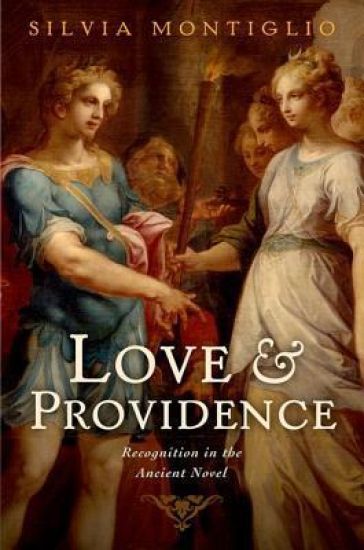
Love and Providence

Love and Providence

Silvia Montiglio

Oxford University Press Inc
2012
sidottu
From the Odyssey and King Lear to modern novels by Umberto Eco and John le Carré, the recognition scene has enjoyed a long life in western literature. It first became a regular feature of prose literature in the Greek novels of the first century CE. In these examples, it is the event that ensures the happy ending for the hero and heroine, and as such, it seems, was as pleasing for Greek readers as the canonical Hollywood kiss is for contemporary movie goers. Recognitions are particularly gratifying in the context of the ancient novels because the genre as a whole celebrates the idyllic social order to which the heroes and heroines belong and from which they have been harshly severed. In spite of their high frequency and thematic importance, novelistic recognitions have attracted little critical attention, especially in relation to epic and tragedy. With Love and Providence, Silvia Montiglio seeks to fill this gap. She begins by introducing the meaning of recognitions in the ancient novel both within the novels' narrative structure and thought world--that is, the values and ideals propounded in the narrative. She pursues these goals while examining novels by Chariton, Xenophon of Ephesus, Achilles Tatius, Longus, Heliodorus, Apuleius, and Petronius, as well as the Life of Apollonius of Tyre, the pseudo-Clementine recognitions, and the Jewish novel Joseph and Aseneth. In addition to addressing questions brought about by the recognitions--What does it mean for lovers to recognize each other at the end of their adventures? Is recognition the confirmation of sameness or an acknowledgement of change?--Montiglio addresses the rapport novelists entertain with their literary tradition, epic and drama. The book concludes by emphasizing the originality of the novels for the development of the recognition motif, and by explaining its influence in early-modern European literature.
From Villain to Hero

From Villain to Hero

Silvia Montiglio

The University of Michigan Press
2011
sidottu
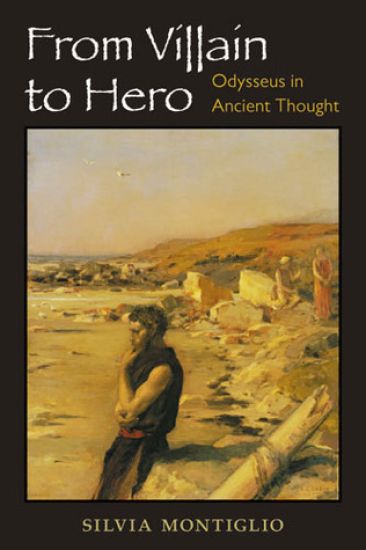
Praise for Silvia Montiglio"[A] brilliant and important book. . . . " ---Journal of Religion, on Silence in the Land of Logos"[A]n invigorating reevaluation of both the ancient symbolic landscape and our preconceptions of it." ---American Journal of Philology, on Wandering in Ancient Greek Culture Best known for his adventures during his homeward journey as narrated in Homer's Odyssey, Odysseus remained a major figure and a source of inspiration in later literature, from Greek tragedy to Dante's Inferno to Joyce's Ulysses. Less commonly known, but equally interesting, are Odysseus' "wanderings" in ancient philosophy: Odysseus becomes a model of wisdom for Socrates and his followers, Cynics and Stoics, as well as for later Platonic thinkers. From Villain to Hero: Odysseus in Ancient Thought follows these wanderings in the world of ancient Greek and Roman philosophy, retracing the steps that led the cunning hero of Homeric epic and the villain of Attic tragedy to become a paradigm of the wise man. From Villain to Hero explores the reception of Odysseus in philosophy, a subject that so far has been treated only in tangential or limited ways. Diverging from previous studies, Montiglio outlines the philosophers' Odysseus across the spectrum, from the Socratics to the Middle Platonists. By the early centuries CE, Odysseus' credentials as a wise man are firmly established, and the start of Odysseus' rehabilitation by philosophers challenges current perceptions of him as a villain. More than merely a study in ancient philosophy, From Villain to Hero seeks to understand the articulations between philosophical readings of Odysseus and nonphilosophical ones, with an eye to the larger cultural contexts of both. While this book is the work of a classicist, it will also be of interest to students of philosophy, comparative literature, and reception studies.
Silence in the Land of Logos

Silence in the Land of Logos

Silvia Montiglio

Princeton University Press
2010
pokkari
In ancient Greece, the spoken word connoted power, whether in the free speech accorded to citizens or in the voice of the poet, whose song was thought to know no earthly bounds. But how did silence fit into the mental framework of a society that valued speech so highly? Here Silvia Montiglio provides the first comprehensive investigation into silence as a distinctive and meaningful phenomenon in archaic and classical Greece. Arguing that the notion of silence is not a universal given but is rather situated in a complex network of associations and values, Montiglio seeks to establish general principles for understanding silence through analyses of cultural practices, including religion, literature, and law. Unlike the silence of a Christian before an ineffable God, which signifies the uselessness of words, silence in Greek religion paradoxically expresses the power of logos--for example, during prayer and sacrifice, it serves as a shield against words that could offend the gods. Montiglio goes on to explore silence in the world of the epic hero, where words are equated with action and their absence signals paralysis or tension in power relationships. Her other examples include oratory, a practice in which citizens must balance their words with silence in very complex ways in order to show that they do not abuse their right to speak. Inquiries into lyric poetry, drama, medical writings, and historiography round out this unprecedented study, revealing silence as a force in its own right.