Kirjojen hintavertailu. Mukana 12 595 353 kirjaa ja 12 kauppaa.

Kirjailija

Simon Biggs

Kirjat ja teokset yhdessä paikassa: 5 kirjaa, julkaisuja vuosilta 2003-2019, suosituimpien joukossa Generational Intelligence. Vertaile teosten hintoja ja tarkista saatavuus suomalaisista kirjakaupoista.

5 kirjaa

Kirjojen julkaisuhaarukka 2003-2019.

Negotiating Ageing

Negotiating Ageing

Simon Biggs

Routledge
2019
nidottu
The world is growing older and this is a historically unprecedented phenomenon. Negotiating such change, personally, socially and for governments and international organisations requires an act of cultural adaptation. Two key questions arise: What is the purpose of a long life? and How do we adapt to societies where generations are of approximately the same size? A number of pre-existing narratives can be identified; however, it is argued that contemporary policies have produced a premature answer which may eclipse the potential arising from lifecourse change.In this book Simon Biggs discusses ways of interrogating these questions and the adaptations we make to them. Four major areas, all of which have been suggested as solutions to population ageing, are critically assessed, including work as an answer, the relationship between work, ageing and health, narratives of spirit, belief and wisdom, the body and the natural, anti-ageing medicine, critical approaches to dementia, plus family and intergenerational relations.This book is particiularly useful for those trying to make sense of population ageing and negotiate solutions. It describes a number of concepts that can be used to assess what we are told about a long life and how generations can adapt together.With the cultural landscape moving away from traditional interpretations of old age, the question of adult ageing is of growing interest to a number of groups. This book is essential reading for social and health-care workers, other helping professionals, policy makers, social scientists and all who encounter the prospect of a long life.
Negotiating Ageing

Negotiating Ageing

Simon Biggs

Routledge
2017
sidottu
The world is growing older and this is a historically unprecedented phenomenon. Negotiating such change, personally, socially and for governments and international organisations requires an act of cultural adaptation. Two key questions arise: What is the purpose of a long life? and How do we adapt to societies where generations are of approximately the same size? A number of pre-existing narratives can be identified; however, it is argued that contemporary policies have produced a premature answer which may eclipse the potential arising from lifecourse change.In this book Simon Biggs discusses ways of interrogating these questions and the adaptations we make to them. Four major areas, all of which have been suggested as solutions to population ageing, are critically assessed, including work as an answer, the relationship between work, ageing and health, narratives of spirit, belief and wisdom, the body and the natural, anti-ageing medicine, critical approaches to dementia, plus family and intergenerational relations.This book is particiularly useful for those trying to make sense of population ageing and negotiate solutions. It describes a number of concepts that can be used to assess what we are told about a long life and how generations can adapt together.With the cultural landscape moving away from traditional interpretations of old age, the question of adult ageing is of growing interest to a number of groups. This book is essential reading for social and health-care workers, other helping professionals, policy makers, social scientists and all who encounter the prospect of a long life.
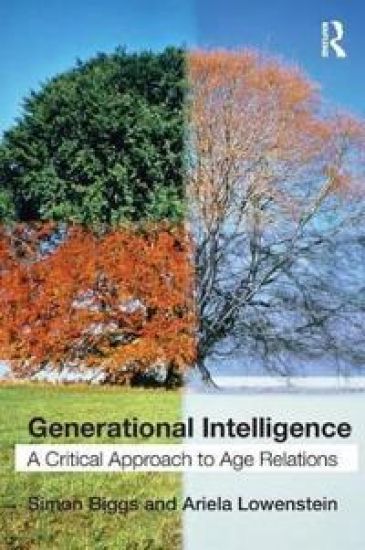
Generational Intelligence

Generational Intelligence

Simon Biggs; Ariela Lowenstein

Routledge
2011
nidottu
The question of communication and understanding between different generations is emerging as a key issue for the twenty-first century. The advent of ageing populations may lead to increased conflict or solidarity in society, and provokes a profound ambivalence both in public and in the private sphere. In a new approach, Biggs and Lowenstein offer a critical examination of Generational Intelligence as one way of addressing these issues. How easy is it to put yourself in the shoes of someone of a different age group? What are the personal, interpersonal and social factors that affect our perceptions of the ‘age other’? What are the key issues facing families, workplaces and communities in an ageing society? This book sets out a way of thinking about interpersonal relations based on age, and the question of communication between people of different ages and generations. The book challenges existing orthodoxies for relations between adults of different ages and draws out steps that can be taken to increase understanding between generational groups. The authors outline a series of steps that can be taken to enhance Generational Intelligence, examine existing theories and social issues, and suggest new directions for sustainable relations between generational groups.
Generational Intelligence

Generational Intelligence

Simon Biggs; Ariela Lowenstein

Routledge
2011
sidottu
The question of communication and understanding between different generations is emerging as a key issue for the twenty-first century. The advent of ageing populations may lead to increased conflict or solidarity in society, and provokes a profound ambivalence both in public and in the private sphere. In a new approach, Biggs and Lowenstein offer a critical examination of Generational Intelligence as one way of addressing these issues. How easy is it to put yourself in the shoes of someone of a different age group? What are the personal, interpersonal and social factors that affect our perceptions of the ‘age other’? What are the key issues facing families, workplaces and communities in an ageing society? This book sets out a way of thinking about interpersonal relations based on age, and the question of communication between people of different ages and generations. The book challenges existing orthodoxies for relations between adults of different ages and draws out steps that can be taken to increase understanding between generational groups. The authors outline a series of steps that can be taken to enhance Generational Intelligence, examine existing theories and social issues, and suggest new directions for sustainable relations between generational groups.
The Need for Theory

The Need for Theory

Simon Biggs; Jon Hendricks; Ariela Lowenstein

Baywood Publishing Company Inc
2003
nidottu
The "Need for Theory" speaks to the burgeoning need for critical thinking in social gerontology. The editors have brought together some of the foremost contributors to theoretical advances in the field. This volume incorporates state-of-the-art theorizing with a focus on selected topical areas facing gerontologists around the world. Using their keen insights into substantive issues, the contributors examine personal and structural changes affecting individuals over the life course. Extolling the need for theory is not enough; the contributors focus their insights on a panoply of substantive issues, linking the personal with the political and with the structural parameters that shape the process of aging, no matter where it occurs.