Kirjojen hintavertailu. Mukana 12 657 676 kirjaa ja 12 kauppaa.

Kirjailija

Simon Elliott

Kirjat ja teokset yhdessä paikassa: 28 kirjaa, julkaisuja vuosilta 2009-2026, suosituimpien joukossa Chagall. Vertaile teosten hintoja ja tarkista saatavuus suomalaisista kirjakaupoista.

28 kirjaa

Kirjojen julkaisuhaarukka 2009-2026.

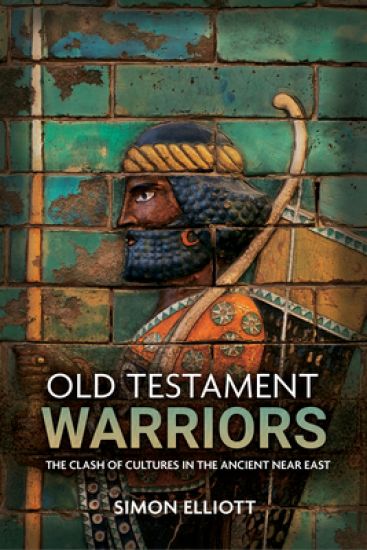
Old Testament Warriors

Old Testament Warriors

Simon Elliott

Casemate Publishers
2021
sidottu
The period covered by the Old Testament - beginning in approximately 3000 BC - was one of great technological development and innovation in warfare, as competing cultures clashed in the ancient Middle East. The Sumerians were the first to introduce the use of bronze into warfare, and were centuries ahead of the Egyptians in the use of the wheel. The Assyrians developed chariot warfare and set the standard for a new equine-based military culture. The Babylonians had an army whose people were granted land in return for army service. This authoritative history gives an overview of warfare and fighting in the age of the Old Testament, from the Akkadians, Early and Middle Kingdom Egypt and their enemies, Mycenean and Minoan Greece and Crete, Assyrians and New Kingdom Egyptians, the Hittites, the Sea Peoples who gave rise to the Philistines, the Hebrew kingdom, the Babylonian kingdom, the Medes and later Persian Empires, through to early Classical Greece. Author Simon Elliott explores how archaeology can shed light on events in the Bible including the famous tumbling walls of Jericho, the career of David the boy warrior who faced the Philistines, and Gideon, who was able to defeat an army that vastly outnumbered his own.
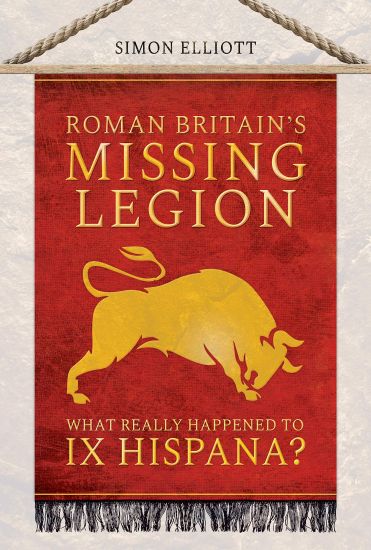
Roman Britain's Missing Legion

Roman Britain's Missing Legion

Simon Elliott

Pen Sword Military
2021
sidottu
Legio IX Hispana had a long and active history, later founding York from where it guarded the northern frontiers in Britain. But the last evidence for its existence in Britain comes from AD 108\. The mystery of their disappearance has inspired debate and imagination for decades. The most popular theory, immortalized in Rosemary Sutcliffe's novel _The Eagle of the Ninth_, is that the legion was sent to fight the Caledonians in Scotland and wiped out there. But more recent archaeology (including evidence that London was burnt to the ground and dozens of decapitated heads) suggests a crisis, not on the border but in the heart of the province, previously thought to have been peaceful at this time. What if IX Hispana took part in a rebellion, leading to their punishment, disbandment and _damnatio memoriae_ (official erasure from the records)? This proposed 'Hadrianic War' would then be the real context for Hadrian's 'visit' in 122 with a whole legion, VI Victrix, which replaced the 'vanished' IX as the garrison at York. Other theories are that it was lost on the Rhine or Danube, or in the East. Simon Elliott considers the evidence for these four theories, and other possibilities.
Romans at War

Romans at War

Simon Elliott

Casemate Publishers
2020
sidottu
In Romans at War ground-breaking research is presented in an accessible, entertaining, and sumptuously illustrated format, including:• A new consideration of the nature of late Roman military leaders; the author argues they were effectively independent warlords.• Cutting edge research regarding the Severan campaigns to conquer Scotland in the early 3rd century AD.• A new analysis of the nature of late Roman troops, both mounted and foot.The Roman military machine was the pre-eminent in the ancient world, projecting power across the known world over a vast chronology, and an increasing huge and diverse geography. One of the most powerful instruments of war in the history of conflict, it proved uniquely adept at learning from setbacks, always coming back the stronger for it. In so doing it displayed two of the most important traits associated with the world of Rome. Firstly grit, that key ability to remain steadfast and to overcome adversity, even in the most challenging of circumstances, as faced for example by the Republic in the Second Punic War against Hannibal. Secondly, the ability to copy the successful technical and tactical innovations of their enemies, enabling the Roman military to always stay one step ahead of its opponents on campaign and in battle.In this grand tour covering every aspect of the Roman military, leading expert Dr Simon Elliott first provides a detailed background to the Roman Republic and Empire to provide context for all that follows. He then looks specifically at the Roman military in its three key chronological phases: the Republic, the Principate Empire and the Dominate Empire. Next he forensically examines specific examples of the Roman military on campaign and in battle, and of its engineering prowess. Finally, he examines the many enemies faced by the Roman Republic and Empire. This all provides a firm structure to enable the reader to come to grips with this incredible military machine, one whose exploits still resonate in the world to this very day.
Pertinax

Pertinax

Simon Elliott

Greenhill Books
2020
sidottu
The son of a former slave, Pertinax was the Roman Emperor who proved that no matter how lowly your birth, you could rise to the very top through hard work, grit and determination. Born in AD 126, he made a late career change from working as a grammar teacher to a position in the army. As he moved up the ranks and further along the aristocratic cursus honorum, he took on many of the most important postings in the Empire, from senior military roles in fractious Britain, the Marcomannic Wars on the Danube, to the Parthian Wars in the east. He held governorships in key provinces, and later consulships in Rome itself. When Emperor Commodus was assassinated on New Year's Eve AD 192/193, the Praetorian Guard alighted on Pertinax to become the new Emperor, expecting a pliable puppet who would favour them with great wealth. But Pertinax was nothing of the sort and when he then attempted to reform the Guard, he was assassinated. His death triggered the beginning of the Year of the Five Emperors' from which Septimius Severus, Pertinax's former mentoree, became the ultimate victor and founder of the Severan Dynasty. This previously untold story brings a fascinating and important figure out of the shadows. A self made everyman, a man of principle and ambition, a role model respected by his contemporaries who styled himself on his philosophising predecessor and sometime champion Marcus Aurelius, Pertinax's remarkable story offers a unique and panoramic insight into the late 2nd century AD Principate Empire.
Septimius Severus in Scotland

Septimius Severus in Scotland

Simon Elliott

Greenhill Books
2020
nidottu
'The order was brutal, its message unequivocal – kill the men, women and children of what is now Scotland and don’t shed a tear for any of them.' - The Scotsman The SpectatorSince 1975 much new archaeological evidence has come to light to illuminate the immense undertaking of Septimius Severus’ campaigns in Scotland, allowing for the first time the true story of this savage invasion to be told. In the early 3rd century Severus, the ageing Roman emperor, launched an immense ‘shock and awe’ assault on Scotland that was so savage it resulted in eighty years of peace at Rome’s most troublesome border. The book shows how his force of 50,000 troops, supported by the fleet, hacked their way through the Maeatae around the former Antonine Wall and then pressed on into Caledonian territory up to the Moray Firth. Severus was the first of the great reforming emperors of the Roman military, and his reforms are explained in the context of how he concentrated power around the imperial throne. There is also an in-depth look at the political, economic and social developments that occurred in the Province. This book will particularly appeal to those who are keen to learn more about the narrative of Rome’s military presence in Britain, and especially the great campaigns of which Severus’ assault on Scotland is the best example.
Julius Caesar

Julius Caesar

Simon Elliott

Casemate Publishers
2019
sidottu
Julius Caesar has been the inspiration to countless military commanders over the last two millennia. Born into an aristocratic family, his early military campaigns, part of his progression along the cursus honorum, included campaigning in the east, Spain and in the early Roman civil wars. His participation in the Gallic Wars is known mainly through the commentary on the wars that he wrote and published, along with his incursions into Britain. This concise history details his military life, and how it impacted with his political career, from his youth through the civil wars that resulted in his becoming the dictator of Rome, and his legacy.
Ragstone to Riches

Ragstone to Riches

Simon Elliott

BAR Publishing
2018
nidottu
Ragstone to Riches tells the story of the huge Roman metalla extractive industries of the south east of the province of Britannia. These provided much of the iron to equip the military there, and ragstone to facilitate the construction of the built environment in the region during the occupation, through to the middle of the 3rd century AD. In the former case this was the Wealden iron industry, which, especially to the north of Hastings, featured sites as large as any industrial enterprise today. Meanwhile, regarding the upper Medway Valley ragstone quarrying industry, the work identifies for the first time the five specific quarries which provided the material to build Roman London. For both, the author also explores the role played by the military in running these enormous metalla enterprises.