Kirjojen hintavertailu. Mukana 12 459 402 kirjaa ja 12 kauppaa.

Kirjailija

Simon Francis Gaine

Kirjat ja teokset yhdessä paikassa: 3 kirjaa, julkaisuja vuosilta 2003-2018, suosituimpien joukossa Did the Saviour See the Father?. Vertaile teosten hintoja ja tarkista saatavuus suomalaisista kirjakaupoista.

3 kirjaa

Kirjojen julkaisuhaarukka 2003-2018.

Did the Saviour See the Father?

Did the Saviour See the Father?

Simon Francis Gaine

T. T.Clark Ltd
2018
nidottu
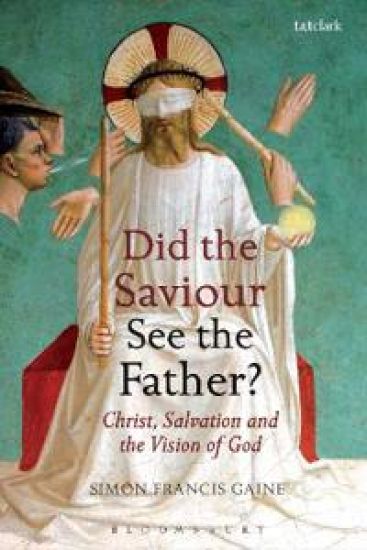
Did Jesus enjoy the beatific vision of God on earth that Christians hope to enjoy only in heaven? This important question is related to a whole series of questions about Jesus, his knowledge and self-consciousness. Did he know he was God’s Son? What did he know of his saving mission? These issues are linked to a fundamental question: is the Saviour we need one who is altogether like us or one who is in some ways unlike us? This book argues that God gave us a Saviour with beatific knowledge, and who in this respect is very unlike us indeed. The answer commonly given by Catholic theologians to this question underwent a dramatic shift in the middle of the 20th century. Previously there had been a general unanimity based on the teaching of Thomas Aquinas that the answer was ‘Yes’: the earthly Christ did indeed possess heavenly knowledge. The theological situation was then radically altered to one where the answer ‘No’ became predominant. Theologians preferred to treat Christ’s knowledge in terms of self-consciousness, ordinary human knowing, faith, prophecy and mysticism, not the beatific vision. This book addresses the reasons why theologians abandoned Aquinas’s thesis, arguing it has been too easily dismissed. Considering the evidence of Scripture and Tradition, and then moving from Christ’s extraordinary knowledge through his ordinary knowledge, to his will, emotions and bodily life, the book sketches an outline of the extraordinary Saviour God has in fact given us and who is indeed the Saviour humanity truly needs.
Did the Saviour See the Father?

Did the Saviour See the Father?

Simon Francis Gaine

T. T.Clark Ltd
2015
sidottu
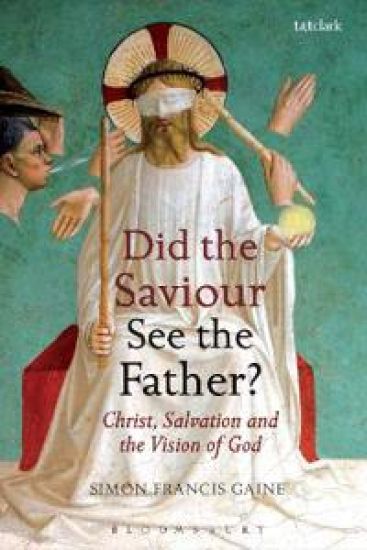
Did Jesus enjoy the beatific vision of God on earth that Christians hope to enjoy only in heaven? This important question is related to a whole series of questions about Jesus, his knowledge and self-consciousness. Did he know he was God’s Son? What did he know of his saving mission? These issues are linked to a fundamental question: Is the Saviour we need one who is altogether like us or one who is in some ways unlike us? This book argues that God gave us a Saviour with beatific knowledge, and who in this respect is very unlike us indeed. The answer commonly given by Catholic theologians to this question underwent a dramatic shift in the middle of the 20th century. Previously there had been a general unanimity based on the teaching of Thomas Aquinas that the answer was ‘Yes’: the earthly Christ did indeed possess heavenly knowledge. The theological situation was then radically altered to one where the answer ‘No’ became predominant. Theologians preferred to treat Christ’s knowledge in terms of self-consciousness, ordinary human knowing, faith, prophecy and mysticism, not the beatific vision. This book addresses the reasons why theologians abandoned Aquinas’s thesis, arguing it has been too easily dismissed. Considering the evidence of Scripture and Tradition, and then moving from Christ’s extraordinary knowledge through his ordinary knowledge, to his will, emotions and bodily life, the book sketches an outline of the extraordinary Saviour God has in fact given us and who is indeed the Saviour humanity truly needs.
Will There Be Free Will in Heaven?

Will There Be Free Will in Heaven?

Simon Francis Gaine

T. T.Clark Ltd
2003
sidottu
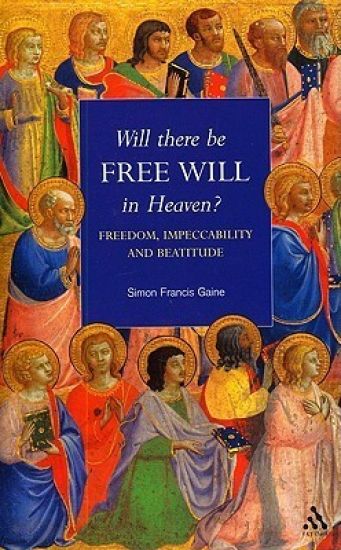
Just before Christmas 1999, various prominent public figures, teachers, clergymen and others received a set of ten religious questions from the BBC's "Today" programme. All were predictable save one: "Will there be free will in heaven?" This book addresses this important question. Simon Gaine sets out the arguments of two modern philosophers, one who concludes that heaven is undesirable because it excludes freedom by excluding the possibility of sin (Wall), and the other who responds that an orthodox notion of heaven in fact implies the real possibility of sin (Donnelly). He shows how such modern concerns have arisen against the background of theologians such as Suarez, who limits freedom in the face of heavenly impeccability, and asks whether a high value placed on freedom can be successfully combined with heavenly impeccability. He then goes on to investigate the theories of Duns Scotus and William of Ockham, two theologians who hold a high view of freedom in general as well as heavenly impeccability, but they are found wanting. Gaine then introduces an alternative conception of freedom through an account of Servais Pinckaers' connection of two different ideas of freedom ("indifference" and "excellence") with two different moral theologies. He applies these two conceptions to eschatology.He concludes that the most pleasing theory combines freedom for excellence and an intrinsic theory of impeccability develops this suggestion by drawing on and developing some ideas found in Thomas Aquinas.