Kirjojen hintavertailu. Mukana 12 595 353 kirjaa ja 12 kauppaa.

Kirjailija

Simon Haykin

Kirjat ja teokset yhdessä paikassa: 21 kirjaa, julkaisuja vuosilta 1994-2026, suosituimpien joukossa Signals and Systems, International Adaptation, Revised and Updated. Vertaile teosten hintoja ja tarkista saatavuus suomalaisista kirjakaupoista.

21 kirjaa

Kirjojen julkaisuhaarukka 1994-2026.

Signals and Systems, International Adaptation, Revised and Updated

Signals and Systems, International Adaptation, Revised and Updated

Simon Haykin; Barry Van Veen

JOHN WILEY SONS INC
2026
nidottu
Signals and Systems, Second Edition, by Simon Haykin and Barry Van Veen, is designed for one- or two-semester undergraduate courses. It introduces core concepts of signals and systems, including classification, operations, and system analysis using Fourier, Laplace, and z-transforms. The book emphasizes practical applications in communications, filter design, and control systems, with a balanced approach to continuous- and discrete-time topics. This International Adaptation offers expanded content with additional examples and exercises, and features a reorganized structure in selected chapters to better support diverse learning needs and improve course alignment.

Impact of Attention on Perception in Cognitive Dynamic Systems

Impact of Attention on Perception in Cognitive Dynamic Systems

Ashkan Amiri; Simon Haykin

Wiley-Blackwell
2023
sidottu
This book provides insights into developing better algorithms for machine learning, artificial intelligence and signal processing. The authors build mainly on two topics: Cognitive Dynamic Systems (CDS), which is a well-established paradigm originated in the Cognitive Systems Lab of McMaster University, and attention, an essential cognitive function the neurobiological root of which is assumed to be the reentry of neuronal firings through feedback connections. This book focuses completely on the perceptual part of a CDS, or in short, the "perceptor," which is the part responsible for visualizing the environment. In this regard, inspired by the mammalian brain, an important step has been taken to redesign the perceptor and therefore improve its functionality in light of "attention," a function that is essential to cognition. The authors demonstrate how the end result is an improved performance for the perceptor in the face of uncertainties and better separation of relevant information from irrelevant information.
Nonlinear Filters

Nonlinear Filters

Peyman Setoodeh; Saeid Habibi; Simon Haykin

John Wiley Sons Inc
2022
sidottu
NONLINEAR FILTERS Discover the utility of using deep learning and (deep) reinforcement learning in deriving filtering algorithms with this insightful and powerful new resource Nonlinear Filters: Theory and Applications delivers an insightful view on state and parameter estimation by merging ideas from control theory, statistical signal processing, and machine learning. Taking an algorithmic approach, the book covers both classic and machine learning-based filtering algorithms. Readers of Nonlinear Filters will greatly benefit from the wide spectrum of presented topics including stability, robustness, computability, and algorithmic sufficiency. Readers will also enjoy: Organization that allows the book to act as a stand-alone, self-contained referenceA thorough exploration of the notion of observability, nonlinear observers, and the theory of optimal nonlinear filtering that bridges the gap between different science and engineering disciplinesA profound account of Bayesian filters including Kalman filter and its variants as well as particle filterA rigorous derivation of the smooth variable structure filter as a predictor-corrector estimator formulated based on a stability theorem, used to confine the estimated states within a neighborhood of their true valuesA concise tutorial on deep learning and reinforcement learningA detailed presentation of the expectation maximization algorithm and its machine learning-based variants, used for joint state and parameter estimationGuidelines for constructing nonparametric Bayesian models from parametric ones Perfect for researchers, professors, and graduate students in engineering, computer science, applied mathematics, and artificial intelligence, Nonlinear Filters: Theory and Applications will also earn a place in the libraries of those studying or practicing in fields involving pandemic diseases, cybersecurity, information fusion, augmented reality, autonomous driving, urban traffic network, navigation and tracking, robotics, power systems, hybrid technologies, and finance.
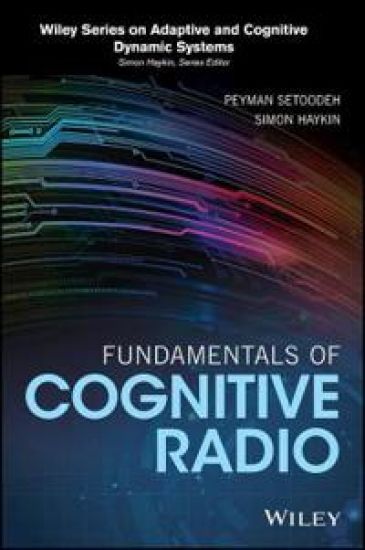
Fundamentals of Cognitive Radio

Fundamentals of Cognitive Radio

Peyman Setoodeh; Simon Haykin

John Wiley Sons Inc
2017
sidottu
A comprehensive treatment of cognitive radio networks and the specialized techniques used to improve wireless communications The human brain, as exemplified by cognitive radar, cognitive radio, and cognitive computing, inspires the field of Cognitive Dynamic Systems. In particular, cognitive radio is growing at an exponential rate. Fundamentals of Cognitive Radio details different aspects of the human brain and provides examples of how it can be mimicked by cognitive dynamic systems. The text offers a communication-theoretic background, including information on resource allocation in wireless networks and the concept of robustness. The authors provide a thorough mathematical background with data on game theory, variational inequalities, and projected dynamic systems. They then delve more deeply into resource allocation in cognitive radio networks. The text investigates the dynamics of cognitive radio networks from the perspectives of information theory, optimization, and control theory. It also provides a vision for the new world of wireless communications by integration of cellular and cognitive radio networks. This groundbreaking book: Shows how wireless communication systems increasingly use cognition to enhance their networksExplores how cognitive radio networks can be viewed as spectrum supply chain networksDerives analytic models for two complementary regimes for spectrum sharing (open-access and market-driven) to study both equilibrium and disequilibrium behaviors of networksStudies cognitive heterogeneous networks with emphasis on economic provisioning for resource sharingIntroduces a framework that addresses the issue of spectrum sharing across licensed and unlicensed bands aimed for Pareto optimality Written for students of cognition, communication engineers, telecommunications professionals, and others, Fundamentals of Cognitive Radio offers a new generation of ideas and provides a fresh way of thinking about cognitive techniques in order to improve radio networks.
Adaptive Filter Theory

Adaptive Filter Theory

Simon Haykin

Pearson Education Limited
2013
pokkari
For courses in Adaptive Filters. Haykin examines both the mathematical theory behind various linear adaptive filters and the elements of supervised multilayer perceptrons. In its fifth edition, this highly successful book has been updated and refined to stay current with the field and develop concepts in as unified and accessible a manner as possible.
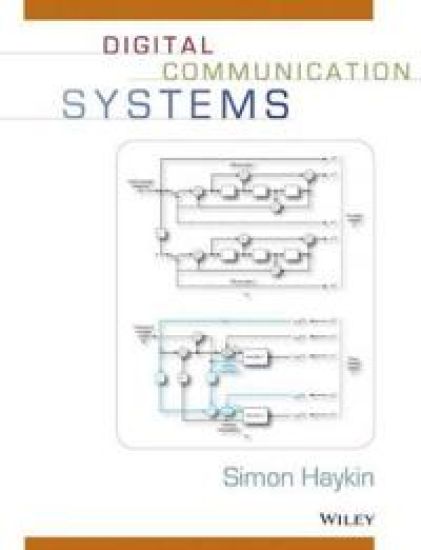
Digital Communication Systems

Digital Communication Systems

Simon Haykin

John Wiley Sons Inc
2013
sidottu
This new text offers up-to-date coverage on the principles of digital communications, focusing on core principles and relating theory to practice. Numerous examples, worked out in detail, have been included to help the student develop an intuitive grasp of the theory. The text also incorporates MATLAB-based computer experiments throughout, as well as themed examples and an abundance of homework problems.
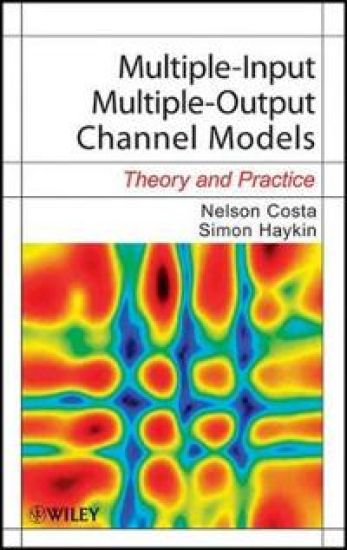
Multiple-Input Multiple-Output Channel Models

Multiple-Input Multiple-Output Channel Models

Nelson Costa; Simon Haykin

John Wiley Sons Inc
2010
sidottu
A complete discussion of MIMO communications, from theory to real-world applications The emerging wireless technology Wideband Multiple-Input, Multiple-Output (MIMO) holds the promise of greater bandwidth efficiency and wireless link reliability. This technology is just now being implemented into hardware and working its way into wireless standards such as the ubiquitous 802.11g, as well as third- and fourth-generation cellular standards. Multiple-Input Multiple-Output Channel Models uniquely brings together the theoretical and practical aspects of MIMO communications, revealing how these systems use their multipath diversity to increase channel capacity. It gives the reader a clear understanding of the underlying propagation mechanisms in the wideband MIMO channel, which is fundamental to the development of communication algorithms, signaling strategies, and transceiver design for MIMO systems. MIMO channel models are important tools in understanding the potential gains of a MIMO system. This book discusses two types of wideband MIMO models in detail: correlative channel models?specifically the Kronecker, Weichselberger, and structured models?and cluster models, including Saleh-Valenzuela, European Cooperation in the field of Scientific and Technical Research (COST) 273, and Random Cluster models. From simple to complex, the reader will understand the models' mechanisms and the reasons behind the parameters. Next, channel sounding is explained in detail, presenting the theory behind a few channel sounding techniques used to sound narrowband and wideband channels. The technique of digital matched filtering is then examined and, using real-life data, is shown to provide very accurate estimates of channel gains. The book concludes with a performance analysis of the structured and Kronecker models. Multiple-Input Multiple-Output Channel Models is the first book to apply tensor calculus to the problem of wideband MIMO channel modeling. Each chapter features a list of important references, including core literary references, Matlab implementations of key models, and the location of databases that can be used to help in the development of new models or communication algorithms. Engineers who are working in the development of telecommunications systems will find this resource invaluable, as will researchers and students at the graduate or post-graduate level.
Adaptive Signal Processing

Adaptive Signal Processing

Tulay Adali; Simon Haykin

John Wiley Sons Inc
2010
sidottu
Leading experts present the latest research results in adaptive signal processing Recent developments in signal processing have made it clear that significant performance gains can be achieved beyond those achievable using standard adaptive filtering approaches. Adaptive Signal Processing presents the next generation of algorithms that will produce these desired results, with an emphasis on important applications and theoretical advancements. This highly unique resource brings together leading authorities in the field writing on the key topics of significance, each at the cutting edge of its own area of specialty. It begins by addressing the problem of optimization in the complex domain, fully developing a framework that enables taking full advantage of the power of complex-valued processing. Then, the challenges of multichannel processing of complex-valued signals are explored. This comprehensive volume goes on to cover Turbo processing, tracking in the subspace domain, nonlinear sequential state estimation, and speech-bandwidth extension. Examines the seven most important topics in adaptive filtering that will define the next-generation adaptive filtering solutions Introduces the powerful adaptive signal processing methods developed within the last ten years to account for the characteristics of real-life data: non-Gaussianity, non-circularity, non-stationarity, and non-linearity Features self-contained chapters, numerous examples to clarify concepts, and end-of-chapter problems to reinforce understanding of the material Contains contributions from acknowledged leaders in the field Adaptive Signal Processing is an invaluable tool for graduate students, researchers, and practitioners working in the areas of signal processing, communications, controls, radar, sonar, and biomedical engineering.
Kernel Adaptive Filtering

Kernel Adaptive Filtering

Weifeng Liu; José C. Principe; Simon Haykin

John Wiley Sons Inc
2010
sidottu
Online learning from a signal processing perspective There is increased interest in kernel learning algorithms in neural networks and a growing need for nonlinear adaptive algorithms in advanced signal processing, communications, and controls. Kernel Adaptive Filtering is the first book to present a comprehensive, unifying introduction to online learning algorithms in reproducing kernel Hilbert spaces. Based on research being conducted in the Computational Neuro-Engineering Laboratory at the University of Florida and in the Cognitive Systems Laboratory at McMaster University, Ontario, Canada, this unique resource elevates the adaptive filtering theory to a new level, presenting a new design methodology of nonlinear adaptive filters. Covers the kernel least mean squares algorithm, kernel affine projection algorithms, the kernel recursive least squares algorithm, the theory of Gaussian process regression, and the extended kernel recursive least squares algorithm Presents a powerful model-selection method called maximum marginal likelihood Addresses the principal bottleneck of kernel adaptive filters—their growing structure Features twelve computer-oriented experiments to reinforce the concepts, with MATLAB codes downloadable from the authors' Web site Concludes each chapter with a summary of the state of the art and potential future directions for original research Kernel Adaptive Filtering is ideal for engineers, computer scientists, and graduate students interested in nonlinear adaptive systems for online applications (applications where the data stream arrives one sample at a time and incremental optimal solutions are desirable). It is also a useful guide for those who look for nonlinear adaptive filtering methodologies to solve practical problems.
Handbook on Array Processing and Sensor Networks

Handbook on Array Processing and Sensor Networks

Simon Haykin; K. J. Ray Liu

John Wiley Sons Inc
2010
sidottu
A handbook on recent advancements and the state of the art in array processing and sensor Networks Handbook on Array Processing and Sensor Networks provides readers with a collection of tutorial articles contributed by world-renowned experts on recent advancements and the state of the art in array processing and sensor networks. Focusing on fundamental principles as well as applications, the handbook provides exhaustive coverage of: wavelets; spatial spectrum estimation; MIMO radio propagation; robustness issues in sensor array processing; wireless communications and sensing in multi-path environments using multi-antenna transceivers; implicit training and array processing for digital communications systems; unitary design of radar waveform diversity sets; acoustic array processing for speech enhancement; acoustic beamforming for hearing aid applications; undetermined blind source separation using acoustic arrays; array processing in astronomy; digital 3D/4D ultrasound imaging technology; self-localization of sensor networks; multi-target tracking and classification in collaborative sensor networks via sequential Monte Carlo; energy-efficient decentralized estimation; sensor data fusion with application to multi-target tracking; distributed algorithms in sensor networks; cooperative communications; distributed source coding; network coding for sensor networks; information-theoretic studies of wireless networks; distributed adaptive learning mechanisms; routing for statistical inference in sensor networks; spectrum estimation in cognitive radios; nonparametric techniques for pedestrian tracking in wireless local area networks; signal processing and networking via the theory of global games; biochemical transport modeling, estimation, and detection in realistic environments; and security and privacy for sensor networks. Handbook on Array Processing and Sensor Networks is the first book of its kind and will appeal to researchers, professors, and graduate students in array processing, sensor networks, advanced signal processing, and networking.
Space-Time Layered Information Processing for Wireless Communications

Space-Time Layered Information Processing for Wireless Communications

Mathini Sellathurai; Simon Haykin

John Wiley Sons Inc
2009
sidottu
Discover cutting-edge research in wireless communications This book presents cutting-edge research in wireless communications, particularly in the fast-growing subject of multiple-input multiple-output (MIMO) wireless communication systems. It begins with an introduction, which includes historical notes and a review of turbo-information processing and MIMO wireless communications, and goes on to cover: * MIMO channel capacity * BLAST architectures * Space-time turbo codes and turbo decoding principles * Turbo-BLAST * Turbo-MIMO systems The material is complemented with abundant illustrations and computer experiments that are designed to help readers reinforce their understanding of the underlying subject matter. Space-Time Layered Information Processing for Wireless Communications is an ideal resource for researchers in academia and industry and an excellent textbook for related courses at the graduate level.
Neural Networks and Learning Machines
For graduate-level neural network courses offered in the departments of Computer Engineering, Electrical Engineering, and Computer Science. Neural Networks and Learning Machines, Third Edition is renowned for its thoroughness and readability. This well-organized and completely up-to-date text remains the most comprehensive treatment of neural networks from an engineering perspective. This is ideal for professional engineers and research scientists. Matlab codes used for the computer experiments in the text are available for download at: http://www.pearsonhighered.com/haykin/ Refocused, revised and renamed to reflect the duality of neural networks and learning machines, this edition recognizes that the subject matter is richer when these topics are studied together. Ideas drawn from neural networks and machine learning are hybridized to perform improved learning tasks beyond the capability of either independently.
Communication Systems

Communication Systems

Simon Haykin; Michael Moher

WILEY
2009
sidottu
This best-selling communication systems text continues to include the most comprehensive and rigorous coverage of digital communications in an undergraduate level text in this Fifth Edition. In addition to being the most up-to-date communications text available, Simon Haykin has reintroduced features and coverage that have made this text a best-seller. Haykin now features equal and thorough coverage of both analog and digital material.
Correlative Learning

Correlative Learning

Zhe Chen; Simon Haykin; Jos J. Eggermont; Suzanna Becker

John Wiley Sons Inc
2007
sidottu
Correlative Learning: A Basis for Brain and Adaptive Systems provides a bridge between three disciplines: computational neuroscience, neural networks, and signal processing. First, the authors lay down the preliminary neuroscience background for engineers. The book also presents an overview of the role of correlation in the human brain as well as in the adaptive signal processing world; unifies many well-established synaptic adaptations (learning) rules within the correlation-based learning framework, focusing on a particular correlative learning paradigm, ALOPEX; and presents case studies that illustrate how to use different computational tools and ALOPEX to help readers understand certain brain functions or fit specific engineering applications.
An Introduction to Analog and Digital Communications

An Introduction to Analog and Digital Communications

Simon Haykin; Michael Moher

John Wiley Sons Inc
2006
sidottu
Simon Haykin has written two books with Wiley for Communications Systems, Introduction to Digital and Analog Communications, 2e and the forthcoming revision of his classic Communications Systems, 5e. The second edition of Introduction to Digital and Analog Communications, 2e is written at an accessible level and serves as an introductory treatment of communication theory, both ana-log and digital communications. Given the highly mathematical nature of communication theory, it is rather easy for the reader to lose sight of the practical side of communication systems. Throughout the book, the authors have made a special effort to move through the mathe-matical treatment at an easy-to-grasp level, and also to point out the practical relevance of the theory wherever it is appropri-ate to do so. Drs. Haykin’s other text, Communication Systems reaches out to a higher level of math rigor. Also, Introduction to Digital and Analog Communications, 2e offers the probability coverage later in the book (chapter 8) since probability theory is not critical to the understanding of modulation. This also contributes to the accessible approach of the text. Introduction to Digital and Analog Communications, 2e is self-contained and suited for a one or two-semester course in communica-tion systems taken by Electrical Engineering juniors or seniors. The book offers flexibility for organizing the course material to suit the interests of course professors and students. Reviewer Quotes: My current textbook by Proakis/Salehi: Communication Systems Engineering, 2e did not meet my student’s capabilities and expecta-tions. The textbook is too complicated and overloaded with heavy mathematical equations. The material is not always logically presented. Not to mention, there is 800 pages of text. I was impressed with Haykin/Moher’s: Introduction to Digital and Analog Communications, 2e and the straightforward comprehensive material coverage of the basic principles of communication theory. Also, the text is logically written with easy to follow and understand mathematical equations and examples. Absolutely, I would like to use this textbook for my communications systems class as soon as it will be possible.” Andrei Pet-rov- Idaho State University “ Overall, I found the concepts are clearly explained, the chapters are well motivated by their introductions, “Lessons to be learned” at the beginning of each chapter are particularly appealing, and concluded with well put summaries. A very well-written introductory text to grasp the basics of communication systems.” Aylin Yener-Penn State University
Kalman Filtering and Neural Networks

Kalman Filtering and Neural Networks

Simon Haykin

John Wiley Sons Inc
2001
sidottu
State-of-the-art coverage of Kalman filter methods for the design of neural networks This self-contained book consists of seven chapters by expert contributors that discuss Kalman filtering as applied to the training and use of neural networks. Although the traditional approach to the subject is almost always linear, this book recognizes and deals with the fact that real problems are most often nonlinear. The first chapter offers an introductory treatment of Kalman filters with an emphasis on basic Kalman filter theory, Rauch-Tung-Striebel smoother, and the extended Kalman filter. Other chapters cover: * An algorithm for the training of feedforward and recurrent multilayered perceptrons, based on the decoupled extended Kalman filter (DEKF) * Applications of the DEKF learning algorithm to the study of image sequences and the dynamic reconstruction of chaotic processes * The dual estimation problem * Stochastic nonlinear dynamics: the expectation-maximization (EM) algorithm and the extended Kalman smoothing (EKS) algorithm * The unscented Kalman filter Each chapter, with the exception of the introduction, includes illustrative applications of the learning algorithms described here, some of which involve the use of simulated and real-life data. Kalman Filtering and Neural Networks serves as an expert resource for researchers in neural networks and nonlinear dynamical systems.
Nonlinear Dynamical Systems

Nonlinear Dynamical Systems

Irwin W. Sandberg; James T. Lo; Craig L. Fancourt; José C. Principe; Shigeru Katagiri; Simon Haykin

John Wiley Sons Inc
2001
sidottu
The first truly up-to-date look at the theory and capabilities of nonlinear dynamical systems that take the form of feedforward neural network structures Considered one of the most important types of structures in the study of neural networks and neural-like networks, feedforward networks incorporating dynamical elements have important properties and are of use in many applications. Specializing in experiential knowledge, a neural network stores and expands its knowledge base via strikingly human routes–through a learning process and information storage involving interconnection strengths known as synaptic weights. In Nonlinear Dynamical Systems: Feedforward Neural Network Perspectives, six leading authorities describe recent contributions to the development of an analytical basis for the understanding and use of nonlinear dynamical systems of the feedforward type, especially in the areas of control, signal processing, and time series analysis. Moving from an introductory discussion of the different aspects of feedforward neural networks, the book then addresses: *Classification problems and the related problem of approximating dynamic nonlinear input-output maps *The development of robust controllers and filters *The capability of neural networks to approximate functions and dynamic systems with respect to risk-sensitive error *Segmenting a time series It then sheds light on the application of feedforward neural networks to speech processing, summarizing speech-related techniques, and reviewing feedforward neural networks from the viewpoint of fundamental design issues. An up-to-date and authoritative look at the ever-widening technical boundaries and influence of neural networks in dynamical systems, this volume is an indispensable resource for researchers in neural networks and a reference staple for libraries.