Kirjojen hintavertailu. Mukana 12 390 323 kirjaa ja 12 kauppaa.
Kirjailija
Simon Lindgren
Kirjat ja teokset yhdessä paikassa: 21 kirjaa, julkaisuja vuosilta 2009-2025, suosituimpien joukossa Digitala metoder i humaniora och samhällsvetenskap. Vertaile teosten hintoja ja tarkista saatavuus suomalaisista kirjakaupoista.
Johan Jarlbrink; Fredrik Norén; André Baltz; Karl Berglund; Eric Carlsson; Coppélie Cocq; Maria Eriksson; David Gunnarsson Lorentzen; Evelina Liliequist; Jens Lindberg; Simon Lindgren; Anna Sofia Lundgren; Patrick Prax; Paulina Rajkowska; Emil Stjernholm; Mathilda Åkerlund
Hur sprids nyheter, politiska upprop och memes över världen i sociala medier? Hur interagerar användarna med varandra i forum och dataspel? Hur har 1900-talets tidningspress rapporterat om olika delar av världen?Digitala medier ger upphov till nya forskningsfrågor men gör det också möjligt att undersöka gamla frågor med nya metoder. Digitaliseringen av kulturarv och arkivsamlingar innebär att historien kan utforskas på digital väg. För första gången på svenska introduceras här en bred uppsättning digitala metoder för studier av historia och samtid. I bokens elva kapitel behandlas digital etnografi, metoder för text-, bild- och nätverksanalys samt studier av dataspel, gränssnitt och digitala flöden. Dessutom beskrivs metoder för automatisk datainsamling och vetenskapliga visualiseringar. Författarna går igenom grunderna för respektive metod och visar med illustrativa exempel hur de kan användas i konkreta undersökningar.Digitala metoder i humaniora och samhällsvetenskap vänder sig till studenter på grund- och avancerad nivå inom ett flertal ämnesområden, men riktar sig också till forskare som vill uppdatera sin metodarsenal.
Eric Carlsson; Bo Nilsson; Simon Lindgren; Anders Johansson; Jonas Andersson Schwarz; Anna Johansson; Anders Olof Larsson; Linda Berg; Maria Carbin; Stefan Gelfgren; Jenny Gunnarsson Payne
Den här boken handlar om hur sociala medier kan fungera politiskt i människors vardag. Digitaliseringen av samhället har starkt aktualiserat frågan om förhållandet mellan medier och deltagande. I Sverige har exempelvis de olika politiska partierna lagt mycket resurser på synlighet, inte minst via bloggar, Facebook och Twitter. Sociala nätverksmedier medför även möjligheter till en mer vardaglig form av engagemang och deltagande i en mängd olika politiska och sociala frågor. Vilken betydelse har sociala medier för exempelvis politiker, journalister och aktivister? Hur används nya digitala kommunikationstekniker för att utöva politiska påtryckningar och för politisk mobilisering? Vad innebär det att vara engagerad i dagens digitaliserade samhälle? Hur kan ?det politiska? ? också i termer av olika typer av livsstilar och identitetsarbete ? spåras i olika gruppers och individers medieanvändning? "Digital politik ? Sociala medier, deltagande och engagemang" består av tio kapitel som från olika perspektiv bidrar till att belysa och problematisera sociala mediers betydelse för ?det politiska? i dag. Författarna är forskare verksamma inom humaniora och samhällsvetenskap i Sverige och Norge.Boken innehåller innehåller bidrag av Jonas Andersson Schwarz, Linda Berg, Maria Carbin, Eric Carlsson, Stefan Gelfgren, Jenny Gunnarsson Payne, Anders Johansson, Anna Johansson, Anders Olof Larsson, Simon Lindgren och Bo Nilsson.
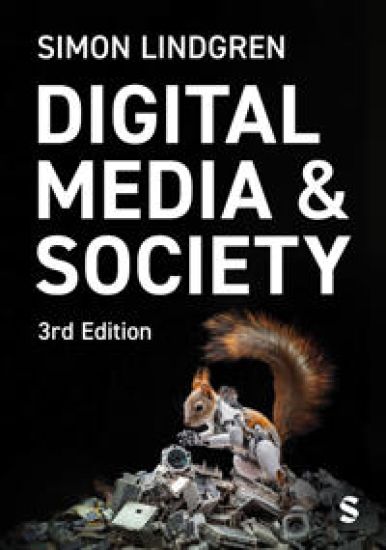
In today’s world, digital media and the social are irreversibly intertwined. In this cutting-edge introduction, Simon Lindgren introduces a wide range of concepts and approaches that aid in exploring and understanding what it means to live in a digital society. In this new edition you will encounter: - An exploration of non-progressive forms of digital activism, including radicalization and hate groups - Added coverage of post-pandemic, post-truth digital media with topics such as disinformation and computational propaganda - Cutting-edge content on algorithms, covering recent developments in generative AI, LLMs, and synthetic media such as deepfakes. - Expanded learning features and discussion prompts to put theory into practice Updated, revised and expanded throughout to cover emerging platforms and issues, this book is a must-have for students exploring digital media, social media, and the internet.
In today’s world, digital media and the social are irreversibly intertwined. In this cutting-edge introduction, Simon Lindgren introduces a wide range of concepts and approaches that aid in exploring and understanding what it means to live in a digital society. In this new edition you will encounter: - An exploration of non-progressive forms of digital activism, including radicalization and hate groups - Added coverage of post-pandemic, post-truth digital media with topics such as disinformation and computational propaganda - Cutting-edge content on algorithms, covering recent developments in generative AI, LLMs, and synthetic media such as deepfakes. - Expanded learning features and discussion prompts to put theory into practice Updated, revised and expanded throughout to cover emerging platforms and issues, this book is a must-have for students exploring digital media, social media, and the internet.
Artificiell intelligens finns överallt omkring oss idag. Maskiner tänker och agerar på alltmer sofistikerade sätt och lär sig samtidigt, på maskiners sätt, att varje dag förbättra sina prestationer. I takt med att samhället blir alltmer datafierat samlas gradvis mer råmaterial än någonsin tidigare som kan matas in i de lärande maskinerna; digitala plattformar och tjänster samlar in stora mängder information om våra sociala och psykologiska liv. Samtidigt sprider sig algoritmer för att sortera och avgöra saker till ett allt större antal områden och smarta maskiner kan användas i olika intelligenta automatiserade processer.AI-baserad automatisering kan utan tvekan vara till stor nytta i många fall, men samtidigt finns utmaningar i form av övervakning, algoritmisk kontroll, diskriminering och spridning av stereotyper. Att kritiskt reflektera över AI är nödvändigt, men en kritik kan inte begränsas till diskussioner om etik eller ansvarsfull AI, utan måste också omfatta maktrelationer. Denna bok visar på ett övertygande sätt hur AI är kopplat till politiska intressen och maktrelationer i samhället, vilka sociala roller och maktrelationer som formas, möjliggörs eller hindras av dessa tekniker, liksom vilka följder det får för samhälleliga dominans- och exploateringshierarkier. AI – ett kritiskt perspektiv vänder sig till studenter och forskare inom humaniora och samhällsvetenskap.
We live in an increasingly digitised society. In an age of digital identities, rapid developments in Artificial Intelligence and ever more sophisticated software available, our methods for researching digital media must be flexible and adaptable. This book will help you to understand why researchers in this field choose and use particular research methods, equipping you to put these methods into practice across the whole range of undergraduate media courses. This book shows you how research methods can help us to make sense of the myriad of information we encounter online every day, from Tiktok influencers to viral Twitter posts. Complete with case studies in each chapter, the book covers both well-established methods, such as network analysis, and cutting-edge ones, such as interface analysis. It provides a crucial foundation for research in digital media, demonstrating the scope and potential of these tools. The book adopts an easy-to-navigate structure, taking you through specific methods in a systematic way. It shows you examples of classic uses of each method, and directs you towards further resources after each chapter.
We live in an increasingly digitised society. In an age of digital identities, rapid developments in Artificial Intelligence and ever more sophisticated software available, our methods for researching digital media must be flexible and adaptable. This book will help you to understand why researchers in this field choose and use particular research methods, equipping you to put these methods into practice across the whole range of undergraduate media courses. This book shows you how research methods can help us to make sense of the myriad of information we encounter online every day, from Tiktok influencers to viral Twitter posts. Complete with case studies in each chapter, the book covers both well-established methods, such as network analysis, and cutting-edge ones, such as interface analysis. It provides a crucial foundation for research in digital media, demonstrating the scope and potential of these tools. The book adopts an easy-to-navigate structure, taking you through specific methods in a systematic way. It shows you examples of classic uses of each method, and directs you towards further resources after each chapter.
We live in an age of artificial intelligence. Machines think and act in ever more complex ways, making suggestions and decisions on our behalf. While AI might be seen as practical and profitable, issues of data surveillance, algorithmic control, and sexist and racist bias persist. In this rapidly changing landscape, social analysis of AI risks getting scaled down to issues of ‘ethics’, ‘responsibility’, and ‘fairness’. While these are important issues, they must be addressed not from an ‘AI first’ perspective, but more thoroughly in terms of power and contention. Approaching artificial intelligence from the often overlooked perspective of critical social theory, this book provides a much-needed intervention on how both old and new theories conceptualize the social consequences of AI. Questions are posed about the ideologies driving AI, the mythologies surrounding AI, and the complex relationship between AI and power. Simon Lindgren provides a way of defining AI as an object of social and political critique, and guides the reader through a set of contentious areas where AI and politics intersect. In relation to these topics, critical theories are drawn upon, both as an argument for and an illustration of how AI can be critiqued. Given the opportunities and challenges of AI, this book is a must-read for students and scholars in the humanities, social sciences, and STEM disciplines.
We live in an age of artificial intelligence. Machines think and act in ever more complex ways, making suggestions and decisions on our behalf. While AI might be seen as practical and profitable, issues of data surveillance, algorithmic control, and sexist and racist bias persist. In this rapidly changing landscape, social analysis of AI risks getting scaled down to issues of ‘ethics’, ‘responsibility’, and ‘fairness’. While these are important issues, they must be addressed not from an ‘AI first’ perspective, but more thoroughly in terms of power and contention. Approaching artificial intelligence from the often overlooked perspective of critical social theory, this book provides a much-needed intervention on how both old and new theories conceptualize the social consequences of AI. Questions are posed about the ideologies driving AI, the mythologies surrounding AI, and the complex relationship between AI and power. Simon Lindgren provides a way of defining AI as an object of social and political critique, and guides the reader through a set of contentious areas where AI and politics intersect. In relation to these topics, critical theories are drawn upon, both as an argument for and an illustration of how AI can be critiqued. Given the opportunities and challenges of AI, this book is a must-read for students and scholars in the humanities, social sciences, and STEM disciplines.
Martin Berg; Maria Engberg; Sara Leckner; Jonas Andersson; Jay David Bolter; Òscar Coromina Rodriguez; Jutta Haider; Fredrik Håland Jensen; Simon Lindgren; Lars Nyre; Linda Paxling; Olof Sundin; Jakob Svensson; Pontus Wärnestål
I en tid då medielandskapet är i ständig förändring och traditionell medieforskning konstant utmanas ökar behovet av att förena teknik, humaniora och samhällsvetenskap. Medie- och teknikforskning kräver innovativa angreppssätt för att navigera bland komplexa relationer mellan kultur, samhälle, ekonomi och teknologi.I den här boken bjuder ledande forskare in till samtal om teknologins utmaningar och möjligheter. Här presenteras redskap för att utforska, beskriva, begreppsliggöra och förstå nya relationer mellan medieteknologier och deras omvärld - en kunskap som förbereder läsaren att på egen hand kombinera samhällsvetenskapernas kritiska analyser med teknikvetenskapernas tradition att utveckla tillförlitliga och effektiva system. Tekniska mediestudier riktar sig till studenter inom ämnen som medieteknik, medie- och kommunikationsvetenskap, kulturvetenskap, data- och systemvetenskap, interaktionsdesign och informatik.
What does it mean to live in a digital society? Does social media empower political activism? How do we form and express our identity in a digital age? Do algorithms and search engine results have a social role? How have software and hardware transformed how we interact with each other? In the early 21st century, digital media and the social have become irreversibly intertwined. In this cutting-edge introduction, Simon Lindgren explores what it means to live in a digital society. With succinct explanations of the key concepts, debates and theories you need to know, this is a must-have resource for students exploring digital media, social media, media and society, data and society, and the internet. “An engaging story of the meaning digital media have in societies. The writing is relatable, with diverse and comprehensive references to theories. Above all, this is a fun book on what a contemporary digital society looks like!” - Professor Zizi Papacharissi, University of Illinois at Chicago Simon Lindgren is Professor of Sociology at Umeå University in Sweden. He is also the director of DIGSUM, an interdisciplinary academic research centre studying the social dimensions of digital technology.
What does it mean to live in a digital society? Does social media empower political activism? How do we form and express our identity in a digital age? Do algorithms and search engine results have a social role? How have software and hardware transformed how we interact with each other? In the early 21st century, digital media and the social have become irreversibly intertwined. In this cutting-edge introduction, Simon Lindgren explores what it means to live in a digital society. With succinct explanations of the key concepts, debates and theories you need to know, this is a must-have resource for students exploring digital media, social media, media and society, data and society, and the internet. “An engaging story of the meaning digital media have in societies. The writing is relatable, with diverse and comprehensive references to theories. Above all, this is a fun book on what a contemporary digital society looks like!” - Professor Zizi Papacharissi, University of Illinois at Chicago Simon Lindgren is Professor of Sociology at Umeå University in Sweden. He is also the director of DIGSUM, an interdisciplinary academic research centre studying the social dimensions of digital technology.
The datafication of our world offers huge challenges and opportunities for social science. The ‘data-drivenness’ of computational research can occur at the expense of theoretical reflection and interpretation. Additionally, it can be difficult to reconcile the ‘quantitative’ dimensions of big data with the ‘qualitative’ sensibilities needed for its understanding. At the same time, this opens up possibilities for reimagining key principles of social inquiry. In this experimental and provocative book, Simon Lindgren argues that a hybrid approach to data and theory must be developed in order to make sense of today's ambivalent, turbulent, and media-saturated political landscape. He pushes for the development of a critical science of data, joining the interpretive theoretical and ethical sensibilities of social science with the predictive and prognostic powers of data science and computational methods. In order for theories and research methods to be more useful and relevant, they must be dismantled and put together in new, alternative, and unexpected ways. Data Theory is essential reading for social scientists and data scientists, as well as students taking courses in social theory and data, digital methods, big data, and data and society.
The datafication of our world offers huge challenges and opportunities for social science. The ‘data-drivenness’ of computational research can occur at the expense of theoretical reflection and interpretation. Additionally, it can be difficult to reconcile the ‘quantitative’ dimensions of big data with the ‘qualitative’ sensibilities needed for its understanding. At the same time, this opens up possibilities for reimagining key principles of social inquiry. In this experimental and provocative book, Simon Lindgren argues that a hybrid approach to data and theory must be developed in order to make sense of today's ambivalent, turbulent, and media-saturated political landscape. He pushes for the development of a critical science of data, joining the interpretive theoretical and ethical sensibilities of social science with the predictive and prognostic powers of data science and computational methods. In order for theories and research methods to be more useful and relevant, they must be dismantled and put together in new, alternative, and unexpected ways. Data Theory is essential reading for social scientists and data scientists, as well as students taking courses in social theory and data, digital methods, big data, and data and society.
Sociologi 2.0 - Samhällsteori och samtidskultur riktar sig till alla som är intresserade av sociologi och samhällsteori, men är särskilt tänkt som lärobok på grundläggande teorikurser inom sociologi och andra samhällsvetenskapliga ämnen. I andra upplagan har många exempel aktualiserats, men bokens grundläggande struktur och idé har bibehållits. Med exempel ur dagens samhälle förkastas inte befintlig teori till förmån för trendiga begrepp, utan exemplen illustrerar snarare de etablerade teoriernas ibland nästan förvånansvärda användbarhet när man ska ge sig i kast med att analysera dagens samhälle. När klassikerna utarbetade sina perspektiv fanns varken snabbmat, reality-TV eller mobiltelefoner, men de lyckades ändå finna perspektiv på samhället som i allra högsta grad bör hållas vid liv.I boken tas både klassiska och mer sentida teorier upp i relation till samtidskulturella uttryck på ett sätt som förser läsaren med en relativt omfattande orientering och begreppslig verktygslåda. Nyckelbegreppen hos tänkare som Marx, Weber, Durkheim, Simmel, Bourdieu, Giddens, Goffman, Bauman och Butler ges en ordentlig genomgång...Bokens författare Simon Lindgren är professor i sociologi vid Umeå universitet. Hans forskning handlar om samarbete, stöd, lärande, konflikter, makt och aktivism på Internet och i sociala medier.
Samhällsvetenskaplig forskning handlar om att studera sociala fenomen som väcker frågor och skapar nyfikenhet. Men för att man ska kunna besvara frågorna och stilla sin nyfikenhet måste man veta hur man ska gå tillväga. I den här boken beskrivs och förklaras det vetenskapliga hantverk som krävs för att man ska nå underbyggd kunskap om vårt samhälle. Det finns många metodböcker, men den här utmärker sig, dels genom att den betonar det tolkningsarbete som tar vid efter insamling av data, dels genom att den avdramatiserar skillnaderna mellan kvantitativ och kvalitativ analys.Denna andra upplaga är mer heltäckande än den första. Här har två kapitel om datainsamlingsmetoder tillkommit, och texten har också uppdaterats och delvis strukturerats om.Mikael Hjerm är professor i sociologi vid Umeå universitet. Simon Lindgren är professor i sociologi vid Umeå universitet. Marco Nilsson är filosofie doktor och verksam vid Statsvetenskapliga institutionen, Göteborgs universitet.
Hur står det till med dagens ungdom? Under senare år har alltmer intresse riktats mot barns och ungas uppväxtvillkor, livssituation, rättigheter och agentskap.En rad frågor diskuteras i dag, bland annat:den ökade psykiska ohälsan bland barn och ungamedieanvändningens positiva och negativa sidoridentitetsskapande och genusfrågorungdomsarbetslöshet och bostadsbristbarns och ungas rättigheter och möjligheter att påverka sina villkor, och i förlängningen samhälle och kulturförskolans, skolans och familjens roll i de lärandeprocesser som skapas av ovanståendeDen här boken tar ett samlat grepp om barns och ungdomars uppväxtvillkor i det samtida Sverige, med en del utblickar mot andra europeiska länder. Författarna vill visa hur globala och sociala förändringar sätter avtryck i det konkreta och levda vardagslivet.Boken är främst avsedd för högskole- och universitetsutbildningar inom pedagogiska och sociala områden. Men den är även lämplig för politiska beslutsfattare, som vill få en god bild av forskningsläget när det gäller barn och unga – för att tänka kring och skapa goda villkor för den nya generationen.Sagt om boken”Genom att beskriva ungas uppväxtvillkor i en såväl historisk, politisk, social som kulturell kontext skildras en bild av ungdomar i ett föränderligt samhälle. […] Social utsatthet, ökad psykisk ohälsa bland barn och unga, det moderna föräldraskapet samt nya risker och möjligheter för unga är några centrala teman, som diskuteras på ett lättfattligt och pedagogiskt sätt. Boken vänder sig framför allt till högskole- och universitetsstudenter inom pedagogiska och sociala discipliner.” Maria Fridstjerna, lektör, BTJ häfte 13111173.Om författarnaThomas Johansson är professor i pedagogik med inriktning mot barn- och ungdomsvetenskap. Han är verksam vid Göteborgs universitet, Institutionen för pedagogik, kommunikation och lärande. Simon Lindgren är professor i sociologi vid Umeå universitet. Anette Hellman är fil. dr och verksam vid Göteborgs universitet, Institutionen för pedagogik, kommunikation och lärande.
This book is about online subcultures thriving in the border zones between pop cultural and political engagement. Combining classic theories of space, power and resistance with current case studies of digital piracy, online activism and remix culture, the book develops a cultural theory of social movements in the digital age.
This book is about online subcultures thriving in the border zones between pop cultural and political engagement. Combining classic theories of space, power and resistance with current case studies of digital piracy, online activism and remix culture, the book develops a cultural theory of social movements in the digital age.
Michael Hviid Jacobsen; Gunnar Aakvaag; Gunnar C. Aakvaag; Thomas Johansson; Willy Guneriussen; Johanna Esseveld; Mai Ottosen; Nihad Bunar; Rickard Jonsson; Sara Eldén; Thomas Eriksen; Simon Lindgren; Fredrik Engelstad; Inger Hagen; Bjørn Schiermer; Philip Lalander; Søren Kristiansen; Marko Valenta; Ola Sigurdson; Thomas Boje
Sociology is a constantly changing scientific endeavour, adventure and practice that was born with the advent of modernity. One of the main reasons for the rise of sociology was modern societys wish to understand itself. In this introduction to sociology, the authors emphasize the importance and centrality of the idea of the sociological imagination, as it was conceived by sociologist C. Wright Mills. This book will enhance and further develop your sociological imagination with a sensibility that has its breeding ground in the Scandinavian countries; this is the first comprehensive attempt to write an international/Nordic text book and introductory text to sociology. This book is aimed primarily at first year students in sociology but will be of interest to anyone who is looking for a comprehensive guide to the exciting field of sociology. Contents Introduction The legacy of the sociological imagination Scandinavian sensibility Structure and content of the book Summary Think for yourself Further reading Chapter 1. What is society? Contested concepts and shifting metaphors Willy Guneriussen, University of Tromsø Introduction Individualism vs holism: methodological and ontological controversies Sociology – an explanatory or interpretive science? Structure or action? Society – a material or symbolic reality? The symbolic turn Combining distinctions The theoretical landscape of sociology Several theories – one reality? Beyond traditions – towards a minimalist model of society Biology and society Combining traditions The first synthesis: Talcott Parsons’ sociology Modifying Parsons’ theory of society Metaphors, science and sociological imagination Metaphors Changing conceptions or changing realities? Concluding reflections Summary Think for yourself Further reading Chapter 2. The sociology of work Inger Marie Hagen, Fafo Introduction The labour contract – labour as commodity in the market From work to labour Modern labour – work as commodity The two parties to the contract: labour and managerial prerogative The labour contract and the social context – different models The collective agreement Labour and self-expression Working conditions Other answers to `why work?’ Motivation and management The work organisation From command to self-management? An example – the modern work organisation – the three different company systems Employer and employee – equal partners Management as superior to employees Employee and management as parties in an ongoing dialogue Working life and distribution – industrial democracy Norms of distribution and norms of democracy Three notions of industrial democracy Industrial democracy and participation – individual and representative participation The Nordic labour market The Nordic model of labour relations When contemporary labour is a part of the past . . . Summary Think for yourself Further reading Chapter 3. The sociology of power Fredrik Engelstad, University of Oslo Introduction The interpretation of `power’ Power as concept Dimensions in social action Expectations and legitimacy From micro to macro State, democracy, politics State, rights and informal power relations Shaping and articulation of interests Political participation on a broad scale Fragmentation and globalisation: abdication of politics? Civil society Networks and organising capacity Gender power and attitudes toward gender Encounters with welfare state institutions Economy and working life Business life, markets and power Management and leadership in enterprises Participation and industrial democracy Ideas and communication Power in the public sphere Aesthetics, culture and national values Social elites: who governs? Power and democratisation Summary Think for yourself Further reading Chapter 4. The sociology of the family Mai Heide Ottosen, The Danish National Centre for Social Research Introduction What is a family? Sociological perspectives on the family Kinship vs family studies The family as a social institution The family as a social group Family as social practice Demographic trends The `bean-pole’ family The crisis of the patriarchal family Structuring family networks Family policies Inside the family: marriage, parenthood and childhood The de-institutionalisation of marriage From fatherhood and motherhood to parenthood Childhood Summary Think for yourself Further reading Chapter 5. The sociology of education Nihad Bunar and Rickard Jonsson, Stockholm University Introduction Sociological perspectives on education The functionalist approach Education and socialisation Social integration Education and gatekeeping: screening and selecting Education as an agent of social change The conflict approach The correspondence principle Reproduction through expectations and opposition Subjective expectation of objective probability Restricted and elaborated codes The subjective-interpretative approach Education and the market The market-oriented position The market-sceptical position The market-ambivalent position Education and ethnicity Urban schools Refugee and migrant students Education and gender Gender and school achievement Summary Think for yourself Further reading Chapter 6. The sociology of religion Ola Sigurdson, University of Gothenburg Introduction What is the sociology of religion? Sociology, the secularisation thesis and the return of religion Religion in the Scandinavian nation-states: an example The continuities and discontinuities of secularised religion The future of religion: towards a post-secular society? Summary Think for yourself Further reading Chapter 7. The sociology of media and information technologies Simon Lindgren, UmeS University Introduction Constructions and representations The media `effects’ model Media, ideology and struggles over hegemony New media and participatory culture Summary Think for yourself Further reading Chapter 8. The sociology of health Thomas Johansson, University of Gothenburg Introduction Historical perspectives Health inequalities Gender and health Lifestyles, risks and health The face of health Global health Summary Think for yourself Further reading Chapter 9. The sociology of class and social stratification Gunnar C. Aakvaag, University of Oslo Introduction Marx’s definition of class The class structure of modern capitalism Max Weber: a multidimensional approach to stratification and class Weber’s general approach to social stratification: class, status and party Weber’s class theory Contemporary class analysis A neo-Marxian approach: Erik Olin Wright and exploitation Wright’s class schema A neo-Weberian approach: John H. Goldthorpe and life chances Service and labour contracts Goldthorpe’s class schema Pierre Bourdieu: classes and lifestyles The social space Bourdieu’s class schema Habitus and class Class, habitus and lifestyle Class and social mobility Social relationships Intergenerational mobility Summary Think for yourself Further reading Chapter 10. The sociology of deviance Philip Lalander, Malmö University Introduction Labelling, ambivalence and counter-labelling Different types of deviance Diagnosis and identity Indulgence at the margins of society Escape from everyday life/escaping everyday life Summary Think for yourself Further reading Chapter 11. The sociology of gender Johanna Esseveld and Sara Eldén, Lund University Introduction Gender and sex Beyond dichotomies A sociological definition of gender Theorising gender Classical texts Men’s and women’s roles Gender oppression and structural inequality New themes in the sociology of gender Gender as a social practice Intersectionality Scandinavian sociology of gender today Conclusions Summary Think for yourself Further reading Chapter 12. The sociology of micro-social interaction and everyday life Søren Kristiansen and Michael Hviid Jacobsen, Aalborg University Introduction Everyday life as a social domain Micro-social interaction The basis of micro-social interaction: common sense, meaning and intersubjectivity Phenomenological sociology Symbolic interactionism Ethnomethodology The syntax of interaction: rules, rituals and ceremonies Goffman and dramaturgical sociology Conversation analysis Summary Think for yourself Further reading Chapter 13. The sociology of globalisation Thomas Hylland Eriksen, University of Oslo Introduction Origins of contemporary globalisation Globalisation today Globalisers and sceptics Dimensions of globalisation Disembedding, including de-localisation Standardisation Interconnectedness Mobility Mixing Vulnerability Re-embedding Central questions about globalisation The dialectics of globalisation Summary Think for yourself Further reading Chapter 14. The sociology of culture Bjorn Schiermer, University of Copenhagen Introduction Sociology of culture and popular culture The Frankfurt School: the critique and the potential of modern mass culture Siegfried Kracauer: the dialectics of commodified culture Theodor W. Adorno: the critical potential of autonomous art Walter Benjamin: art and politics The Birmingham School: culture as `a way of life’ Poststructuralism and semiotics: culture as `text’ The `material turn’: re-extending the shortened concept of culture Cultural studies: leaving the high/low dichotomy behind Ironic sensibilities: kitsch and camp and new ways of being together Summary Think for yourself Further reading Chapter 15. The sociology of ethnicity Nihad Bunar and Marko Valenta, Stockholm University and NTNU Introduction Defining ethnicity Theoretical approaches to ethnicity Primordialism Instrumentalism New ethnicities The importance of ethnic networks Symbolic ethnicity Theories and policies for managing ethnic diversity Ethnicity and other sociologically relevant concepts of categorisation Ethnicity and class Ethnicity and gender Ethnicity and race Ethnicity, racism and discrimination Ethnicity and nation Ethnicity and citizenship Summary Think for yourself Further reading Chapter 16. The sociology of the self Thomas Johansson, University of Gothenburg Introduction The sociology of the body: classical texts Consuming the Other Cyborgs and transvestites Lifestyle, fashion and the body Bodybuilding, fitness and gender Plastic surgery and body modifications Summary Think for yourself Further reading Chapter 17. The sociology of social change Gunnar C. Aakvaag, University of Oslo Introduction What are the `general characteristics’ of a society? Functional differentiation Consequences for the individual: facing social complexity Institutional `colonisation’ Consequences for the individual: facing commercialisation and bureaucratisation Individualisation Industrial modernity Individualised modernity Consequences for the individual: facing the decline of standard biographies Risk society Objective side-effects Subjective perception Consequences for the individual: facing uncertainty Social change: all that is solid melts into air? Summary Think for yourself Further reading Notes References Index