Kirjojen hintavertailu. Mukana 12 595 353 kirjaa ja 12 kauppaa.

Kirjailija

Simon Marginson

Kirjat ja teokset yhdessä paikassa: 15 kirjaa, julkaisuja vuosilta 1993-2026, suosituimpien joukossa Global Creation. Vertaile teosten hintoja ja tarkista saatavuus suomalaisista kirjakaupoista.

15 kirjaa

Kirjojen julkaisuhaarukka 1993-2026.

Global Higher Education in Times of Upheaval

Global Higher Education in Times of Upheaval

Simon Marginson

BLOOMSBURY PUBLISHING PLC
2026
sidottu
This open access book collects papers on the major trends in international higher education from leading scholar Simon Marginson, who led the UK’s Centre for Global Higher Education (CGHE) from 2015-2024. In the last decade higher education and research has grown rapidly, becoming more international and embroiled in politics and economics of an increasingly conflicted world. Surveying these developments, Marginson judiciously identifies and discusses the major trends, events, issues and dilemmas that have shaped and are still shaping global higher education. With exemplary worldwide reach, these papers, sole or lead authored by Marginson, consider the relation between public good and private good in higher education; the changing geo-politics of higher education; the growing role of the higher education sector and its increasing destabilisation; the impact of Brexit in the UK; how nativist politics and U.S./China tensions are disrupting cooperation in research and the free movement of ideas and people across national borders; the undue dominance of Western institutions and knowledge in global higher education in what is now a multi-polar world and the need to open global science to diverse languages and insights; the unresolved dilemmas and challenges for higher education resulting from its failure to conclusively progress on either social equality at home or global justice abroad; and the growing demands for greater focus on graduate employability and national not global mission.Global Higher Education in Times of Upheaval maps global higher education with strong and accessible data, while also exploring and developing key concepts for understanding worldwide trends and developments in higher education and science, and analysing these in terms of relations of power. It will provide critical new insights in how to improve the delivery and impact of higher education globally.The ebook editions of this book are available open access under a CC BY-NC-ND 4.0 licence on bloomsburycollections.com. Open access was funded by UKRI.
Brexit, EU Students and UK Higher Education

Brexit, EU Students and UK Higher Education

Vassiliki Papatsiba; Simon Marginson

BLOOMSBURY PUBLISHING PLC
2025
sidottu
This open access book examines the effects of Brexit on UK higher education, based on the largest academic research project conducted in the UK across 12 universities in all four nations.The Brexit decision in 2016 has brought about a profound transformation in UK higher education, with the decline in EU engagement reshaping the sector in many areas, including recruitment of academic staff, research collaboration, university facilities and the declining diversity of students in British institutions. This study, grounded in 127 interviews with university leaders and academic staff, focuses especially on the sharp reduction in EU student entry into UK universities and how this is being experienced in the UK.With an analysis of the impact of Brexit in three areas, revenue, diversity and competition, the book also offers a broader understanding of the internationalisation of higher education in the UK. The authors review developments in policy and practice in the internationalisation of UK higher education and research, including scholarly studies and perspectives. The argument is supported by rich data including up to date statistics on enrolment and well-crafted qualitative case studies. Significantly, Brexit, EU Students and UK Higher Education offers implicit and explicit wider lessons which can be expanded to other HE systems and global HE.The ebook editions of this book are available open access under a CC BY-NC-ND 4.0 licence on bloomsburycollections.com. Open access was funded by UKRI.
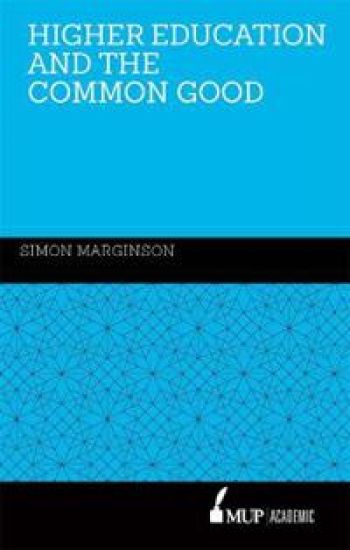
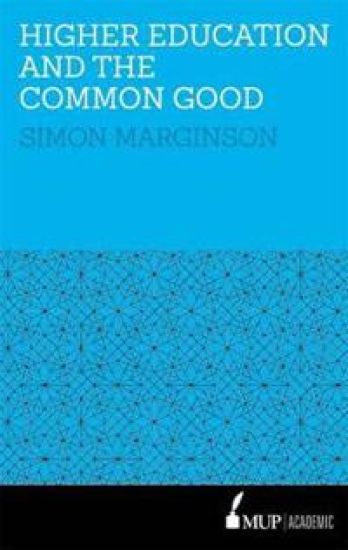
Higher Education and the Common Good

Higher Education and the Common Good

Simon Marginson

Melbourne University Press
2016
sidottu
In the last half century higher education has moved from the fringe to the centre of society and accumulated a long list of social functions. In the English-speaking world, Europe and much of East Asia more than two thirds of all school students enter tertiary education. Bulging at the seams, universities are fountains of new knowledge, engines of prosperity and innovation, drivers of regional growth, skilled migration and global competitiveness, and makers of equality of opportunity. Yet they can do little to stop growing income inequality, and in the English-speaking countries, government rhetoric and policy economics have narrowed their purpose to that of sorting careers for the middle class, partly to justify the rise in tuition fees. Higher education systems have become more competitive and stratified, with value more concentrated at the top, and the collective public benefits of universities are underplayed and underfunded. In short, governments expect both too much and too little of higher education, and its contribution to the common good is being eroded. Yet universities are much much more than factories for graduate earnings. Higher Education and the Common Good argues that this sector has a key role in rebuilding social solidarity and mobility in fractured societies.
Higher Education and the Common Good

Higher Education and the Common Good

Simon Marginson

MELBOURNE UNIVERSITY PRESS
2016
nidottu
In the last half century higher education has moved from the fringe to the centre of society and accumulated a long list of social functions. In the English-speaking world, Europe and much of East Asia more than two thirds of all school students enter tertiary education. Bulging at the seams, universities are fountains of new knowledge, engines of prosperity and innovation, drivers of regional growth, skilled migration and global competitiveness, and makers of equality of opportunity. Yet they can do little to stop growing income inequality, and in the English-speaking countries, government rhetoric and policy economics have narrowed their purpose to that of sorting careers for the middle class, partly to justify the rise in tuition fees. Higher education systems have become more competitive and stratified, with value more concentrated at the top, and the collective public benefits of universities are underplayed and underfunded. In short, governments expect both too much and too little of higher education, and its contribution to the common good is being eroded. Yet universities are much much more than factories for graduate earnings. Higher Education and the Common Good argues that this sector has a key role in rebuilding social solidarity and mobility in fractured societies.
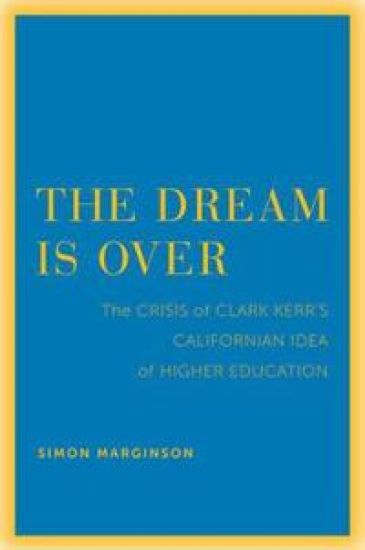
The Dream Is Over

The Dream Is Over

Simon Marginson

University of California Press
2016
pokkari
A free ebook version of this title is available through Luminos, University of California Press's Open Access publishing program for monographs. Visit www.luminosoa.org to learn more. The Dream Is Over tells the extraordinary story of the 1960 Master Plan for Higher Education in California, created by visionary University of California President Clark Kerr and his contemporaries. The Master Plan's equality of opportunity policy brought college within reach of millions of American families for the first time and fashioned the world's leading system of public research universities. The California idea became the leading model for higher education across the world and has had great influence in the rapid growth of universities in China and East Asia. Yet, remarkably, the political conditions supporting the California idea in California itself have evaporated. Universal access is faltering, public tuition is rising, the great research universities face new challenges, and educational participation in California, once the national leader, lags far behind. Can the social values embodied in Kerr's vision be renewed?
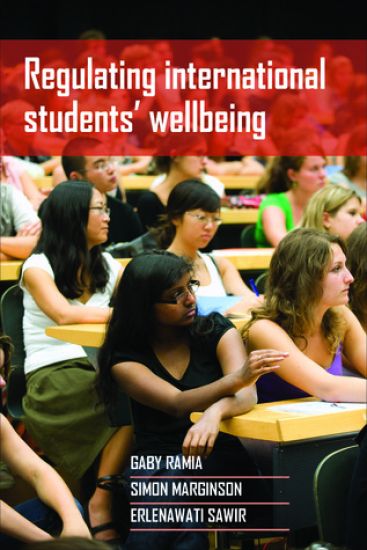
Regulating International Students’ Wellbeing

Regulating International Students’ Wellbeing

Gaby Ramia; Simon Marginson; Erlenawati Sawir

Policy Press
2013
sidottu
Cross-border education is a fast growing and diverse global market, but little is known about how international students actually live. Using international and cross-country comparative analysis, this book explores how governments influence international student welfare, and how students shape their own opportunities. As well as formal regulation by government, ‘informal regulation’ through students’ family, friendship and co-student networks proves vital to the overseas experience. Two case study countries - Australia and New Zealand - are presented and compared in detail. These are placed in the global regulatory and market contexts, with lessons for similar exporter countries drawn. Regulating international students’ wellbeing will be of interest to international students, student representative bodies, education policy makers and administrators, as well as civil servants and policy makers in international organisations. Students and researchers of international and comparative social policy will be drawn into its focus on a little understood but vulnerable global population.
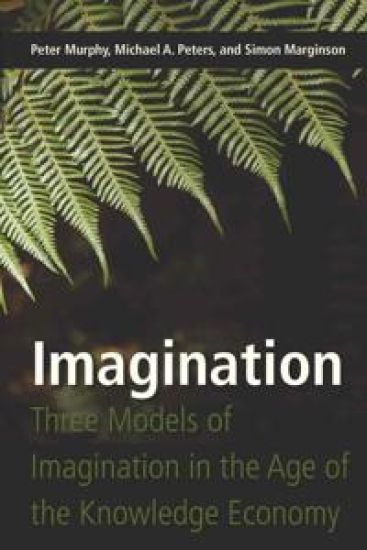
Imagination

Imagination

Peter Murphy; Michael Adrian Peters; Simon Marginson

Peter Lang Publishing Inc
2010
sidottu
Advancement in the arts and sciences is a primary driver of economic production and social policy in post-industrial societies. Imagination steps back and asks ‘what advances the arts and sciences?’ This book explores the collective, social and global dimension of human imagining–and the ambivalent relationship of social institutions, including universities, schools, economies, media and culture industries, to the collective imagination. Basic discovery requires high levels of creative thinking: Imagination looks at the social conditions that make path-breaking thought possible on a large scale. It examines the role of aesthetic, pictorial, digital, paradoxical and other imaginative styles of thinking, and the times and places in which such styles become socially prominent and a significant force in economic and cultural production. It looks at successful societies as they are approaching their peak, when new ideas are driving them forward.
Imagination

Imagination

Peter Murphy; Michael Adrian Peters; Simon Marginson

Peter Lang Publishing Inc
2010
nidottu
Advancement in the arts and sciences is a primary driver of economic production and social policy in post-industrial societies. Imagination steps back and asks ‘what advances the arts and sciences?’ This book explores the collective, social and global dimension of human imagining–and the ambivalent relationship of social institutions, including universities, schools, economies, media and culture industries, to the collective imagination. Basic discovery requires high levels of creative thinking: Imagination looks at the social conditions that make path-breaking thought possible on a large scale. It examines the role of aesthetic, pictorial, digital, paradoxical and other imaginative styles of thinking, and the times and places in which such styles become socially prominent and a significant force in economic and cultural production. It looks at successful societies as they are approaching their peak, when new ideas are driving them forward.
International Student Security

International Student Security

Simon Marginson; Chris Nyland; Erlenawati Sawir; Helen Forbes-Mewett

Cambridge University Press
2010
pokkari
More than three million students globally are on the move each year, crossing borders for their tertiary education. Many travel from Asia and Africa to English speaking countries, led by the United States, including the UK, Australia and New Zealand where students pay tuition fees at commercial rates and prop up an education export sector that has become lucrative for the provider nations. But the 'no frills' commercial form of tertiary education, designed to minimise costs and maximise revenues, leaves many international students inadequately protected and less than satisfied. International Student Security draws on a close study of international students in Australia, and exposes opportunity, difficulty, danger and courage on a massive scale in the global student market. It works through many unresolved issues confronting students and their families, including personal safety, language proficiency, finances, sub-standard housing, loneliness and racism.
Global Creation

Global Creation

Simon Marginson; Peter Murphy; Michael A. Peters

Peter Lang Publishing Inc
2009
nidottu
This lively and original book changes the way we see globalization and the knowledge economy. Creativity, exchange and the open flow of ideas have long shaped states, economies and everyday life. But knowledge now has an extraordinary dynamism. The world is crisscrossed by traffic in people, data and images. A world society is emerging, though governance is yet to reflect this. Global Creation shows that global creativity is transforming in two ways. First, global synchrony and convergence are changing the conception, production and sharing of creative work and this is feeding back into the core structures of the social world. Second, the global dimension is itself a human product and one that is continually being created. This book explores acts of imagining, producing and regulating the global dimension of action in the past, present and future. It will interest all intelligent readers, particularly those engaged with the history of ideas, political economy, sociology, innovation, or business organization. It follows Creativity and the Global Knowledge Economy (Peters, Marginson, Murphy 2009), also published by Peter Lang.
Creativity and the Global Knowledge Economy

Creativity and the Global Knowledge Economy

Michael Adrian Peters; Simon Marginson; Peter Murphy

Peter Lang Publishing Inc
2008
sidottu
This is a major work by three international scholars at the cutting edge of new research that investigates the emerging set of complex relationships between creativity, design, research, higher education and knowledge capitalism. It highlights the role of the creative and expressive arts, of performance, of aesthetics in general, and the significant role of design as an underlying infrastructure for the creative economy. This book tracks the most recent mutation of these serial shifts – from postindustrial economy to the information economy to the digital economy to the knowledge economy to the ‘creative economy’ – to summarize the underlying and essential trends in knowledge capitalism and to investigate post-market notions of open source public space. The book hypothesizes that creative economy might constitute an enlargement of its predecessors that not only democratizes creativity and relativizes intellectual property law, but also emphasizes the social conditions of creative work. It documents how these profound shifts have brought to the forefront forms of knowledge production based on the commons and driven by ideas, not profitability per se; and have given rise to the notion of not just ‘knowledge management’ but the design of ‘creative institutions’ embodying new patterns of work.
Creativity and the Global Knowledge Economy

Creativity and the Global Knowledge Economy

Michael Adrian Peters; Simon Marginson; Peter Murphy

Peter Lang Publishing Inc
2008
nidottu
This is a major work by three international scholars at the cutting edge of new research that investigates the emerging set of complex relationships between creativity, design, research, higher education and knowledge capitalism. It highlights the role of the creative and expressive arts, of performance, of aesthetics in general, and the significant role of design as an underlying infrastructure for the creative economy. This book tracks the most recent mutation of these serial shifts – from postindustrial economy to the information economy to the digital economy to the knowledge economy to the ‘creative economy’ – to summarize the underlying and essential trends in knowledge capitalism and to investigate post-market notions of open source public space. The book hypothesizes that creative economy might constitute an enlargement of its predecessors that not only democratizes creativity and relativizes intellectual property law, but also emphasizes the social conditions of creative work. It documents how these profound shifts have brought to the forefront forms of knowledge production based on the commons and driven by ideas, not profitability per se; and have given rise to the notion of not just ‘knowledge management’ but the design of ‘creative institutions’ embodying new patterns of work.
The Enterprise University

The Enterprise University

Simon Marginson; Mark Considine

Cambridge University Press
2000
pokkari
Throughout the industrialised world, universities have undergone remarkable changes since the mid-1980s. In Australia, interest has been intense, and publication of The Enterprise University was very timely. First published in 2001, it was the first systematic study of the Australian system since the momentous Dawkins reforms ten years earlier. The book is grounded in case studies of most of the major Australian universities: the authors interviewed a large number of senior managers. They also have taken account of global trends and have prepared the book in the light of international research on the university as an institution. The authors contend that the modern university can be understood as an 'enterprise university', characterised by corporate-style executive leadership. In a hard-hitting conclusion they propose novel policies and directions for Australia's higher education system.
Educating Australia

Educating Australia

Simon Marginson

Cambridge University Press
1997
pokkari
This book is the first comprehensive history of Australian education systems, programs and policies of the period since 1960. The narrative of changes in schooling, training and university life is placed in the context of changing policies and governments and evolving economic and social trends. The book draws on economic and sociological data, key texts and political events, anecdotes and a review of other analyses to build its rich picture of the role of education programs in the modernisation of Australian life. The book traces the shift from universal public provision to market systems, with the concomitant change in definitions of participation and equity. It examines the implications of this change for the labour market and the economy, in social policies and in cultural life. An important focus of the book is the discussion of the extension of citizenship through education.
Education and Public Policy in Australia

Education and Public Policy in Australia

Simon Marginson

Cambridge University Press
1993
pokkari
The gap between the demands placed on education in Australia and the resources allocated to it by government has increased dramatically in recent years. The education system is expected to absorb youth unemployment and play a key role in the modernisation of the economy, yet education spending as a proportion of GDP has declined. The notion of education as being important for its own sake and a key to equality in society seems to have been set aside, and economics now dominates debate on education policy. This book summarises and analyses the major issues in Australian education policy today: the relationship between education and work; the reform of higher education and vocational training; outputs, resources and class sizes; the role of government and the public/private debate in schooling. It also examines the main economic theories about education, including human capital theory and free market theory, and finds them seriously inadequate as a basis for policy. The author argues that economic rationalism has installed a free market agenda at the heart of public education policy, with deep consequences for the academic and democratic development of Australia’s citizens.