

Kirjailija
Simon Mills
Kirjat ja teokset yhdessä paikassa: 25 kirjaa, julkaisuja vuosilta 2003-2026, suosituimpien joukossa Dictionary of Modern Herbalism. Vertaile teosten hintoja ja tarkista saatavuus suomalaisista kirjakaupoista.
25 kirjaa
Kirjojen julkaisuhaarukka 2003-2026.


Homicide detective Madeline Bradley is obnoxious, bourbon-fueled, and foul-mouthed but fiercely lovable as she hunts a killer so skilled at his evil machinations that even when you know who the killer is, you won't know who the killer is. Nine Fine Deaths is a deeply intricate murder mystery that takes you on a sweeping worldwide journey to rich and exotic locations where murder is art and police work is a whole new game.About the author. Dr. Simon E. Mills is the author of over sixty books. Business to biography, systems engineering to military strategy, and even children's storybooks make up his work. Nine Fine Deaths, however, is his first novel and has been years in the making. Traveling to a dozen international locations for research and inspiration, Mills has created a web of such murderous intrigue that you'll be driven to re-visit passages repeatedly to let the fine details wash over you as new layers are revealed.Critical Acclaim"If I really had to be murdered, I'd choose Mills to do it. At least it would be entertaining." -Governor David A Paterson."If you think it's frightening to read him, just imagine being married to him." -Molley Mills-Wife of Dr. Mills.
Homicide detective Madeline Bradley is obnoxious, bourbon-fueled, and foul-mouthed but fiercely lovable as she hunts a killer so skilled at his evil machinations that even when you know who the killer is, you won't know who the killer is. Nine Fine Deaths is a deeply intricate murder mystery that takes you on a sweeping worldwide journey to rich and exotic locations where murder is art and police work is a whole new game.About the author. Dr. Simon E. Mills is the author of over sixty books. Business to biography, systems engineering to military strategy, and even children's storybooks make up his work. Nine Fine Deaths, however, is his first novel and has been years in the making. Traveling to a dozen international locations for research and inspiration, Mills has created a web of such murderous intrigue that you'll be driven to re-visit passages repeatedly to let the fine details wash over you as new layers are revealed.Critical Acclaim"If I really had to be murdered, I'd choose Mills to do it. At least it would be entertaining." -Governor David A Paterson."If you think it's frightening to read him, just imagine being married to him." -Molley Mills-Wife of Dr. Mills.
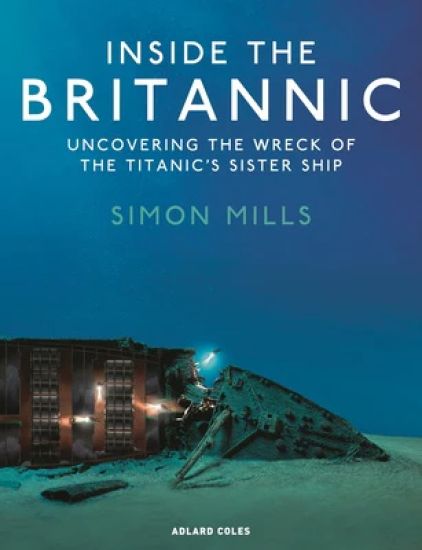
Documenting one of the most comprehensive surveys of a shipwreck ever conducted, Simon Mills’ new book takes you inside the SS Britannic for a unique dive into the past.The Olympic Class ships were intended to be the greatest liners to ever sail the oceans, but the Britannic sank only four years after her sister ship the Titanic. While the wreck of the Titanic is 2 miles below the surface and rapidly deteriorating, the Britannic is much more accessible (only 400ft down) and remains largely intact. One of the largest passenger ships ever to have sunk, her wreck presents a unique opportunity to explore the interior of the Olympic Class liners, and examine areas which on the Titanic simply no longer exist.Simon Mills bought the wreck of the Britannic in 1996 and has spent more time exploring it than anyone else. Inside the Britannic is the sum of decades of work covering every inch of the shipwreck as he searches for answers to century-old questions, and discovers new mysteries to solve. Simon takes a forensic approach but this book is more than just the autopsy report of a ship; it is a fascinating survey supported by stunning, never-before-seen photos from inside the wreck, archival blueprints and original technical schematics of specific areas, and specially recreated digital images of how the ship would have looked.The Britannic may have been lost over a century ago, but Simon Mills’ fascinating new book gives everyone unparalleled access to rediscover her.

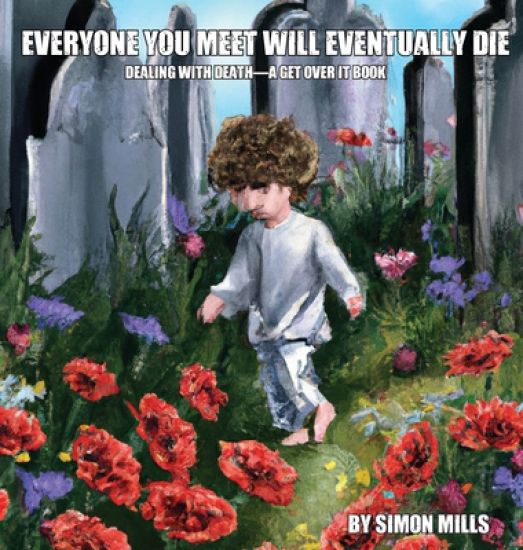
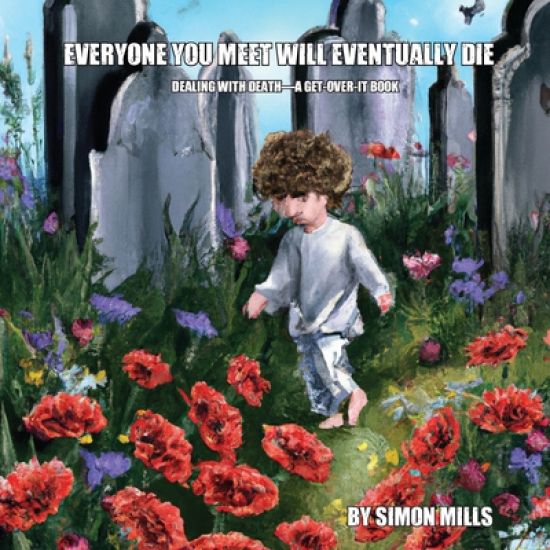
Let's face it, parenting is tough, and the softer parents get, the softer our kids get. Get-Over-It books are designed to broach the tough questions and start the conversation in a humorous way. Everyone You Meet Will Eventually Die just puts it on the table and says it like it is. It doesn't matter where they're going, but they are going.

Let's face it, parenting is tough, and the softer parents get, the softer our kids get. Get-Over-It books are designed to broach the tough questions and start the conversation in a humorous way. Everyone You Meet Will Eventually Die just puts it on the table and says it like it is. It doesn't matter where they're going, but they are going.

In the story of Faust, the eponymous hero makes a so-called deal with the Devil. Frustrated and ambitious, Faust agrees to take the offer of unlimited power. In return, Faust's soul will be lost and damned. The imagery is clear of course. For immediate, albeit temporary power, Faust makes the choice to be doomed rather than continue living his bounded and limited life. The Devil's temptation was too strong, and Faust too shortsighted in his hubristic dreams. I open with this allegory for its imagery, an imagery that seemingly parallels our relationship with our modern technology. By its power we will acquire greater heights of knowledge, material progress, and ease of life. Bounds that may have once chained us have withered away due to the exponential boom of technological growth. Ill-content with anything less, humanity, and Westerners in particular, have thrown themselves behind the utopian dreams that infinite technological development seemingly offers.
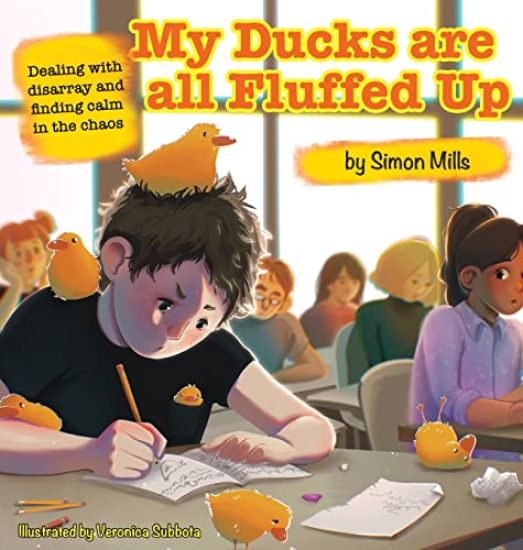
Life throws up its challenges. Endless, unforeseeable obstacles that seem intent on our undoing. I was constantly told to "Get my ducks in a row." Well, my ducks are my ducks; they go where they go. This book is a key to happiness and mental wellness at any age. A "Don't Sweat the small stuff" for new generations with new challenges. A "Chicken Soup for the Soul"- but with ducks-told over a lifetime.
Life throws up its challenges. Endless, unforeseeable obstacles that seem intent on our undoing. I was constantly told to "Get my ducks in a row." Well, my ducks are my ducks; they go where they go. This book is a key to happiness and mental wellness at any age. A "Don't Sweat the small stuff" for new generations with new challenges. A "Chicken Soup for the Soul"- but with ducks-told over a lifetime.
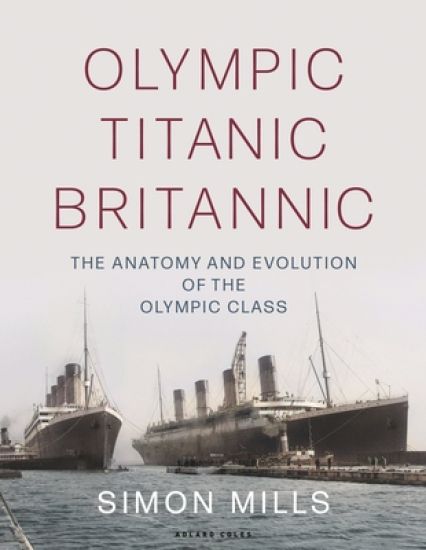
The Titanic. The Britannic. The Olympic. They are some of the most famous ships in history, but for the wrong reasons.The Olympic Class liners were conceived as the largest, grandest ships ever to set sail. Of the three ships built, the first only lost the record for being the largest because she was beaten by the second, and they were both beaten by the third. The class was meant to secure the White Star Line’s reputation as the greatest shipping company on earth. Instead, with the loss of both the Titanic and the Britannic in their first year of service, it guaranteed White Star’s infamy.This unique book tells the extraordinary story of these three extraordinary ships from the bottom up, starting with their conception and construction (and later their modification) and following their very different careers. Behind the technical details of these magnificent ships lies a tragic human story – not just of the lives lost aboard the Titanic and Britannic, but of the designers pushing the limits beyond what was actually possible, engineers unable to prepare for every twist of fate, and ship owners and crew who truly believed a ship could be unsinkable.This fascinating story is told with rare photographs, new computer-generated recreations of the ships, and unique wreck images that explore how well the ships were designed and built. Simon Mills offers unparalleled access to shipbuilders Harland & Wolff’s specification book for the Olympic Class, including original blueprints and - being made widely available for the first time - large fold-out technical drawings showing how these extensive plans were meant to be seen.
Carl Moellenberg's story is one of overcoming enormous obstacles and changing course to find his passion and his true self to live joyously as a long-term survivor. It is a journey of many transformations: from Midwestern boy most interested in music to a fast-paced Wall Street career; from investment banking to a 13-time Tony Award-winner on Broadway; from overcoming several death-defying crises by finding healing, and inspiration from a higher being, and deeper spirituality. Carl hopes that his story will inspire others who face seemingly overwhelming obstacles to find their passion, their reason to live, and to find love.

Despite being the largest of the legendary Olympic-class trio, Britannic is often overlooked in comparison to Olympic and Titanic. Launched on the eve of war in February 1914, Britannic would never see service on the White Star Line’s express service for which she was built. Instead, His Majesty’s Hospital Ship Britannic became vital to the thousands of injured and sick troops who needed transporting back to Britain from the Mediterranean theatre of war. However, her life was cut short when she was suddenly wracked by a mysterious explosion on 21 November 1916 and sank in less than an hour – three times faster than her sister ship Titanic – and yet, thanks to the improvements in safety heralded by the tragedy of her sister, 1,032 of 1,062 on board survived.In this updated and expanded edition of The Unseen Britannic, Simon Mills incorporates previously unseen material to tell a tale of heroism in the First World War and a remarkable ship, which is finally beginning to emerge from the shadow of the Titanic.
A Commerce of Knowledge tells the story of three generations of Church of England chaplains who served the English Levant Company in Syria during the seventeenth and eighteenth centuries. Reconstructing the careers of its protagonists in the cosmopolitan city of Ottoman Aleppo, Simon Mills investigates the links between English commercial and diplomatic expansion, and English scholarly and missionary interests: the study of Middle-Eastern languages; the exploration of biblical and Greco-Roman antiquities; and the early dissemination of Protestant literature in Arabic. Early modern Orientalism is usually conceived as an episode in the history of scholarship. By shifting the focus to Aleppo, A Commerce of Knowledge brings to light the connections between the seemingly separate worlds, tracing the emergence of new kinds of philological and archaeological enquiry in England back to a series of real-world encounters between the chaplains and the scribes, booksellers, priests, rabbis, and sheikhs they encountered in the Ottoman Empire. Setting the careers of its protagonists against a background of broader developments across Protestant and Catholic Europe, Mills shows how the institutionalization of English scholarship, and the later English attempt to influence the Eastern Christian churches, were bound up with the international struggle to establish a commercial foothold in the Levant. He argues that these connections would endure until the shift of British commercial and imperial interests to the Indian subcontinent in the second half of the eighteenth century fostered new currents of intellectual life at home.
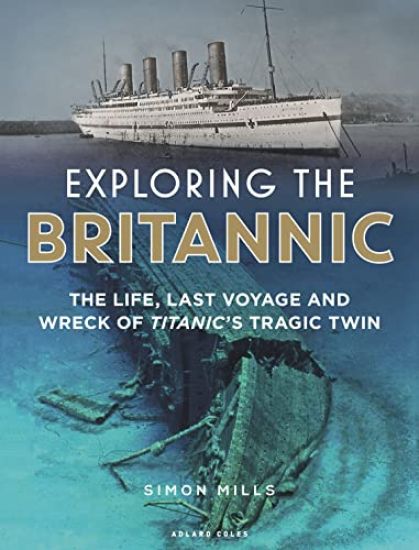
Launched in 1914, two years after the ill-fated voyage of her sister ship, RMS Titanic, the Britannic was intended to be superior to her tragic twin in every way. But war intervened and in 1915 she was requisitioned as a hospital ship. Just one year later, while on her way to collect troops wounded in the Balkans campaign, she fell victim to a mine laid by a German U-boat and tragically sank in the middle of the Aegean Sea.There her wreck lay, at a depth of 400 feet, until it was discovered 59 years later by legendary explorer Jacques Cousteau. In 1996 the wreck was bought by the author of this book, Simon Mills.Exploring the Britannic tells the complete story of this enigmatic ship: her construction, launch and life, her fateful last voyage, and the historical findings resulting from the exploration of the well-preserved wreck over a period of 40 years. With remarkable sonar scans and many never before seen photographs of the wreck, plus fold-out sections of the original Harland & Wolff ship plans, not previously published in their entirety, Exploring the Britannic finally details how the mysteries surrounding the 100-year-old enigma were laid to rest, and what the future might also hold for her.
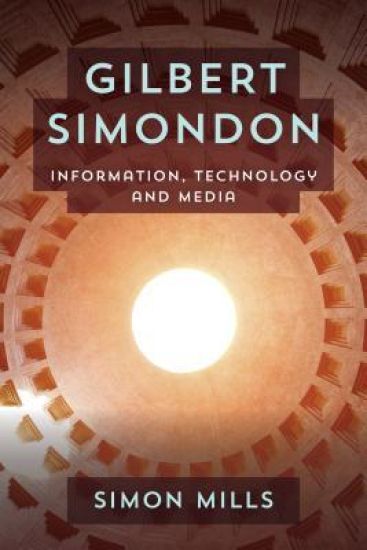
Gilbert Simondon: Information, Technology and Media is a comprehensive introduction to the work of the French philosopher Gilbert Simondon. In particular it examines Simondon's original informational ontology, as developed from a synthesis of Cybernetics, thermodynamics and French epistemology, The book goes on to delineate the role this ontology plays in developing an original account of individuation in the physical, biological and psycho-social regimes. This is done, in part, through reading Simondon with and against other figures in these fields such as Merleau-Ponty and Stuart Kauffman. Additionally, Mills explores Simondon's contribution to epistemology and invention, including an analysis of his important theories of the image-cycle and transindividuality. He also examines Simondon's influence on several contemporary thinkers, including Bernard Stiegler and Bruno Latour, before exploring the relevance of Simondon's work for theorising contemporary media technology.