Kirjojen hintavertailu. Mukana 12 595 353 kirjaa ja 12 kauppaa.

Kirjailija

Simon Pierce

Kirjat ja teokset yhdessä paikassa: 33 kirjaa, julkaisuja vuosilta 2012-2025, suosituimpien joukossa The Artemis Program. Vertaile teosten hintoja ja tarkista saatavuus suomalaisista kirjakaupoista.

33 kirjaa

Kirjojen julkaisuhaarukka 2012-2025.

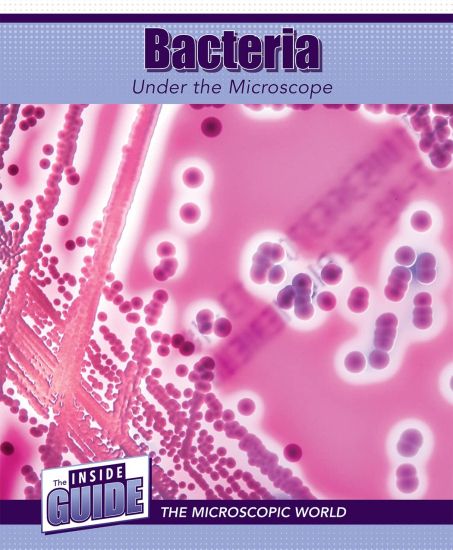
Bacteria Under the Microscope

Bacteria Under the Microscope

Simon Pierce

Cavendish Square Publishing
2023
nidottu
Most people automatically associate bacteria with illness. However, 99 percent of all bacteria are either harmless to humans or actually helpful. For instance, we would not be able to digest food without our gut bacteria. Plants would not grow without bacteria to break down the nutrients in the soil for them. In fact, bacteria's ability to break things down is so helpful that scientists are working on harnessing it to clear plastic, oil, and other pollution from the environment. Informative fact boxes and engaging sidebars give readers an in-depth look at these important microorganisms.
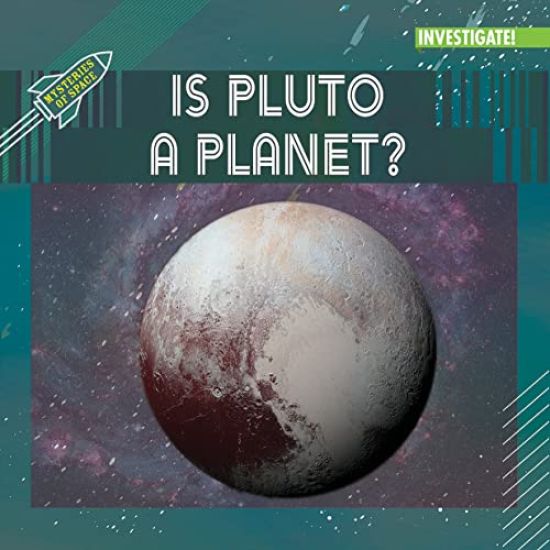
Is Pluto a Planet?

Is Pluto a Planet?

Simon Pierce

Enslow Publishing
2022
sidottu
For many years, children learned in school that there are nine planets in our solar system. The ninth planet, Pluto, was discovered in 1930. However, in 2006, Pluto was demoted. Why did this happen after nearly 80 years? What sets a planet apart from an asteroid, comet, or other celestial body? What exactly is a dwarf planet--Pluto's new designation? Readers learn the answers to these questions and more through engaging text, augmented by informative fact boxes and full-color photographs.
What's a Pandemic?

What's a Pandemic?

Simon Pierce

Kidhaven Publishing
2022
nidottu
The COVID-19 pandemic has completely altered the way people participate in society. Some of these changes are temporary, while others may end up being permanent. While children have certainly heard the word, they may struggle to understand exactly how a pandemic affects them specifically as well as society at large. The engaging main text, enhanced with full-color photographs and informative fact boxes, break down the complex issues surrounding pandemics. A list of age-appropriate ways to get involved give young readers a sense of agency to combat feelings of helplessness that often accompany major world events.
What Are Vaccines?

What Are Vaccines?

Simon Pierce

Kidhaven Publishing
2022
nidottu
Some people have vocally opposed vaccines ever since they were first invented. In the 20th century, the anti-vax movement gained steam as celebrities such as Jenny McCarthy spread false information about their link to autism. The COVID-19 pandemic thrust the issue into the spotlight, and misinformation spread on social media helped turn many people against vaccination. This volume examines the scientific facts about vaccines, dispelling the myths and rumors about their efficacy and safety. In-depth fact boxes, detailed graphic organizers, and a glossary of new terms give readers a deeper understanding of this crucial issue.
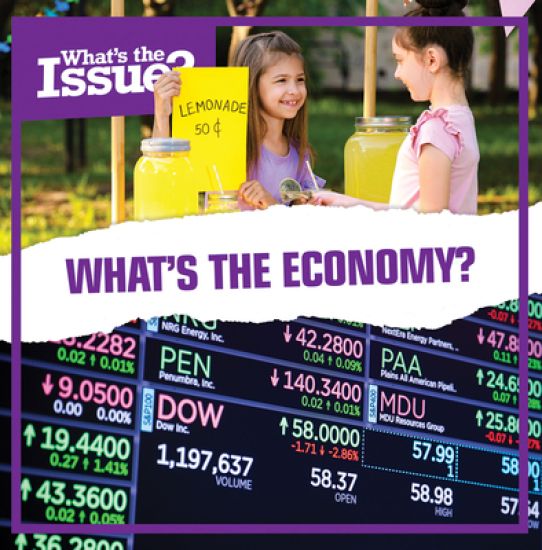
What's the Economy?

What's the Economy?

Simon Pierce

Kidhaven Publishing
2021
sidottu
The economy affects nearly every aspect of a person's life, yet many find it confusing or boring. This outlook can cause people to ignore changes in economic policy that have a profound effect on them. By gaining a deeper understanding of what the economy is and how it affects people, budding activists are more equipped to advocate for themselves and others. Full-color photographs, graphic organizers, and informative fact boxes give readers a basic introduction to the economy and how to get more involved in economic issues. A list of resources gives them a jumping-off point for more in-depth research.
What's the Economy?

What's the Economy?

Simon Pierce

Kidhaven Publishing
2021
nidottu
The economy affects nearly every aspect of a person's life, yet many find it confusing or boring. This outlook can cause people to ignore changes in economic policy that have a profound effect on them. By gaining a deeper understanding of what the economy is and how it affects people, budding activists are more equipped to advocate for themselves and others. Full-color photographs, graphic organizers, and informative fact boxes give readers a basic introduction to the economy and how to get more involved in economic issues. A list of resources gives them a jumping-off point for more in-depth research.
Should Peanuts Be Banned in Schools?

Should Peanuts Be Banned in Schools?

Simon Pierce

Kidhaven Publishing
2021
sidottu
Peanuts are one of the most common--and most deadly--allergens around the world, and the rates of peanut allergies have been on the rise in the 21st century. Fears about exposure to peanuts as well as the large number of people who are affected by them have prompted some schools to ban peanut products. Are these bans effective? Are they fair to the people whose lunch options are thus restricted? This objective text, augmented with engaging fact boxes and vibrant photographs, examines arguments on both sides of this relatable issue for young students.
The Great Depression

The Great Depression

Simon Pierce

Cavendish Square Publishing
2020
sidottu
The Great Depression was a time of severe hardship, especially in the United States. With a quarter of the population out of work, families struggled to survive, obsessively saving money, food, and material to reuse or recycle. This "Depression mentality" stuck with many people for the rest of their lives. Supplemented by historical photographs, annotated quotes, and a fact-filled timeline, this engaging narrative discusses the causes and lingering effects of the Great Depression. Discussion questions at the end of each chapter encourage readers to think critically about this period and how it has impacted the world they live in today.
Sleep Disorders: What Keeps People Up at Night?
Although medical experts know people need sleep to remain healthy, many of the mechanics of sleep remain a mystery, which can make it difficult to diagnose and treat sleep disorders. Through informative main text, annotated quotes, detailed charts, and engaging sidebars, readers learn about these difficulties as well as the realities of living with sleep disorders such as insomnia and narcolepsy. A list of organizations to contact for further resources and support is also available for readers who want to go more in-depth into a particular disorder that they or a loved one may be suffering from.
Epilepsy: Coming to Terms with Chronic Seizures
Epilepsy can be frightening to both the sufferer and their loved ones. However, knowing more about the symptoms and treatment can give people a sense of empowerment. This volume discusses what epilepsy is, how it can be treated, and what can be done for someone who is having a seizure. The narrative is supplemented with in-depth sidebars, full-color photographs, and detailed charts. It dispels the myths surrounding epilepsy and gives readers a clear picture of this challenging disorder.
The Evolutionary Strategies that Shape Ecosystems

The Evolutionary Strategies that Shape Ecosystems

J. Philip Grime; Simon Pierce

John Wiley Sons Inc
2012
nidottu
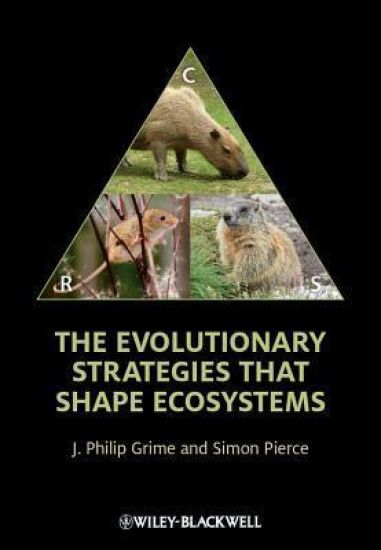
THE EVOLUTIONARY STRATEGIES THAT SHAPE ECOSYSTEMS In 1837 a young Charles Darwin took his notebook, wrote “I think”, and then sketched a rudimentary, stick-like tree. Each branch of Darwin’s tree of life told a story of survival and adaptation – adaptation of animals and plants not just to the environment but also to life with other living things. However, more than 150 years since Darwin published his singular idea of natural selection, the science of ecology has yet to account for how contrasting evolutionary outcomes affect the ability of organisms to coexist in communities and to regulate ecosystem functioning. In this book Philip Grime and Simon Pierce explain how evidence from across the world is revealing that, beneath the wealth of apparently limitless and bewildering variation in detailed structure and functioning, the essential biology of all organisms is subject to the same set of basic interacting constraints on life-history and physiology. The inescapable resulting predicament during the evolution of every species is that, according to habitat, each must adopt a predictable compromise with regard to how they use the resources at their disposal in order to survive. The compromise involves the investment of resources in either the effort to acquire more resources, the tolerance of factors that reduce metabolic performance, or reproduction. This three-way trade-off is the irreducible core of the universal adaptive strategy theory which Grime and Pierce use to investigate how two environmental filters selecting, respectively, for convergence and divergence in organism function determine the identity of organisms in communities, and ultimately how different evolutionary strategies affect the functioning of ecosystems. This book refl ects an historic phase in which evolutionary processes are finally moving centre stage in the effort to unify ecological theory, and animal, plant and microbial ecology have begun to find a common theoretical framework. Companion website This book has a companion website www.wiley.com/go/grime/evolutionarystrategies with Figures and Tables from the book for downloading.
The Evolutionary Strategies that Shape Ecosystems

The Evolutionary Strategies that Shape Ecosystems

J. Philip Grime; Simon Pierce

John Wiley Sons Inc
2012
sidottu
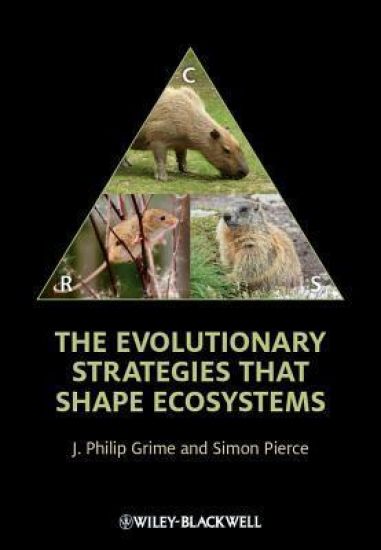
THE EVOLUTIONARY STRATEGIES THAT SHAPE ECOSYSTEMS In 1837 a young Charles Darwin took his notebook, wrote “I think”, and then sketched a rudimentary, stick-like tree. Each branch of Darwin’s tree of life told a story of survival and adaptation – adaptation of animals and plants not just to the environment but also to life with other living things. However, more than 150 years since Darwin published his singular idea of natural selection, the science of ecology has yet to account for how contrasting evolutionary outcomes affect the ability of organisms to coexist in communities and to regulate ecosystem functioning. In this book Philip Grime and Simon Pierce explain how evidence from across the world is revealing that, beneath the wealth of apparently limitless and bewildering variation in detailed structure and functioning, the essential biology of all organisms is subject to the same set of basic interacting constraints on life-history and physiology. The inescapable resulting predicament during the evolution of every species is that, according to habitat, each must adopt a predictable compromise with regard to how they use the resources at their disposal in order to survive. The compromise involves the investment of resources in either the effort to acquire more resources, the tolerance of factors that reduce metabolic performance, or reproduction. This three-way trade-off is the irreducible core of the universal adaptive strategy theory which Grime and Pierce use to investigate how two environmental filters selecting, respectively, for convergence and divergence in organism function determine the identity of organisms in communities, and ultimately how different evolutionary strategies affect the functioning of ecosystems. This book refl ects an historic phase in which evolutionary processes are finally moving centre stage in the effort to unify ecological theory, and animal, plant and microbial ecology have begun to find a common theoretical framework. Companion website This book has a companion website www.wiley.com/go/grime/evolutionarystrategies with Figures and Tables from the book for downloading.