

Kirjailija
Simon Roberts
Kirjat ja teokset yhdessä paikassa: 17 kirjaa, julkaisuja vuosilta 1994-2025, suosituimpien joukossa Order and Dispute. Vertaile teosten hintoja ja tarkista saatavuus suomalaisista kirjakaupoista.
17 kirjaa
Kirjojen julkaisuhaarukka 1994-2025.

Coton de Tulear Training Guide Coton de Tulear Training Includes
Simon Roberts
Desert Thrust Ltd
2023
pokkari
This training guide is a truly unique and informative book which is full of reliable and time tested information - written for the admirers and owners of this wonderful breed. Easy-to-read and in-depth in its nature - you will thoroughly enjoy your experience with this training guide. A wealth of reliable methods and procedures, alongside detailed advice for current or soon-to-be-owners is contained within. Contributed to by a series of specialist dog trainers, this book is certainly a must have addition to your collection.

Coton de Tulear Activities Coton de Tulear Tricks, Games & Agility. Includes
Simon Roberts
Desert Thrust Ltd
2023
pokkari
"Unique in its approach and really helpful with its information - this book is a must have for any owner" Written for the admirers, fans and owners of this wonderful breed, we are confident that you will greatly benefit from the techniques and information in this book. A must have addition to your collection.


Details the role our body plays in how we learn and how we can tap into our body’s knowledge to excel in all facets of life. Ask someone to point to the part of their body responsible for their intelligence and it is highly likely that they will point at their head. This assumption is understandable, given that, for centuries, from Descartes’ “cogito ergo sum” to the computer age, this is what we have been told to think.And yet we all share common experiences that have revealed the incomparable power of “not thinking”. Have you ever struggled to remember your pin number only to hold your fingers out and type it correctly with your hands, played the piano without focusing on remembering the correct notes or listened to your gut feeling when under the pressure of a big decision? All these instances prove that it is time to stop neglecting the role the body plays in our acquisition of knowledge and to explore how it is that brain and body combine to deliver what we view as uniquely human intelligence. You never forgot how to ride a bike did you? In this unique new book, social and business anthropologist Simon Roberts looks at the pivotal role that our body plays in how we learn and reminds us of why we should learn to listen to it more often. Drawing upon an incredible range of cutting-edge science, real-life examples and personal experience, Roberts explores the complexity of even the simplest of tasks that humans perform every day and goes on to explain how, with a greater awareness of the processes at work, we can tap into our full potential and excel in any area of our lives. His proposition isn’t the antidote to big data, cold rationalism, and reductionism. But, as embodied knowledge emerges from our engagement and interaction with the world, the author underlines why intelligence does not solely reside in our brains. If there’s a single, practical message to be taken from it, it is that we should give more credit to the role of the body as a resource for learning about and understanding the world. That means a more ‘sleeves rolled up’, engaged and practical way of ‘learning by doing’ not by rational detachment.

Sex, drugs, gambling, ghosts, drinking, rugby, overseas adventures - and even some police work. Hong Kong on the edge of empire was a place teeming with triads, smugglers, Chinese immigrants and Vietnamese refugees. Simon's memoir of his time in the Hong Kong police force - from the 1970s until after the 1997 handover - is a fast-paced tale of his exploits. From the murky back streets of Kowloon to the open seas in the Marine division, his shocking and hilarious tales offer an alternative look back at what life was really like on the Hong Kong beat.
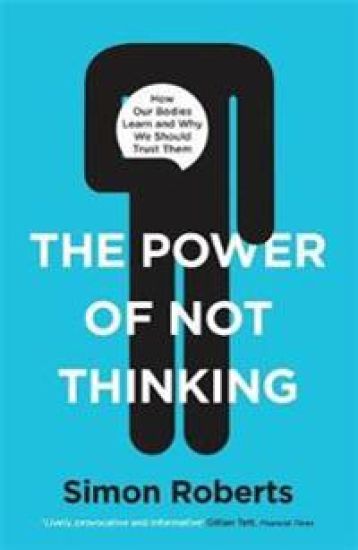
SHORTLISTED FOR BEST SPECIALIST BUSINESS BOOK AT THE BUSINESS BOOK AWARDS 2021Have you ever relied on your hand to remember your pin rather than your memory?Or acted out a golf stroke before going for it?Or listened to your gut on a big decision?In this insightful new book, leading business anthropologist Simon Roberts breaks down the revolutionary idea of embodied knowledge: the information that is unconsciously picked up by our body for use in every area of our lives.Drawing on his own experience working with some of the world's leading industry experts and looking at a range of real-life examples and cutting-edge science, Roberts explains the various ways in which our body acquires, retains and employs information and why we should learn to trust the instincts that inform the most crucial decisions and actions in our lives.The Power of Not Thinking shows why humans are capable of far more than we are currently led to believe.We just have to stop thinking and start trusting our bodies.

This wide-ranging study considers the primary forms of decision-making – negotiation, mediation, umpiring, as well as the processes of avoidance and violence – in the context of rapidly changing discourses and practices of civil justice across a range of jurisdictions. Many contemporary discussions in this field–and associated projects of institutional design–are taking place under the broad but imprecise label of Alternative Dispute Resolution (ADR). The book brings together and analyses a wide range of materials dealing with dispute processes, and the current debates on and developments in civil justice. With the help of analysis of materials beyond those ordinarily found in the ADR literature, it provides a comprehensive and comparative perspective on modes of handling civil disputes. The new edition is thoroughly revised and is extended to include new chapters on avoidance and self-help, the ombuds, Online Dispute Resolution and pressures of institutionalisation.

This wide-ranging study considers the primary forms of decision-making – negotiation, mediation, umpiring, as well as the processes of avoidance and violence – in the context of rapidly changing discourses and practices of civil justice across a range of jurisdictions. Many contemporary discussions in this field–and associated projects of institutional design–are taking place under the broad but imprecise label of Alternative Dispute Resolution (ADR). The book brings together and analyses a wide range of materials dealing with dispute processes, and the current debates on and developments in civil justice. With the help of analysis of materials beyond those ordinarily found in the ADR literature, it provides a comprehensive and comparative perspective on modes of handling civil disputes. The new edition is thoroughly revised and is extended to include new chapters on avoidance and self-help, the ombuds, Online Dispute Resolution and pressures of institutionalisation.


The Great British Seaside
Tony Ray-Jones; David Hurn; Simon Roberts; Martin Parr; Susy Ray-Jones
National Maritime Museum
2018
sidottu
Featuring works by some of Britain's best-loved photographers - Tony Ray-Jones, David Hurn, Martin Parr, and Simon Roberts - this book explores our changing relationship with the seaside over the last six decades and holds up a critical and affectionate mirror to a much-loved and quintessentially British experience. Published to accompany the 2018 National Maritime Museum exhibition The Great British Seaside: Photography from the 1960s to the Present, this book showcases over 100 photographs, including material from each of the photographers' archival collections, newly commissioned works, and never-before-seen images.

For over a decade, Simon Roberts has photographed events and places across Britain that have drawn people together in public, communal experiences. This has often been an implicit theme of his work, the apparent desire for common presence and participation and the need to share a sense of belonging, suggesting something distinctive about our national character and identity. Whilst Roberts's interests have often gravitated towards evolving patterns of leisure, and the consumption and commodification of history, he has also chosen to photograph events and places that have a more immediate, topical significance in the turning of Britain's recent history, and which - summoning the sense of a national survey - collectively form a visual chronicle of the times in which we live. Merrie Albion ranges across several of his projects from the last decade, projects that have explored not only our leisure landscape but also our social and political landscape. The book registers a distinct shift in approach, and tone, from his work in We English. Roberts has exchanged the element of discovery and revelation evident in his earlier travels through England, for a form of 'reporting', in which he responds to subjects and places that are already firmly positioned within the public consciousness - defining locations in our recent national story.
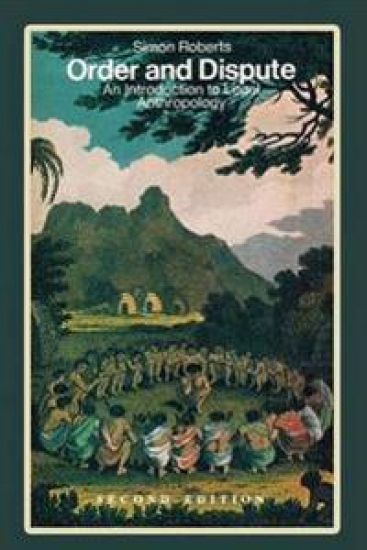


A classic resource in the modern study of the anthropology of law, this acclaimed book is now widely available again in an updated and expanded Second Edition. There are many societies that survive in a remarkably orderly fashion without the help of judges, law courts and policemen. They are small in scale and have relatively simple technologies, lacking those centralized agencies which we associate with legal systems; yet early anthropologists did not hesitate to name "law," along with kinship, politics and religion, as one of the facets of their subject. Simon Roberts contends, however, that legal theory has become too closely identified with our own arrangements in western societies to be of much help in cross-cultural studies of order. But conversely, by looking at the ways in which other societies keep order and solve disputes, he sheds valuable light on the contemporary debates about order in our own society, in a straightforward text which will be accessible to the general reader and anthropologist alike. Now in its Second Edition with a new Foreword and Afterword by the author, this renowned introduction to the anthropology of law is part of the Classics of Law & Society Series from Quid Pro Books. Its modern presentation uses larger font, margins, and dimensions than the original paperback edition, yet adds no more pages.
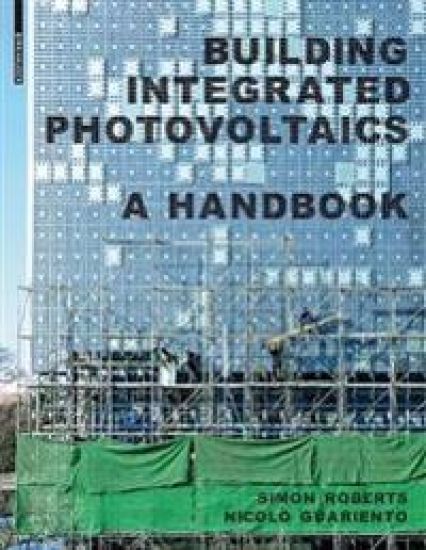
Photovoltaics is one of the most promising technologies for global energy production in the context of the energy crisis and climate change.Photovoltaic modules are now available in such a wide range of forms that nearly all of the usual fl at parts of buildings can be provided with photovoltaic capabilities. In addition to producing energy, these modules offer a number of synergistic effects, since increasingly they are integrated as glazing elements and can perform such other functions as weather protection, solar control, and providing privacy. Special modules such as solar roofing tiles and solar membranes are available for particular applications.This book explains the technology, presents the available products, and communicates clearly how they are used in buildings, with a particular focus on large-scale buildings.It provides architects with all of the necessary know-how to provide a new or existing building with a photovoltaic system, covering both planning and implementation.Last but not least, it is a valuable practical instrument to prepare for communicating with the relevant manufacturers and clients.
The volumes collected in this series are designed to provide an academic analysis of society in mid-20th century Africa through classic texts. The volumes collected in this series were the product of two programmes of publications and research, one in the 1930s and the other in the 1950s. The series as a whole is designed to provide an academic analysis of society in mid-20th century Africa through these texts. Includes a new introduction by Simon Roberts. Schapera's original study was published in 1938. New edition published in association with the International African Institute Germany: Lit Verlag; North America: Transaction Books