Kirjojen hintavertailu. Mukana 12 657 676 kirjaa ja 12 kauppaa.

Kirjailija

Simon Shorvon

Kirjat ja teokset yhdessä paikassa: 7 kirjaa, julkaisuja vuosilta 2006-2022, suosituimpien joukossa Physicians and War. Vertaile teosten hintoja ja tarkista saatavuus suomalaisista kirjakaupoista.

7 kirjaa

Kirjojen julkaisuhaarukka 2006-2022.

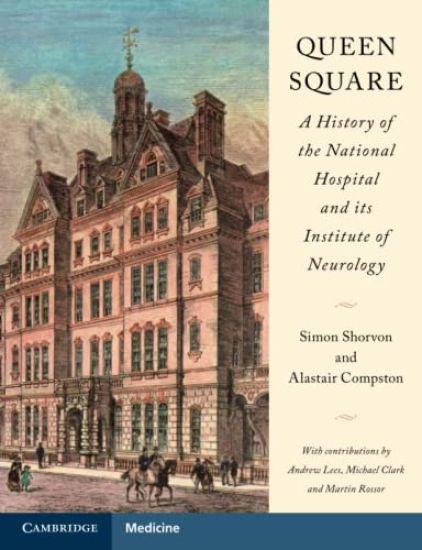
Queen Square: A History of the National Hospital and its Institute of Neurology

Queen Square: A History of the National Hospital and its Institute of Neurology

Simon Shorvon; Alastair Compston

Cambridge University Press
2022
pokkari
As the first neurological hospital in the world, founded in 1859, the National Hospital, Queen Square, and its affiliated Institute of Neurology remain leading neurological centres providing exceptional clinical services, teaching and research. Illustrated by over 100 historical images and much unpublished archival material, this book provides a comprehensive history of the National Hospital, the Institute, and their staff. It relates the ups and downs of the Hospital and Institute in war and peacetime, their financial struggles, many personality conflicts, efforts to remain independent and to maintain neurological dominance, academic and clinical contributions, issues relating to specialisation and subspecialisation and relations between disciplines, and the changing roles of the Hospital and Institute. The history is told from varying perspectives against the backdrop of the evolution of British clinical neuroscience, the special position of London medicine, and the influence of world wars, and is set in the context of modern British social history.
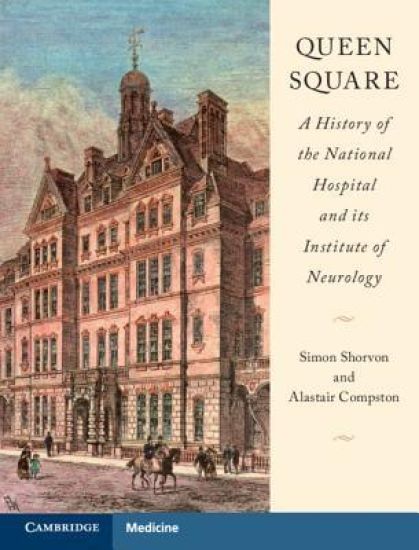
Queen Square: A History of the National Hospital and its Institute of Neurology

Queen Square: A History of the National Hospital and its Institute of Neurology

Simon Shorvon; Alastair Compston

Cambridge University Press
2018
sidottu
As the first neurological hospital in the world, founded in 1859, the National Hospital, Queen Square, and its affiliated Institute of Neurology remain leading neurological centres providing exceptional clinical services, teaching and research. Illustrated by over 100 historical images and much unpublished archival material, this book provides a comprehensive history of the National Hospital, the Institute, and their staff. It relates the ups and downs of the Hospital and Institute in war and peacetime, their financial struggles, many personality conflicts, efforts to remain independent and to maintain neurological dominance, academic and clinical contributions, issues relating to specialisation and subspecialisation and relations between disciplines, and the changing roles of the Hospital and Institute. The history is told from varying perspectives against the backdrop of the evolution of British clinical neuroscience, the special position of London medicine, and the influence of world wars, and is set in the context of modern British social history.
Physicians and War

Physicians and War

Simon Shorvon; Humphrey Hodgson

Little, Brown
2016
pokkari
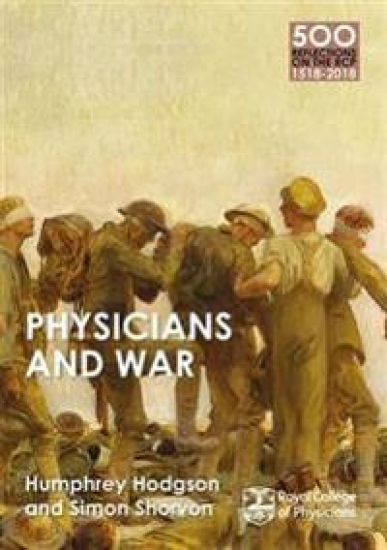
The Royal College of Physicians celebrates its 500th anniversary in 2018, and to observe this landmark is publishing this series of ten books. Each of the books focuses on fifty themed elements that have contributed to making the RCP what it is today, together adding up to 500 reflections on 500 years. Some of the people, ideas, objects and manuscripts featured are directly connected to the College, while others have had an influence that can still be felt in its work. This, the fourth book in the series looks at the Royal College and its impact and influence in war over the centuries.
The End of Epilepsy?

The End of Epilepsy?

Dieter Schmidt; Simon Shorvon

Oxford University Press
2016
sidottu
Epilepsy is more than just a physical condition, the fact of simply having epileptic seizures, it has cultural, geographic and historical meaning and significance which go beyond that of a neurological disorder, and which defy a single perspective. The End of Epilepsy? is a beautifully illustrated, authoritative, and engaging history of medical developments during the modern era of epilepsy, which began with the introduction of Bromides and Hughlings-Jacksons definition of epilepsy in 1860. This thought-provoking book comprehensively covers the definitions of and the attitudes to epilepsy over the past 150 years, and describes the bureaucracies surrounding the condition. It explores the technological advances, and the different management techniques, with antiepileptic drugs and surgery, which have been applied to epilepsy up to the present day. After presenting an overview both of the advances and improvements made, and also of the dark side which has cast shadows over medical and social progress, the authors then critically examine on-going research into new treatments for epilepsy, and provide an insight into the complex underpinnings of scientific and medical practice. They look forward to a time when the condition will no longer be, as Temkin put it, a paradigm of the suffering of both body and soul in disease.
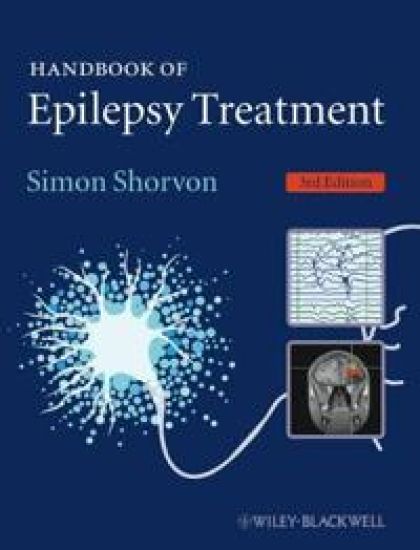
Handbook of Epilepsy Treatment

Handbook of Epilepsy Treatment

Simon Shorvon

Wiley-Blackwell (an imprint of John Wiley Sons Ltd)
2010
nidottu
Make your way through the epilepsy maze Epilepsy is a complex neurological condition. There are many modern treatment options, and treatment should nowadays be tailored to an individual patient. But identification of the best therapy can be a labyrinthine process. The Handbook of Epilepsy Treatment provides a practical pathfinder for treating epilepsy based on published evidence and the author’s 30 years of specialist clinical experience. Direct in style but comprehensive in content, with ample tables and summaries, the Handbook of Epilepsy Treatment covers: Treatment of the different forms and causes of epilepsyTreatment in the different commonly encountered clinical situationsTreatment in children, in adults, in the elderly, in women, in epilepsy syndromes and in those with special needs and requirementsEpilepsy drugs – their pharmacology, kinetics, side effects, effectiveness and practical usage in the clinicEpilepsy surgery – the various types, the indications, assessment and outcome A succinct pharmacopeia summarizes the entire range of anti-epileptic medications with emphasis on effective prescribing in the clinical setting. The Handbook of Epilepsy Treatment will help you and your patient find the best path to control epilepsy for each individual’s situation.
Epilepsy

Epilepsy

Simon Shorvon

Oxford University Press
2009
nidottu
Epilepsy is a common condition, and approximately 3% of the general population will experience a seizure at some point in their lives. The average GP in the UK will have responsibility for about 10 patients with active epilepsy, and about 10-20% of all neurological and paediatric consultations are concerned with epilepsy. Part of the Oxford Neurology Library, this pocketbook is intended to serve as a practical guide for the busy clinician and to summarise, in a clear and concise manner, the clinical presentations, differential diagnosis and investigations and management of this condition, in children and adults. The treatment of epilepsy has been much improved in recent years by the introduction of many new and effective antiepileptic drugs - and this book places strong emphasis on the principles and practice of antiepileptic drug treatment. This book will serve as a useful quick reference to all clinicians who treat patients with epilepsy.
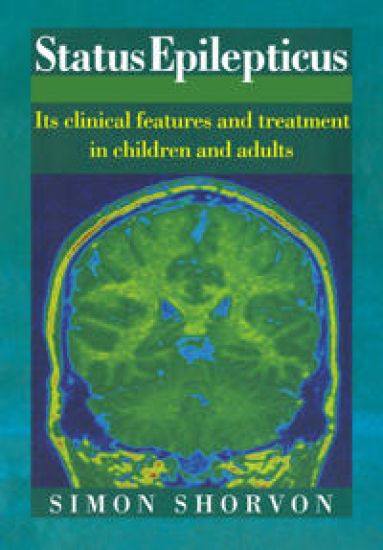
Status Epilepticus

Status Epilepticus

Simon Shorvon

Cambridge University Press
2006
pokkari
This book provides a thorough reappraisal of Status Epilepticus, the severest expression of epilepsy. In the light of modern research it rigorously examines current treatment, critically challenging existing tenets. A scheme of classification is proposed based not solely on seizure type but also on age, pathophysiological mechanisms and clinical features, considering where possible the clinical aspects of status in the context of their scientific basis, whether this is epidemiology, neurophysiology, neuropathology or neuropharmacology. A practical bias is maintained throughout, based on clinical experience, with greatest space devoted to treatment, including reviews of efficacy and toxicity of individual drugs and helpful use of tables to clearly summarize key information. This is a uniquely comprehensive review of the large volume of published literature in this field and will act as an invaluable reference work and practical guide for a wide range of practising clinicians, from neurologists, psychiatrists and paediatricians right through to those involved primarily in emergency medicine.