Kirjojen hintavertailu. Mukana 12 390 323 kirjaa ja 12 kauppaa.

Kirjailija

Simon Watts

Kirjat ja teokset yhdessä paikassa: 14 kirjaa, julkaisuja vuosilta 2006-2022, suosituimpien joukossa Sailing for Everyone. Vertaile teosten hintoja ja tarkista saatavuus suomalaisista kirjakaupoista.

14 kirjaa

Kirjojen julkaisuhaarukka 2006-2022.

Radar Sea Clutter

Radar Sea Clutter

Luke Rosenberg; Simon Watts

INSTITUTION OF ENGINEERING AND TECHNOLOGY
2022
sidottu
The first maritime surveillance radars in World War II quickly discovered that returns from the sea, soon to be known as sea clutter, were often the limiting factor when attempting to detect small targets while controlling false alarms. This remains true for modern radars, where the detection of small, slow moving targets on a rough sea surface remains one of the main drivers for maritime radar design, particularly in the development of detection processing. The design, development and testing of radar signal processing for maritime surveillance requires a very detailed understanding of the characteristics of radar sea clutter and of the combined target and clutter returns. This book provides an updated and comprehensive review of the latest research into radar sea clutter and detection methods for targets in sea clutter. The emphasis is on understanding the characteristics of radar sea clutter as observed with different radars, viewing geometries and environmental conditions. This understanding is assisted by the development of mathematical models that are used in the radar design process. In recent years there has been an increased interest in operating at higher altitudes, resulting in the sea surface being illuminated with larger grazing angles than used in traditional airborne surveillance platforms or ground-based systems. There has also been significant research into bistatic operation, including passive radars using illuminators of opportunity. The use of coherent and multi-aperture systems in maritime radar are also of increasing interest and these new application areas are also covered in this book.
Airborne Maritime Surveillance Radar

Airborne Maritime Surveillance Radar

Simon Watts

Morgan Claypool Publishers
2018
nidottu
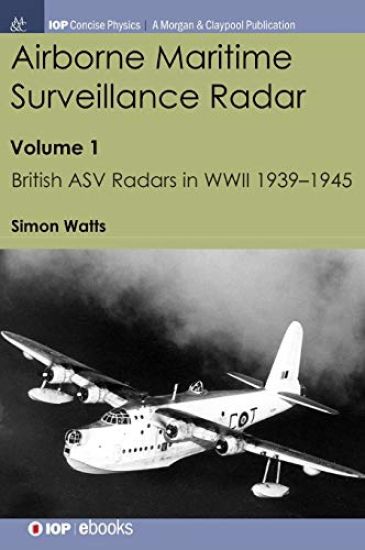
Today, air-to-surface vessel (ASV) radars, or more generally airborne maritime surveillance radars, are installed on maritime reconnaissance aircraft for long-range detection, tracking and classification of surface ships (ASuW--anti-surface warfare) and for hunting submarines (ASW--anti-submarine warfare). Such radars were first developed in the UK during WWII as part of the response to the threat to shipping from German U boats. This book describes the ASV radars developed in the UK and used by RAF Coastal Command during WWII for long-range maritime surveillance.
Airborne Maritime Surveillance Radar

Airborne Maritime Surveillance Radar

Simon Watts

Morgan Claypool Publishers
2018
sidottu
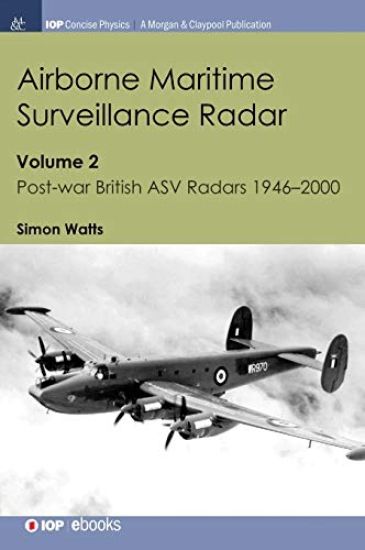
Today, air-to-surface vessel (ASV) radars, or more generally maritime surveillance radars, are installed on maritime reconnaissance aircraft for long-range detection, tracking and classification of surface ships (ASuW - Air to Surface Warfare) and for hunting submarines (ASW - anti-submarine warfare). Such radars were first developed in the UK during WWII as part of the response to the threat to shipping from German U-Boats. This book describes the ASV radars developed in the UK after WWII (1946-2000) and used by the RAF for long-range maritime surveillance.
Airborne Maritime Surveillance Radar

Airborne Maritime Surveillance Radar

Simon Watts

Morgan Claypool Publishers
2018
sidottu
Today, air-to-surface vessel (ASV) radars, or more generally airborne maritime surveillance radars, are installed on maritime reconnaissance aircraft for long-range detection, tracking and classification of surface ships (ASuW--anti-surface warfare) and for hunting submarines (ASW--anti-submarine warfare). Such radars were first developed in the UK during WWII as part of the response to the threat to shipping from German U boats. This book describes the ASV radars developed in the UK and used by RAF Coastal Command during WWII for long-range maritime surveillance.
Airborne Maritime Surveillance Radar

Airborne Maritime Surveillance Radar

Simon Watts

Morgan Claypool Publishers
2018
nidottu
Today, air-to-surface vessel (ASV) radars, or more generally maritime surveillance radars, are installed on maritime reconnaissance aircraft for long-range detection, tracking and classification of surface ships (ASuW - Air to Surface Warfare) and for hunting submarines (ASW - anti-submarine warfare). Such radars were first developed in the UK during WWII as part of the response to the threat to shipping from German U-Boats. This book describes the ASV radars developed in the UK after WWII (1946-2000) and used by the RAF for long-range maritime surveillance.
Airborne Maritime Surveillance Radar, Volume 1

Airborne Maritime Surveillance Radar, Volume 1

Simon Watts

Morgan Claypool Publishers
2018
nidottu
Today, air-to-surface vessel (ASV) radars, or more generally airborne maritime surveillance radars, are installed on maritime reconnaissance aircraft for long-range detection, tracking and classification of surface ships (ASuW-anti-surface warfare) and for hunting submarines (ASW-anti-submarine warfare). Such radars were first developed in the UK during WWII as part of the response to the threat to shipping from German U-boats. This book describes the ASV radars developed in the UK and used by RAF Coastal Command during WWII for long-range maritime surveillance.
Airborne Maritime Surveillance Radar, Volume 2

Airborne Maritime Surveillance Radar, Volume 2

Simon Watts

Morgan Claypool Publishers
2018
nidottu
Today, air-to-surface vessel (ASV) radars, or more generally maritime surveillance radars, are installed on maritime reconnaissance aircraft for long-range detection, tracking and classification of surface ships (ASuW-anti-surface warfare) and for hunting submarines (ASW-anti-submarine warfare). Such radars were first developed in the UK during WWII as part of the response to the threat to shipping from German U-Boats. This book describes the ASV radars developed in the UK after WWII (1946-2000) and used by the RAF for long-range maritime surveillance.
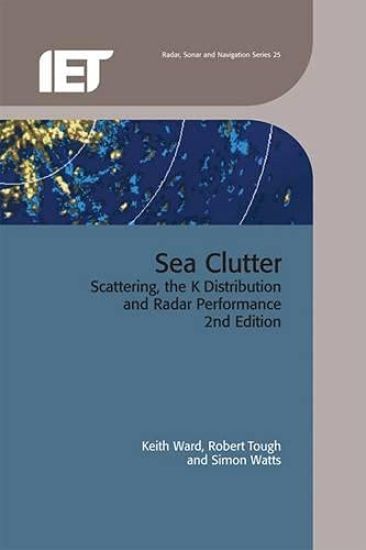
Sea Clutter

Sea Clutter

Keith Ward; Robert Tough; Simon Watts

Institution of Engineering and Technology
2013
sidottu
Sea Clutter: Scattering, the K Distribution and Radar Performance, 2nd Edition gives an authoritative account of our current understanding of radar sea clutter. Topics covered include the characteristics of radar sea clutter, modelling radar scattering by the ocean surface, statistical models of sea clutter, the simulation of clutter and other random processes, detection of small targets in sea clutter, imaging ocean surface features, radar detection performance calculations, CFAR detection, and the specification and measurement of radar performance. The calculation of the performance of practical radar systems is presented in sufficient detail for the reader to be able to tackle related problems with confidence. In this second edition the contents have been fully updated and reorganised to give better access to the different types of material in the book. Extensive new material has been added on the Doppler characteristics of sea clutter and detection processing; bistatic sea clutter measurements; electromagnetic scattering theory of littoral sea clutter and bistatic sea clutter; the use of models for predicting radar performance; and use of the K distribution in other fields.
Doing Q Methodological Research

Doing Q Methodological Research

Simon Watts; Paul Stenner

SAGE Publications Ltd
2012
nidottu
This book is a simple yet thorough introduction to Q methodology, a research technique designed to capture the subjective or first-person viewpoints of its participants. Watts and Stenner outline the key theoretical concepts developed by William Stephenson, the founder of Q methodology, including subjectivity, concourse theory and abduction. They then turn to the practicalities of delivering high quality Q methodological research. Using worked examples throughout, the reader is guided through: • important design issues • the conduct of fieldwork • all the analytic processes of Q methodology, including factor extraction, factor rotation and factor interpretation. Drawing on helpful conceptual introductions to potentially difficult statistical concepts and a step-by-step guide to running Q methodological analyses using dedicated software, this book enables interested readers to design, manage, analyse, interpret and publish their own Q methodological research.
Doing Q Methodological Research

Doing Q Methodological Research

Simon Watts; Paul Stenner

SAGE Publications Ltd
2012
sidottu
This book is a simple yet thorough introduction to Q methodology, a research technique designed to capture the subjective or first-person viewpoints of its participants. Watts and Stenner outline the key theoretical concepts developed by William Stephenson, the founder of Q methodology, including subjectivity, concourse theory and abduction. They then turn to the practicalities of delivering high quality Q methodological research. Using worked examples throughout, the reader is guided through: • important design issues • the conduct of fieldwork • all the analytic processes of Q methodology, including factor extraction, factor rotation and factor interpretation. Drawing on helpful conceptual introductions to potentially difficult statistical concepts and a step-by-step guide to running Q methodological analyses using dedicated software, this book enables interested readers to design, manage, analyse, interpret and publish their own Q methodological research.
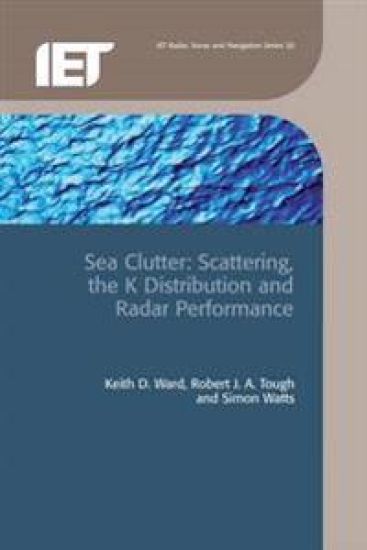
Sea Clutter

Sea Clutter

Keith D. Ward; Robert J.A. Tough; Simon Watts

Institution of Engineering and Technology
2006
sidottu
This book provides an authoritative account of the current understanding of radar sea clutter, describing its phenomenology, EM scattering and statistical modelling and simulation, and their use in the design of detection systems and the calculation and practical evaluation of radar performance. The book pays particular attention to the compound K distribution model developed by the authors during the past 20 years. The evidence for this model, its mathematical formulation and development and practical application to the specification, design and evaluation of radar systems are all discussed. In addition, the book sets the previously empirical development of the K distribution model in the wider context of recent advances in the calculation of low grazing angle electromagnetic scattering and oceanographic modelling of the statistics of the sea surface. The authors discuss in detail the prediction of the performance of specified radar systems; at the same time, their presentation of the underlying physical principles and analytic and computational techniques employed in these calculations is sufficiently comprehensive for the reader to be well equipped to tackle related problems with confidence. These features, and appendices reviewing pertinent mathematical background material and the calculation of low grazing angle scattering by corrugated surfaces, make this book invaluable to specialist radar engineers and academic researchers, while being of considerable interest to the wider applied physics and mathematics communities.