Kirjojen hintavertailu. Mukana 12 657 676 kirjaa ja 12 kauppaa.
Kirjailija
Simon Winchester
Kirjat ja teokset yhdessä paikassa: 57 kirjaa, julkaisuja vuosilta 1999-2026, suosituimpien joukossa Lonely Planet Tales from Nowhere. Vertaile teosten hintoja ja tarkista saatavuus suomalaisista kirjakaupoista.
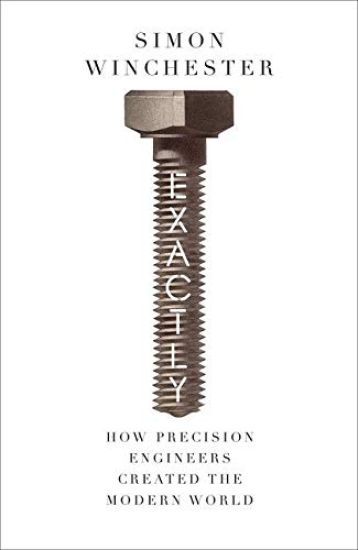
SHORTLISTED FOR THE ROYAL SOCIETY SCIENCE BOOK PRIZE 2018 Bestselling author Simon Winchester writes a magnificent history of the pioneering engineers who developed precision machinery to allow us to see as far as the moon and as close as the Higgs boson.
The revered New York Times bestselling author traces the development of technology from the Industrial Age to the Digital Age to explore the single component crucial to advancement--precision--in a superb history that is both an homage and a warning for our future.The rise of manufacturing could not have happened without an attention to precision. At the dawn of the Industrial Revolution in eighteenth-century England, standards of measurement were established, giving way to the development of machine tools--machines that make machines. Eventually, the application of precision tools and methods resulted in the creation and mass production of items from guns and glass to mirrors, lenses, and cameras--and eventually gave way to further breakthroughs, including gene splicing, microchips, and the Hadron Collider.Simon Winchester takes us back to origins of the Industrial Age, to England where he introduces the scientific minds that helped usher in modern production: John Wilkinson, Henry Maudslay, Joseph Bramah, Jesse Ramsden, and Joseph Whitworth. It was Thomas Jefferson who later exported their discoveries to the fledgling United States, setting the nation on its course to become a manufacturing titan. Winchester moves forward through time, to today's cutting-edge developments occurring around the world, from America to Western Europe to Asia.As he introduces the minds and methods that have changed the modern world, Winchester explores fundamental questions. Why is precision important? What are the different tools we use to measure it? Who has invented and perfected it? Has the pursuit of the ultra-precise in so many facets of human life blinded us to other things of equal value, such as an appreciation for the age-old traditions of craftsmanship, art, and high culture? Are we missing something that reflects the world as it is, rather than the world as we think we would wish it to be? And can the precise and the natural co-exist in society?
"Another gem from one of the world's justly celebrated historians specializing in unusual and always fascinating subjects and people." -- Booklist (starred review)The revered New York Times bestselling author traces the development of technology from the Industrial Age to the Digital Age to explore the single component crucial to advancement--precision--in a superb history that is both an homage and a warning for our future.The rise of manufacturing could not have happened without an attention to precision. At the dawn of the Industrial Revolution in eighteenth-century England, standards of measurement were established, giving way to the development of machine tools--machines that make machines. Eventually, the application of precision tools and methods resulted in the creation and mass production of items from guns and glass to mirrors, lenses, and cameras--and eventually gave way to further breakthroughs, including gene splicing, microchips, and the Hadron Collider.Simon Winchester takes us back to origins of the Industrial Age, to England where he introduces the scientific minds that helped usher in modern production: John Wilkinson, Henry Maudslay, Joseph Bramah, Jesse Ramsden, and Joseph Whitworth. It was Thomas Jefferson who later exported their discoveries to the fledgling United States, setting the nation on its course to become a manufacturing titan. Winchester moves forward through time, to today's cutting-edge developments occurring around the world, from America to Western Europe to Asia.As he introduces the minds and methods that have changed the modern world, Winchester explores fundamental questions. Why is precision important? What are the different tools we use to measure it? Who has invented and perfected it? Has the pursuit of the ultra-precise in so many facets of human life blinded us to other things of equal value, such as an appreciation for the age-old traditions of craftsmanship, art, and high culture? Are we missing something that reflects the world as it is, rather than the world as we think we would wish it to be? And can the precise and the natural co-exist in society?
"Another gem from one of the world's justly celebrated historians specializing in unusual and always fascinating subjects and people." -- Booklist (starred review)The revered New York Times bestselling author traces the development of technology from the Industrial Age to the Digital Age to explore the single component crucial to advancement--precision--in a superb history that is both an homage and a warning for our future.The rise of manufacturing could not have happened without an attention to precision. At the dawn of the Industrial Revolution in eighteenth-century England, standards of measurement were established, giving way to the development of machine tools--machines that make machines. Eventually, the application of precision tools and methods resulted in the creation and mass production of items from guns and glass to mirrors, lenses, and cameras--and eventually gave way to further breakthroughs, including gene splicing, microchips, and the Hadron Collider.Simon Winchester takes us back to origins of the Industrial Age, to England where he introduces the scientific minds that helped usher in modern production: John Wilkinson, Henry Maudslay, Joseph Bramah, Jesse Ramsden, and Joseph Whitworth. It was Thomas Jefferson who later exported their discoveries to the fledgling United States, setting the nation on its course to become a manufacturing titan. Winchester moves forward through time, to today's cutting-edge developments occurring around the world, from America to Western Europe to Asia.As he introduces the minds and methods that have changed the modern world, Winchester explores fundamental questions. Why is precision important? What are the different tools we use to measure it? Who has invented and perfected it? Has the pursuit of the ultra-precise in so many facets of human life blinded us to other things of equal value, such as an appreciation for the age-old traditions of craftsmanship, art, and high culture? Are we missing something that reflects the world as it is, rather than the world as we think we would wish it to be? And can the precise and the natural co-exist in society?
'The greatest enterprise of its kind in history,' was the verdict of British prime minister Stanley Baldwin in June 1928 when The Oxford English Dictionary was finally published. With its 15,490 pages and nearly two million quotations, it was indeed a monumental achievement, gleaned from the efforts of hundreds of ordinary and extraordinary people who made it their mission to catalogue the English language in its entirety. In The Meaning of Everything, Simon Winchester celebrates this remarkable feat, and the fascinating characters who played such a vital part in its execution, from the colourful Frederick Furnivall, cheerful promoter of an all-female sculling crew, to James Murray, self-educated son of a draper, who spent half a century guiding the project towards fruition. Along the way we learn which dictionary editor became the inspiration for Kenneth Grahame's Ratty in The Wind in the Willows, and why Tolkien found it so hard to define 'walrus'. Written by the bestselling author of The Surgeon of Crowthorne and The Map That Changed the World, The Meaning of Everything is an enthralling account of the creation of the world's greatest dictionary.
American military bases encircle the globe. More than two decades after the end of the Cold War, the United States still stations its troops at nearly a thousand locations in foreign lands. These bases are usually taken for granted or overlooked entirely, a little-noticed part of the Pentagon’s vast operations. But in an eye-opening account, Base Nation shows that the worldwide network of bases brings with it a panoply of ills and actually makes the nation less safe in the long run. As David Vine demonstrates, the overseas bases raise geopolitical tensions and provoke widespread antipathy towards the United States. They also undermine American democratic ideals, pushing the United States into partnerships with dictators and perpetuating a system of second-class citizenship in territories such as Guam. They breed sexual violence, destroy the environment, and damage local economies. And their financial cost is staggering: though the Pentagon underplays the numbers, Vine’s accounting proves that the bill approaches $100 billion per year. For many decades, the need for overseas bases has been a quasi-religious dictum of U.S. foreign policy. But in recent years, a bipartisan coalition has finally started to question this conventional wisdom. With the United States withdrawing from Afghanistan and ending thirteen years of war, there is no better time to re-examine the tenets of our military strategy. Base Nation is an essential contribution to that debate.
Martin Parr, one of Britain's best-known contemporary photographers, and President of Magnum, the world-famous photographic agency has undertaken a photo-documentary book project. Oxford is a collection of around 100 photographs documenting an academic year in the life of the university. They capture the day-to-day life of the colleges and University at work and play, and the colourful and arcane rituals that make it so distinctive. His photographs are accompanied by an extended afterword that draws on, and enriches, the photographic material and penned by Simon Winchester, OBE, the British writer, journalist and broadcaster. The very first photo-documentary of Oxford was created by William Henry Fox Talbot. A century and a half later, Martin Parr's new project pays tribute to the great the pioneer of photography, and coincides with the Bodleian Library's bid to secure his personal archive.
The East Coast of North America is a wondrous, intriguing, yet threatened coastline. It zigs and zags for more than 5,500 miles and assumes a multifaceted, jigsaw shape from the Arctic Circle and Greenland across the Canadian Maritimes, then southward into Maine, Cape Cod, New York Harbor, the Delaware and Chesapeake Bays, along the Outer Banks to Charleston Harbor and on to Cape Canaveral. It ends at the Dry Tortugas on the western tip of the Florida Keys near the Tropic of Cancer. In this companion book to "West Coast: Bering to Baja", David Freese has once again captured a vast coastal region—one that presently faces a major peril from the rising sea brought about by global climate change and higher temperatures on land and in the ocean. There are wonderful surprises here. The remote regions of Greenland, northern Quebec, Labrador, and Newfoundland offer breathtaking beauty that many people would not normally associate with the East Coast. As seen from the air, there are estuaries, fjords, cities, rivers, bays, wildlife refuges, parks, beaches, and islands that create stunning abstract shapes which also reveal their fragility in the face of the increasing sea-level. Simon Winchester, always the master storyteller, provides the informative and captivating tale about the geological underpinnings and climatic history of the Atlantic seaboard, including an ominous view of what lies ahead. Jenna Butler, an award-winning Canadian author, gives a noteworthy commentary on Freese’s photographs, as she places the images in context with the expansive North American environment and explains the effects and risks of global warming to the populations of Canada and the United States. East Coast: Arctic to Tropic is the perfect complement to West Coast: Bering to Baja, in which Freese explored the creation and dangers associated with the North American portion of the Pacific’s Ring of Fire. Together, the books provide a unique photographic and historical record of these two remarkably diverse Atlantic and Pacific Coasts at the very start of a true land-and-sea change brought about by human use of fossil fuels. In "East Coast: Arctic to Tropic", an extraordinary sequence of photographs tells the Atlantic tale and reveals an ocean that lies in wait.
Lonely Planet: The world's leading travel guide publisherHumorous tales of travel and misadventure.Lonely Planet knows that some of life's funniest experiences happen on the road. Whether they take the form of unexpected detours, unintended adventures, unidentifiable dinners or unforgettable encounters, they can give birth to our most found travel lessons, and our most memorable - and hilarious - travel stories.These 31 globegirdling tales that run the gamut from close-encounter safaris to loss-of-face follies, hair-raising rides to culture-leaping brides, eccentric expats to mind-boggling repasts, wrong roads taken to agreements mistaken. The collection brings together some of the world's most renowned travellers and storytellers with previously unpublished writers.Includes stories by Wickam Boyle, Tim Cahill, Joshua Clark, Sean Condon, Chistopher R.Cox, David Downie, Holly Erikson, Bill Fink, Don George, Karl Taro Greenfeld, Jeff Grenwald, Pico Iyer, Amanda Jones, Kathie Kertesz, Doug Lansky, Alexander Ludwick, Linda Watanabe McFerrin, Jan Morris, Brooke Neill, Rolf Potts, Laura Resau, Michelle Richmond, Alana Semuels, Deborah Steg, Judy Tierney, Edwin Tucker, Jeff Vize, Danny Wallace, Kelly Watton, Simon Wichester, Michelle WittonAbout Lonely Planet: Started in 1973, Lonely Planet has become the world's leading travel guide publisher with guidebooks to every destination on the planet, as well as an award-winning website, a suite of mobile and digital travel products, and a dedicated traveller community. Lonely Planet's mission is to enable curious travellers to experience the world and to truly get to the heart of the places where they travel.TripAdvisor Travellers' Choice Awards 2012 and 2013 winner in Favorite Travel Guide category'Lonely Planet guides are, quite simply, like no other.' - New York Times'Lonely Planet. It's on everyone's bookshelves, it's in every traveller's hands. It's on mobile phones. It's on the Internet. It's everywhere, and it's telling entire generations of people how to travel the world.' - Fairfax Media (Australia) *#1 in the world market share - source: Nielsen Bookscan. Australia, UK and USA. March 2012-January 2013
On a summer's day in 1858, in a garden behind Christ Church College in Oxford, Charles Dodgson, a lecturer in mathematics, photographed six-year-old Alice Liddell, the daughter of the college dean, with a Thomas Ottewill Registered Double Folding camera, recently purchased in London. Simon Winchester deftly uses the resulting image--as unsettling as it is famous, and the subject of bottomless speculation--as the vehicle for a brief excursion behind the lens, a focal point on the origins of a classic work of English literature. Dodgson's love of photography framed his view of the world, and was partly responsible for transforming a shy and half-deaf mathematician into one of the world's best-loved observers of childhood. Little wonder that there is more to "Alice Liddell as the Beggar Maid" than meets the eye. Using Dodgson's published writings, private diaries, and of course his photographic portraits, Winchester gently exposes the development of Lewis Carroll and the making of his Alice. Acclaim for Simon Winchester "An exceptionally engaging guide at home everywhere, ready for anything, full of gusto and seemingly omnivorous curiosity." --Pico Iyer, The New York Times Book Review "A master at telling a complex story compellingly and lucidly." --USA Today "Extraordinarily graceful." --Time "Winchester is an exquisite writer and a deft anecdoteur." --Christopher Buckley "A lyrical writer and an indefatigable researcher." --Newsweek
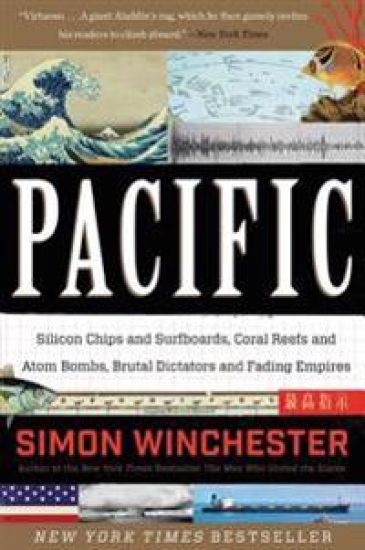
One of Library Journal's 10 Best Books of 2015Following his acclaimed Atlantic and The Men Who United the States, New York Times bestselling author Simon Winchester offers an enthralling biography of the Pacific Ocean and its role in the modern world, exploring our relationship with this imposing force of nature.As the Mediterranean shaped the classical world, and the Atlantic connected Europe to the New World, the Pacific Ocean defines our tomorrow. With China on the rise, so, too, are the American cities of the West coast, including Seattle, San Francisco, and the long cluster of towns down the Silicon Valley.Today, the Pacific is ascendant. Its geological history has long transformed us--tremendous earthquakes, volcanoes, and tsunamis--but its human history, from a Western perspective, is quite young, beginning with Magellan's sixteenth-century circumnavigation. It is a natural wonder whose most fascinating history is currently being made.In telling the story of the Pacific, Simon Winchester takes us from the Bering Strait to Cape Horn, the Yangtze River to the Panama Canal, and to the many small islands and archipelagos that lie in between. He observes the fall of a dictator in Manila, visits aboriginals in northern Queensland, and is jailed in Tierra del Fuego, the land at the end of the world. His journey encompasses a trip down the Alaska Highway, a stop at the isolated Pitcairn Islands, a trek across South Korea and a glimpse of its mysterious northern neighbor.Winchester's personal experience is vast and his storytelling second to none. And his historical understanding of the region is formidable, making Pacific a paean to this magnificent sea of beauty, myth, and imagination that is transforming our lives.
One of Library Journal's 10 Best Books of 2015Following his acclaimed Atlantic and The Men Who United the States, New York Times bestselling author Simon Winchester offers an enthralling biography of the Pacific Ocean and its role in the modern world, exploring our relationship with this imposing force of nature.As the Mediterranean shaped the classical world, and the Atlantic connected Europe to the New World, the Pacific Ocean defines our tomorrow. With China on the rise, so, too, are the American cities of the West coast, including Seattle, San Francisco, and the long cluster of towns down the Silicon Valley.Today, the Pacific is ascendant. Its geological history has long transformed us--tremendous earthquakes, volcanoes, and tsunamis--but its human history, from a Western perspective, is quite young, beginning with Magellan's sixteenth-century circumnavigation. It is a natural wonder whose most fascinating history is currently being made.In telling the story of the Pacific, Simon Winchester takes us from the Bering Strait to Cape Horn, the Yangtze River to the Panama Canal, and to the many small islands and archipelagos that lie in between. He observes the fall of a dictator in Manila, visits aboriginals in northern Queensland, and is jailed in Tierra del Fuego, the land at the end of the world. His journey encompasses a trip down the Alaska Highway, a stop at the isolated Pitcairn Islands, a trek across South Korea and a glimpse of its mysterious northern neighbor.Winchester's personal experience is vast and his storytelling second to none. And his historical understanding of the region is formidable, making Pacific a paean to this magnificent sea of beauty, myth, and imagination that is transforming our lives.
Travelling the circumference of the truly gigantic Pacific, Simon Winchester tells the story of the worldâ??s largest body of water, and â?? in matters economic, political and military â?? the ocean of the future.
Simon Winchester, the acclaimed New York Times bestselling author of Atlantic and The Professor and the Madman, delivers his first book about America: a fascinating popular history that illuminates the men who toiled fearlessly to discover, connect, and bond the citizenry and geography of the U.S.A. from its beginnings.How did America become "one nation, indivisible"? What unified a growing number of disparate states into the modern country we recognize today? To answer these questions, Winchester follows in the footsteps of America's most essential explorers, thinkers, and innovators, such as Lewis and Clark and the leaders of the Great Surveys; the builders of the first transcontinental telegraph and the powerful civil engineer behind the Interstate Highway System. He treks vast swaths of territory, from Pittsburgh to Portland, Rochester to San Francisco, Seattle to Anchorage, introducing the fascinating people who played a pivotal role in creating today's United States.Throughout, he ponders whether the historic work of uniting the States has succeeded, and to what degree. Featuring 32 illustrations throughout the text, The Men Who United the States is a fresh look at the way in which the most powerful nation on earth came together.
"Simon Winchester never disappoints, and The Men Who United the States is a lively and surprising account of how this sprawling piece of geography became a nation. This is America from the ground up. Inspiring and engaging." --Tom BrokawSimon Winchester, acclaimed New York Times bestselling author of Atlantic and The Professor and the Madman, delivers his first book about America: a fascinating popular history that illuminates the men who toiled fearlessly to discover, connect, and bond the citizenry and geography of the U.S.A. from its beginnings.How did America become "one nation, indivisible"? What unified a growing number of disparate states into the modern country we recognize today? To answer these questions, Winchester follows in the footsteps of America's most essential explorers, thinkers, and innovators, such as Lewis and Clark and the leaders of the Great Surveys; the builders of the first transcontinental telegraph and the powerful civil engineer behind the Interstate Highway System. He treks vast swaths of territory, from Pittsburgh to Portland, Rochester to San Francisco, Seattle to Anchorage, introducing the fascinating people who played a pivotal role in creating today's United States.Throughout, he ponders whether the historic work of uniting the States has succeeded, and to what degree. Featuring 32 illustrations throughout the text, The Men Who United the States is a fresh look at the way in which the most powerful nation on earth came together.
Simon Winchester, the acclaimed New York Times bestselling author of Atlantic and The Professor and the Madman, delivers his first book about America: a fascinating popular history that illuminates the men who toiled fearlessly to discover, connect, and bond the citizenry and geography of the U.S.A. from its beginnings.How did America become "one nation, indivisible"? What unified a growing number of disparate states into the modern country we recognize today? To answer these questions, Winchester follows in the footsteps of America's most essential explorers, thinkers, and innovators, such as Lewis and Clark and the leaders of the Great Surveys; the builders of the first transcontinental telegraph and the powerful civil engineer behind the Interstate Highway System. He treks vast swaths of territory, from Pittsburgh to Portland, Rochester to San Francisco, Seattle to Anchorage, introducing the fascinating people who played a pivotal role in creating today's United States.Throughout, he ponders whether the historic work of uniting the States has succeeded, and to what degree. Featuring 32 illustrations throughout the text, The Men Who United the States is a fresh look at the way in which the most powerful nation on earth came together.
Filled with wit and insight, this is a fascinating tour of Venice from an artist's perspective. The city of Venice has always provided an almost irresistible lure for both writers and artists. Henry James loved it, as did Ruskin, Browning, Pound, and Brodsky. For artists, it has been a compulsory magnet since the time of Bellini and Canaletto. By the 19th century there was hardly an artist of note - Whistler and Turner, Sargent and Prendergas - who was not seduced by the city's charms, history, and aesthetic heritage. For the depiction of Venice by artists, it's a high bar that's been set, but Adam Van Doren, grandson of the Pulitzer prize-winning poet Mark Van Doren, convincingly confronts the competition in this charming memoir, a verbal and visual account of his love affair with the city. His story is personal; like all other artists, he sees the city through his own eyes, but he is also well-informed historically, lacing his tour with information, opinion, and wit.
There is no more beautiful or alluring coast in the world than the West Coast of North America: a 5,000-mile-long region that extends from the Aleutian Islands of Alaska to Canada's British Columbia, south to Washington, Oregon, and California, and then to Baja California in Mexico. No photographer until David Freese has explored the various and wondrous landscapes along the Pacific Ocean in such depth, making this the first book to look comprehensively at what makes the natural beauty of this particular coast so memorable. Behind the scenery, of course, lie the geologic forces that have created the West Coast landscapes that we now admire, explore, and praise. The engaging and informative text by renowned author Simon Winchester grounds us in understanding the deep relationship between geology and scenery. And Naomi Rosenblum, the esteemed photographic historian, writer, curator, and art critic, firmly establishes David Freese's place among the great landscape photographers of the past and present. In every photograph, his unique vision of nature and of place comes shining through. West Coast: Bering to Baja is a major publishing enterprise that will appeal to book-lovers of photography, nature, and those who dream of North America's West Coast. For here we see the vital connection between art and science merge in ways previously unseen for this special region of the world.
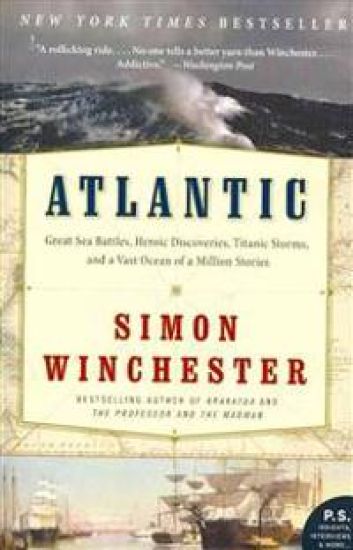
"Variably genial, cautionary, lyrical, admonitory, terrifying, horrifying and inspiring...A lifetime of thought, travel, reading, imagination and memory inform this affecting account." --Kirkus Reviews (starred review)Blending history and anecdote, geography and reminiscence, science and exposition, New York Times bestselling author Simon Winchester tells the breathtaking saga of the Atlantic Ocean. A gifted storyteller and consummate historian, Winchester sets the great blue sea's epic narrative against the backdrop of mankind's intellectual evolution, telling not only the story of an ocean, but the story of civilization. Fans of Winchester's Krakatoa, The Man Who Loved China, and The Professor and the Madman will love this masterful, penetrating, and resonant tale of humanity finding its way across the ocean of history.