Kirjojen hintavertailu. Mukana 12 152 606 kirjaa ja 12 kauppaa.

Kirjailija

Simon Winlow

Kirjat ja teokset yhdessä paikassa: 18 kirjaa, julkaisuja vuosilta 2001-2025, suosituimpien joukossa Violent Night. Vertaile teosten hintoja ja tarkista saatavuus suomalaisista kirjakaupoista.

18 kirjaa

Kirjojen julkaisuhaarukka 2001-2025.

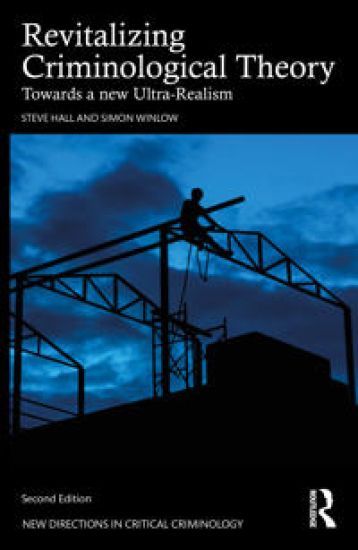
Revitalizing Criminological Theory

Revitalizing Criminological Theory

Steve Hall; Simon Winlow

TAYLOR FRANCIS LTD
2025
nidottu
The second edition of Revitalizing Criminological Theory is a substantial revision and expansion of the first edition. Ultra-realism is a unique school of criminological thought currently establishing itself in the discipline despite resistance from traditional schools. The second edition still provides the undergraduate and postgraduate student reader with an invaluable guide to existing schools of thought and their roots in politics and philosophy, but with updated commentary on their intellectual flaws.In the first edition, Hall and Winlow introduced a number of important new concepts that laid the foundations for an alternative theoretical framework and research programme in criminology. In three additional chapters written specially for this edition, they introduce further concepts and substantive revisions to the theoretical framework. They also outline and discuss in detail the growing body of award-winning criminological projects conducted by a new generation of researchers who have adopted and mobilised ultra-realist thinking over the past ten years. During this period of time, ultra-realism has also made significant progress towards its primary objectives of understanding human motivations, constructing insightful representations of reality and answering the fundamental zemiological question of why some human beings risk inflicting harm on others to further their own interests or achieve various ends. The philosophical and psychosocial approaches outlined in the first edition are now significantly advanced and able to offer a more detailed answer to this question and a convincing alternative to the traditional paradigms of conservatism, neoclassicism and left liberalism. Ultra-realism is now in a position to make some substantive contributions to the debate on the depth of political intervention required to get serious about reducing the impact of crime and harm on the lives of ordinary people.This book is essential reading for academics and students engaged in the study of criminology, sociology, social psychology, the philosophy of social science and the history of crime.
Revitalizing Criminological Theory

Revitalizing Criminological Theory

Steve Hall; Simon Winlow

TAYLOR FRANCIS LTD
2025
sidottu
The second edition of Revitalizing Criminological Theory is a substantial revision and expansion of the first edition. Ultra-realism is a unique school of criminological thought currently establishing itself in the discipline despite resistance from traditional schools. The second edition still provides the undergraduate and postgraduate student reader with an invaluable guide to existing schools of thought and their roots in politics and philosophy, but with updated commentary on their intellectual flaws.In the first edition, Hall and Winlow introduced a number of important new concepts that laid the foundations for an alternative theoretical framework and research programme in criminology. In three additional chapters written specially for this edition, they introduce further concepts and substantive revisions to the theoretical framework. They also outline and discuss in detail the growing body of award-winning criminological projects conducted by a new generation of researchers who have adopted and mobilised ultra-realist thinking over the past ten years. During this period of time, ultra-realism has also made significant progress towards its primary objectives of understanding human motivations, constructing insightful representations of reality and answering the fundamental zemiological question of why some human beings risk inflicting harm on others to further their own interests or achieve various ends. The philosophical and psychosocial approaches outlined in the first edition are now significantly advanced and able to offer a more detailed answer to this question and a convincing alternative to the traditional paradigms of conservatism, neoclassicism and left liberalism. Ultra-realism is now in a position to make some substantive contributions to the debate on the depth of political intervention required to get serious about reducing the impact of crime and harm on the lives of ordinary people.This book is essential reading for academics and students engaged in the study of criminology, sociology, social psychology, the philosophy of social science and the history of crime.
The Politics of Nostalgia

The Politics of Nostalgia

Simon Winlow

Emerald Publishing Limited
2025
nidottu
For ordinary people today, the future seems dark and forbidding. In generations gone by, parents looked forward with optimism, confident their children would do better. Not anymore. Standards of living continue to fall. Our institutions seem redundant, our cities dilapidated and dysfunctional. Electoral systems seem incapable of driving positive change. What is there to be optimistic about? A multiplicity of escalating pressures and a growing fear of the future encourage people to look to the past to identify something positive, and the bittersweet sting of nostalgia now plays a key role in working-class politics and community life. But how should we understand our increasingly common retreat into nostalgia? In this sweeping ethnography, Simon Winlow explores our common desire to take refuge in the past, and what it means for our political future.
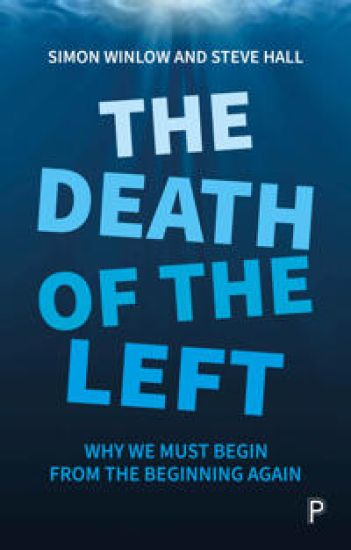
The Death of the Left

The Death of the Left

Simon Winlow; Steve Hall

Bristol University Press
2022
nidottu
The left is dead. Its ailments cannot be cured. The only way to resurrect what was once valuable in leftist politics is to declare the left dead and begin from the beginning again. Winlow and Hall identify the root causes of its maladies, describe how new cultural obsessions displaced core unifying principles and explore the yawning chasm that now separates the left from the working class. Drawing upon a wealth of historical evidence to structure their story of entryism, corruption, fragmentation and decline, they close the book by outlining how a new reincarnation of the left can win in the 21st century.
The Rise of the Right

The Rise of the Right

Simon Winlow; Steve Hall; James Treadwell

Policy Press
2017
nidottu
The shock Brexit result highlighted a worrying trend: underemployed white men and women who have seen their standard of living fall, their communities disintegrate and their sense of value, function and inclusion diminish, desperately want a mainstream political party to defend their interests. However, no such party exists. These men and women cannot connect their declining fortunes and growing frustrations to their true cause. Instead, immigrants are scapegoated and groups like the English Defence League (EDL) emerge. This book is the first to offer an accessible and uncompromising look at the EDL. It aims to alter thinking about working-class politics and the rise of right-wing nationalism in the de-industrialised and decaying towns and cities of England. The rise of the right among the working class, the authors claim, is inextricably connected to the withdrawal of the political left from traditional working-class communities, and the left’s refusal to advance the economic interests of those who have suffered most from neoliberal economic restructuring. Incisive, contentious and boundary-breaking, it uses the voices of men and women who now support far-right political groups to address the total failure of mainstream parliamentary politics and the rising tide of frustration, resentment and anger.
Riots and Political Protest

Riots and Political Protest

Simon Winlow; Steve Hall; Daniel Briggs; James Treadwell

Routledge
2015
nidottu
The years 2008 to 2013 saw a new generation of political protestors take to the streets. Riots disrupted many Western cities and new protest movements emerged, keen to address a bleak context of economic collapse and austerity politics. In this groundbreaking new study, Winlow, Hall, Briggs and Treadwell push past the unworldly optimism of the liberal left to offer an illuminating account of the enclosure and vacuity of contemporary politics. Focusing on the English riots of 2011, the ongoing crisis in Greece, the Indignados, 15M and Podemos in Spain, the Occupy movement in New York and London and the English Defence League in northern England, this book uses original empirical data to inform a strident theoretical critique of our post-political present. It asks: what are these protest groups fighting for, and what are the chances of success?Written by leading criminological theorists and researchers, this book makes a major contribution to contemporary debates on social order, politics and cultural capitalism. It illuminates the epochal problems we face today. Riots and Political Protest is essential reading for academics and students engaged in the study of political sociology, criminological theory, political theory, sociological theory and the sociology of deviance.
Riots and Political Protest

Riots and Political Protest

Simon Winlow; Steve Hall; Daniel Briggs; James Treadwell

Routledge
2015
sidottu
The years 2008 to 2013 saw a new generation of political protestors take to the streets. Riots disrupted many Western cities and new protest movements emerged, keen to address a bleak context of economic collapse and austerity politics. In this groundbreaking new study, Winlow, Hall, Briggs and Treadwell push past the unworldly optimism of the liberal left to offer an illuminating account of the enclosure and vacuity of contemporary politics. Focusing on the English riots of 2011, the ongoing crisis in Greece, the Indignados, 15M and Podemos in Spain, the Occupy movement in New York and London and the English Defence League in northern England, this book uses original empirical data to inform a strident theoretical critique of our post-political present. It asks: what are these protest groups fighting for, and what are the chances of success?Written by leading criminological theorists and researchers, this book makes a major contribution to contemporary debates on social order, politics and cultural capitalism. It illuminates the epochal problems we face today. Riots and Political Protest is essential reading for academics and students engaged in the study of political sociology, criminological theory, political theory, sociological theory and the sociology of deviance.
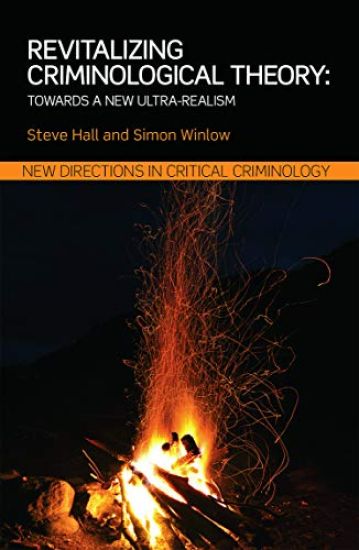
Revitalizing Criminological Theory:

Revitalizing Criminological Theory:

Steve Hall; Simon Winlow

Routledge
2015
nidottu
This book provides a short, comprehensive and accessible introduction to Ultra-Realism: a unique and radical school of criminological thought that has been developed by the authors over a number of years. After first outlining existing schools of thought, their major intellectual flaws and their underlying politics in a condensed guide that will be invaluable to all undergraduate and postgraduate students, Hall and Winlow introduce a number of important new concepts to criminology and suggest a new philosophical foundation, theoretical framework and research programme. These developments will enhance the discipline’s ability to explain human motivations, construct insightful representations of reality and answer the fundamental question of why some human beings risk inflicting harm on others to further their own interests or achieve various ends.Combining new philosophical and psychosocial approaches with a clear understanding of the shape of contemporary global crime, this book presents an intellectual alternative to the currently dominant paradigms of conservatism, neoclassicism and left-liberalism. In using an advanced conception of "harm", Hall and Winlow provide original explanations of criminal motivations and make the first steps towards a paradigm shift that will help criminology to illuminate the reality of our times.This book is essential reading for academics and students engaged in the study of criminology, sociology, criminological theory, social theory, the philosophy of social sciences and the history of crime.
Rethinking Social Exclusion

Rethinking Social Exclusion

Simon Winlow; Steve Hall

SAGE Publications Ltd
2013
nidottu
‘…classic Winlow and Hall – bleak, brilliant and unmatched in the art of rethinking crucial social issues. Enlightening, and rather scary.’ - Professor Beverley Skeggs, Goldsmiths, University of London ‘This superb book inhabits a unique theoretical space and demonstrates Winlow and Hall at their brilliant best as theorists of contemporary social exclusion.’ - Professor John Armitage, University of Southampton ‘…making exemplary use of critical theory, this book represents a powerful, rallying response to Benjamin's notion that "It is only for the sake of those without a hope that hope is given to us"’. - Dr Paul A. Taylor, author of Zizek and the Media ‘… an intellectual tour de force. Winlow and Hall, outriders of a radically different political economy for our era, have done it again. Their latest book is the critical criminology book of the decade, and the best account of capitalism since the 2008 crash… A devastating critical analysis of the effects of neo-liberalism.’ - Professor Steve Redhead, Charles Sturt University 'I had long regarded "social exclusion" to be another zombie-concept that retained no analytic or political purchase whatsoever. This book has changed my mind.' - Professor Roger Burrows, Goldsmiths, University of London In their quest to rethink the study of ‘social exclusion’, Winlow and Hall offer a startling analysis of social disintegration and the retreat into subjectivity. They claim that the reality of social exclusion is not simply displayed in ghettos and sink estates. It can also be discerned in exclusive gated housing developments, in the non-places of the shopping mall, in the deadening reality of low-level service work – and in the depressing uniformity of our political parties. Simon Winlow is Professor of Criminology at the Social Futures Institute, Teesside University. Steve Hall is Professor of Criminology at the Social Futures Institute, Teesside University.
Rethinking Social Exclusion

Rethinking Social Exclusion

Simon Winlow; Steve Hall

SAGE Publications Ltd
2013
sidottu
‘…classic Winlow and Hall – bleak, brilliant and unmatched in the art of rethinking crucial social issues. Enlightening, and rather scary.’ - Professor Beverley Skeggs, Goldsmiths, University of London ‘This superb book inhabits a unique theoretical space and demonstrates Winlow and Hall at their brilliant best as theorists of contemporary social exclusion.’ - Professor John Armitage, University of Southampton ‘…making exemplary use of critical theory, this book represents a powerful, rallying response to Benjamin's notion that "It is only for the sake of those without a hope that hope is given to us"’. - Dr Paul A. Taylor, author of Zizek and the Media ‘… an intellectual tour de force. Winlow and Hall, outriders of a radically different political economy for our era, have done it again. Their latest book is the critical criminology book of the decade, and the best account of capitalism since the 2008 crash… A devastating critical analysis of the effects of neo-liberalism.’ - Professor Steve Redhead, Charles Sturt University 'I had long regarded "social exclusion" to be another zombie-concept that retained no analytic or political purchase whatsoever. This book has changed my mind.' - Professor Roger Burrows, Goldsmiths, University of London In their quest to rethink the study of ‘social exclusion’, Winlow and Hall offer a startling analysis of social disintegration and the retreat into subjectivity. They claim that the reality of social exclusion is not simply displayed in ghettos and sink estates. It can also be discerned in exclusive gated housing developments, in the non-places of the shopping mall, in the deadening reality of low-level service work – and in the depressing uniformity of our political parties. Simon Winlow is Professor of Criminology at the Social Futures Institute, Teesside University. Steve Hall is Professor of Criminology at the Social Futures Institute, Teesside University.
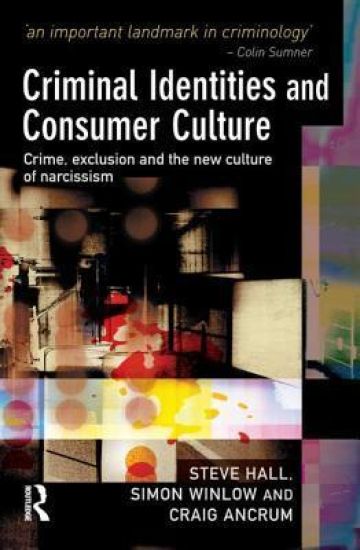
Criminal Identities and Consumer Culture

Criminal Identities and Consumer Culture

Steve Hall; Simon Winlow; Craig Ancrum

Willan Publishing
2008
sidottu
This book offers the first in-depth investigation into the relationship between today's criminal identities and consumer culture. Using unique data taken from criminals locked in areas of permanent recession, the book aims to uncover feelings and attitudes towards a variety of criminal activities, investigating the incorporation of hearts and minds into consumer culture's surrogate social world and highlighting the relationship between the lived identities of active criminals and the socio-economic climate of instability and anxiety that permeates post-industrial Britain. This book will be of interest to undergraduates, postgraduates, researchers and lecturers in all fields within the social sciences, but especially criminology, sociology, social policy, politics and anthropology.
Criminal Identities and Consumer Culture

Criminal Identities and Consumer Culture

Steve Hall; Simon Winlow; Craig Ancrum

Willan Publishing
2008
nidottu
This book offers the first in-depth investigation into the relationship between today's criminal identities and consumer culture. Using unique data taken from criminals locked in areas of permanent recession, the book aims to uncover feelings and attitudes towards a variety of criminal activities, investigating the incorporation of hearts and minds into consumer culture's surrogate social world and highlighting the relationship between the lived identities of active criminals and the socio-economic climate of instability and anxiety that permeates post-industrial Britain. This book will be of interest to undergraduates, postgraduates, researchers and lecturers in all fields within the social sciences, but especially criminology, sociology, social policy, politics and anthropology.
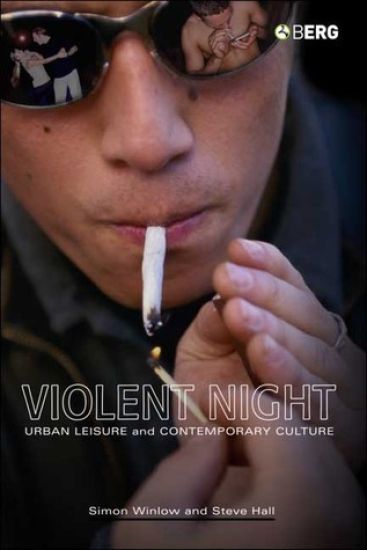
Violent Night

Violent Night

Simon Winlow; Steve Hall

Berg Publishers
2006
nidottu
Why do our night-time cities seem to mix pleasure with violence? This is the time and place when cities are taken over by young men in search of alcohol, drugs, another club or a fight. Current public policy has patently failed to keep on top of the new trends in both consumption and destruction which make urban centres simultaneously seductive and dangerous. Violent Night uses powerful insider accounts to uncover the underlying causes and meanings of violence. Interviews with the police, the perpetrators and the victims of violence reveal the complex emotions that surround both the perpetration and resolution of crime. Violent Night shows that a new approach is needed to successfully rehabilitate a culture struggling and failing to deal with nihilism and escalating hostility.
Violent Night

Violent Night

Simon Winlow; Steve Hall

Berg Publishers
2006
sidottu
Why do our night-time cities seem to mix pleasure with violence? This is the time and place when cities are taken over by young men in search of alcohol, drugs, another club or a fight. Current public policy has patently failed to keep on top of the new trends in both consumption and destruction which make urban centres simultaneously seductive and dangerous. Violent Night uses powerful insider accounts to uncover the underlying causes and meanings of violence. Interviews with the police, the perpetrators and the victims of violence reveal the complex emotions that surround both the perpetration and resolution of crime. Violent Night shows that a new approach is needed to successfully rehabilitate a culture struggling and failing to deal with nihilism and escalating hostility.
Bouncers

Bouncers

Dick Hobbs; Philip Hadfield; Stuart Lister; Simon Winlow

Oxford University Press
2005
nidottu
In recent years, the expansion of night-time leisure has emerged as a key indicator of post-industrial urban prosperity, attracting investment, creating employment and re-generating the built environment. These leisure economies are youth-dominated, focusing upon the sale and consumption of alcohol. Unprecedented numbers of young people now flock to town centres that are crammed with bars, pubs and clubs, and the resulting violent disorder has over run police resources that remain geared to the drinking patterns and alcohol cultures of previous generations. Post-industrial re-structuring has spawned an increasingly complex mass of night-time leisure options through which numerous licit and illicit commercial opportunities flow. Yet, regardless of the fashionable and romantic notions of many contemporary urban theorists, it is alcohol, mass intoxication and profit rather than 'cultural regeneration,' which lies at the heart of this rapidly expanding dimension of post-industrial urbanism. Private security in the bulky form of bouncers fills the void left by the public police. These men (only 7% are women), whose activities are barely regulated by the State, are dominated by a powerful subculture rooted in routine violence and intimidation. Using ethnography, participant observation and extensive interviews with all the main players, this controversial book charts the emergence of the bouncer as one of the most graphic symbols in the iconography of post industrial Britain.
Bouncers

Bouncers

Dick Hobbs; Philip Hadfield; Stuart Lister; Simon Winlow

Oxford University Press
2003
sidottu
In recent years, the expansion of night-time leisure has emerged as a key indicator of post-industrial urban prosperity, attracting investment, creating employment, and re-generating the built environment. These leisure economies are youth-dominated, focusing upon the sale and consumption of alcohol. Unprecedented numbers of young people now flock to town centres that are crammed with bars, pubs, and clubs, and the resulting violent disorder has over run police resources that remain geared to the drinking patterns and alcohol cultures of previous generations. Post-industrial re-structuring has spawned an increasingly complex mass of night-time leisure options through which numerous licit and illicit commercial opportunities flow. Yet, regardless of the fashionable and romantic notions of many contemporary urban theorists, it is alcohol, mass intoxication, and profit rather than 'cultural regeneration,' which lies at the heart of this rapidly expanding dimension of post-industrial urbanism. Private security in the bulky form of bouncers fills the void left by the public police. These men (only 7% are women), whose activities are barely regulated by the State, are dominated by a powerful subculture rooted in routine violence and intimidation. Using ethnography, participant observation, and extensive interviews with all the main players, this controversial book charts the emergence of the bouncer as one of the most graphic symbols in the iconography of post-industrial Britain.
Badfellas

Badfellas

Simon Winlow

Berg Publishers
2001
sidottu
Fights, fraud and drugs racketeering regularly hit the headlines, but they are just news stories for most of us. For others, they constitute a way of life. This book uncovers a world where male identity is expressed each day through physical strength and power. Focusing on professional criminals and violent men, the author shows how workshop camaraderie, hard physical work and criminal reputations allow for changing masculinities. It is all too easy to stereotype criminals, when, in fact, their world is complex and creative. Criminal men adapt and modify their forms of gender expression to fit in with their changing economic, social and cultural circumstance, as do men in all walks of life. Why is violence attractive to these men? What motivates their crimes, both planned and impulsive? How do criminals themselves view their activities and their reputations, and how do these reputations affect their perception of masculinity? This book is the first sustained analysis of organized crime and violence to use covert research methods. Far from the sensationalized memoirs of retired gangsters, or the abstract discussions of scholars, this book builds on first-hand experiences and relationships made while working amongst bouncers and criminals. The social world of professional criminals and the working environments of criminal bouncers are demystified and laid bare. The author sets individual criminal careers and experiences in the wider context of de-industrialization and globalization, and provides a thoughtful and stimulating addition to the fields of anthropology, sociology and criminology.
Badfellas

Badfellas

Simon Winlow

Berg Publishers
2001
nidottu
This study builds on first-hand experiences of working among bouncers and criminals to provide an analysis of male identity in the world of organized crime. Setting individual criminal careers in a global context, the book looks at the changing meanings and motivations of criminality.