
Kirjailija
Sinclair Lewis
Kirjat ja teokset yhdessä paikassa: 340 kirjaa, julkaisuja vuosilta 1905-2026, suosituimpien joukossa Main Street. Vertaile teosten hintoja ja tarkista saatavuus suomalaisista kirjakaupoista.
340 kirjaa
Kirjojen julkaisuhaarukka 1905-2026.
Main Street: The Story of Carol Kennicott is a satirical novel written by Sinclair Lewis, and published in 1920. Awards and nominations Main Street was initially awarded the 1921 Pulitzer Prize for literature, but was rejected by the Board of Trustees, who overturned the jury's decision. The prize went, instead, to Edith Wharton for The Age of Innocence. In 1926 Lewis refused the Pulitzer when he was awarded it for Arrowsmith. In 1930, Lewis was the first American ever awarded the Nobel Prize for Literature. While a Nobel Prize is awarded to the author not the work, and itself does not cite a particular work for which he was chosen, Main Street was Lewis' best-known work and enormously popular at the time. In the Nobel committee's presentation speech, both Main Street and Arrowsmith were cited. The prize was awarded "...for his vigorous and graphic art of description and his ability to create, with wit and humour, new types of characters." In 1998, the Modern Library ranked Main Street #68 on its list of the 100 best English-language novels of the 20th century.

Cheap and Contented Labor: The Picture of a Southern Mill Town in 1929
Sinclair Lewis
Literary Licensing, LLC
2011
nidottu
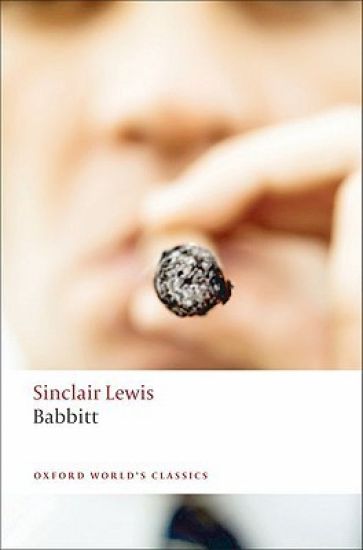
Amusing and tragic by turn, Sinclair Lewis's classic novel is a biting satire of middle-American values whose title has entered the language as a byword for smug complacency, conformity, and materialism, and whose suburban targets are still much in evidence. A successful real estate agent, George F. Babbitt is a member of all the right clubs, and unquestioningly shares the same aspirations and ideas as his friends and fellow Boosters. Yet even Babbitt dreams of romance and escape, and when his best friend does something to throw his world upside down, he rebels, and tries to find fulfillment in romantic adventures and liberal thinking. Hilarious and poignant, Babbitt turns the spotlight on middle America and strips bare the hypocrisy of business practice, social mores, politics, and religious institutions. In his introduction and notes Gordon Hutner explores the novel's historical and literary contexts, and highlights its rich cultural and social references. The book also features an up-to-date bibliography and explanatory notes that document and gloss the rich social history of the period. About the Series: For over 100 years Oxford World's Classics has made available the broadest spectrum of literature from around the globe. Each affordable volume reflects Oxford's commitment to scholarship, providing the most accurate text plus a wealth of other valuable features, including expert introductions by leading authorities, voluminous notes to clarify the text, up-to-date bibliographies for further study, and much more.
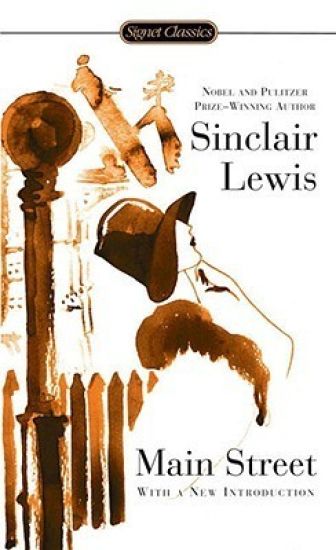
The first of Sinclair Lewis's great successes, Main Street shattered the sentimental American myth of happy small-town life with its satire of narrow-minded provincialism. Reflecting his own unhappy childhood in Sauk Centre, Minnesota, Lewis's sixth novel attacked the conformity and dullness he saw in midwestern village life. Young college graduate Carol Milford moves from the city to tiny Gopher Prairie after marrying the local doctor, and tries to bring culture to the small town. But her efforts to reform the prairie village are met by a wall of gossip, greed, conventionality, pitifully unambitious cultural endeavors, and--worst of all--the pettiness and bigotry of small-town minds. Lewis's portrayal of a marriage torn by disillusionment and a woman forced into compromises is at once devastating social satire and persuasive realism. His subtle characterizations and intimate details of small-town America make Main Street a complex and compelling work and established Lewis as an important figure in twentieth-century American literature.

Sinclair Lewis' world-famous satire of religious hypocrisy and the excesses of the Roaring ʼ20s. Universally recognized as a landmark in American literature, Elmer Gantry scandalized readers when it was first published, causing Sinclair Lewis to be "invited" to a jail cell in New Hampshire and to his own lynching in Virginia. His portrait of a golden-tongued evangelist who rises to power within his church--a saver of souls who lives a life of duplicity, sensuality, and ruthless self-indulgence--is also the record of a period, a reign of grotesque vulgarity, which but for Lewis would have left no trace of itself. Elmer Gantry has been called the greatest, most vital, and most penetrating study of hypocrisy that has been written since the works of Voltaire. With an introduction by Jason Stevens





George E. Babbitt, a conniving, prosperous real estate man from Zenith, Ohio, revels in his popularity, his success, and, especially, in the material rewards they bring. He bullies his wife, flirts with other women, and patronizes the less successful. But when his best friend is sent to prison for killing his wife, Babbitt's middle-class complacency is shattered, and he rebels, seeking a more "meaningful" life. His small revolt is quickly defeated, however, by public opinion and his own need for acceptance. Babbitt captures the flavor of America during the economic boom years of the 1920s, and its protagonist has become the symbol of middle-class mediocrity, his name an enduring part of the American lexicon.
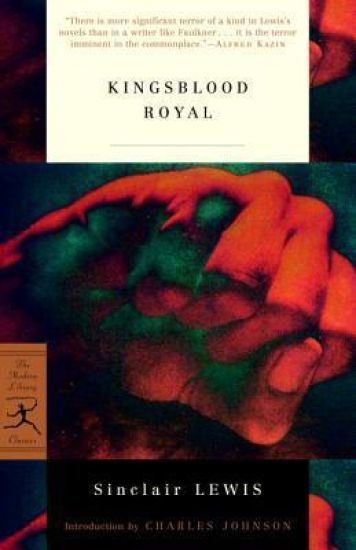
A neglected tour de force by the first American to win the Nobel Prize in literature, Kingsblood Royal is a stirring and wickedly funny portrait of a man who resigns from the white race. When Neil Kingsblood a typical middle-American banker with a comfortable life makes the shocking discovery that he has African-American blood, the odyssey that ensues creates an unforgettable portrayal of two Americas, one black, one white.As timely as when it was first published in 1947, one need only open today's newspaper to see the same issues passionately being discussed between blacks and whites that we find in Kingsblood Royal, says Charles Johnson. Perhaps only now can we fully appreciate Sinclair Lewis's astonishing achievement.

George F. Babbitt, a conniving, real estate man from Ohio, revels in his popularity, success, and, especially, in the material rewards they bring. He bullies his wife, flirts with other women, and patronizes the less successful. But when his best friend is sent to prison for killing his wife, Babbitt's middle-class complacency is shattered, and he rebels, seeking a more 'meaningful' life. His small revolt is quickly defeated, however, by public opinion and his own need for acceptance.
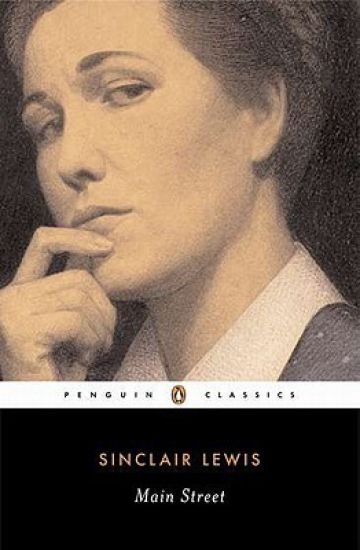
Sinclair Lewis' barbed portrait of Gopher Prairie, Minnesota, shattered the myth of the American Middle West as God's Country and became a symbol of the cultural narrow-mindedness and smug complacency of small towns everywhere. At the center of the novel is Carol Kennicott, the wife of a town doctor, who dreams of initiating social reforms and introducing art and literature to the community. The range of reactions to "Main Street" when it was published in 1920 was extraordinary, reflecting the ambivalence in the novel itself and Lewis' own mixed feelings about his hometwon of Sauk Centre, Minnesota, the prototype for Gopher Prairie.

Realising that his life is devoid of meaning, he grows determined to transcend his trivial existence and search for a greater purpose. In the economic boom years of 1920s' America, Babbitt became a symbol of middle-class mediocrity, and his name an enduring part of the American lexicon.

Amidst Sinclair Lewis s many remarkable novels are more than a hundred short stories which he wrote over forty-four years. Selected Short Stories contains those selected by Lewis himself for a 1935 edition and illustrates the wide range of his art and interest: tales of romantic fantasy or escape, melodramas of heroic or mock-heroic adventure, boy-meets-girl stories, satires of pretension and folly, and tales of isolation and loneliness. Lewis often played variations on themes more fully developed in his novels. In his introduction, James W. Tuttleton calls Lewis an excellent storyteller with an enviable command of narrative At his best Lewis s short stories, like his novels, accomplish the remarkable feat described by E.M. Forster: What Mr. Lewis has done for myself and thousands of others is to lodge a piece of a continent in our imagination.
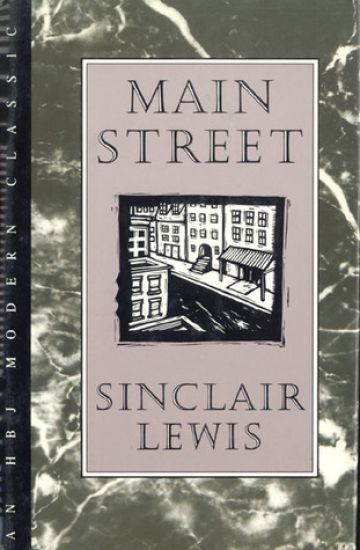
In this classic satire of small-town America, beautiful young Carol Kennicott comes to Gopher Prairie, Minnesota, with dreams of transforming the provincial old town into a place of beauty and culture. But she runs into a wall of bigotry, hypocrisy and complacency. The first popular bestseller to attack conventional ideas about marriage, gender roles, and small town life, Main Street established Lewis as a major American novelist.