
Kirjailija
Siu-Cheung Kong
Kirjat ja teokset yhdessä paikassa: 4 kirjaa, julkaisuja vuosilta 2020-2024, suosituimpien joukossa Computational Thinking Education in K-12. Vertaile teosten hintoja ja tarkista saatavuus suomalaisista kirjakaupoista.
4 kirjaa
Kirjojen julkaisuhaarukka 2020-2024.
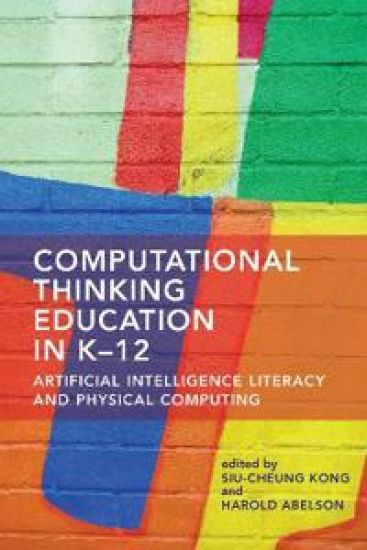

Computational Thinking Education
Harold Abelson; Siu-Cheung Kong
Saint Philip Street Press
2020
pokkari
This This book is open access under a CC BY 4.0 license. This book offers a comprehensive guide, covering every important aspect of computational thinking education. It provides an in-depth discussion of computational thinking, including the notion of perceiving computational thinking practices as ways of mapping models from the abstraction of data and process structures to natural phenomena. Further, it explores how computational thinking education is implemented in different regions, and how computational thinking is being integrated into subject learning in K-12 education. In closing, it discusses computational thinking from the perspective of STEM education, the use of video games to teach computational thinking, and how computational thinking is helping to transform the quality of the workforce in the textile and apparel industry. This work was published by Saint Philip Street Press pursuant to a Creative Commons license permitting commercial use. All rights not granted by the work's license are retained by the author or authors.
Computational Thinking Education
Harold Abelson; Siu-Cheung Kong
Saint Philip Street Press
2020
sidottu
This This book is open access under a CC BY 4.0 license. This book offers a comprehensive guide, covering every important aspect of computational thinking education. It provides an in-depth discussion of computational thinking, including the notion of perceiving computational thinking practices as ways of mapping models from the abstraction of data and process structures to natural phenomena. Further, it explores how computational thinking education is implemented in different regions, and how computational thinking is being integrated into subject learning in K-12 education. In closing, it discusses computational thinking from the perspective of STEM education, the use of video games to teach computational thinking, and how computational thinking is helping to transform the quality of the workforce in the textile and apparel industry. This work was published by Saint Philip Street Press pursuant to a Creative Commons license permitting commercial use. All rights not granted by the work's license are retained by the author or authors.