Kirjojen hintavertailu. Mukana 12 390 323 kirjaa ja 12 kauppaa.

Kirjailija

Sjraar Van Heugten

Kirjat ja teokset yhdessä paikassa: 5 kirjaa, julkaisuja vuosilta 2014-2018, suosituimpien joukossa Van Gogh. Vertaile teosten hintoja ja tarkista saatavuus suomalaisista kirjakaupoista.

5 kirjaa

Kirjojen julkaisuhaarukka 2014-2018.

Van Gogh and Nature

Van Gogh and Nature

Richard Kendall; Sjraar van Heugten; Chris Stolwijk

Yale University Press
2015
sidottu
A revelatory study of the importance of nature in Van Gogh’s art throughout his life in Holland and France The celebrated painter Vincent van Gogh (1853–1890) had a lifelong fascination with the natural world. He spent his youth in rural Holland, and the country’s flat landscapes, trees, flowers, and birds would feature in his early art. After he moved to Paris, he encountered new radical thinking about art and humanity’s changing relationship with nature. Later, in Provence and Auvers, he discovered unfamiliar terrain, flora, and fauna that further influenced his artistic ideas and subject matter. Van Gogh’s images of such diverse environments reflect not only his immediate surroundings but also the artist’s evolving engagement with nature and art. Van Gogh and Nature is an eye-opening and beautifully produced catalogue, which accompanied the best-attended special exhibition in the Clark Art Institute's history. It chronicles the artist’s ongoing relationship with nature throughout his entire career. Among the featured works are Van Gogh’s drawings and paintings, along with related materials that illuminate his reading, sources, and influences. Vivid color photography and explanatory texts based on new research by the authors clarify a central theme of Van Gogh’s oeuvre. Distributed for the Clark Art InstituteExhibition Schedule:Clark Art Institute (06/14/15–09/13/15)
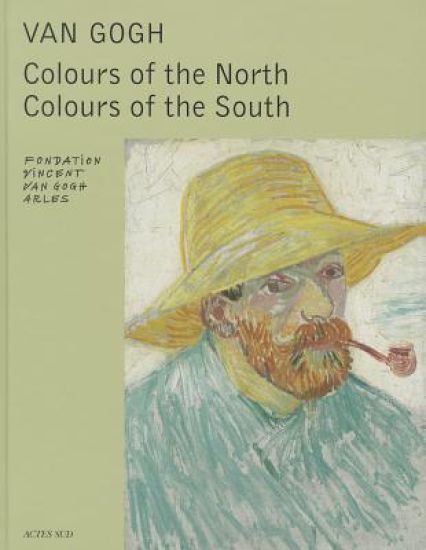
Van Gogh

Van Gogh

Sjraar Van Heugten

Actes Sud
2014
sidottu
Vincent Van Gogh (1853-1890) is one of art history’s greatest colourists. However, the first years of his career in Holland were above all influenced by the painters of the Barbizon and Hague schools, whose grey and gloomy palettes he emulated. It was only when he moved to Paris in early 1886 that his work began to gradually change. In the capital he studied the works of Delacroix – his favourite artist – but also old masters, impressionists and the avant-garde of the era. Van Gogh also drew inspiration from Japanese art, especially highly coloured engravings on wood that he started collecting. His palette gradually took on more colour under the influence of the chromatic theories he had already met in Holland, the meaning of which he now understood. In February 1888 Van Gogh set out for Arles, where he lived until early May 1889. Here his talent as a colourist flourished. The artist was fascinated by the light of the south and the intensity of colour he observed there. He combined all the sources of inspiration he had drew upon in Paris to create a very personal and expressive modern style. Following in Delacroix’s footsteps, while drawing on Japanese art, he started using stark chromatic contrast along with a very dynamic brushstroke. Van Gogh hoped to form an artists’ community in Provence and Paul Gauguin joined him in Arles late October 1888. The pair worked together and influenced each other, but in late December their incompatible characters led to confrontation. Gauguin left, and Van Gogh’s dream of an artist’s community was shattered. Mental illness led him to the asylum of Saint-Rémy, where he developed a less contrasting style. His work ceased to express the radiant colours and light of the south that he had found in Arles.
Van Gogh and the Seasons

Van Gogh and the Seasons

Sjraar van Heugten

PRINCETON UNIVERSITY PRESS
2018
sidottu
A new look at the ways van Gogh represented the seasons and the natural world throughout his careerThe changing seasons captivated Vincent van Gogh (1853–90), who saw in their unending cycle the majesty of nature and the existence of a higher force. Van Gogh and the Seasons is the first book to explore this central aspect of van Gogh's life and work.Van Gogh often linked the seasons to rural life and labor as men and women worked the land throughout the year. From his depictions of peasants and sowers to winter gardens, riverbanks, orchards, and harvests, he painted scenes that richly evoke the sensory pleasures and deprivations particular to each season. This stunning book brings to life the locales that defined his tumultuous career, from Arles, where he experienced his most crucial period of creativity, to Auvers-sur-Oise, where he committed suicide. It looks at van Gogh's interpretation of nature, the religious implications of the seasons in his time, and how his art was perceived against the backdrop of various symbolist factions, antimaterialist debates, and esoteric beliefs in fin de siècle Paris. The book also features revealing extracts from the artist's correspondence and artworks from his own collection that provide essential context to the themes in his work.Breathtakingly illustrated and featuring informative essays by Sjraar van Heugten, Joan Greer, and Ted Gott, Van Gogh and the Seasons shines new light on the extraordinary creative vision of one of the world's most beloved artists.
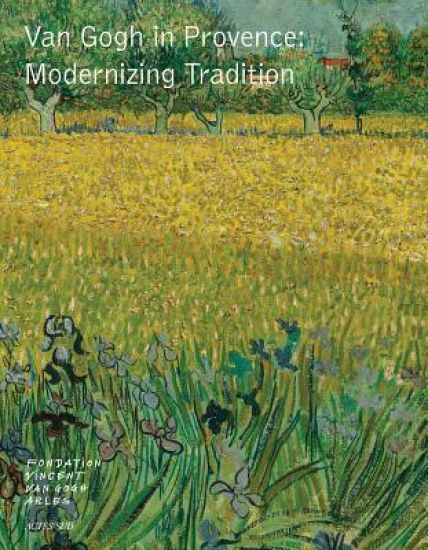
Van Gogh in Provence:Modernizing Tradition
Although Vincent van Gogh is now considered one of the most original artists of his time, his art was deeply rooted in tradition. Modern subjects and styles began to enter Van Gogh's oeuvre after he arrived in Paris in 1886, and his subsequent years in Provence found him experimenting and refining his personal style. But Van Gogh always remained true to the subject matter that had interested him in his early years.Three genres dominate Van Gogh's work from the beginning of his career to its end: the figure, the landscape and the still life. "Van Gogh in Provence" argues that Van Gogh's achievements as a modernist are best understood in relation to these traditional loyalties. Using vibrant colors, surging brushstrokes and daring compositions to give established motifs new, expressive form, Van Gogh built a modern house on a traditional foundation.Vincent van Gogh was born in the Netherlands in 1853. His painting career began when he was in his late twenties, influenced first by his work as a missionary in a mining region of Belgium, and later by his exposure to Impressionism while living in Paris. His bright, signature style emerged after relocating to the South of France, where he produced over 2,000 artworks in just over a decade. After bouts of mental illness, the artist took his life in 1890.
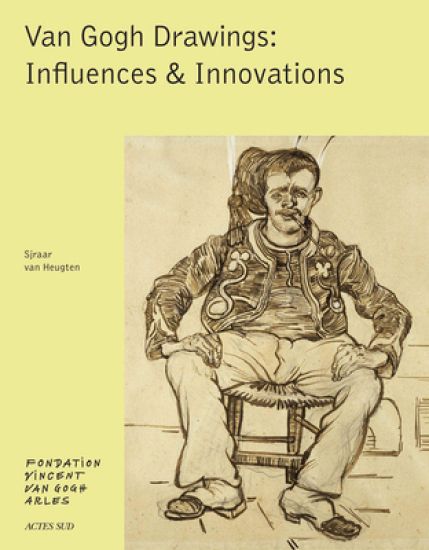
Van Gogh Drawings

Van Gogh Drawings

Sjraar van Heugten

Actes Sud
2015
sidottu
Vincent van Gogh started his artistic career by concentrating on drawing. Convinced that this was the foundation he needed to become a painter, he did little else for the first three years of his career. Consequently, he was a talented draughtsman long before he became an experienced painter. Drawing would always be an important part of his artistic activities, and his outstanding mastery makes this part of his production an equal counterpart to his paintings. This book considers the influences of prints and drawings by other artists on Van Gogh’s drawings and his small graphic oeuvre. Besides a representative choice from Van Gogh’s work in some 35–40 drawings and prints, a range of works will be shown that inspired his early and his late work: prints from illustrated magazines and 19th century prints which he collected and which strongly influenced his early work; replica’s of 17th century prints, Japanese prints and other works which led to his remarkable drawings with the reed pen in Provence. Van Gogh absorbed a multitude of influences, but merged all that in works that are highly innovative, in style but quite often also in technique. The exhibition and the accompanying publication will pay close attention to those and other aspects of one of the most remarkable drawn oeuvres of the 19th century.