Kirjojen hintavertailu. Mukana 12 390 323 kirjaa ja 12 kauppaa.

Kirjailija

Slavenka Drakulic

Kirjat ja teokset yhdessä paikassa: 16 kirjaa, julkaisuja vuosilta 1993-2026, suosituimpien joukossa Frida. Vertaile teosten hintoja ja tarkista saatavuus suomalaisista kirjakaupoista.

16 kirjaa

Kirjojen julkaisuhaarukka 1993-2026.

A Guided Tour Through the Museum of Communism: Fables from a Mouse, a Parrot, a Bear, a Cat, a Mole, a Pig, a Dog, and a Raven
A wry, cutting deconstruction of the Communist empire by one of Eastern Europe's exceptional authors. Called "a perceptive and amusing social critic, with a wonderful eye for detail" by The Washington Post, Slavenka Drakulic-a native of Croatia-has emerged as one of the most popular and respected critics of Communism to come out of the former Eastern Bloc. In A Guided Tour Through the Museum of Communism, she offers a eight-part exploration of Communism by way of an unusual cast of narrators, each from a different country, who reflect on the fall of Communism. Together they constitute an Orwellian send-up of absurdities during the final years of European Communism that showcase this author's tremendous talent.
Frida

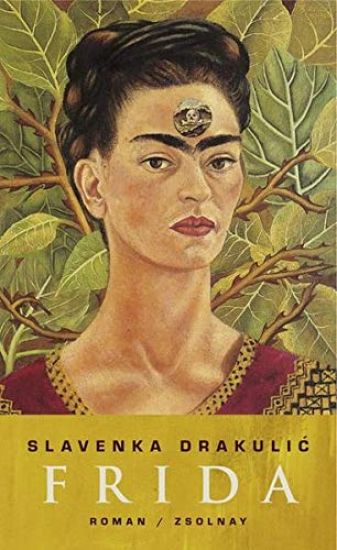
Frida

Slavenka Drakulic

Zsolnay-Verlag
2007
sidottu
Coyoac?n nahe Mexiko City, ein früher Morgen im Juli 1954: Die 47-jährige Frida Kahlo liegt nach einer unruhigen Nacht in ihrem Bett. Sie spürt den Tod, überlässt sich aber nicht dem Schicksal, das ihr ein Leben lang übel mitgespielt hat. Die Entscheidung, wie sie stirbt, will sie selbst treffen. Zuvor lässt sie das Leben Revue passieren. Faszinierend und schrecklich zugleich: Slavenka Drakulic zeigt uns Frida Kahlo, wie wir sie noch nie gesehen haben.
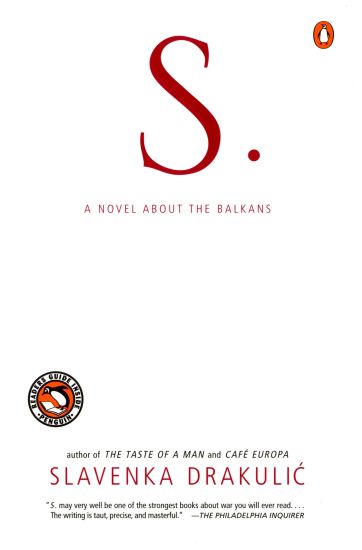
S.: A Novel about the Balkans

S.: A Novel about the Balkans

Slavenka Drakulic

PENGUIN BOOKS
2001
nidottu
"S. may very well be one of the strongest books about war you will ever read. . . The writing is taut, precise, and masterful." --The Philadelphia Enquirer Set in 1992, during the height of the Bosnian war, S. reveals one of the most horrifying aspects of any war: the rape and torture of civilian women by occupying forces. S. is the story of a Bosnian woman in exile who has just given birth to an unwanted child--one without a country, a name, a father, or a language. Its birth only reminds her of an even more grueling experience: being repeatedly raped by Serbian soldiers in the "women's room" of a prison camp. Through a series of flashbacks, S. relives the unspeakable crimes she has endured, and in telling her story--timely, strangely compelling, and ultimately about survival--depicts the darkest side of human nature during wartime.
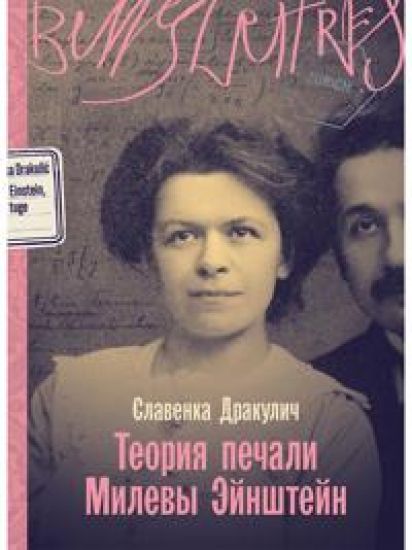
Teorija pechali Milevy Ejnshtejn

Teorija pechali Milevy Ejnshtejn

Slavenka Drakulic; Slavenka Drakulic

Alpina Publisher
2026
nidottu
Blestjaschij matematik Mileva Marich v molodosti pozhertvovala svoej kareroj, posvjativ sebja suprugu Albertu Ejnshtejnu. Nakanune Pervoj mirovoj vojny ona poluchaet ot nego, uzhe izvestnogo uchenogo, pismo s unizitelnymi uslovijami sokhranenija braka i dolzhna prinjat muchitelnoe reshenie: soglasitsja ili zabrat synovej i uekhat iz Berlina v neizvestnost. Khorvatskaja pisatelnitsa i zhurnalistka Slavenka Drakulich rasskazyvaet o zhenschine, kotoroj istorija prisudila ostatsja v teni znamenitogo muzhchiny. Osnovannyj na faktakh i podlinnykh pismakh, roman prolivaet svet na lichnost i zhizn cheloveka, izmenivshego predstavlenija o prostranstve i vremeni. No v pervuju ochered avtor daet slovo toj, kotoraja ljubila, podderzhivala, terpela i borolas - i tak legko byla predana zabveniju.
Cafe Europa Revisited

Cafe Europa Revisited

Slavenka Drakulic

Penguin USA
2021
nidottu
An evocative and timely collection of essays that paints a portrait of Eastern Europe thirty years after the end of communism. An immigrant with a parrot in Stockholm, a photo of a girl in Lviv, a sculpture of Alexander the Great in Skopje, a memorial ceremony for the 50th anniversary of the Soviet led army invasion of Prague: these are a few glimpses of life in Eastern Europe today. Three decades after the Velvet Revolution, Slavenka Drakulic, the author of Cafe Europa and A Guided Tour of the Museum Of Communism, takes a look at what has changed and what has remained the same in the region in her daring new essay collection. Totalitarianism did not die overnight and democracy did not completely transform Eastern European societies. Looking closely at artefacts and day to day life, from the health insurance cards to national monuments, and popular films to cultural habits, alongside pieces of growing nationalism and Brexit, these pieces of political reportage dive into the reality of a Europe still deeply divided.
How We Survived Communism & Even Laughed

How We Survived Communism & Even Laughed

Slavenka Drakulic

HARPER PERENNIAL
2016
nidottu
"She is a writer and journalist whose voice belongs to the world." -- Gloria SteinemThis essay collection from renowned journalist and novelist Slavenka Drakulic, which quickly became a modern (and feminist) classic, draws back the Iron Curtain for a glimpse at the lives of Eastern European women under Communist regimes. Provocative, witty, and intensely personal, How We Survived Communism and Even Laughed cracks open a paradoxical world that through its rejection of capitalism and commoditization ends up fetishizing both.Examining the relationship between material goods and expressions of happiness and individuality in a society where even bananas were an alien luxury, Drakulic homes in on the eradication of female identity, drawing on her own experiences as well as broader cultural observations. Enforced communal housing that allowed for little privacy, the banishment of many time-saving devices, and a focus on manual labor left no room for such bourgeois affectations as cosmetics or clothes, but Drakulic's remarkable exploration of the reality behind the rhetoric reveals that women still went to desperate lengths to feel "feminine."How We Survived Communism and Even Laughed also chronicles the lingering consequences of such regimes. The Berlin Wall may have fallen, but Drakulic's power pieces testify that ideology cannot be dismantled so quickly; a lifetime lived in fear cannot be so easily forgotten.
Café Europa: Life After Communism

Café Europa: Life After Communism

Slavenka Drakulic

PENGUIN BOOKS
1999
nidottu
"Slavenka Drakulic is a journalist and writer whose voice belongs to the world." --Gloria Steinem Today in Eastern Europe the architectural work of revolution is complete: the old order has been replaced by various forms of free market economy and de jure democracy. But as Slavenka Drakulic observes, "in everyday life, the revolution consists much more of the small things--of sounds, looks and images." In this brilliant work of political reportage, filtered through her own experience, we see that Europe remains a divided continent. In the place of the fallen Berlin Wall there is a chasm between East and West, consisting of the different way people continue to live and understand the world. Little bits--or intimations--of the West are gradually making their way east: boutiques carrying Levis and tiny food shops called "Supermarket" are multiplying on main boulevards. Despite the fact that Drakulic can find a Cafe Europa, complete with Viennese-style coffee and Western decor, in just about every Eastern European city, the acceptance of the East by the rest of Europe continues to prove much more elusive.
Cafe Europa

Cafe Europa

Slavenka Drakulic

Little, Brown Book Group
1996
pokkari
This work explores the divisions that still exist in contemporary Europe. It focuses on Eastern Europe and the attitudes and cultural identity of Eastern Europeans, a nation of people still living in the past. Budapest, Tirane, Warsaw and Zagreb are featured.