Kirjailija
Sofia Samatar
Kirjat ja teokset yhdessä paikassa: 13 kirjaa, julkaisuja vuosilta 2013-2025, suosituimpien joukossa Friendly City. Vertaile teosten hintoja ja tarkista saatavuus suomalaisista kirjakaupoista.
13 kirjaa
Kirjojen julkaisuhaarukka 2013-2025.
In 2024, Sofia Samatar spent the year documenting her walks around her hometown of Harrisonburg, Virginia. Every week, she wrote about her experiences for the local online news outlet, The Harrisonburg Citizen. The fifty-two pieces collected here incorporate regional lore, eccentric characters, flora and fauna, and the changing weather. Inspired by a variety of urban writers, including Walter Benjamin, Harryette Mullen, and Virginia Woolf, Samatar's essays uncover hidden nooks and unexpected histories, illuminating the pleasures of walking and the character of a small and special place.
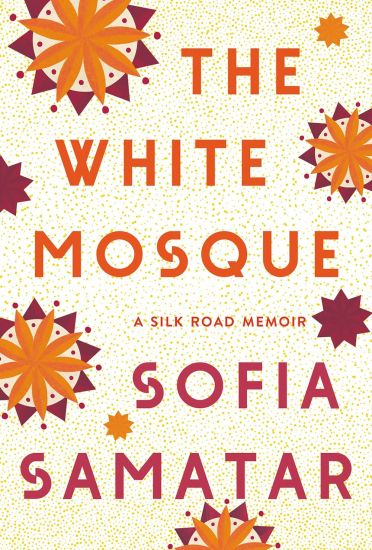
Longlisted for the PEN/Jean Stein Book Award A historical tapestry of border-crossing travelers, of students, wanderers, martyrs and invaders, The White Mosque is a memoiristic, prismatic record of a journey through Uzbekistan and of the strange shifts, encounters, and accidents that combine to create an identity In the late nineteenth century, a group of German-speaking Mennonites traveled from Russia into Central Asia, where their charismatic leader predicted Christ would return. Over a century later, Sofia Samatar joins a tour following their path, fascinated not by the hardships of their journey, but by its aftermath: the establishment of a small Christian village in the Muslim Khanate of Khiva. Named Ak Metchet, "The White Mosque," after the Mennonites' whitewashed church, the village lasted for fifty years. In pursuit of this curious history, Samatar discovers a variety of characters whose lives intersect around the ancient Silk Road, from a fifteenth-century astronomer-king, to an intrepid Swiss woman traveler of the 1930s, to the first Uzbek photographer, and explores such topics as Central Asian cinema, Mennonite martyrs, and Samatar's own complex upbringing as the daughter of a Swiss-Mennonite and a Somali-Muslim, raised as a Mennonite of color in America. A secular pilgrimage to a lost village and a near-forgotten history, The White Mosque traces the porous and ever-expanding borders of identity, asking: How do we enter the stories of others? And how, out of the tissue of life, with its weird incidents, buried archives, and startling connections, does a person construct a self?
Shortlisted for the 2023 PEN/Jean Stein Book Award A Kirkus Reviews Best Book of The Year A Literary Hub Most Anticipated Book of the Year A rich history of wanderers, exiles and intruders. A haunting personal journey through Central Asia. An intimate reflection on mixed identity shaped by cultural crossings. In the late 1800s, a group of German-speaking Mennonites fled Russia for Muslim Central Asia, to await Christ’s return. Over a century later, Sofia Samatar traces their gruelling journey across desert and mountains, and its improbable fruit: a small Christian settlement inside the Khanate of Khiva. Named ‘The White Mosque’ after the Mennonites’ whitewashed church, the village—a community of peace, prophecy, music and martyrs—lasted fifty years. Within this curious tale, Sofia discovers a tapestry of characters connected by the ancient Silk Road: a fifteenth-century astronomer-king; an intrepid Swiss woman traveller; the first Uzbek photographer; a free spirit of the Harlem Renaissance. Along the way, in a voice both warm and wise, she explores her own complex upbringing as an American Mennonite of colour, the daughter of a Swiss-American Christian and a Somali Muslim. On this pilgrimage to a lost village and a near-forgotten history, Samatar traces the porous borders of identity and narrative. When you leave your tribe, what remains? How do we enter the stories of others? And how, out of life’s buried archives and startling connections, does a person construct a self?
World Fantasy, British Fantasy, and Locus award finalistDivided into “Tender Bodies” and “Tender Landscapes,” the stories collected here in this first collection of short fiction from a rising star travel from the commonplace to the edges of reality. Some of Samatar’s weird and compassionate fabulations spring from her life and literary studies; some spring from the world, some from the void. Tender explores the fragility of bodies, emotions, and landscapes, in settings that range from medieval Egypt to colonial Kenya to the stars, and the voices of those who question: children, students, servants, researchers, writers.Tender includes two new stories, “An Account of the Land of Witches” and the Nommo Award shortlisted “Fallow.”
Four women, soldier, scholar, poet, and socialite are caught up on different sides of a violent rebellion. As war erupts and their families are torn apart, they fear they may disappear into the unwritten pages of history. Using the sword and the pen, the body and the voice, they struggle not just to survive, but to make history. Praise for The Winged Histories: "Like an alchemist, Sofia Samatar spins golden landscapes and dazzling sentences...a fantasy novel for those who take their sentences with the same slow, unfolding beauty as a cup of jasmine tea, and for adventurers like Tav, who are willing to charge ahead into the unknown."--Shelf Awareness (starred review) "A highly recommended indulgence." --N.K. Jemisin, New York Times Book Review "Above all, it's a story about love--the terrible love that tears lives apart. Doomed love; impossible love; love that requires a rewriting of the rules, be it for a country, a person, or a story."--Jenn Northington, Tor.com "An imaginative, poetic, and dark meditation on how history gets made." --Hello Beautiful Sofia Samatar is the author of the novels A Stranger in Olondria and The Winged Histories and a collection, Tender: Stories. She has written for the Guardian, Strange Horizons, New Inquiry, Believer, and Clarkesworld, among others, and has won the John W. Campbell Award, the Crawford Award, the British Fantasy Award, and the World Fantasy Award. She lives in Virginia and her website is sofiasamatar.com.
Mothership
N.K. Jemisin; Victor LaValle; Junot Daz; Silvia Moreno-Garcia; Lauren Beukes; Carmen Maria Machado; Tobias Buckell; Rabih Alameddine; Nisi Shawl; S.P. Somtow; Daniel Jose Older; Eden Robinson; Ibi Zoboi; Sofia Samatar; Carlos Hernandez; Katherena Vermette
Rosarium Publishing
2013
pokkari
Mothership: Tales from Afrofuturism and Beyond is a groundbreaking speculative fiction anthology that showcases the work from some of the most talented writers inside and outside speculative fiction across the globe-including Junot Diaz, Victor LaValle, Lauren Beukes, N. K. Jemisin, Rabih Alameddine, S. P. Somtow, and more. These authors have earned such literary honors as the Pulitzer Prize, the American Book Award, the World Fantasy Award, and the Bram Stoker, among others.
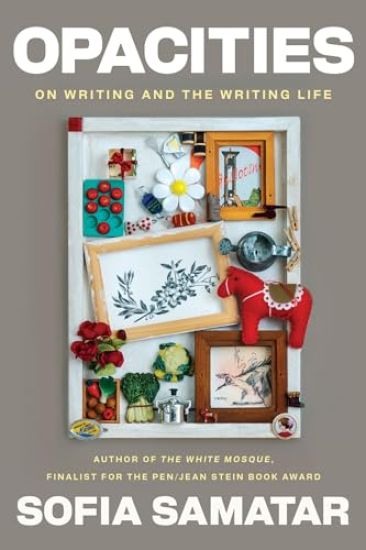
Opacities is a book about writing, publishing, and friendship. Rooted in an epistolary relationship between Sofia Samatar and a friend and fellow writer, this collection of meditations traces Samatar's attempt to rediscover the intimacy of writing In a series of compressed, dynamic prose pieces, Samatar blends letters from her friend with notes on literature, turning to douard Glissant to study the necessary opacity of identity, to Theresa Hak Kyung Cha for a model of literary kinship, and to a variety of others, including Clarice Lispector, Maurice Blanchot, and Rainer Maria Rilke, for insights on the experience and practice of writing. In so doing, Samatar addresses a number of questions about the writing life: Why does publishing feel like the opposite of writing? How can a Black woman navigate interviews and writing conferences without being reduced to a symbol? Are writers located in their biographies or in their texts? And above all, how can the next book be written? Blurring the line between author and character and between correspondence and literary criticism, Opacities delivers a personal, contemplative exploration of writing where it lives, among impassioned conversations and the work of beloved writers.
The boy was raised as one of the Chained, condemned to toil in the bowels of a mining ship out among the stars. His whole world changes - literally - when he is yanked 'upstairs' and informed he has been given an opportunity to be educated at the ship’s university alongside the elite. Overwhelmed and alone, the boy forms a bond with the woman he comes to know as 'the professor.' A weary idealist, the woman has spent her career striving for acceptance and validation from her more senior colleagues in the hopes of achieving a brighter future, only to fall short at every turn. Together, the boy and the woman will embark on a transformative journey to grasp the design of the chains that fetter them both - and are the key to breaking free.
Tone is a collaborative study of literary tone, a notoriously challenging and slippery topic for criticism. Both granular and global, infusing a text with feeling, tone is so difficult to pin down that responses to it often take the vague form of “I know it when I see it.”In Tone, a cooperative authorial voice under the name of the Committee to Investigate Atmosphere begins from the premise that tone is relational, belonging to shared experience rather than a single author, and should be approached through a communal practice. In partnership, the Committee explores the atmospheres emanating from texts by Nella Larsen, W. G. Sebald, Heike Geissler, Hiroko Oyamada, Mieko Kanai, Bhanu Kapil, Franz Kafka, Renee Gladman, and others, attending to the chafing of political irritation, the hunger of precarious and temporary work, and the lonely delights of urban and suburban walks.This study treats a variety of questions: How is tone filtered through translation? Can a text hold the feelings that pass between humans and animals? What can attention to literary tone reveal about shared spaces such as factories, universities, and streets and the clashes and connections that happen there? Searching and conversational, Tone seeks immersion in literary affect to convey the experience of reading—and living—together.
Winner of the Bernard J. Brommel Award for Biography & Memoir (Midland Authors Book Award) Finalist for the PEN/Jean Stein Book Award A historical tapestry of border-crossing travelers, of students, wanderers, martyrs and invaders, The White Mosque is a memoiristic, prismatic record of a journey through Uzbekistan and of the strange shifts, encounters, and accidents that combine to create an identity In the late nineteenth century, a group of German-speaking Mennonites traveled from Russia into Central Asia, where their charismatic leader predicted Christ would return. Over a century later, Sofia Samatar joins a tour following their path, fascinated not by the hardships of their journey, but by its aftermath: the establishment of a small Christian village in the Muslim Khanate of Khiva. Named Ak Metchet, "The White Mosque," after the Mennonites' whitewashed church, the village lasted for fifty years. In pursuit of this curious history, Samatar discovers a variety of characters whose lives intersect around the ancient Silk Road, from a fifteenth-century astronomer-king, to an intrepid Swiss woman traveler of the 1930s, to the first Uzbek photographer, and explores such topics as Central Asian cinema, Mennonite martyrs, and Samatar's own complex upbringing as the daughter of a Swiss-Mennonite and a Somali-Muslim, raised as a Mennonite of color in America. A secular pilgrimage to a lost village and a near-forgotten history, The White Mosque traces the porous and ever-expanding borders of identity, asking: How do we enter the stories of others? And how, out of the tissue of life, with its weird incidents, buried archives, and startling connections, does a person construct a self?
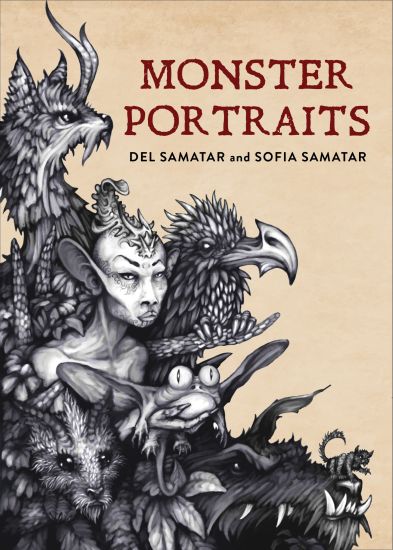
Relentlessly original and brilliantly hybrid, Monster Portraits investigates the concept of the monstrous through a mesmerizing combination of words and images. An uncanny and imaginative autobiography of otherness, it offers the fictional record of a writer in the realms of the fantastic shot through with the memories of a pair of Somali-American children growing up in the 1980s. Operating under the sign of two--texts and drawings, brother and sister, black and white, extraordinary and everyday--Monster Portraits multiplies, disintegrates, and blends, inviting the reader to find the danger in the banal, the beautiful in the grotesque. Accumulating into a breathless journey and groundbreaking study, these brief fictions and sketches claim the monster as a fragmentary vastness: not the sum but the derangement of its parts.Del Samatar's drawings conjure beings who drag worlds in their wake. World Fantasy Award-winning author Sofia Samatar responds with allusive, critical, and ecstatic meditations. Together they have created a secret history of the mixed-race child, a guide to the beasts of an unknown mythos, and a dreamer's iconography. The monstrous never looked so simultaneously haunting and familiar.
Jevick, the pepper merchant's son, has been raised on stories of Olondria, a distant land where books are as common as they are rare in his home. When his father dies and Jevick takes his place on the yearly selling trip to Olondria, Jevick's life is as close to perfect as he can imagine. But just as he revels in Olondria's Rabelaisian Feast of Birds, he is pulled drastically off course and becomes haunted by the ghost of an illiterate young girl. In desperation, Jevick seeks the aid of Olondrian priests and quickly becomes a pawn in the struggle between the empire's two most powerful cults. Yet even as the country shimmers on the cusp of war, he must face his ghost and learn her story before he has any chance of becoming free by setting her free: an ordeal that challenges his understanding of art and life, home and exile, and the limits of that seductive necromancy, reading. A Stranger in Olondria is a skillful and immersive debut fantasy novel that pulls the reader in deeper and deeper with twists and turns reminiscent of George R. R. Martin and Joe Hill.