Kirjojen hintavertailu. Mukana 12 595 353 kirjaa ja 12 kauppaa.

Kirjailija

Solomon H Snyder

Kirjat ja teokset yhdessä paikassa: 2 kirjaa, julkaisuja vuosilta 1989-2008, suosituimpien joukossa Science and Psychiatry. Vertaile teosten hintoja ja tarkista saatavuus suomalaisista kirjakaupoista.

Mukana myös kirjoitusasut: Solomon H. Snyder

2 kirjaa

Kirjojen julkaisuhaarukka 1989-2008.

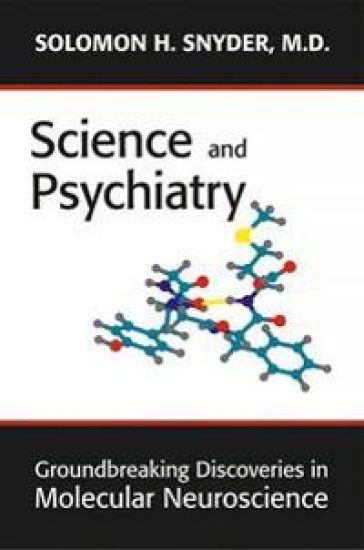
Science and Psychiatry

Science and Psychiatry

Solomon H. Snyder; Eric R. Kandel

American Psychiatric Association Publishing
2008
sidottu
Solomon Snyder has been instrumental in the establishment of modern psychopharmacology—as a pioneer in the identification of receptors for neurotransmitters and drugs and in the explanation of the actions of psychotropic agents. Science and Psychiatry is a collection of some of his best scientific papers, publications ranging over forty years that represent important advances in psychopharmacology and molecular biology. Audacious and unanticipated when they first appeared, these papers opened up new areas of understanding and revolutionized the modern study of the brain. Republished here, they show why fundamental research into the "messengers of the mind" is as essential for clinicians as for researchers. Many of these papers have clear clinical relevance, offering insight into modern neuroscience to help make sense of the bewildering array of available psychotropic medications and point the way toward more effective and safer agents. Others describe the underpinnings of psychopharmacology that practitioners need to know, especially regarding the role of receptors in drug action. Each of the nine groups of research articles is accompanied by a commentary by a well-known authority, putting the discoveries in perspective and providing a broad overview of subjects ranging from characterization of the enkephalins to serotonin receptor subtypes. The final set of papers focuses on apoptosis, the general process of cell suicide, where Snyder's work with bilirubin holds promise for treating neurodegenerative disorders. And in a closing piece, "The Audacity Principle in Science," Snyder speculates about factors conducive to creativity and efficacy in scientific discovery. The articles particularly describe four groups of extraordinary discoveries for which Snyder is widely recognized: • Identification of opiate receptors, providing keys to understanding pain perception• Characterization of the IP3 receptor, exploring its role as a target for lithium treatment in manic-depressive disorders• Establishment of nitric oxide as a transmitter in the brain, radically transforming conceptualizations of neurotransmission• Discovery that D-serine is the normal stimulus for the glycine site of the NMDA receptor, providing new insight into the regulation of the receptor important for learning and memory Hailed as one of the preeminent scientists of the past twenty years, Snyder is a consummate researcher who confesses to remaining obsessed with the need to "think thoughts no one else has thought before." Science and Psychiatry clearly shows how that urge accounts for the diversity of challenges he has taken on as it conveys the origins of modern psychopharmacologic practice.

Brainstorming

Brainstorming

Solomon H Snyder

Harvard University Press
1989
sidottu
The discovery of how opiates such as morphine and heroin relieve pain and produce euphoria is one of the most dramatic tales of modern science. It begins in 1971 when, at the height of the undeclared war in Vietnam, Richard Nixon officially announced a war on drugs. Heroin addiction--no longer confined to urban ghettos--was causing bad public relations for the White House. The specter of young American soldiers demoralized, drugged, and committing atrocities was not the image President Nixon wished to convey as he argued for further bombings of North Vietnam. In this book Solomon Snyder describes the political maneuverings and scientific sleuthing that led him and Candace Pert, then a graduate student in his lab, to a critical breakthrough in the effort to understand addiction. Their discovery--the so-called opiate receptor--is a structure on the surface of certain nerve cells that attracts opiates. Heroin or morphine molecules fit into opiate receptors much as a key fits into the ignition switch of a car--thus turning on the engine of the cell. Snyder and his students were able to show that nerve cells which possess opiate receptors are found in precisely those parts of the brain that control emotion and pain. Dr. Snyder describes the friendly yet intense competition from other researchers to expand upon this initial discovery. From the work of two Scottish investigators, Hans Kosterlitz and John Hughes, neuroscientists now know not only where opiate receptors are found in the brain but also why they are there: to serve as binding sites for an opiate-like substance produced by the brain itself--the brain's own morphine. This substance, called enkephalin, regulates pain, mood, and a host of other physiological functions. From this very human chronicle of scientific battles in the ongoing war against pain and addiction, we gain an appreciation of the extraordinary intellectual processes of an eminent scientist. But Dr. Snyder's story of scientific brainstorming also affords us rare glimpses into the fruitful, sometimes frustrating, relationships among scientists which enrich and complicate creative work. We are reminded of the delicate political alliances that are forged at every level of organization, from the lab bench to the Oval Office, as the scientific community attempts to fit its needs to those of the larger society.