Kirjojen hintavertailu. Mukana 12 657 676 kirjaa ja 12 kauppaa.

Kirjailija

Sonja Ardoin

Kirjat ja teokset yhdessä paikassa: 8 kirjaa, julkaisuja vuosilta 2014-2026, suosituimpien joukossa The Strategic Guide to Shaping Your Student Affairs Career. Vertaile teosten hintoja ja tarkista saatavuus suomalaisista kirjakaupoista.

8 kirjaa

Kirjojen julkaisuhaarukka 2014-2026.

The Strategic Guide to Shaping Your Student Affairs Career
This updated practical guide invites readers to employ a personalized framework for strategically shaping their professional path in higher education and student affairs and related careers. Drawing on five key career strategy components—lifelong learning, the job search and extending your experiences, networking or connecting, self-reflection and well-being, and planning for professional development—Ardoin provides comprehensive, applicable recommendations for career success. This second edition features a significant amount of new content including 20 distinctive stories of how higher education and student affairs and adjacent professionals are applying the five components in their own unique career trajectories. The story contributors’ broad representation of identities, experiences, institutional types, functional areas, and geographic regions showcases the enduring utility of the career strategy components. Prospective, early-career, and seasoned practitioners will find this book a worthwhile resource as they navigate career planning, career development, and career pivots.
The Strategic Guide to Shaping Your Student Affairs Career
This updated practical guide invites readers to employ a personalized framework for strategically shaping their professional path in higher education and student affairs and related careers. Drawing on five key career strategy components—lifelong learning, the job search and extending your experiences, networking or connecting, self-reflection and well-being, and planning for professional development—Ardoin provides comprehensive, applicable recommendations for career success. This second edition features a significant amount of new content including 20 distinctive stories of how higher education and student affairs and adjacent professionals are applying the five components in their own unique career trajectories. The story contributors’ broad representation of identities, experiences, institutional types, functional areas, and geographic regions showcases the enduring utility of the career strategy components. Prospective, early-career, and seasoned practitioners will find this book a worthwhile resource as they navigate career planning, career development, and career pivots.
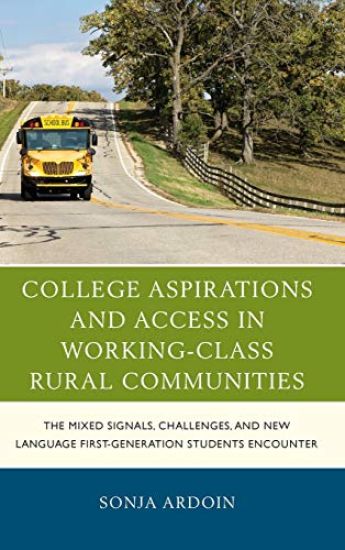
College Aspirations and Access in Working-Class Rural Communities
College Aspirations and Access in Working Class Rural Communities: The Mixed Signals, Challenges, and New Language First-Generation Students Encounter explores how a working class, rural environment influences rural students’ opportunities to pursue higher education and engage in the college choice process. Based on a case study with accounts from rural high school students and counselors, this book examines how these communities perceive higher education and what challenges arise for both rural students and counselors. The book addresses how college knowledge and university jargon illustrate the gap between rural cultural capital and higher education cultural capital. Insights about approaches to reduce barriers created by college knowledge and university jargon are shared and strategies for offering rural students pathways to learn academic language and navigate higher education are presented for both secondary and higher education institutions.
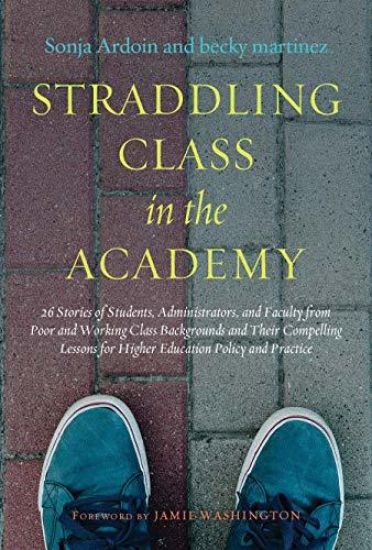
Straddling Class in the Academy

Straddling Class in the Academy

Sonja Ardoin; becky martinez

Stylus Publishing
2019
sidottu
Why do we feel uncomfortable talking about class? Why is it taboo? Why do people often address class through coded terminology like trashy, classy, and snobby? How does discriminatory language, or how do conscious or unconscious derogatory attitudes, or the anticipation of such behaviors, impact those from poor and working class backgrounds when they straddle class? Through 26 narratives of individuals from poor and working class backgrounds – ranging from students, to multiple levels of administrators and faculty, both tenured and non-tenured – this book provides a vivid understanding of how people can experience and straddle class in the middle, upper, or even elitist class contexts of the academy.Through the powerful stories of individuals who hold many different identities--and naming a range of ways they identify in terms of race, ethnicity, gender, sexuality, age, ability, and religion, among others--this book shows how social class identity and classism impact people's experience in higher education and why we should focus more attention on this dimension of identity. The book opens by setting the foundation by examining definitions of class, discussing its impact on identity, and summarizing the literature on class and what it can tell us about the complexities of class identity, its fluidity, sometimes performative nature, and the sense of dissonance it can provoke.This book brings social class identity to the forefront of our consciousness, conversations, and behaviors and compels those in the academy to recognize classism and reimagine higher education to welcome and support those from poor and working class backgrounds. Its concluding chapter proposes means for both increasing social class consciousness and social class inclusivity in the academy. It is a compelling read for everyone in the academy, not least for those from poor or working class backgrounds who will find validation and recognition and draw strength from its vivid stories.
Straddling Class in the Academy

Straddling Class in the Academy

Sonja Ardoin; becky martinez

Stylus Publishing
2019
nidottu
Why do we feel uncomfortable talking about class? Why is it taboo? Why do people often address class through coded terminology like trashy, classy, and snobby? How does discriminatory language, or how do conscious or unconscious derogatory attitudes, or the anticipation of such behaviors, impact those from poor and working class backgrounds when they straddle class? Through 26 narratives of individuals from poor and working class backgrounds – ranging from students, to multiple levels of administrators and faculty, both tenured and non-tenured – this book provides a vivid understanding of how people can experience and straddle class in the middle, upper, or even elitist class contexts of the academy.Through the powerful stories of individuals who hold many different identities--and naming a range of ways they identify in terms of race, ethnicity, gender, sexuality, age, ability, and religion, among others--this book shows how social class identity and classism impact people's experience in higher education and why we should focus more attention on this dimension of identity. The book opens by setting the foundation by examining definitions of class, discussing its impact on identity, and summarizing the literature on class and what it can tell us about the complexities of class identity, its fluidity, sometimes performative nature, and the sense of dissonance it can provoke.This book brings social class identity to the forefront of our consciousness, conversations, and behaviors and compels those in the academy to recognize classism and reimagine higher education to welcome and support those from poor and working class backgrounds. Its concluding chapter proposes means for both increasing social class consciousness and social class inclusivity in the academy. It is a compelling read for everyone in the academy, not least for those from poor or working class backgrounds who will find validation and recognition and draw strength from its vivid stories.
College Aspirations and Access in Working-Class Rural Communities
College Aspirations and Access in Working Class Rural Communities: The Mixed Signals, Challenges, and New Language First-Generation Students Encounter explores how a working class, rural environment influences rural students’ opportunities to pursue higher education and engage in the college choice process. Based on a case study with accounts from rural high school students and counselors, this book examines how these communities perceive higher education and what challenges arise for both rural students and counselors. The book addresses how college knowledge and university jargon illustrate the gap between rural cultural capital and higher education cultural capital. Insights about approaches to reduce barriers created by college knowledge and university jargon are shared and strategies for offering rural students pathways to learn academic language and navigate higher education are presented for both secondary and higher education institutions.
The Strategic Guide to Shaping Your Student Affairs Career
This is a book for any student affairs professional who wants to strategically shape his or her career path—and will be particularly helpful for people in early or mid-career, or contemplating a career, in student affairs.By engagingly offering us the fruits of the reflective and strategic approach she has used to shape her own career, and of the theoretical and practical approaches she has undertaken to map out the culture and dynamics of student affairs, and by gathering the voices of 25 professionals who offer the insights and advice derived from their own experiences, Sonja Ardoin has created a guide for everyone in student affairs who wants to be intentional in setting the course for their professional and personal development.She begins by describing the changing and varied student populations who are the heart of this field, and outlines the typical organizational structures of student affairs, the range of functional areas, and how practice varies by size and type of institution. She highlights major trends, discusses the typical paths of entry to the profession, the expectations and realities of starting in a new position, the process of socialization, and the required skills and competencies. She devotes the core of the book to the five key elements for developing a career strategy: Lifelong Learning, Extending Your Experiences, Planning for Professional Development, Networking/Connecting, and Self-Reflection, and provides advice on the job search, from application through interview. In doing so she ranges over choices to be made about formal qualifications, and describes activities – from volunteering and committee work to conference presentations, writing and teaching – that we can use to strategically develop the proficiencies to attain our goals.
The Strategic Guide to Shaping Your Student Affairs Career
This is a book for any student affairs professional who wants to strategically shape his or her career path—and will be particularly helpful for people in early or mid-career, or contemplating a career, in student affairs.By engagingly offering us the fruits of the reflective and strategic approach she has used to shape her own career, and of the theoretical and practical approaches she has undertaken to map out the culture and dynamics of student affairs, and by gathering the voices of 25 professionals who offer the insights and advice derived from their own experiences, Sonja Ardoin has created a guide for everyone in student affairs who wants to be intentional in setting the course for their professional and personal development.She begins by describing the changing and varied student populations who are the heart of this field, and outlines the typical organizational structures of student affairs, the range of functional areas, and how practice varies by size and type of institution. She highlights major trends, discusses the typical paths of entry to the profession, the expectations and realities of starting in a new position, the process of socialization, and the required skills and competencies. She devotes the core of the book to the five key elements for developing a career strategy: Lifelong Learning, Extending Your Experiences, Planning for Professional Development, Networking/Connecting, and Self-Reflection, and provides advice on the job search, from application through interview. In doing so she ranges over choices to be made about formal qualifications, and describes activities – from volunteering and committee work to conference presentations, writing and teaching – that we can use to strategically develop the proficiencies to attain our goals.