Kirjojen hintavertailu. Mukana 12 390 323 kirjaa ja 12 kauppaa.

Kirjailija

Sophia Vasalou

Kirjat ja teokset yhdessä paikassa: 11 kirjaa, julkaisuja vuosilta 2008-2025, suosituimpien joukossa Schopenhauer and the Aesthetic Standpoint. Vertaile teosten hintoja ja tarkista saatavuus suomalaisista kirjakaupoista.

11 kirjaa

Kirjojen julkaisuhaarukka 2008-2025.

Al-Ghazali and the Ideal of Godlikeness

Al-Ghazali and the Ideal of Godlikeness

Sophia Vasalou

Oxford University Press
2025
sidottu
The idea that improving our character requires modelling ourselves on another will seem natural to many. But what might it mean to take God as a model for virtue? This book investigates how Muslim thinkers developed this idea against a rich backdrop of historical reflection on the topic and how one particular intellectual, Abu ?amid al-Ghazali, shaped the conversation. The idea that becoming virtuous means becoming like God has a long history. It was a calling card of Plato's philosophy and popular among many of the ancient philosophical schools. In the Islamic world, it assumed a vivid form at the hands of Sufi thinkers who took the beautiful names of God as the headline of a project of self-transformation. God's beautiful names aren't just objects for abstract understanding; they represent moral and spiritual ideals. Moved by both philosophical and Sufi inspirations, al-Ghazali casts the idea in a distinctive form which lets us into the sources of its fascination--and to the welter of questions it provokes. What, for example, does it even mean to ascribe virtues to God, given how closely the virtues seem to be tied to human limitations? Does the imitation of God set an achievable standard-and given the risks of aiming for it, should we even try? Drawing on a range of broader perspectives on virtue, character education, and the role of exemplars, this book works through such questions and places al-Ghazali at the heart of an unfolding conversation.
Al-Ghazali and the Idea of Moral Beauty

Al-Ghazali and the Idea of Moral Beauty

Sophia Vasalou

TAYLOR FRANCIS LTD
2024
nidottu
Al-Ghazali and the Idea of Moral Beauty rethinks the relationship between the good and the beautiful by considering the work of eleventh-century Muslim theologian Abu ?amid al-Ghazali (d. 1111). A giant of Islamic intellectual history, al-Ghazali is celebrated for his achievements in a wide range of disciplines. One of his greatest intellectual contributions lies in the sphere of ethics, where he presided over an ambitious attempt to integrate philosophical and scriptural ideas into a seamless ethical vision. The connection between ethics and aesthetics turns out to be a signature feature of this account. Virtue is one of the forms of beauty, and human beings are naturally disposed to respond to it with love. The universal human response to beauty in turn provides the central paradigm for thinking about the love commanded by God. While al-Ghazali’s account of divine love has received ample attention, his special way of drawing the good into relation with the beautiful has oddly escaped remark. In this book Sophia Vasalou addresses this gap by offering a philosophical and contextual study of this aspect of al-Ghazali’s ethics and of the conception of moral beauty that emerges from it. This book will be of interest to scholars and students in Islamic ethics, Islamic intellectual history, and the history of ethics.
Al-Ghazali and the Idea of Moral Beauty

Al-Ghazali and the Idea of Moral Beauty

Sophia Vasalou

Taylor Francis Ltd
2021
sidottu
Al-Ghazali and the Idea of Moral Beauty rethinks the relationship between the good and the beautiful by considering the work of eleventh-century Muslim theologian Abu ?amid al-Ghazali (d. 1111). A giant of Islamic intellectual history, al-Ghazali is celebrated for his achievements in a wide range of disciplines. One of his greatest intellectual contributions lies in the sphere of ethics, where he presided over an ambitious attempt to integrate philosophical and scriptural ideas into a seamless ethical vision. The connection between ethics and aesthetics turns out to be a signature feature of this account. Virtue is one of the forms of beauty, and human beings are naturally disposed to respond to it with love. The universal human response to beauty in turn provides the central paradigm for thinking about the love commanded by God. While al-Ghazali’s account of divine love has received ample attention, his special way of drawing the good into relation with the beautiful has oddly escaped remark. In this book Sophia Vasalou addresses this gap by offering a philosophical and contextual study of this aspect of al-Ghazali’s ethics and of the conception of moral beauty that emerges from it. This book will be of interest to scholars and students in Islamic ethics, Islamic intellectual history, and the history of ethics.
The Old Woman and the River

The Old Woman and the River

Ismail Fahd Ismail; Sophia Vasalou

INTERLINK PUBLISHING GROUP, INC
2019
nidottu
After the ceasefire in 1988, the devastation to the landscape of Iraq wrought by the longest war of the twentieth century--the Iran-Iraq War--becomes visible. Eight years of fighting have turned nature upside down, with vast wastelands being left behind. In southeastern Iraq, along the shores of the Shatt al-Arab River, the groves of date palm trees have withered. No longer bearing fruit, their leaves have turned a bright yellow. There, Iraqi forces had blocked the entry points of the river's tributaries and streams, preventing water from flowing to the trees and vegetation. Yet, surveying this destruction from the sky, a strip of land bursting with green can be seen. Beginning from the Shatt al-Arab River and reaching to the fringes of the western desert, several kilometers wide, it appears as a lush oasis of some kind. The secret of this fertility, sustaining villages and remaining soldiers, is unclear. But it is said that one old woman is responsible for this lifeline.
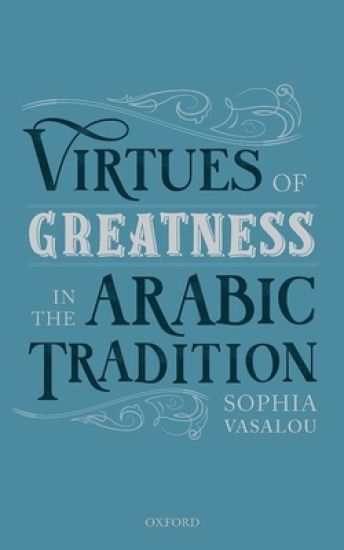
Virtues of Greatness in the Arabic Tradition

Virtues of Greatness in the Arabic Tradition

Sophia Vasalou

Oxford University Press
2019
sidottu
There are few ideals of character as distinctive and divisive as the ancient virtue of 'greatness of soul'. A larger-than-life virtue embodying nothing less than a vision of human greatness, it has often been seen as a relic of the Homeric world and its honour-loving heroes. In philosophy, it found its most celebrated expression in Aristotle's ethics, and it has lived on in the minds of philosophers and theologians in different forms ever since. Yet among the many lives this virtue has led in intellectual history, one remains conspicuously unwritten. This is the life it led in the Arabic tradition. A virtue of Greek warriors and their democratic epigones -- what happened when this splendid virtue made landfall in the Islamic world? This world, too, had its native heroes, who bequeathed their conception of extraordinary virtue to posterity. Heroic virtue is above all expressed in a boundless aspiration to what is greatest. Could we admire such virtue enough to want it as our own? What can we learn from the Arabic tradition of the virtues? In answering these questions, Sophia Vasalou elucidates a larger family of virtues that are united by their preoccupation with all things great: the 'virtues of greatness'. An important constituent of the character ideals expounded within the Islamic world, this type of virtue tells us as much about the content of these ideals as about their kaleidoscopic genealogies.
Ibn Taymiyya's Theological Ethics

Ibn Taymiyya's Theological Ethics

Sophia Vasalou

Oxford University Press Inc
2018
nidottu
Icon of modern-day fundamentalist movements, firebrand religious purist, tireless polemicist against the intellectual schools of his time-the Ibn Taymiyya we know is a thinker we often associate with hard attitudes and dogmatic stances. Yet there is another Ibn Taymiyya that stands out from the pages of his work, the thinker who fashions himself as a master of the via media and as a defender of the harmony between human reason and the religious faith. The aim of this book is to shed fresh light on Ibn Taymiyya's intellectual identity by a close investigation of his ethical thought. Earlier Muslim thinkers debating ethical value had been exercised by a number of core questions. What makes actions right or wrong? How do human beings know it? And what is God's relationship to the evaluative standards discerned by the human mind? An investigation of Ibn Taymiyya's engagement with such questions has much to teach us about his intellectual program and particularly about the role of reason and the linchpin concept of human nature (fitra) within this program. It also has much to teach us about Ibn Taymiyya's relationship to the intellectual landscape of his time, bringing us up against a rich tapestry of ethical discussions unfolding within theology, philosophy and legal theory in the classical period. At the same time, a close reading of Ibn Taymiyya's ethics invites us to confront not only the content of his thought but its form, and more particularly those features of his writing that fracture our efforts to unify his thought.
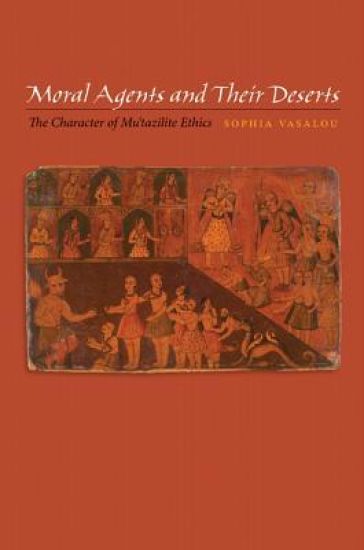
Moral Agents and Their Deserts

Moral Agents and Their Deserts

Sophia Vasalou

Princeton University Press
2016
pokkari
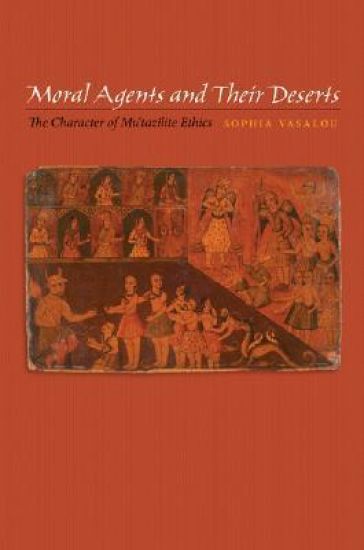
Must good deeds be rewarded and wrongdoers punished? Would God be unjust if He failed to punish and reward? And what is it about good or evil actions and moral identity that might generate such necessities? These were some of the vital religious and philosophical questions that eighth- and ninth-century Mu'tazilite theologians and their sophisticated successors attempted to answer, giving rise to a distinctive ethical position and one of the most prominent and controversial intellectual trends in medieval Islam. The Mu'tazilites developed a view of ethics whose distinguishing features were its austere moral objectivism and the crucial role it assigned to reason in the knowledge of moral truths. Central to this ethical vision was the notion of moral desert, and of the good and evil consequences--reward or punishment--deserved through a person's acts. Moral Agents and Their Deserts is the first book-length study of this central theme in Mu'tazilite ethics, and an attempt to grapple with the philosophical questions it raises. At the same time, it is a bid to question the ways in which modern readers, coming to medieval Islamic thought with a philosophical interest, seek to read and converse with Mu'tazilite theology. Moral Agents and Their Deserts tracks the challenges and rewards involved in the pursuit of the right conversation at the seams between modern and medieval concerns.
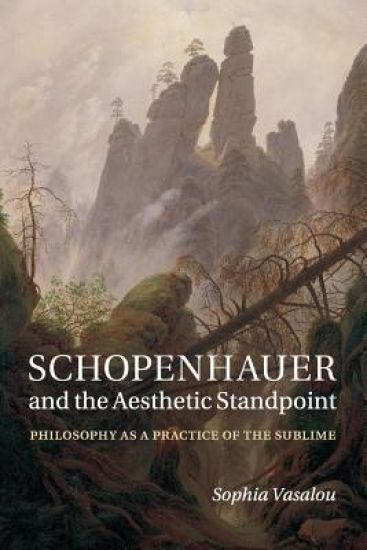
Schopenhauer and the Aesthetic Standpoint

Schopenhauer and the Aesthetic Standpoint

Sophia Vasalou

Cambridge University Press
2016
pokkari
With its pessimistic vision and bleak message of world-denial, it has often been difficult to know how to engage with Schopenhauer's philosophy. Schopenhauer's arguments have seemed flawed and his doctrines marred by inconsistencies; his very pessimism almost too flamboyant to be believable. Yet a way of redrawing this engagement stands open, Sophia Vasalou argues, if we attend more closely to the visionary power of Schopenhauer's work. The aim of this book is to place the aesthetic character of Schopenhauer's standpoint at the heart of the way we read his philosophy and the way we answer the question: why read Schopenhauer - and how? Approaching his philosophy as an enactment of the sublime with a longer history in the ancient philosophical tradition, Vasalou provides a fresh way of assessing Schopenhauer's relevance in critical terms. This book will be valuable for students and scholars with an interest in post-Kantian philosophy and ancient ethics.
Ibn Taymiyya's Theological Ethics

Ibn Taymiyya's Theological Ethics

Sophia Vasalou

Oxford University Press Inc
2015
sidottu
Icon of modern-day fundamentalist movements, firebrand religious purist, tireless polemicist against the intellectual schools of his timeâthe Ibn Taymiyya we know is a thinker we often associate with hard attitudes and dogmatic stances. Yet there is another Ibn Taymiyya that stands out from the pages of his work, the thinker who fashions himself as a master of the via media and as a defender of the harmony between human reason and the religious faith. The aim of this book is to shed fresh light on Ibn Taymiyya's intellectual identity by a close investigation of his ethical thought. Earlier Muslim thinkers debating ethical value had been exercised by a number of core questions. What makes actions right or wrong? How do human beings know it? And what is God's relationship to the evaluative standards discerned by the human mind? An investigation of Ibn Taymiyya's engagement with such questions has much to teach us about his intellectual program and particularly about the role of reason and the linchpin concept of human nature (fitra) within this program. It also has much to teach us about Ibn Taymiyya's relationship to the intellectual landscape of his time, bringing us up against a rich tapestry of ethical discussions unfolding within theology, philosophy and legal theory in the classical period. At the same time, a close reading of Ibn Taymiyya's ethics invites us to confront not only the content of his thought but its form, and more particularly those features of his writing that fracture our efforts to unify his thought.
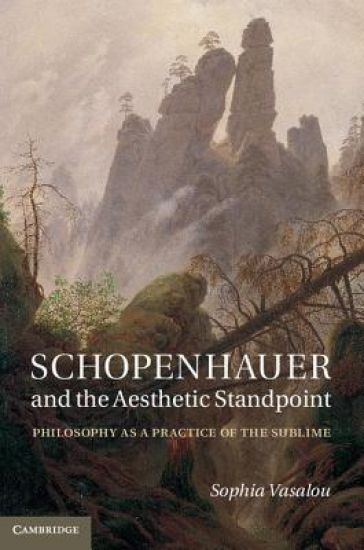
Schopenhauer and the Aesthetic Standpoint

Schopenhauer and the Aesthetic Standpoint

Sophia Vasalou

Cambridge University Press
2013
sidottu
With its pessimistic vision and bleak message of world-denial, it has often been difficult to know how to engage with Schopenhauer's philosophy. Schopenhauer's arguments have seemed flawed and his doctrines marred by inconsistencies; his very pessimism almost too flamboyant to be believable. Yet a way of redrawing this engagement stands open, Sophia Vasalou argues, if we attend more closely to the visionary power of Schopenhauer's work. The aim of this book is to place the aesthetic character of Schopenhauer's standpoint at the heart of the way we read his philosophy and the way we answer the question: why read Schopenhauer - and how? Approaching his philosophy as an enactment of the sublime with a longer history in the ancient philosophical tradition, Vasalou provides a fresh way of assessing Schopenhauer's relevance in critical terms. This book will be valuable for students and scholars with an interest in post-Kantian philosophy and ancient ethics.
Moral Agents and Their Deserts

Moral Agents and Their Deserts

Sophia Vasalou

Princeton University Press
2008
sidottu
Must good deeds be rewarded and wrongdoers punished? Would God be unjust if He failed to punish and reward? And what is it about good or evil actions and moral identity that might generate such necessities? These were some of the vital religious and philosophical questions that eighth- and ninth-century Mu'tazilite theologians and their sophisticated successors attempted to answer, giving rise to a distinctive ethical position and one of the most prominent and controversial intellectual trends in medieval Islam. The Mu'tazilites developed a view of ethics whose distinguishing features were its austere moral objectivism and the crucial role it assigned to reason in the knowledge of moral truths. Central to this ethical vision was the notion of moral desert, and of the good and evil consequences--reward or punishment--deserved through a person's acts. Moral Agents and Their Deserts is the first book-length study of this central theme in Mu'tazilite ethics, and an attempt to grapple with the philosophical questions it raises. At the same time, it is a bid to question the ways in which modern readers, coming to medieval Islamic thought with a philosophical interest, seek to read and converse with Mu'tazilite theology. Moral Agents and Their Deserts tracks the challenges and rewards involved in the pursuit of the right conversation at the seams between modern and medieval concerns.