Kirjojen hintavertailu. Mukana 12 390 323 kirjaa ja 12 kauppaa.
Kirjailija
Sophie de Schaepdrijver
Kirjat ja teokset yhdessä paikassa: 4 kirjaa, julkaisuja vuosilta 2015-2021, suosituimpien joukossa Gabrielle Petit. Vertaile teosten hintoja ja tarkista saatavuus suomalaisista kirjakaupoista.
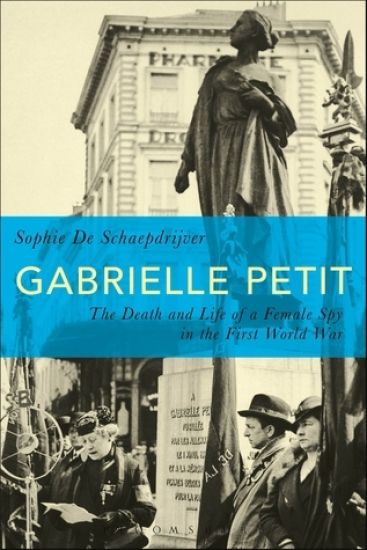
In central Brussels stands a statue of a young woman. Built in 1923, it is the first monument to a working-class woman in European history. Her name was Gabrielle Petit. History has forgotten Petit, an ambitious and patriotic Belgian, executed by firing squad in 1916 for her role as an intelligence agent for the British Army. After the First World War she was celebrated as an example of stern endeavour, but a hundred years later her memory has faded. In the first part of this historical biography Sophie De Schaepdrijver uses Petit's life to explore gender, class and heroism in the context of occupied Europe. Petit's experiences reveal the reality of civilian engagement under military occupation and the emergence of modern espionage. The second part of the book focuses on the legacy and cultural memory of Petit and the First World War. By analysing Petit's representation in ceremony, discourse and popular culture De Schaepdrijver expands our understanding of remembrance across the 20th century.
In central Brussels stands a statue of a young woman. Built in 1923, it is the first monument to a working-class woman in European history. Her name was Gabrielle Petit. History has forgotten Petit, an ambitious and patriotic Belgian, executed by firing squad in 1916 for her role as an intelligence agent for the British Army. After the First World War she was celebrated as an example of stern endeavour, but a hundred years later her memory has faded. In the first part of this historical biography Sophie De Schaepdrijver uses Petit's life to explore gender, class and heroism in the context of occupied Europe. Petit's experiences reveal the reality of civilian engagement under military occupation and the emergence of modern espionage. The second part of the book focuses on the legacy and cultural memory of Petit and the First World War. By analysing Petit's representation in ceremony, discourse and popular culture De Schaepdrijver expands our understanding of remembrance across the 20th century.
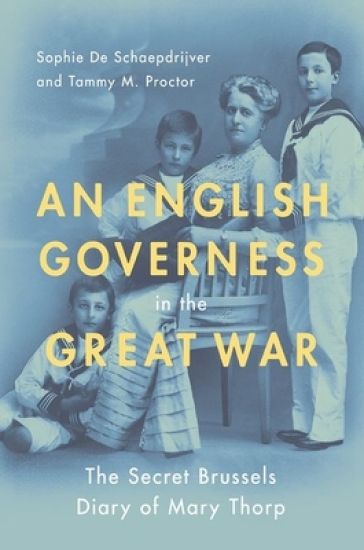
An Englishwoman of no particular fame living in World War I Brussels started a secret diary in September 1916. Aware that her thoughts could put her in danger with German authorities, she never wrote her name on the diary and ran to hide it every time the "Boches" came to inspect the house. The diary survived the war and ended up in a Belgian archive, forgotten for nearly a century until historians Sophie De Schaepdrijver and Tammy M. Proctor discovered it and the remarkable woman who wrote it: Mary Thorp, a middle-aged English governess working for a wealthy Belgian-Russian family in Brussels. As a foreigner and a woman, Mary Thorp offers a unique window into life under German occupation in Brussels (the largest occupied city of World War I) and in the uncertain early days of the peace. Her diary describes the roar of cannons in the middle of the night, queues for food and supplies in the shops, her work for a wartime charity, news from an interned godson in Germany, along with elegant dinners with powerful diplomats and the educational progress of her beloved charges. Mary Thorp's sharp and bittersweet reflections testify to the daily strains of living under enemy occupation, comment on the events of the war as they unfolded, and ultimately serve up a personal story of self-reliance and endurance. De Schaepdrijver and Proctor's in-depth commentary situate this extraordinary woman in her complex political, social, and cultural context, thus providing an unusual chance to engage with the Great War on an intimate and personal level.
An Englishwoman living in World War I Brussels started a secret diary in September 1916. The diary, which survived the war and whose author remained anonymous, ended up in a Belgian archive. This book brings to light both the diary and the story of the woman who wrote it: a middle-aged English governess working for a Belgian-Russian family in German-occupied Brussels. Mary Thorp (1864 -1945) grew up in London and in Bruges. Like many educated young women of impoverished middle-class backgrounds, she worked as a governess. Neither a servant nor a member of the upper classes that employed her, she harbored a sturdy middle-class outlook stressing self-reliance and responsibility for others -- the very attitude that underlay societies' resilience in the face of war. Her diary expresses this attitude but also the strains on it as the war wore on. Thorp did not only crossed classes; she crossed national borders as well. Her diary's perspective is transnational. She followed the wartime fate of her widely dispersed friends and family. She tracked military news from theaters both far-flung and nearby. And, because of her privileged access to diplomats from Spain, the Netherlands, the US, Persia, and Japan, she tallied wider war news - on peace overtures, the Russian Revolution, and discontent in Germany. At the same time, Thorp remained attuned to local dynamics in Brussels, the First World War's largest occupied city. Alert to both structural constraints and individual stories, she showed how the occupying army sought to exploit Belgium, but also how this rebutted some in the German military. Uniquely, her diary also documents the Armistice and its immediate aftermath, for she kept it up until January 1919. In this volume, Tammy M. Proctor and Sophie De Schaepdrijver provide a biographical introduction on Thorp, an overview of the war in occupied Belgium, and detailed annotations to the diary.