
Kirjailija
Soyica Diggs Colbert
Kirjat ja teokset yhdessä paikassa: 9 kirjaa, julkaisuja vuosilta 2011-2026, suosituimpien joukossa Freedom's Gate. Vertaile teosten hintoja ja tarkista saatavuus suomalaisista kirjakaupoista.
9 kirjaa
Kirjojen julkaisuhaarukka 2011-2026.


Presenting an innovative approach to performance studies and literary history, Soyica Colbert argues for the centrality of black performance traditions to African American literature, including preaching, dancing, blues and gospel, and theatre itself, showing how these performance traditions create the 'performative ground' of African American literary texts. Across a century of literary production using the physical space of the theatre and the discursive space of the page, W. E. B. Du Bois, Zora Neale Hurston, James Baldwin, August Wilson and others deploy performances to re-situate black people in time and space. The study examines African American plays past and present, including A Raisin in the Sun, Blues for Mister Charlie and Joe Turner's Come and Gone, demonstrating how African American dramatists stage black performances in their plays as acts of recuperation and restoration, creating sites that have the potential to repair the damage caused by slavery and its aftermath.

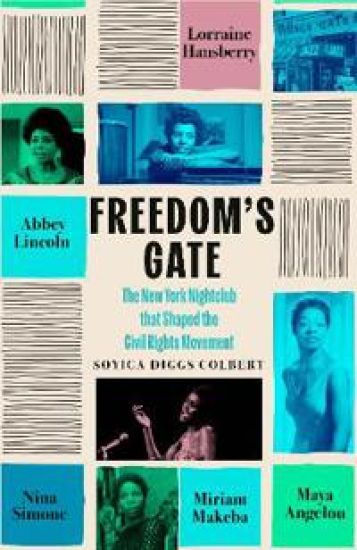
A “loving, lavishly detailed” (New York Times) and captivating portrait of Lorraine Hansberry’s life, art, and political activism—one of O Magazine’s best books of April 2021 “A devoted and deeply felt account of the development of an artist’s mind.”—Dave Itzkoff, New York Times Book Review (2021 Summer Reading issue) In this acclaimed biography of Lorraine Hansberry, Soyica Diggs Colbert narrates a life at the intersection of art and politics, arguing that for Hansberry the theater operated as a rehearsal room for her political and intellectual work. Celebrated for her play A Raisin in the Sun, Hansberry was also the author of innovative journalism and of plays touching on slavery, interracial communities, and Black freedom movements. Hansberry was deeply involved in the Black freedom struggle during the Cold War and in the early civil rights movement, and here Colbert shows us an artist’s life with the background of the Greenwich Village art scene in the 1960s, the homophile movement, Black diasporic freedom movements, and third-wave feminism. Drawing from Hansberry’s papers, speeches, and interviews, this book provides a new point of entry in the history of Black radicalism, and a new perspective on Black women in mid-twentieth-century political movements.

How does theatre shape the body and perceptions of it? How do bodies on stage challenge audience assumptions about material evidence and the truth? Theory for Theatre Studies: Bodies responds to these questions by examining how theatre participates in and informs theories of the body in performance, race, queer, disability, trans, gender, and new media studies.Throughout the 20th century, theories of the body have shifted from understanding the body as irrefutable material evidence of race, sex, and gender, to a social construction constituted in language. In the same period, theatre has struggled with representing ideas through live bodies while calling into question assumptions about the body.This volume demonstrates how theatre contributes to understanding the historical, contemporary and burgeoning theories of the body. It explores how theories of the body inform debates about labor conditions and spatial configurations. Theatre allows performers to shift an audience’s understandings of the shape of the bodies on stage, possibly producing a reflexive dynamic for consideration of bodies offstage as well. In addition, casting choices in the theatre, most recently and popularly in Hamilton, question how certain bodies are “cast” in social, historical, and philosophical roles. Through an analysis of contemporary case studies, including The Balcony, Angels in America, and Father Comes Home from the Wars, this volume examines how the theatre theorizes bodies. Online resources are also available to accompany this book.
How does theatre shape the body and perceptions of it? How do bodies on stage challenge audience assumptions about material evidence and the truth? Theory for Theatre Studies: Bodies responds to these questions by examining how theatre participates in and informs theories of the body in performance, race, queer, disability, trans, gender, and new media studies.Throughout the 20th century, theories of the body have shifted from understanding the body as irrefutable material evidence of race, sex, and gender, to a social construction constituted in language. In the same period, theatre has struggled with representing ideas through live bodies while calling into question assumptions about the body.This volume demonstrates how theatre contributes to understanding the historical, contemporary and burgeoning theories of the body. It explores how theories of the body inform debates about labor conditions and spatial configurations. Theatre allows performers to shift an audience’s understandings of the shape of the bodies on stage, possibly producing a reflexive dynamic for consideration of bodies offstage as well. In addition, casting choices in the theatre, most recently and popularly in Hamilton, question how certain bodies are “cast” in social, historical, and philosophical roles. Through an analysis of contemporary case studies, including The Balcony, Angels in America, and Father Comes Home from the Wars, this volume examines how the theatre theorizes bodies. Online resources are also available to accompany this book.

Received the 2018 Honorable Mention for the Joe A. Callaway Prize for the Best Book on Drama or Theatre?Black Movements analyzes how artists and activists of recent decades reference earlier freedom movements in order to imagine and produce a more expansive and inclusive democracy. The post–Jim Crow, post–apartheid, postcolonial era has ushered in a purportedly color blind society and along with it an assault on race-based forms of knowledge production and coalition formation. Soyica Diggs Colbert argues that in the late twentieth century race went “underground,” and by the twenty-first century race no longer functioned as an explicit marker of second-class citizenship. The subterranean nature of race manifests itself in discussions of the Trayvon Martin shooting that focus on his hoodie, an object of clothing that anyone can choose to wear, rather than focusing on structural racism; in discussions of the epidemic proportions of incarcerated black and brown people that highlight the individual’s poor decision making rather than the criminalization of blackness; in evaluations of black independence struggles in the Caribbean and Africa that allege these movements have accomplished little more than creating a black ruling class that mirrors the politics of its former white counterpart. Black Movements intervenes in these discussions by highlighting the ways in which artists draw from the past to create coherence about blackness in present and future worlds. Through an exploration of the way that black movements create circuits connecting people across space and time, Black Movements offers important interventions into performance, literary, diaspora, and African American studies.
Received the 2018 Honorable Mention for the Joe A. Callaway Prize for the Best Book on Drama or Theatre?Black Movements analyzes how artists and activists of recent decades reference earlier freedom movements in order to imagine and produce a more expansive and inclusive democracy. The post–Jim Crow, post–apartheid, postcolonial era has ushered in a purportedly color blind society and along with it an assault on race-based forms of knowledge production and coalition formation. Soyica Diggs Colbert argues that in the late twentieth century race went “underground,” and by the twenty-first century race no longer functioned as an explicit marker of second-class citizenship. The subterranean nature of race manifests itself in discussions of the Trayvon Martin shooting that focus on his hoodie, an object of clothing that anyone can choose to wear, rather than focusing on structural racism; in discussions of the epidemic proportions of incarcerated black and brown people that highlight the individual’s poor decision making rather than the criminalization of blackness; in evaluations of black independence struggles in the Caribbean and Africa that allege these movements have accomplished little more than creating a black ruling class that mirrors the politics of its former white counterpart. Black Movements intervenes in these discussions by highlighting the ways in which artists draw from the past to create coherence about blackness in present and future worlds. Through an exploration of the way that black movements create circuits connecting people across space and time, Black Movements offers important interventions into performance, literary, diaspora, and African American studies.
Presenting an innovative approach to performance studies and literary history, Soyica Colbert argues for the centrality of black performance traditions to African American literature, including preaching, dancing, blues and gospel, and theatre itself, showing how these performance traditions create the 'performative ground' of African American literary texts. Across a century of literary production using the physical space of the theatre and the discursive space of the page, W. E. B. Du Bois, Zora Neale Hurston, James Baldwin, August Wilson and others deploy performances to re-situate black people in time and space. The study examines African American plays past and present, including A Raisin in the Sun, Blues for Mister Charlie and Joe Turner's Come and Gone, demonstrating how African American dramatists stage black performances in their plays as acts of recuperation and restoration, creating sites that have the potential to repair the damage caused by slavery and its aftermath.