Kirjojen hintavertailu. Mukana 12 595 353 kirjaa ja 12 kauppaa.

Kirjailija

Stacey L Tyler

Kirjat ja teokset yhdessä paikassa: 2 kirjaa, julkaisuja vuosilta 2016-2020, suosituimpien joukossa The Internal Threat. Vertaile teosten hintoja ja tarkista saatavuus suomalaisista kirjakaupoista.

Mukana myös kirjoitusasut: Stacey L. Tyler

2 kirjaa

Kirjojen julkaisuhaarukka 2016-2020.

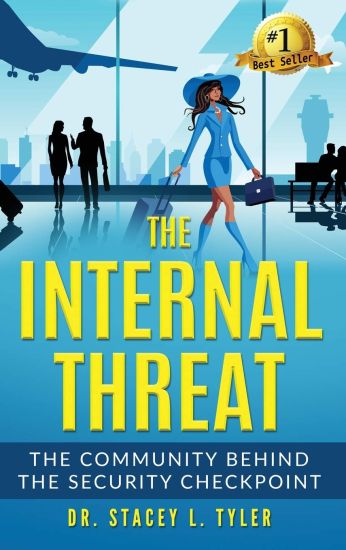
The Internal Threat

The Internal Threat

Stacey L Tyler

Triple a Experience
2020
sidottu
Have you ever wondered when going through security, Transportation Security Administration (TSA), how those pictures of weapons and other objects made it through security undetected? When going through those metal detectors, have you ever questioned if they really work? Or why certain people get patted down and some do not? Is it random? This book is not only going to reveal some shocking truths but makes you think long and hard about our national aviation security and how we are being manipulated to feel secure in a veil of deception. Let us start with the frontline employees as they are misusing their privileges by compromising airport security policies and procedures by funneling contraband, weapons, drugs, and prohibited items through security checkpoints and/or employee access points. Did you know that? September 11 gave the national aviation industry a huge sense of protection by imposing security taxes on the public traveling tickets to support the newly created agencies namely the Department of Homeland Security (DHS) and the Transportation Security Administration (TSA). The 9/11 terrorist attacks took a major toll on the aviation industry creating multiple mergers and bankruptcies which caused the remaining airlines and airports an ulterior means for survival. Reduce overhead and succumb to contracting out the frontline workforce to independent contractors. This course of action also diminished the rigorous training frontline employees need with strict requirements of policies, processes, and compliance. Not to mention recurrent training to ensure the traveling public safe. In this book, The Internal Threat: The Community Behind the Security Checkpoint, Dr. Stacey Tyler provides a qualitative study on the central research question that focuses on the degree to which miscommunication between TSA, airlines, and airport employees has an impact on the implementation of changes in airport security policies, particularly those regarding prohibited items that pass through security checkpoints. This behavior impacts the effective execution of airport security policies by federal law regarding carryon baggage on commercial aircraft that is specifically known as the Internal Threat.
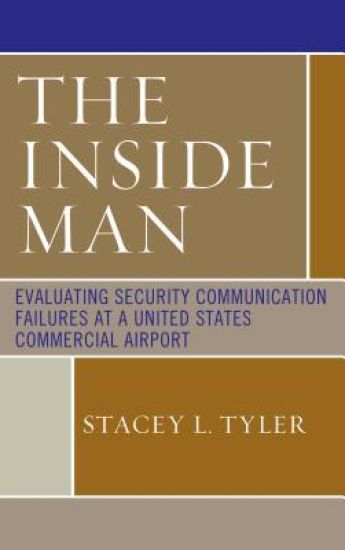
The Inside Man

The Inside Man

Stacey L. Tyler

University Press of America
2016
sidottu
Organizational communication impacts service efficiency and productivity. An increase in federal funding to strengthen communication within the airport stakeholders has failed to deliver expected results. The purpose of this qualitative case study is to explore whether miscommunication among the TSA agents and airport employees relates to effective implementation of airport security policies. The central research question focuses on the degree to which miscommunication between the TSA and airlines regarding prohibited items at security checkpoints impeded the effective execution of federal law regarding carry on luggage on commercial aircraft. Using Weick’s organizational information theory, this study examines the implementation of airport security policy focusing on communication between government and industry organizations. A sample of 13 private airline employees and 7 airport employees at a large U.S. commercial airport participated in the study. Data was collected via semi structured interview questions. Data was coded and analyzed following an inductive coding strategy. According to study results, there is very little evidence of miscommunications between government and airline stakeholders regarding policy changes and expectations related to security procedures. However, miscommunication about the same policy changes to consumers confuses travelers, which may explain incidences of prohibited items at the security checkpoints. Implications for positive social change related to this study may assist policy makers in clarifying language to better inform travelers about security changes and prohibited items, the objective of which will promote safer flying experiences, reduce the potential for harm, and result in more expedient traveling.