Angels and Demons: The Personification of Communication: Logology
Stan A. Lindsay
Say Press
2020
nidottu
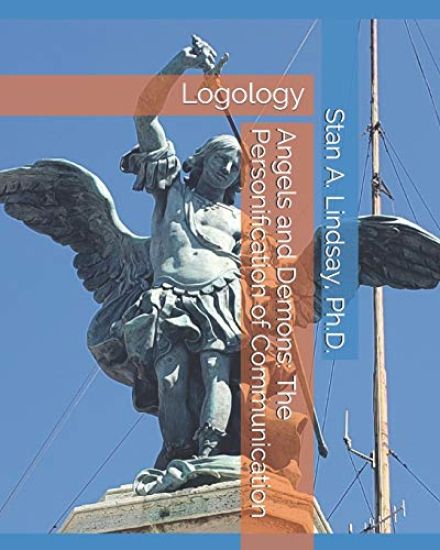
Angels and Demons: The Personification of Communication offers a solid, scholarly presentation of angelology and demonology from early Jewish and Christian sources from the Hellenistic period. It demonstrates the existence of a new category of fallen angel stories: Sinless Fallen Angels. It demonstrates that the New Testament (along with Rabbinic Judaism) generally rejects the three most common views of the Fallen Angel story, from the Hellenistic and Persian periods. Finally, it expands on G. F. Moore's formula: "God's will is made known or effectuated in the world not only through personal agents (ANGELS), but directly by his WORD or by his SPIRIT" (emphases Lindsay's). Applying to Moore's formula the "logological" views of Communication scholar Kenneth Burke, the book argues that angels and demons are presented in early Jewish and Christian sources as the personification of communication. Pop culture perpetrates several myths regarding angels and demons that are alien to the literature of the Old or New Testament and early Rabbinic period. This book, however, pertains only to the angelology in that literature. Here are corrections some of the myths:1.Lucifer is NOT the devil, Satan, or even a Fallen Angel or demon. Mentioned only in Isaiah, Lucifer (meaning "Shining One") is a nickname for the King of Babylon, who thinks he is god-like, but will die like any other man.2.Satan is not an "evil god" who is at war with the Good God.3.The fallen angel stories you have heard do not occur anywhere in the Bible.4.Demons, such as the ones in the Exorcist with Linda Blair, or even in the Rite with Anthony Hopkins, are incorrectly portrayed, according the literature of the Old and New Testaments and early Rabbinic period. There is no levitation, no spinning heads, etc. in demon possession stories in the New Testament.5.Demons, according to the Apostle Paul, do not even exist as actual entities; they are nothing: the equivalent of Idols or False Gods.6.Angels have no capacity for having sex or for reproduction.Dr. Stan A. Lindsay has served on the faculties of Iowa Christian College, Indiana University, Purdue University, Loyola University Chicago, and Florida State University, for which schools he has taught Classical Greek, Classical and Mishnaic Hebrew, Biblical Studies, Burkean Studies, and Rhetorical Studies. He holds an M.A. in Hebrew, and worked on multiple Ph.D. programs in Hebrew, Comparative Literature, Biblical Studies, and Rhetoric, before completing the Ph.D. in Rhetoric at Purdue University. He is an internationally renowned specialist in the communication theory of Kenneth Burke. In light of these credentials, Dr. Lindsay provides a unique perspective for viewing the Judeo-Christian cultural, logological, rhetorical, and communicative aspect of angelology. Other books that Dr. Lindsay has published are: Implicit Rhetoric: Kenneth Burke's Extension of Aristotle's Concept of Entelechy (University Press of America, 1998), The Twenty-One Sales in a Sale (Oasis Press/PSI Research, 1998), Revelation: The Human Drama (Lehigh University Press, 2001), A Concise Kenneth Burke Concordance (Say Press, 2004), The Seven C's of Stress: A Burkean Approach (Say Press, 2004), Psychotic Entelechy: The Dangers of "Spiritual Gifts" Theology (University Press of America, 2006), Persuasion, Proposals, and Public Speaking 2nd ed. (Say Press, 2009), Disneology: Religious Rhetoric at Walt Disney World (Say Press, 2010), The Essence of Rhetoric in Disney Music (Say Press, 2010), Basic Public Relations Documents: Implicit Rhetoric in Action (Say Press, 2010), The Expanded Kenneth Burke Concordance (Say Press, 2014), ArguMentor (Say Press, 2015), Making Offers They Can't Refuse: The Twenty-One Sales in a Sale 3rd ed. (Say Press, 2015), and The Logic of Christianity: A Syllogistic Chain (Say Press, 2018).