

Kirjailija
Stan Goff
Kirjat ja teokset yhdessä paikassa: 8 kirjaa, julkaisuja vuosilta 2004-2019, suosituimpien joukossa Mammon's Ecology. Vertaile teosten hintoja ja tarkista saatavuus suomalaisista kirjakaupoista.
8 kirjaa
Kirjojen julkaisuhaarukka 2004-2019.

In Borderline, Stan Goff unpacked the association of masculinity with war. In Tough Gynes, using an incisive and often darkly humorous study of nine films featuring violent female leads, he untangles the confusion about ""masculinity constructed as violence"" when our popular stories feature women as violent protagonists. Whether read individually or with a group, Tough Gynes raises compelling questions about gender and violence, with a few provisional answers. Plus, you get to watch movies as you read it. ""Reading this book made me deeply uncomfortable in all the very best ways. From space operas to zombies to westerns, Goff explores the way our popular entertainment--even, and especially, entertainment packaged for women as ""empowering""--is subtly driven by a patriarchal narrative. Just as The Beauty Myth made me uncomfortably aware of how much my self-invention was driven by an oppressive mythos marketed to women to limit our freedom as persons, Tough Gynes opened my eyes to the ways entertainment can reinforce patterns of oppression and violence. I've long believed that liberation from patriarchy needs to be a co-ed activity, and the voices of the men who are honestly examining their own complicity (instead of mansplaining) are crucial in the polyphony of redemption. This book gives you access to one of these voices."" --Rebecca Bratten Weiss, writer, farmer, activist, and author of the Patheos blog ""Suspended in Her Jar"" ""Here is a book to break hearts. It explodes the myth embedded in the national psyche of the virtue of violence and deftly turns our liberal feminist fantasies to ashes."" --Esther Acolatse, Knox College, Toronto ""Long before G.I. Jane, the equation of masculinity with violence was a troubling connection for both Christian and non-Christian alike. In this lively collection, Stan Goff explores the ways in which this connection between being manly and being violent has proliferated in some of the best-loved cinema of the modern era. We are in debt to his keen eye and to the light he sheds here."" --Myles Werntz, Logsdon Seminary, Hardin-Simmons University Stan Goff is a profeminist Roman Catholic writer living in southeast Michigan. He is the author of Borderline: Reflections on War, Sex, and Church (Wipf and Stock, 2015) and Mammon's Ecololgy: Metaphysic of an Empty Sign (Wipf and Stock, forthcoming).
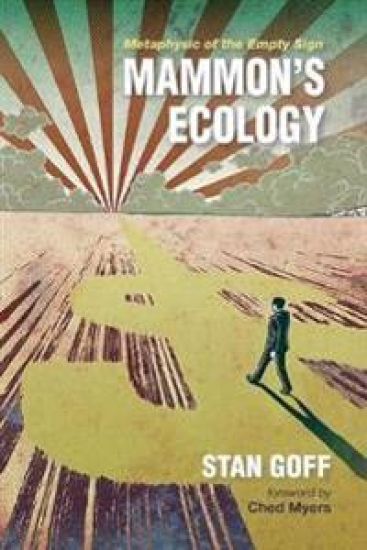
Proverbs 22:22 enjoins the reader, ""Don't take advantage of the poor just because you can."" Mammon's Ecology is a systematic investigation into the mysterious nature of modern money, which confronts us with the perplexing fact that, in the global economy as it is, we take advantage of the poor whether we want to or not. We destroy natural systems whether we want to or not. Ched Myers describes Mammon's Ecology as a ""workbook"" about ""the secret life of money."" Where Prather and others have shown that money is one of the perverse Powers described in Ephesians 6, Mammon's Ecology details precisely how money exercises this peculiar power and outlines suggestions for Christians who feel trapped in this complicity--not just as individuals, but as church. Mammon's Ecology is not a book about economics (which the author calls ""the world's best antidote to insomnia""), but rather a book about the ""deep ecology"" of (post)modern power and injustice. Read individually or as a group, Mammon's Ecology will leave you unable to think about money the same way again. ""Stan Goff has written that rare book: ambitious yet concise, erudite yet accessible. Mammon's Ecology is breathtaking. Deftly combining critical political economy and ecological thought with a radical Christian perspective, Mammon's Ecology should be read by everyone concerned about money, ecology, and justice. Goff challenges us to unthink the ways of knowing that have made today's planetary crisis, and in so doing to begin to think, hope, and imagine a world beyond modernity's violence."" --Jason W. Moore, Binghamton University, author of Capitalism in the Web of Life ""In a time when you might feel trapped between the megalomania of the charlatan who purports to explain everything, and the bubble mentality of the academic who won't step outside disciplinary fences, Goff's work is important. While being directly critical of thinkers who try to come up with simplistic universal explanations or cures, Goff also invites the reader to work out just how interconnected everything is."" --Rebecca Bratten Weiss, farmer, lecturer, and editor of Convivium Stan Goff has authored five books on war and militarism--including Borderline: Reflections on War, Sex, and Church (Cascade Books, 2015)--on gender and militarism. He has written numerous articles on socioeconomic issues since 1995. This is his first book on ""monetary ecology."" He is a former career soldier, a peace activist, and a Roman Catholic with latent Mennonite tendencies.
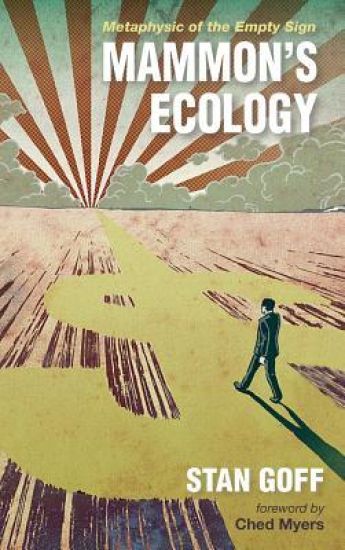
Proverbs 22:22 enjoins the reader, ""Don't take advantage of the poor just because you can."" Mammon's Ecology is a systematic investigation into the mysterious nature of modern money, which confronts us with the perplexing fact that, in the global economy as it is, we take advantage of the poor whether we want to or not. We destroy natural systems whether we want to or not. Ched Myers describes Mammon's Ecology as a ""workbook"" about ""the secret life of money."" Where Prather and others have shown that money is one of the perverse Powers described in Ephesians 6, Mammon's Ecology details precisely how money exercises this peculiar power and outlines suggestions for Christians who feel trapped in this complicity--not just as individuals, but as church. Mammon's Ecology is not a book about economics (which the author calls ""the world's best antidote to insomnia""), but rather a book about the ""deep ecology"" of (post)modern power and injustice. Read individually or as a group, Mammon's Ecology will leave you unable to think about money the same way again. ""Stan Goff has written that rare book: ambitious yet concise, erudite yet accessible. Mammon's Ecology is breathtaking. Deftly combining critical political economy and ecological thought with a radical Christian perspective, Mammon's Ecology should be read by everyone concerned about money, ecology, and justice. Goff challenges us to unthink the ways of knowing that have made today's planetary crisis, and in so doing to begin to think, hope, and imagine a world beyond modernity's violence."" --Jason W. Moore, Binghamton University, author of Capitalism in the Web of Life ""In a time when you might feel trapped between the megalomania of the charlatan who purports to explain everything, and the bubble mentality of the academic who won't step outside disciplinary fences, Goff's work is important. While being directly critical of thinkers who try to come up with simplistic universal explanations or cures, Goff also invites the reader to work out just how interconnected everything is."" --Rebecca Bratten Weiss, farmer, lecturer, and editor of Convivium Stan Goff has authored five books on war and militarism--including Borderline: Reflections on War, Sex, and Church (Cascade Books, 2015)--on gender and militarism. He has written numerous articles on socioeconomic issues since 1995. This is his first book on ""monetary ecology."" He is a former career soldier, a peace activist, and a Roman Catholic with latent Mennonite tendencies.
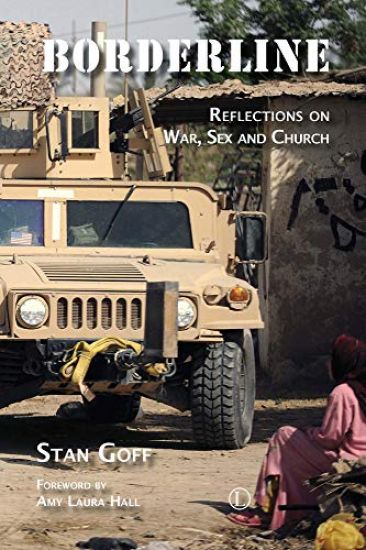
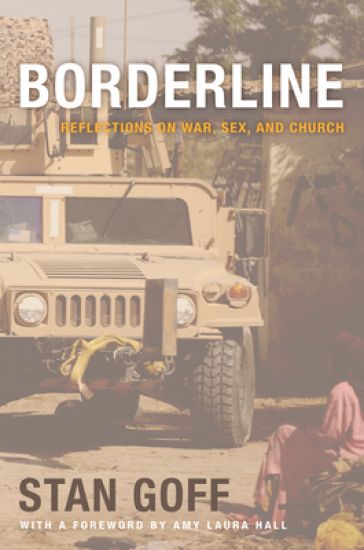
In his sharp, observant book, Stan Goff grapples with a problem crucial to modern Christian values. The sanctification of war and contempt for women are both grounded in a fear that breeds hostility, a hostility that valorises conquest and murder. In 'Borderline', Goff dissects the driving force behind the darkest impulses of the human heart. The un-Christian history of loving war and hating women are not merely similar but two sides of the same coin, he argues, in an 'autobiography' that spans two millennia of war and misogyny. 'Borderline' is the personal and conceptual history of an American career army veteran transformed by Jesus into a passionate advocate for nonviolence, written by a man who narrates his conversion to Christianity through feminism.
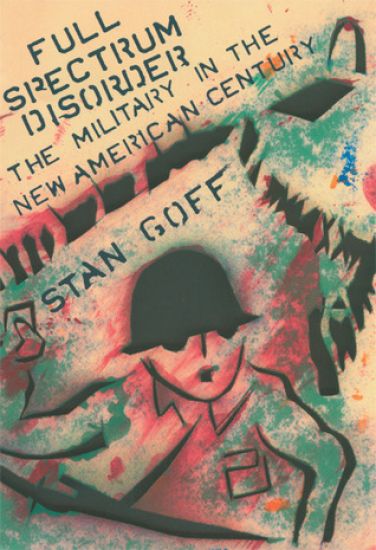
Former U.S. Special Forces veteran turned antiwar political activist Goff brings an idiosyncratic point of view and tone to his critique of U.S. foreign policy, much of which hinges on the idea that the complex system that is global capitalism is fundamentally at odds with the laws of entropy and is