

Kirjailija
Stanislaw Lem
Kirjat ja teokset yhdessä paikassa: 103 kirjaa, julkaisuja vuosilta 1976-2026, suosituimpien joukossa Eden. Vertaile teosten hintoja ja tarkista saatavuus suomalaisista kirjakaupoista.
103 kirjaa
Kirjojen julkaisuhaarukka 1976-2026.

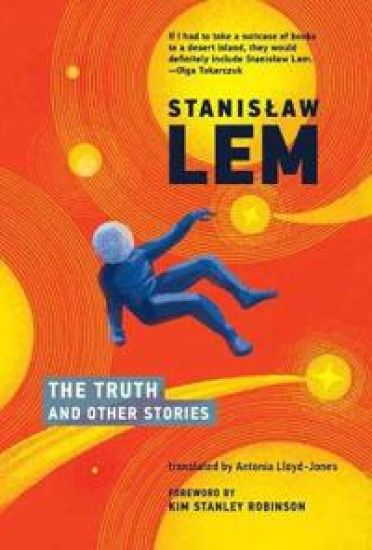
Twelve stories by science fiction master Stanislaw Lem, nine of them never before published in English. Of these twelve short stories by science fiction master Stanislaw Lem, only three have previously appeared in English, making this the first new book of fiction by Lem since the late 1980s. The stories display the full range of Lem's intense curiosity about scientific ideas as well as his sardonic approach to human nature, presenting as multifarious a collection of mad scientists as any reader could wish for. Many of these stories feature artificial intelligences or artificial life forms, long a Lem preoccupation; some feature quite insane theories of cosmology or evolution. All are thought provoking and scathingly funny. Written from 1956 to 1993, the stories are arranged in chronological order. In the title story, The Truth, a scientist in an insane asylum theorizes that the sun is alive; The Journal appears to be an account by an omnipotent being describing the creation of infinite universes--until, in a classic Lem twist, it turns out to be no such thing; in An Enigma, beings debate whether offspring can be created without advanced degrees and design templates. Other stories feature a computer that can predict the future by 137 seconds, matter-destroying spores, a hunt in which the prey is a robot, and an electronic brain eager to go on the lam. These stories are peak Lem, exploring ideas and themes that resonate throughout his writing.

Summa-Technologiae dal latino "Summa" ovvero "Compendio" della Tecnologia un libro scritto dall'autore polacco Stanislaw Lem nel 1964. Summa una delle prime raccolte di articoli filosofici di Lem. Il compendio ha la profondit di intuizione e l'ironia per cui le opere di Lem sono famose. Il titolo un chiaro riferimento alla Summa Theologiae di Tommaso d'Aquino. Per parafrasare l'autore, il libro tenta di "analizzare le spine delle rose che non sono ancora sbocciate" - in altre parole, di affrontare le difficolt di un futuro lontano (e, in alcuni casi, non cos lontano). Il tema principale affrontato da Lem nel libro quello della civilt nell'assenza di vincoli tecnici e materiali nel campo della tecnologgie informatiche. Un libro che de facto contiene anticipazioni che oggi sono oggetto degli studi nel campo dell'Intelligenza Artificiale. Il libro considera anche le implicazioni morali, etiche e filosofiche della tecnologia futura. In questa edizione inclusa la postfazione scritta da Lem nel 1982.
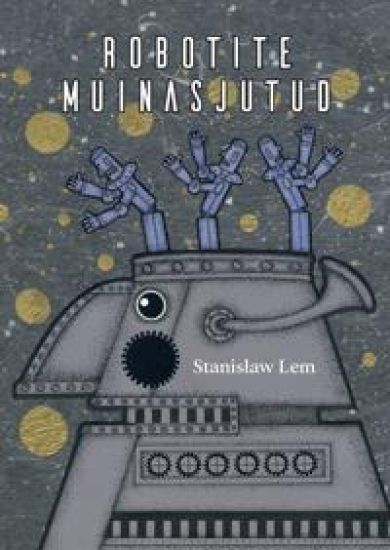
Stanislaw Lemi (1921-2006) "Robotite muinasjutud" ilmuvad esmakordselt eesti keeles kuulsa Poola kirjaniku 100. sünniaastapäeva puhul.See raamat on unikaalne - 16 loost 8 on illustreerinud eesti ja 8 poola kunstnikud. Neid muinasjutte võiksid vesta robotivanaemad robotilastele. Samas on need lood olemuslikult inimestest ja inimestele, ergutades meie kujutlusvõime ja pannes mõtlema inimloomuse keerukuse üle, meie suhete üle ümbritsevaga - kosmosesse välja.
"Summa tekhnologii" podvela itog klassicheskoj epokhe issledovanija Buduschego. V svoej knige Stanislav Lem provel unikalnyj i smelyj tekhnologicheskij analiz tsivilizatsij. On proanaliziroval vozmozhnosti vozniknovenija printsipialno novykh grupp nauchnykh distsiplin i polnostju otkazalsja ot prostykh ekstrapoljatsionnykh postroenij Buduschego. Napisannaja bolee soroka let nazad kniga niskolko ne ustarela i javljaetsja klassikoj futurologii.




I en fjern kant av verdensrommet ligger planeten Solaris. Overflaten er dekket av en mystisk, flytende substans som kan anta de mest utrolige former. Dette oseanet har gitt grunnlag for myriader av teorier om intelligent liv, og i over hundre år har forskere fra jorden forsøkt å løse Solaris' gåte. Psykologen Kris Kelvin ankommer forskningsstasjonen på Solaris og oppdager raskt at det ikke bare er den vanlige besetningen som befinner seg om bord. Stasjonen er hjemsøkt av skapninger som synes å ha opphav i besetningens minner. Kelvin blir selv konfrontert med en naturtro kopi av sin avdøde kone, Harey. Kan det være oseanet som frembringer disse såkalte «gjestene», og i så fall, hvorfor? Kultklassikeren «Solaris» fra 1961 er en psykologisk thriller, en tragisk kjærlighetshistorie, en vitenskapssatire og en elegi over menneskets ensomhet i universet. Romanen innbyr til refleksjoner omkring menneskets plass i universet og om hvordan man kan forstå en utenomjordisk eksistens som er radikalt forskjellig fra alt vi kjenner fra før. Oversatt fra polsk av Julia Wiedlocha. Stanislaw Lem (1921-2006) er en polsk forfatter, essayist og futurolog. Han regnes som en av verdens fremste science fiction-forfattere. «Solaris» er hans mest kjente roman og har blitt oversatt til over 40 språk. Boken ble filmatisert av Andrej Tarkovskij i 1972 og Steven Soderbergh i 2002. Stanislaw Lem (1921-2006) var en polsk forfatter av satirisk og filosofisk science-fiction-litteratur. Hans bøker er oversatt til 40 språk og er solgt i over 27 millioner eksemplarer.
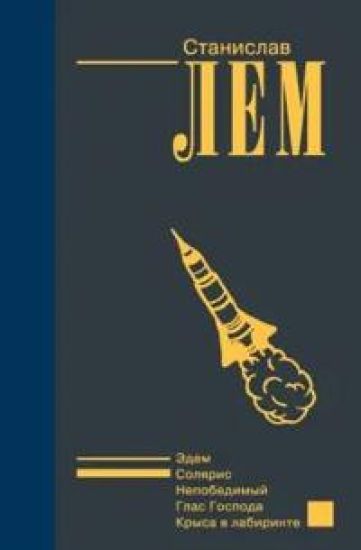
Stanislav Lem (1921-2006) - klassik mirovoj literatury KHKh veka, pisatel s bolshoj bukvy, kotorogo kritiki nazyvajut "poslednim iz filosofov-entsiklopedistov". Avtor legendarnykh knig: "Soljaris", "Edem", "Zvezdnye dnevniki Ijona Tikhogo", "Vozvraschenie so zvezd", i mnogikh drugikh. Knig, vyzyvajuschikh neizmennoe voskhischenie kak chitatelej, tak i pisatelej vo vsekh stranakh mira. Knig, navsegda izmenivshikh litso sovremennoj fantastiki.V etot tom voshli proizvedenija, napisannye v 1956-1968 godakh: "Edem", "Soljaris", "Nepobedimyj", "Glas Gospoda", "Krysa v labirinte".Perevodchik: Dushenko K., Nudelman Rafail, Gudimova G.
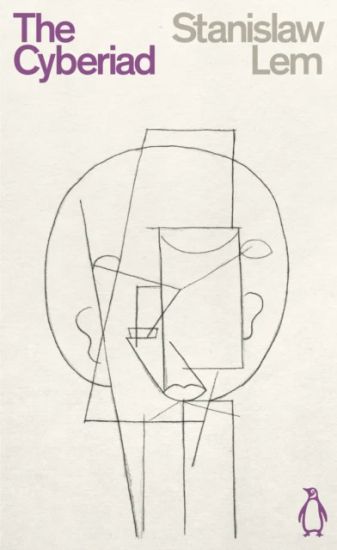
'A giant of twentieth-century science fiction' GuardianOne of the world's most beloved science fiction writers, Stanislaw Lem was famed for his wryly comic, outlandish imaginings of the relationship between humans and technology. In this playful cosmic fantasia, two 'constructors' compete to dream up ever-more ingenious inventions in a universe beyond reality.'A Jorge Luis Borges for the Space Age, who plays with every concept of philosophy and physics' The New York Times
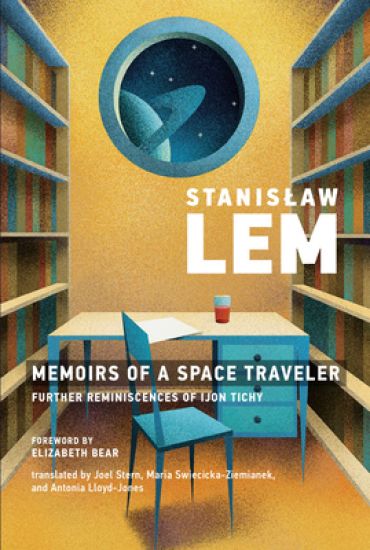
The travels of Ijon Tichy, a Gulliver of the space age, who encounters faulty time machines, intelligent washing machines, suicidal potatoes, and other puzzling phenomena.Memoirs of a Space Traveler follows the adventures of Ijon Tichy, a Gulliver of the space age, who leads readers through strange experiments involving, among other puzzling phenomena, faulty time machines, intelligent washing machines, and suicidal potatoes. The scientists Tichy encounters make plans that are grandiose, and strike bargains that are Faustian. They pursue humanity's greatest and most ancient obsessions: immortality, artificial intelligence, and top-of-the-line consumer items.By turns satirical, philosophical, and absurd, these stories express the most starkly original and prescient notions of a master of speculative fiction.

An early realist novel by Stanislaw Lem, taking place in a Polish psychiatric hospital during World War II.Taking place within the confines of a psychiatric hospital, Stanislaw Lem's The Hospital of the Transfiguration tells the story of a young doctor working in a Polish asylum during World War II. At first the asylum seems like a bucolic refuge, but a series of sinister encounters and incidents reveal an underlying brutality. The doctor begins to seek relief in the strange conversation of the poet Sekulowski, who is posing as a patient in a bid for safety from the occupying German forces. Meanwhile, Resistance fighters stockpile weapons in the surrounding woods. A very early work by Lem, The Hospital of the Transfiguration is partly autobiographical, drawing on the author's experiences as a medical student. Written in 1948, it was suppressed by Polish censors and not published until 1955. The censorship of this realist novel is partly what led Lem to focus on science fiction and nonfiction for the rest of his career.
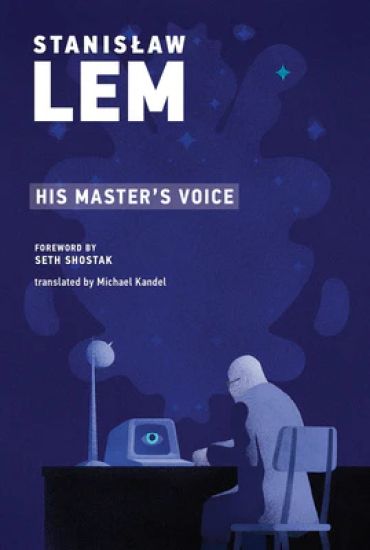
Scientists attempt to decode what may be a message from intelligent beings in outer space.By pure chance, scientists detect a signal from space that may be communication from rational beings. How can people of Earth understand this message, knowing nothing about the senders—even whether or not they exist? Written as the memoir of a mathematician who participates in the government project (code name: His Master's Voice) attempting to decode what seems to be a message from outer space, this classic novel shows scientists grappling with fundamental questions about the nature of reality, the confines of knowledge, the limitations of the human mind, and the ethics of military-sponsored scientific research.