Kirjojen hintavertailu. Mukana 12 390 323 kirjaa ja 12 kauppaa.

Kirjailija

Stanley Aronowitz

Kirjat ja teokset yhdessä paikassa: 34 kirjaa, julkaisuja vuosilta 1981-2024, suosituimpien joukossa Popular Culture. Vertaile teosten hintoja ja tarkista saatavuus suomalaisista kirjakaupoista.

34 kirjaa

Kirjojen julkaisuhaarukka 1981-2024.

Popular Culture

Popular Culture

Stanley Aronowitz; Robert W. Connell; Philip Corrigan; Elizabeth Ellsworth; Henry A. Giroux; Lawrence Grossberg; Peter McLaren; Roger Simon; Paul Smith; Richard Smith; Mimi White; Paul Willis

Praeger Publishers Inc
1989
sidottu
Illuminating one of the most pervasive issues of our time, Popular Culture is the first book to link the importance and implications of popular culture with pedagogical practice. It shows how cultural forms such as Hollywood films, pop music, soap operas, and televangelism are organized by gender, age, class, race, and ethnicity, thus providing the contradictory text that both enables and disables emancipatory interest, so fundamental to the formation of self and society. What emerges is a redefinition of the very notion of popular culture.

Live Theory

Live Theory

Stanley Aronowitz; Cornel West

Eris
2024
sidottu
Stanley Aronowitz was a towering figure on the American Left for over sixty years. Both a tireless organizer and a militant social and political theorist, Aronowitz was a highly perceptive analyst of class power. He was dedicated throughout his career to the development and circulation of conceptual weapons for the working class and for all those who faced oppression within American society.Live Theory: The Stanley Aronowitz Reader brings together in thirteen seminal essays Aronowitz’s theoretical contributions to fundamental questions regarding science, class, culture, and education, alongside his pioneering interventions on labor, contract unionism, and the ongoing struggle for radical democracy. It is a crucial introduction to an indispensable thinker.
Live Theory

Live Theory

Stanley Aronowitz; Cornel West

Eris
2024
pokkari
Stanley Aronowitz was a towering figure on the American Left for over sixty years. Both a tireless organizer and a militant social and political theorist, Aronowitz was a highly perceptive analyst of class power. He was dedicated throughout his career to the development and circulation of conceptual weapons for the working class and for all those who faced oppression within American society.Live Theory: The Stanley Aronowitz Reader brings together in thirteen seminal essays Aronowitz’s theoretical contributions to fundamental questions regarding science, class, culture, and education, alongside his pioneering interventions on labor, contract unionism, and the ongoing struggle for radical democracy. It is a crucial introduction to an indispensable thinker.
Education Under Siege

Education Under Siege

Stanley Aronowitz; Henry A. Giroux

Routledge
2017
sidottu
Public spending on education is under attack. In this challenging book Aronowitz and Giroux examine the thinking behind that attack, in the USA and in other industrialized countries.
The Death and Life of American Labor

The Death and Life of American Labor

Stanley Aronowitz

Verso Books
2015
nidottu
Union membership in the United States has fallen below 11 percent, the lowest rate since before the New Deal. Labor activist and scholar of the American labor movement Stanley Aronowitz argues that the movement as we have known it for the last 100 years is effectively dead. And he explains how this death has been a long time coming-the organizing and political principles adopted by US unions at mid-century have taken a terrible toll. In the 1950s, Aronowitz was a factory metalworker.In the '50s and '60s, he directed organizing with the Amalgamated Clothing Workers and the Oil, Chemical and Atomic Workers. In 1963, he coordinated the labor participation for the March on Washington for Jobs and Freedom. Ten years later, the publication of his book False Promises: The Shaping of American Working Class Consciousness was a landmark in the study of the US working-class and workers' movements.Aronowitz draws on this long personal history, reflecting on his continuing involvement in labor organizing, with groups such as the Professional Staff Congress of the City University. He brings a historian's understanding of American workers' struggles in taking the long view of the labor movement. Then, in a survey of current initiatives, strikes, organizations, and allies, Aronowitz analyzes the possibilities of labor's rebirth, and sets out a program for a new, broad, radical workers' movement.
The Death and Life of American Labor

The Death and Life of American Labor

Stanley Aronowitz

Verso Books
2014
sidottu
Union membership in the United States has fallen beneath 11%, the lowest rate since before the New Deal. Longtime scholar of the American union movement Stanley Aronowitz argues that the labor movement as we have known it for most of the last 100 years is effectively dead. And he asserts that this death has been a long time coming - the organizing principles chosen by the labor movement at mid-century have come back to haunt the movement today. In an expansive survey of new initiatives, strikes, organizations, and allies Aronowitz analyzes the possibilities of labor's renewal, and sets out a program for a new, broad, radical workers' movement.
Taking It Big

Taking It Big

Stanley Aronowitz

Columbia University Press
2014
pokkari
C. Wright Mills (1916-1962) was a pathbreaking intellectual who transformed the independent American Left in the 1940s and 1950s. Often challenging the established ideologies and approaches of fellow leftist thinkers, Mills was central to creating and developing the idea of the "public intellectual" in postwar America and laid the political foundations for the rise of the New Left in the 1960s. Written by Stanley Aronowitz, a leading sociologist and critic of American culture and politics, Taking It Big reconstructs this icon's formation and the new dimension of American political life that followed his work. Aronowitz revisits Mills's education and its role in shaping his outlook and intellectual restlessness. Mills defined himself as a maverick, and Aronowitz tests this claim (which has been challenged in recent years) against the work and thought of his contemporaries. Aronowitz describes Mills's growing circle of contacts among the New York Intellectuals and his efforts to reenergize the Left by encouraging a fundamentally new theoretical orientation centered on more ambitious critiques of U.S. society. Blurring the rigid boundaries among philosophy, history, and social theory and between traditional orthodoxies and the radical imagination, Mills became one of the most admired and controversial thinkers of his time and was instrumental in inspiring the student and antiwar movements of the 1960s. In this book, Aronowitz not only reclaims this critical thinker's reputation but also emphasizes his ongoing significance to debates on power in American democracy.
Taking It Big

Taking It Big

Stanley Aronowitz

Columbia University Press
2012
sidottu
C. Wright Mills (1916-1962) was a pathbreaking intellectual who transformed the independent American Left in the 1940s and 1950s. Often challenging the established ideologies and approaches of fellow leftist thinkers, Mills was central to creating and developing the idea of the "public intellectual" in postwar America and laid the political foundations for the rise of the New Left in the 1960s. Written by Stanley Aronowitz, a leading sociologist and critic of American culture and politics, Taking It Big reconstructs this icon's formation and the new dimension of American political life that followed his work. Aronowitz revisits Mills's education and its role in shaping his outlook and intellectual restlessness. Mills defined himself as a maverick, and Aronowitz tests this claim (which has been challenged in recent years) against the work and thought of his contemporaries. Aronowitz describes Mills's growing circle of contacts among the New York Intellectuals and his efforts to reenergize the Left by encouraging a fundamentally new theoretical orientation centered on more ambitious critiques of U.S. society. Blurring the rigid boundaries among philosophy, history, and social theory and between traditional orthodoxies and the radical imagination, Mills became one of the most admired and controversial thinkers of his time and was instrumental in inspiring the student and antiwar movements of the 1960s. In this book, Aronowitz not only reclaims this critical thinker's reputation but also emphasizes his ongoing significance to debates on power in American democracy.
The Jobless Future

The Jobless Future

Stanley Aronowitz; William DiFazio

University of Minnesota Press
2010
nidottu
High technology will destroy more jobs than it creates. This grim prediction was first published in the 1994 edition of The Jobless Future, an eerily accurate title that could have been written for today's dismal economic climate. Fully updated and with a new introduction by Stanley Aronowitz and William DiFazio, The Jobless Future warns that jobs as we know them-long-term, with benefits-are an endangered species.
Against Schooling

Against Schooling

Stanley Aronowitz

Paradigm
2008
nidottu
In Against Schooling, Stanley Aronowitz passionately raises an alarm about the current state of education in our country. Discipline and control over students, Aronowitz argues, are now the primary criteria of success, and genuine learning is sacrificed to a new educational militarism. In an age where school districts have imposed testing, teachers must teach to test, and both teacher and student are robbed of their autonomy and creativity. The crisis extends to higher education, where all but a few elite institutions are becoming increasingly narrowly focused and vocational in their teaching. With education lacking opportunity for self-reflection on broad social and historical dynamics, Against Schooling asks "How will society be able to solve its most pressing problems?" Aronowitz proposes innovative approaches to get schools back on track..
Against Schooling

Against Schooling

Stanley Aronowitz

Paradigm
2008
sidottu
In Against Schooling, Stanley Aronowitz passionately raises an alarm about the current state of education in our country. Discipline and control over students, Aronowitz argues, are now the primary criteria of success, and genuine learning is sacrificed to a new educational militarism. In an age where school districts have imposed testing, teachers must teach to test, and both teacher and student are robbed of their autonomy and creativity. The crisis extends to higher education, where all but a few elite institutions are becoming increasingly narrowly focused and vocational in their teaching. With education lacking opportunity for self-reflection on broad social and historical dynamics, Against Schooling asks "How will society be able to solve its most pressing problems?" Aronowitz proposes innovative approaches to get schools back on track.
The Last Good Job in America

The Last Good Job in America

Stanley Aronowitz

Rowman Littlefield Publishers
2007
nidottu
Money, jobs, careers, training_all are topics often overheard in the conversation of middle-class Americans. One of the nation's leading critics of education, the world of work, and the labor movement, Stanley Aronowitz shows how new technologies, labor, and education all are deeply intertwined in our culture and everyday lives. This book reflects Aronowitz's thinking at a time when globalization has brought these connections to broad public attention. Aronowitz argues for the decline of 'the job' as the backbone, along with family, of American society. Despite high employment, low wages and job insecurity leave many families at or below the poverty line. The career instability previously experienced mostly by blue-collar workers has spread to middle managers and high-level executives caught in the rapid movement of capital and technologies. In light of these facts, Aronowitz argues for a new social contract between employers and workers.
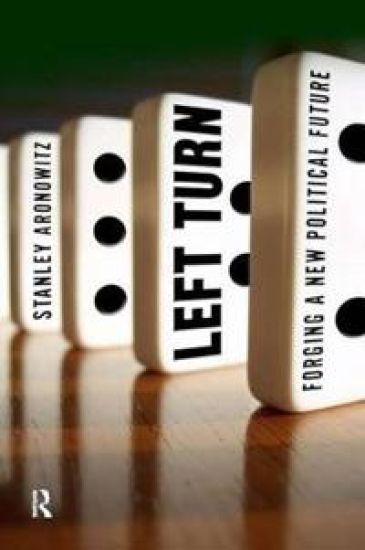
Left Turn

Left Turn

Stanley Aronowitz

Paradigm
2006
nidottu
Building a new platform for change, prominent social critic Stanley Aronowitz diagnoses America's crisis of democracy and the dangers of the new authoritarianism. Aronowitz draws on his vast knowledge of history and political theory and from currents of political change around the globe, from the traditions of the European left to the newest political trends in Latin America that have challenged the "death of socialism. Demonstrating why Democrats lose when they cling to centrism and compromise their core values, this book shows us what a new left party in America would look like in an era of globalization, terrorism, and a crisis of public confidence in government.
Left Turn

Left Turn

Stanley Aronowitz

Paradigm
2006
sidottu
Building a new platform for change, prominent social critic Stanley Aronowitz diagnoses America's crisis of democracy and the dangers of the new authoritarianism. Aronowitz draws on his vast knowledge of history and political theory and from currents of political change around the globe, from the traditions of the European left to the newest political trends in Latin America that have challenged the "death of socialism. Demonstrating why Democrats lose when they cling to centrism and compromise their core values, this book shows us what a new left party in America would look like in an era of globalization, terrorism, and a crisis of public confidence in government.
Just Around The Corner

Just Around The Corner

Stanley Aronowitz

Temple University Press,U.S.
2005
pokkari
Americans have always believed that economic growth leads to job growth. In this groundbreaking analysis, Stanley Aronowitz argues that this is no longer true. Just Around the Corner examines the state of the American economy as planned by Democrats and Republicans over the last thirty years. Aronowitz finds that economic growth has become \u0022delinked\u0022 from job creation, and that unemployment and underemployment are a permanent condition of our economy. He traces the historical roots of this state of affairs and sees under the surface of booms and busts a continuum of economic austerity that creates financial windfalls for the rich at the expense of most Americans. Aronowitz also explores the cultural and political processes by which we have come to describe and accept economics in the United States. He concludes by presenting a concrete plan of action that would guarantee employment and living wages for all Americans. With both measured analysis and persuasive reasoning, Just Around the Corner provides an indispensable guide to our current economic predicament and a bold challenge to economists and policymakers.
Just Around The Corner

Just Around The Corner

Stanley Aronowitz

Temple University Press,U.S.
2005
sidottu
Americans have always believed that economic growth leads to job growth. In this groundbreaking analysis, Stanley Aronowitz argues that this is no longer true. Just Around the Corner examines the state of the American economy as planned by Democrats and Republicans over the last thirty years. Aronowitz finds that economic growth has become \u0022delinked\u0022 from job creation, and that unemployment and underemployment are a permanent condition of our economy. He traces the historical roots of this state of affairs and sees under the surface of booms and busts a continuum of economic austerity that creates financial windfalls for the rich at the expense of most Americans. Aronowitz also explores the cultural and political processes by which we have come to describe and accept economics in the United States. He concludes by presenting a concrete plan of action that would guarantee employment and living wages for all Americans. With both measured analysis and persuasive reasoning, Just Around the Corner provides an indispensable guide to our current economic predicament and a bold challenge to economists and policymakers.
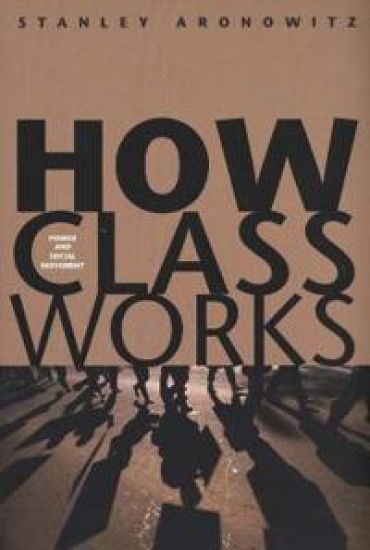
How Class Works

How Class Works

Stanley Aronowitz

Yale University Press
2004
pokkari
Although Americans like to believe that they live in a classless society, Stanley Aronowitz demonstrates that class remains a potent force. Defining class as the power of social groups to make a difference, he explains that social groups such as labor movements, environmental activists, and feminists become classes when they make demands that change the course of history.“With How Class Works Aronowitz puts the subject of social class squarely on the intellectual agenda—though in a new, inclusive, and dynamic form. Like his influential False Promises, How Class Works is both intellectually exciting and morally challenging.”—Barbara Ehrenreich“In How Class Works Aronowitz argues for the enduring vitality of the concept of social class as a way of understanding social relations. This is a significant contribution to social theory, an argument certain to be widely considered, debated, and tested.”—George Lipsitz, author of American Studies in a Moment of Danger“An intellectually captivating book on a topic that remains as timely and significant as ever.”—Howard Kimeldorf, University of Michigan
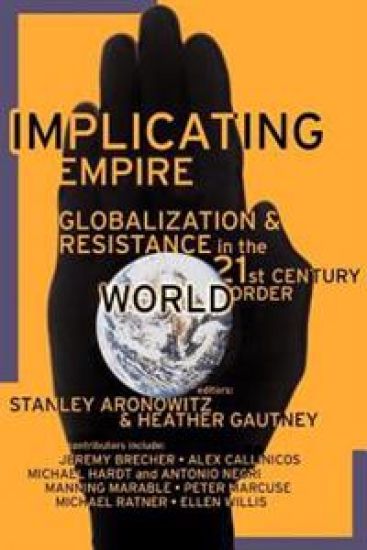
Implicating Empire

Implicating Empire

Stanley Aronowitz

Basic Books
2002
pokkari
Over the past several years, while visible protests against the World Bank and the I.M.F. made front-page news, there has been a growing field of scholarship that looks at the role of globalization for national and international state identities. The first truism of globalization- that we live in an increasingly interconnected world, one in which it is impossible to separate the fate of one nation from that of the others- was dramatically illustrated on September 11, 2001, when the seemingly distant effects of a civil war in Afghanistan so murderously interrupted life in the United States.Implicating Empire is the first book to look at four crucial dimensions of globalization: first, its role vis-à-vis the current war second, the impact of globalization on domestic U.S. policy third, how globalization will necessarily alter national security, both in its definition as well as how it is pursued, and, finally, the future of globalization. Including original essays by Stanley Aronowitz, Ahmed Rashid, Tariq Ali, Manning Marable, Michael Hardt, and Ellen Willis, among others, Implicating Empire will set the agenda for how globalization is debated- and resisted- in the future.
Paradigm Lost

Paradigm Lost

Stanley Aronowitz

University of Minnesota Press
2002
nidottu
Analyzes the ongoing relevance of a revitalized state theory to today’s political debates.With increasing globalization, the meaning and role of the nation-state are in flux. At the same time, state theory, which might help to explain such a trend, has fallen victim to the general decline of radical movements, particularly the crisis in Marxism. This volume seeks to enrich and complicate current political debates by bringing state theory back to the fore and assessing its relevance to the social phenomena and thought of our day. Throughout, it becomes clear that, whether confronting the challenges of postmodern and neo-institutionalist theory or the crisis of the welfare state and globalization, state theory still has great analytical and strategic value.Contributors: Clyde W. Barrow, U of Massachusetts, Dartmouth; Richard A. Cloward; Adriano Nervo Codato, Federal U of Paraná, Brazil; Bob Jessop, Lancaster U, UK; Andreas Kalyvas, U of Michigan; Rhonda F. Levine, Colgate U; Leo Panitch, York U; Renato Monseff Perissinotto, Federal U of Paraná, Brazil; Frances Fox Piven, CUNY; Paul Thomas, U of California, Berkeley; Constantine Tsoukalas, U of Athens.