Kirjojen hintavertailu. Mukana 12 595 353 kirjaa ja 12 kauppaa.

Kirjailija

Stanley Cavell

Kirjat ja teokset yhdessä paikassa: 38 kirjaa, julkaisuja vuosilta 1979-2025, suosituimpien joukossa Philosophy and Animal Life. Vertaile teosten hintoja ja tarkista saatavuus suomalaisista kirjakaupoista.

38 kirjaa

Kirjojen julkaisuhaarukka 1979-2025.

Philosophy and Animal Life

Philosophy and Animal Life

Stanley Cavell; Cora Diamond; John McDowell; Ian Hacking; Cary Wolfe

Columbia University Press
2009
pokkari
Philosophy and Animal Life offers a new way of thinking about animal rights, our obligation to animals, and the nature of philosophy itself. Cora Diamond begins with "The Difficulty of Reality and the Difficulty of Philosophy," in which she accuses analytical philosophy of evading, or deflecting, the responsibility of human beings toward nonhuman animals. Diamond then explores the animal question as it is bound up with the more general problem of philosophical skepticism. Focusing specifically on J. M. Coetzee's The Lives of Animals, she considers the failure of language to capture the vulnerability of humans and animals. Stanley Cavell responds to Diamond's argument with his own close reading of Coetzee's work, connecting the human-animal relation to further themes of morality and philosophy. John McDowell follows with a critique of both Diamond and Cavell, and Ian Hacking explains why Cora Diamond's essay is so deeply perturbing and, paradoxically for a philosopher, he favors poetry over philosophy as a way of overcoming some of her difficulties. Cary Wolfe's introduction situates these arguments within the broader context of contemporary continental philosophy and theory, particularly Jacques Derrida's work on deconstruction and the question of the animal. Philosophy and Animal Life is a crucial collection for those interested in animal rights, ethics, and the development of philosophical inquiry. It also offers a unique exploration of the role of ethics in Coetzee's fiction.
Philosophy and Animal Life

Philosophy and Animal Life

Stanley Cavell; Cora Diamond; John McDowell; Ian Hacking; Cary Wolfe

Columbia University Press
2008
sidottu
Philosophy and Animal Life offers a new way of thinking about animal rights, our obligation to animals, and the nature of philosophy itself. Cora Diamond begins with "The Difficulty of Reality and the Difficulty of Philosophy," in which she accuses analytical philosophy of evading, or deflecting, the responsibility of human beings toward nonhuman animals. Diamond then explores the animal question as it is bound up with the more general problem of philosophical skepticism. Focusing specifically on J. M. Coetzee's The Lives of Animals, she considers the failure of language to capture the vulnerability of humans and animals. Stanley Cavell responds to Diamond's argument with his own close reading of Coetzee's work, connecting the human-animal relation to further themes of morality and philosophy. John McDowell follows with a critique of both Diamond and Cavell, and Ian Hacking explains why Cora Diamond's essay is so deeply perturbing and, paradoxically for a philosopher, he favors poetry over philosophy as a way of overcoming some of her difficulties. Cary Wolfe's introduction situates these arguments within the broader context of contemporary continental philosophy and theory, particularly Jacques Derrida's work on deconstruction and the question of the animal. Philosophy and Animal Life is a crucial collection for those interested in animal rights, ethics, and the development of philosophical inquiry. It also offers a unique exploration of the role of ethics in Coetzee's fiction.
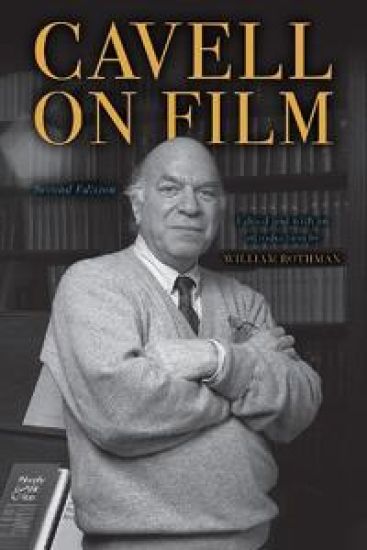
Cavell on Film

Cavell on Film

Stanley Cavell

STATE UNIVERSITY OF NEW YORK PRESS
2025
sidottu
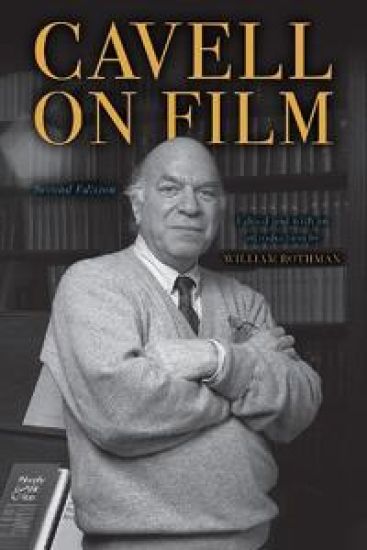
A collection of the philosopher Stanley Cavell's most important writings on cinema. Stanley Cavell was the first philosopher in the Anglo-American tradition to make film a central concern of his work, and this volume offer a substantially complete retrospective of his writings on cinema, which continues to offer inspiration and new directions to the field of film and media studies. The essays and other writings collected here include major theoretical statements and extended critical studies of individual films and filmmakers, as well as occasional pieces, all of which illustrate Cavell's practice of film-philosophy as it developed in the decades following the publication of his landmark work, The World Viewed. This revised edition includes six additional essays, five of them previously unpublished, that illuminate his inspiring vision of a humanistic study rooted in a marriage of film and philosophy. In his introduction and in the preface to this new edition, William Rothman provides an overview of Cavell's work on film and his aims as a philosopher more generally.
Cavell on Film

Cavell on Film

Stanley Cavell

STATE UNIVERSITY OF NEW YORK PRESS
2025
pokkari
A collection of the philosopher Stanley Cavell's most important writings on cinema. Stanley Cavell was the first philosopher in the Anglo-American tradition to make film a central concern of his work, and this volume offer a substantially complete retrospective of his writings on cinema, which continues to offer inspiration and new directions to the field of film and media studies. The essays and other writings collected here include major theoretical statements and extended critical studies of individual films and filmmakers, as well as occasional pieces, all of which illustrate Cavell's practice of film-philosophy as it developed in the decades following the publication of his landmark work, The World Viewed. This revised edition includes six additional essays, five of them previously unpublished, that illuminate his inspiring vision of a humanistic study rooted in a marriage of film and philosophy. In his introduction and in the preface to this new edition, William Rothman provides an overview of Cavell's work on film and his aims as a philosopher more generally.
Here and There

Here and There

Stanley Cavell

HARVARD UNIVERSITY PRESS
2022
sidottu
The first posthumous collection from the writings of Stanley Cavell, shedding new light on the distinctive vision and intellectual trajectory of an influential American philosopher.For Stanley Cavell, philosophy was a matter of responding to the voices of others. Throughout his career, he articulated the belief that words spring to life in concrete circumstances of speech: the significance and power of language depend on the occasions that elicit it. When Cavell died in 2018, he left behind some of his own most powerful language—a plan for a book collecting numerous unpublished essays and lectures, as well as papers printed in niche journals. Here and There presents this manuscript, with thematically relevant additions, for the first time.These writings, composed between the 1980s and the 2000s, reflect Cavell’s expansive interests and distinctive philosophical method. The collection traverses all the major themes of his immense body of work: modernity, psychoanalysis, the human voice, moral perfectionism, tragedy, skepticism. Cavell’s rich and cohesive philosophical vision unites his wide-ranging engagement with poets, critics, psychoanalysts, social scientists, and fellow philosophers. In Here and There, readers will find dialogues with Shakespeare, Thoreau, Wittgenstein, Freud, Heidegger, Walter Benjamin, Wallace Stevens, Veena Das, and Peter Kivy, among others. One of the collection’s most striking features is an ensemble of five pieces on music, constituting Cavell’s first discussion of the subject since the mid-1960s.Edited by philosophers who have been invested in Cavell’s work for decades, Here and There not only gathers the strands of a writing life but also maps its author’s intellectual journeys. In these works, Cavell models what it looks like to examine seriously one’s own passions and to forge new communities through unexpected conversations.
Must We Mean What We Say?

Must We Mean What We Say?

Stanley Cavell

Cambridge University Press
2015
sidottu
In this classic collection of wide-ranging and interdisciplinary essays, Stanley Cavell explores a remarkably broad range of philosophical issues from politics and ethics to the arts and philosophy. The essays explore issues as diverse as the opposing approaches of 'analytic' and 'Continental' philosophy, modernism, Wittgenstein, abstract expressionism and Schoenberg, Shakespeare on human needs, the difficulties of authorship, Kierkegaard and post-Enlightenment religion. Presented in a fresh twenty-first century series livery, and including a specially commissioned preface, written by Stephen Mulhall, illuminating its continuing importance and relevance to philosophical enquiry, this influential work is now available for a new generation of readers.
Must We Mean What We Say?

Must We Mean What We Say?

Stanley Cavell

Cambridge University Press
2015
pokkari
In this classic collection of wide-ranging and interdisciplinary essays, Stanley Cavell explores a remarkably broad range of philosophical issues from politics and ethics to the arts and philosophy. The essays explore issues as diverse as the opposing approaches of 'analytic' and 'Continental' philosophy, modernism, Wittgenstein, abstract expressionism and Schoenberg, Shakespeare on human needs, the difficulties of authorship, Kierkegaard and post-Enlightenment religion. Presented in a fresh twenty-first century series livery, and including a specially commissioned preface, written by Stephen Mulhall, illuminating its continuing importance and relevance to philosophical enquiry, this influential work is now available for a new generation of readers.
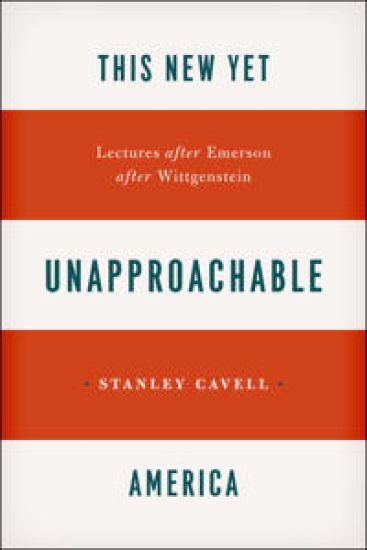
This New Yet Unapproachable America

This New Yet Unapproachable America

Stanley Cavell

University of Chicago Press
2013
nidottu
Stanley Cavell is a titan of the academic world; his work in aesthetics and philosophy has shaped both fields in the United States over the past forty years. In this brief yet enlightening collection of lectures, Cavell investigates the work of two of his most tried-and-true subjects: Emerson and Wittgenstein. Beginning with an introductory essay that places his own work in a philosophical and historical context, Cavell guides his reader through his thought process when composing and editing his lectures while making larger claims about the influence of institutions on philosophers, and the idea of progress within the discipline of philosophy. In "Declining Decline," Cavell explains how language modifies human existence, looking specifically at the culture of Wittgenstein's writings. He draws on Emerson, Thoreau, and many others to make his case that Wittgenstein can indeed be viewed as a "philosopher of culture." In his final lecture, "Finding as Founding," Cavell writes in response to Emerson's "Experience," and explores the tension between the philosopher and language - that he or she must embrace language as his or her "form of life," while at the same time surpassing its restrictions. He compares finding new ideas to discovering a previously unknown land in an essay that unabashedly celebrates the power and joy of philosophical thought.
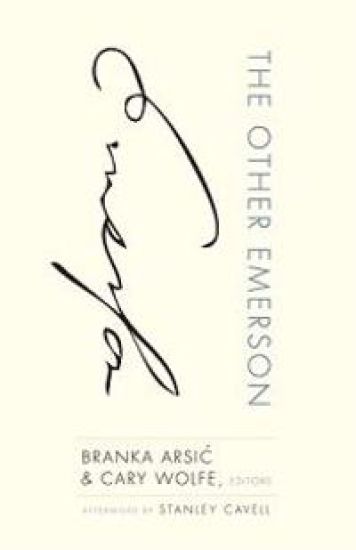
The Other Emerson

The Other Emerson

Stanley Cavell

University of Minnesota Press
2010
nidottu
Ralph Waldo Emerson is one of the most significant figures in nineteenth-century American literature and culture-indeed, this collection argues, in the history of philosophy. The Other Emerson is a thorough reassessment of the philosophical underpinnings, theoretical innovations, and ethical and political implications of the prose writings of one of America's most enduring thinkers.Considering Emerson first and foremost as a daring and original thinker, The Other Emerson focuses on three Emersonian subjects-subjectivity, the political, and the nature of philosophy-and range in topic from Emerson's relationships to slavery and mourning to his place in the development of Romanticism as reread by contemporary systems theory. It is Emerson's appreciation of truth's instability that link him to the European philosophical tradition.Contributors: Eduardo Cadava, Princeton U; Sharon Cameron, Johns Hopkins U; Russell B. Goodman, U of New Mexico; Paul Grimstad, Yale U; Eric Keenaghan, U at Albany, SUNY; Gregg Lambert, Syracuse U; Sandra Laugier, Université de Picardie Jules Verne; Donald Pease, Dartmouth College.
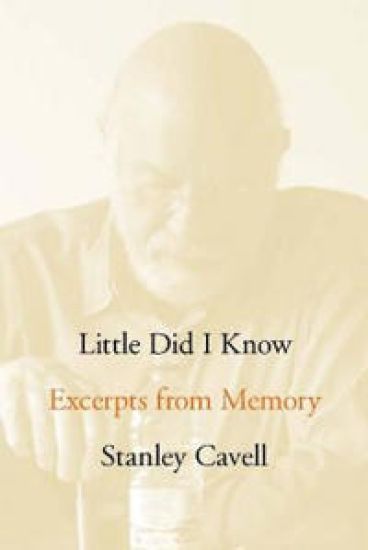
Little Did I Know

Little Did I Know

Stanley Cavell

Stanford University Press
2010
sidottu
An autobiography in the form of a philosophical diary, Little Did I Know's underlying motive is to describe the events of a life that produced the kind of writing associated with Stanley Cavell's name. Cavell recounts his journey from early childhood in Atlanta, Georgia, through musical studies at UC Berkeley and Julliard, his subsequent veering off into philosophy at UCLA, his Ph.D. studies at Harvard, and his half century of teaching. Influential people from various fields figure prominently or in passing over the course of this memoir. J.L. Austin, Ernest Bloch, Roger Sessions, Thomas Kuhn, Robert Lowell, Rogers Albritton, Seymour Shifrin, John Rawls, Bernard Williams, W. V. O. Quine, and Jacques Derrida are no longer with us; but Cavell also pays homage to the living: Michael Fried, John Harbison, Rose Mary Harbison, Kurt Fischer, Milton Babbitt, Thompson Clarke, John Hollander, Hilary Putnam, Sandra Laugier, Belle Randall, and Terrence Malick. The drift of his narrative also registers the decisiveness of the relatively unknown and the purely accidental. Cavell's life has produced a trail of some eighteen published books that range from treatments of individual writers like Wittgenstein, Austin, Emerson, Thoreau, Heidegger, Shakespeare, and Beckett to studies in aesthetics, epistemology, moral and political philosophy, cinema, opera, and religion.
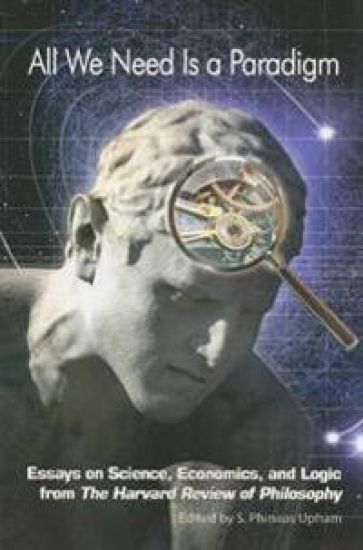
All We Need Is a Paradigm

All We Need Is a Paradigm

Stanley Cavell

Cricket Books, a division of Carus Publishing Co
2009
pokkari
The Harvard Review of Philosophy has long been a forum for new thoughts in the field ? this collection includes some of the most important essays from that publication. Exploring the unexpected ways that philosophy impacts our world, this book considers the discipline as an essential element in our understanding of science, economics, and logic. This fascinating read for both laypeople and those familiar with philosophical concepts delves deep into questions of human nature, intellectual thought, and the manner in which our world operates. Using several different approaches, including puzzles, essays, and songs, this book challenges our basic assumptions about how things work.
Erfaringer og det hverdagslige
Boka består av en rekke essays fra Must We Mean What We Say? (1969) og In Quest of the Ordinary (1988). Cavells filosofi kan ses som et forsøk på å rehabilitere den rollen det hverdagslige spiller for vår erfaring. I det hverdagslige utgjør både vårt forhold til verden og vårt forhold til andre en bakgrunn som muliggjør erfaring. En undersøkelse av det hverdagsliges natur blir derfor samtidig en form for selverkjennelse, der både det personlige og det intersubjektive er innreflektert. Forsøket på å avdekke det intersubjektive i det subjektive så vel som det subjektive det intersubjektive, preger hele Cavells forfatterskap. Dette viser seg gjennom hans interesse for den estetiske smaksdommen, hans tematisering av biografien og hans høyst personlige filosofiske prosa. I utvalget er det lagt vekt på å tydeliggjøre bredden i Cavells forfatterskap. Både hans bidrag til språkfilosofien og hans mer estetisk orienterte essays er representert. Stephen Mulhall har skrevet innledningen til den norske utgaven.
Life and Words

Life and Words

Veena Das; Stanley Cavell

University of California Press
2006
pokkari
In this powerful, compassionate work, one of anthropology's most distinguished ethnographers weaves together rich fieldwork with a compelling critical analysis in a book that will surely make a signal contribution to contemporary thinking about violence and how it affects everyday life. Veena Das examines case studies including the extreme violence of the Partition of India in 1947 and the massacre of Sikhs in 1984 after the assassination of then Prime Minister Indira Gandhi. In a major departure from much anthropological inquiry, Das asks how this violence has entered 'the recesses of the ordinary' instead of viewing it as an interruption of life to which we simply bear witness. Das engages with anthropological work on collective violence, rumor, sectarian conflict, new kinship, and state and bureaucracy as she embarks on a wide-ranging exploration of the relations among violence, gender, and subjectivity. Weaving anthropological and philosophical reflections on the ordinary into her analysis, Das points toward a new way of interpreting violence in societies and cultures around the globe. The book will be indispensable reading across disciplinary boundaries as we strive to better understand violence, especially as it is perpetrated against women.
The Gleam of Light

The Gleam of Light

Naoko Saito; Stanley Cavell

Fordham University Press
2006
pokkari
In the name of efficiency, the practice of education has come to be dominated by neoliberal ideology and procedures of standardization and quantification. Such attempts to make all aspects of practice transparent and subject to systematic accounting lack sensitivity to the invisible and the silent, to something in the human condition that cannot readily be expressed in an either-or form. Seeking alternatives to such trends, Saito reads Dewey's idea of progressive education through the lens of Emersonian moral perfectionism (to borrow a term coined by Stanley Cavell). She elucidates a spiritual and aesthetic dimension to Dewey's notion of growth, one considerably richer than what Dewey alone presents in his typically scientific terminology. The Gleam of Light: Moral Perfectionism and Education in Dewey and Emerson is available from the publisher on an open-access basis.
Philosophy the Day after Tomorrow

Philosophy the Day after Tomorrow

Stanley Cavell

The Belknap Press
2006
nidottu
Nietzsche characterized the philosopher as the man of tomorrow and the day after tomorrow--a description befitting Stanley Cavell, with his longtime interest in freedom in the face of an uncertain future. This interest, particularly in the role of language in freedom of the will, is fully engaged in this volume, a collection of retrospective and forward-thinking essays on performative language and on performances in which the question of freedom is the underlying concern. Seeking for philosophy the same spirit and assurance conveyed by an artist like Fred Astaire, Cavell presents essays that explore the meaning of grace and gesture in film and on stage, in language and in life. Cavell's range is broad--from Astaire to Shakespeare's soulful Cordelia. He also analyzes filmic gestures that bespeak racial stereotypes, opening a key topic that runs through the book: What is the nature of praise? The theme of aesthetic judgment, viewed in the light of "passionate utterance," is everywhere evident in Cavell's effort to provoke a renaissance in American thought. Critical to such a rebirth is a recognition of the centrality of the "ordinary" to American life. Here Cavell, who has alluded to Thoreau throughout, takes up the quintessential American philosopher directly, and in relation to Heidegger; he also returns to his great philosophical love, Wittgenstein. His collection of essays ends, appropriately enough, with an essay on collecting.
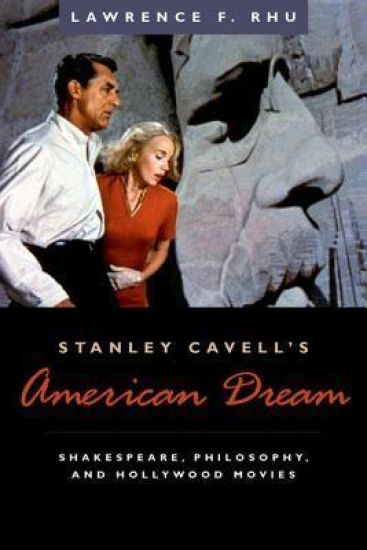
Stanley Cavell's American Dream

Stanley Cavell's American Dream

Lawrence F. Rhu; Stanley Cavell

Fordham University Press
2006
sidottu
This book explores Cavell's writings along converging lines of thought rather than in isolated categories. The author claims that, after Cavell's celebrated reading of King Lear turned into a nightmarish meditation on Vietnam, he found a more audible voice. Noting that Cavell's keen ear for the expressive power of ordinary language makes him both a first-rate literary artist and a compelling philosopher of the everyday, he catches what holds Cavell's manifold interests together. Here the poetry of ideas and presence of mind that animate Cavell's writing receive readings attuned to the spirit of their composition and its enlivening powers.
Cities of Words

Cities of Words

Stanley Cavell

The Belknap Press
2005
nidottu
Since Socrates and his circle first tried to frame the Just City in words, discussion of a perfect communal life--a life of justice, reflection, and mutual respect--has had to come to terms with the distance between that idea and reality. Measuring this distance step by practical step is the philosophical project that Stanley Cavell has pursued on his exploratory path. Situated at the intersection of two of his longstanding interests--Emersonian philosophy and the Hollywood comedy of remarriage--Cavell's new work marks a significant advance in this project. The book--which presents a course of lectures Cavell presented several times toward the end of his teaching career at Harvard--links masterpieces of moral philosophy and classic Hollywood comedies to fashion a new way of looking at our lives and learning to live with ourselves.This book offers philosophy in the key of life. Beginning with a rereading of Emerson's "Self-Reliance," Cavell traces the idea of perfectionism through works by Plato, Aristotle, Locke, Kant, Mill, Nietzsche, and Rawls, and by such artists as Henry James, George Bernard Shaw, and Shakespeare. Cities of Words shows that this ever-evolving idea, brought to dramatic life in movies such as It Happened One Night, The Awful Truth, The Philadelphia Story, and The Lady Eve, has the power to reorient the perception of Western philosophy.
The Gleam of Light

The Gleam of Light

Naoko Saito; Stanley Cavell

Fordham University Press
2005
sidottu
In the name of efficiency, the practice of education has come to be dominated by neoliberal ideology and procedures of standardization and quantification. Such attempts to make all aspects of practice transparent and subject to systematic accounting lack sensitivity to the invisible and the silent, to something in the human condition that cannot readily be expressed in an either-or form. Seeking alternatives to such trends, Saito reads Dewey's idea of progressive education through the lens of Emersonian moral perfectionism (to borrow a term coined by Stanley Cavell). She elucidates a spiritual and aesthetic dimension to Dewey's notion of growth, one considerably richer than what Dewey alone presents in his typically scientific terminology. The Gleam of Light: Moral Perfectionism and Education in Dewey and Emerson is available from the publisher on an open-access basis.
Emerson's Transcendental Etudes

Emerson's Transcendental Etudes

Stanley Cavell

Stanford University Press
2003
sidottu
This book is Stanley Cavell's definitive expression on Emerson. Over the past thirty years, Cavell has demonstrated that he is the most emphatic and provocative philosophical critic of Emerson that America has yet known. The sustained effort of that labor is drawn together here for the first time into a single volume, which also contains two previously unpublished essays and an introduction by Cavell that reflects on this book and the history of its emergence. Students and scholars working in philosophy, literature, American studies, history, film studies, and political theory can now more easily access Cavell's luminous and enduring work on Emerson. Such engagement should be further complemented by extensive indices and annotations. If we are still in doubt whether America has expressed itself philosophically, there is perhaps no better space for inquiry than reading Cavell reading Emerson.