Kirjojen hintavertailu. Mukana 12 595 353 kirjaa ja 12 kauppaa.
Kirjailija
Stanley Fischer
Kirjat ja teokset yhdessä paikassa: 10 kirjaa, julkaisuja vuosilta 1995-2025, suosituimpien joukossa Corporate Financing and Governance in Japan. Vertaile teosten hintoja ja tarkista saatavuus suomalaisista kirjakaupoista.
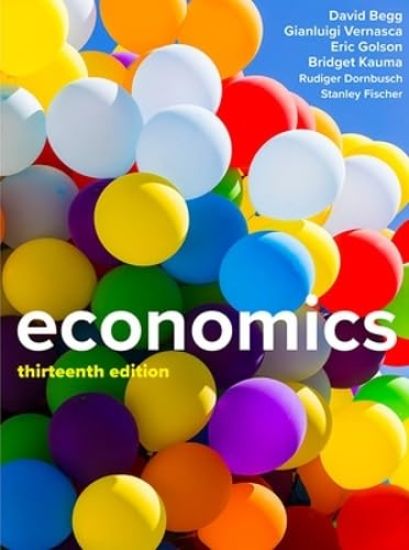
Discover how the dynamic world of economics influences our daily lives, society, political decisions and environmental concerns. This thirteenth edition of Economics by David Begg, Gianluigi Vernasca, Eric Golson and Bridget Kauma, supports students understanding of economics by blending foundational principles with contemporary issues and applications.Covering the latest economic topics, such as the global implications of war, the effects of macro-inflation and the role of AI in the labour market this new edition provides a thorough and insightful exploration that fosters critical thinking and informed decision-making. Perfect for anyone looking to deepen their economic knowledge and apply it effectively.Key Features:•Up to date insights: Fully updated chapters, including new material on AI, the continued impact of COVID-19 on consumer’s confidence and expanded material on climate change.•Engaging pedagogy: Across each chapter, theory is met with topical case studies, boxes on economic concepts and activity applications, showcasing the relevance and application of the material.•Flexible learning: Economics is written with the reader in mind to allows students to learn at their own pace. End of chapter questions are graded by difficulty and math boxes are optional for technical ability to be scaffolded.•Expert authors: Written by renowned economists with extensive experience in academia and practice.•Digital material: A wealth of online resources including adaptive learning technology, application-based activities, graphing and maths prep, question banks and a full suite of instructor resources.David Begg is Emeritus Professor of Economics at Imperial College London, and former Principle of the Business School. He is a fellow of the Royal Society of Edinburgh, a fellow of the City and Guilds of London Institute and senior independent director of IP Group, which invests in technology start-ups from leading universities in the UK, the US, and Australasia.Gianluigi Vernasca is Professor of Economics at the University of Essex. Since October 2013 he has also been Director of Education in the Department of Economics. He is Senior Fellow of the Higher Education Academy and has taught economics at both undergraduate and postgraduate levels in various institutions.Eric Golson is an Associate Professor of Economics at the University of Surrey, specializing in economic warfare and international political economy. His research includes trade warfare, economic sanctions, and military spending. An award-winning educator and advocate for diversity, he has published extensively and holds degrees from the London School of Economics and the University of Chicago.Bridget Kauma is a Lecturer in Economics at the University of Sussex, where is also the Course Director for the BA Economics. Bridget is a fellow of the Higher Education Academy and teaches Economics at both the undergraduate and postgraduate levels. She received her PhD from the University of Sussex in 2022. Her research interests are in international trade with a particular emphasis on the intersection between productivity and labour markets. Prior to joining the academia Bridget worked as Chief Trade Officer in the Ministry of Trade in Malawi.
Economics is all around us. It influences our daily lives, our society, political decisions, environmentalconcerns and the future we leave for our children. The twelfth edition of Economics by David Begg andGianluigi Vernasca is a focused toolkit for studying economics. It enables the reader to understand howeconomics underpins the world we live in, by presenting the economic theory in a clear and accessibleway and applying it to real world situations.This new edition has been revised and updated to include the latest topics and issues, such as the roleof information and the digital economy, immigration, and globalization. This material, combined with arich array of pedagogical features, encourages students to understand not only our economic past andpresent, but also our changing world and the way in which economics can make sense of it.Key Features:New chapters on “Globalization, National Sovereignty and the World Economy” and “Governingthe Market”;Fully updated chapters, including new and expanded material on behavioural economics andgame theory;A range of pedagogical features, including topical case studies, boxes on economic conceptsand activity applications, which show the relevance and application of the material;A flexible learning approach allows the reader to learn at their own pace, with end of chapterquestions graded by difficulty and optional math boxes for the technically-minded;Clean and contemporary design for ease of reading and study;Connect® resources such as application-based activities, interactive graphs, algorithmicquestions and graphing and maths tutorials.Available with McGraw-Hill Education’s Connect®, the well-established online learning platform, whichfeatures our award-winning adaptive reading experience as well as resources to help faculty andinstitutions improve student outcomes and course delivery efficiency.To learn more, visit mheducation.co.uk/connect
A Complete View of MacroeconomicsDornbusch, Fischer, and Startz’s Macroeconomics relies on straightforward explanations by emphasizing concepts over technique, and fitting difficult material into a larger framework so students can see its relevance in the world. The authors explore state-of-the art research, while allowing for flexibility in how much to emphasize these topics. A balanced approach explains both the potential and limitations of economic policy. Hallmark features and key changes in the 13th edition include:• Background and analysis on The Great Recession of 2007-2009 and its aftermath.• Updates on unemployment and the Federal Reserve, including more detailed dives into each topic with current data, definitions, and context.• History Speaks and What More Do We Know? boxes callout relevant data and information that further enhance the concepts covered within each chapter.• Macroeconomics employs a model-based approach to macroeconomic analysis and demonstrates how various models relate to the goal of giving students the capacity to analyze current economic issues in the context of an economic frame of reference.• A focus on international perspectives helps students understand the important links connecting foreign economies to their own.
This volume contains two major papers prepared for the Bank of England's Tercentenary Symposium in June 1994. The first, by Forrest Capie, Charles Goodhart and Norbert Schnadt, provides an authoritative account of the evolution of central banking. It traces the development of both the monetary and financial stability concerns of central banks, and includes individual sections on the evolution and constitutional positions of 31 central banks from around the world. The second paper, by Stanley Fischer, explores the major policy dilemmas now facing central bankers: the extent to which there is a short-term trade-off between inflation and growth; the choice of inflation targets; and the choice of operating procedures. Important contributions by leading central bankers from around the world, and the related Per Jacobsen lecture by Alexander Lamfalussy, are also included in the volume.
This new edition of "Macroeconomics" has been thoroughly revised and updated by respected author team, Philip Bodman and Mark Crosby. The book maintains many of the bestselling features of its US counterpart, such as the focus on models and methodological frameworks for economic analysis, while including currently policy issues using a blend of theory and data, combined with new examples and real world material. Pedagogical features are significantly enhanced and material is presented in a clear and accessible manner. In response to market feedback, two entirely new chapters have been added - Chapter 17 on Inflation and Chapter 18 on Unemployment. This edition retains its international perspective with particular focus on the economies of Asia. Extensive analysis is given to the interactions and interdependencies of the Australian economy with those overseas. Additionally, two detailed chapters (Chapters 10 and 11) are devoted to discussing international linkages. Models and Data Students are provided with a rich toolbox of simple models for analysing today's economic events. In addition to the already extensive examples and data, cutting-edge research has been included to add depth and breadth to their study.
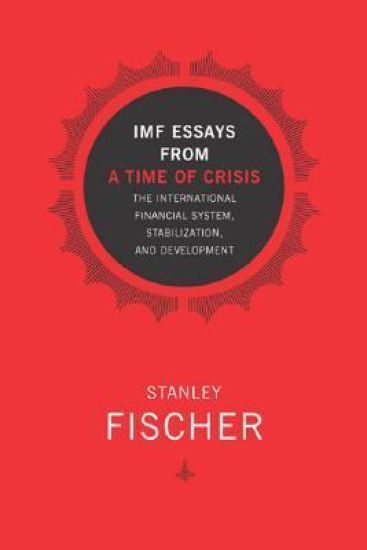
Stanley Fischer served as First Deputy Managing Director of the International Monetary Fund from 1994 to 2001. IMF Essays from a Time of Crisis collects sixteen essays written for the most part during his time at the IMF, each updated with Fischer's later reflections on the issues raised. The IMF drew much criticism for some of its actions during Fischer's tenure, and he vigorously defends the "battlefield medicine" practiced by the IMF during a series of economic crises, which included the problems of economic transition in the former Soviet bloc and the Asian financial crisis. Fischer addresses the subsequent calls for reform of the international financial system and makes the case for the IMF as an international lender of last resort.The first section of essays, "The Role of the IMF and the Reform of the International Financial System," considers the IMF's role in the international financial system in light of the crises of the 1990s. The second section, "Macroeconomic Policy, Stabilization, and Transition," examines such topics as exchange rate regimes, inflation, and Eastern Europe's relation to the European Union. The final section, "Poverty and Development," reflects Fischer's basic belief that economic policies should explicitly target poverty reduction. These engaging and accessible essays will appeal not only to economics students, economists, and policymakers but also to the general reader interested in the international monetary system.
In this book, Takeo Hoshi and Anil Kashyap examine the history of the Japanese financial system, from its nineteenth-century beginnings through the collapse of the 1990s that concluded with sweeping reforms. Combining financial theory with new data and original case studies, they show why the Japanese financial system developed as it did and how its history affects its ongoing evolution. The authors describe four major periods within Japan's financial history and speculate on the fifth, into which Japan is now moving. Throughout, they focus on four questions: How do households hold their savings? How is business financing provided? What range of services do banks provide? And what is the nature and extent of bank involvement in the management of firms? The answers provide a framework for analyzing the history of the past 150 years, as well as implications of the just-completed reforms known as the "Japanese Big Bang." Hoshi and Kashyap show that the largely successful era of bank dominance in postwar Japan is over, largely because deregulation has exposed the banks to competition from capital markets and foreign competitors. The banks are destined to shrink as households change their savings patterns and their customers continue to migrate to new funding sources. Securities markets are set to re-emerge as central to corporate finance and governance.
Ziel dieses Buches ist die Erklarung, wie man die moderne Makrookonomik fur das Verstandnis wichtiger wirtschaftlicher Streitfragen verwenden und wie man Leser helfen kann, selbst makrookonomische Probleme zu analysieren. Die achte Auflage wurde gegenuber der sechsten deutschen Auflage und der amerikanischen siebten stark verbessert und uberarbeitet. Aus dem Inhalt: Volkswirtschaftliche Gesamtrechnung. Wachstum und Akkumulation. Wachstum und Politik. Angebot und Nachfrage. Aggregiertes Angebot. Inflation und Arbeitslosigkeit. Politik. Einkommen und Ausgaben. Geld, Zins und Einkommen. Geld- und Fiskalpolitik. Internationale Wirtschaftsbeziehungen. Konsum und Sparen. Die Investitionsausgaben. Die Geldnachfrage. Zentralbank, Geldangebot etc. Finanzmarkte. Depression, etc. Anpassung und Interdependenz. Fortgeschrittene Themenbereiche."
This volume contains two major papers prepared for the Bank of England’s Tercentenary Symposium in June 1994. The first, by Forrest Capie, Charles Goodhart and Norbert Schnadt, provides an authoritative account of the evolution of central banking. It traces the development of both the monetary and financial stability concerns of central banks, and includes individual sections on the evolution and constitutional positions of 31 central banks from around the world. The second paper, by Stanley Fischer, explores the major policy dilemmas now facing central bankers: the extent to which there is a short-term trade-off between inflation and growth; the choice of inflation targets; and the choice of operating procedures. Important contributions by leading central bankers from around the world, and the related Per Jacobsen lecture by Alexander Lamfalussy, are also included in the volume.