Kirjojen hintavertailu. Mukana 12 657 676 kirjaa ja 12 kauppaa.
Kirjailija
Stanley Nelson
Kirjat ja teokset yhdessä paikassa: 13 kirjaa, julkaisuja vuosilta 2006-2022, suosituimpien joukossa Murder So Final. Vertaile teosten hintoja ja tarkista saatavuus suomalaisista kirjakaupoista.
Tommy Jacks, reporter/political columnist, encounters new love and old threats while covering one of the most brutal U.S. Senate races in history. With a massive oil fire threatening the city of Tulsa, three candidates face off, a ruthless oil baron, an idealist college professor, and a reverend running under the God Party. When the race suddenly turns deadly, the winner may be the last man standing.Final book in the Muckraker trilogy, Murder So Final brings to a close the stories of Louongo, Albright, Robbie Gilmore, Tracy and Ray Jacks, and Tommy himself.
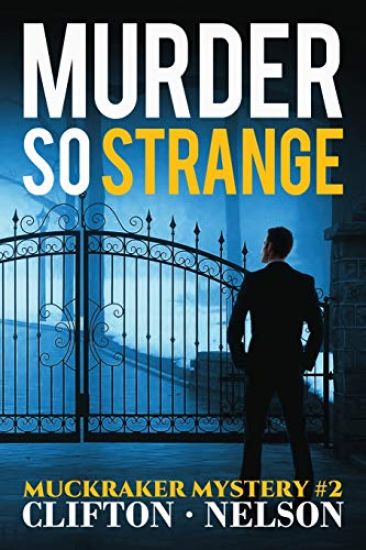
In an exclusive residential neighborhood, a U.S. Senator's wife has died. Tommy Jacks and his fellow journalists don't believe the police chief's story blaming it on natural causes. It has the smell of a crime. So begins a new journey set in the 1960s involving numerous dead bodies, high-tension political intrigue, police corruption, the drug underworld and unsavory hidden pasts. Tommy has a lot to write about in his My View political column.Only in his second year as a political columnist, he finds new romance and emotional healing among a chaotic mixture of characters, from his new mother and his recently out-of-jail father to his acerbic journalistic mentor and antagonist and a foul-mouthed lawyer of questionable ethics, all wrapped inside the saga of two competing daily newspapers still at war.Lurking in the shadows is the powerful and corrupt police chief, who seems to think it might be best if Mister Jacks, even so young, was dead.Murder So Strange continues the 1960s saga of Tommy Jacks: Muckraker.
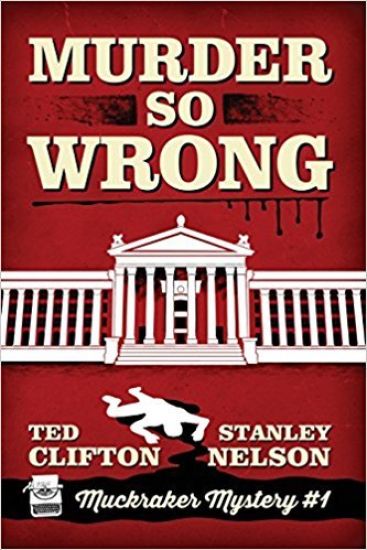
Fresh out of journalism school, Tommy Jacks begins his career as a newspaper reporter in the 1960s, finding intrigue, love, tragedy, and maybe himself.On the trail of a competing reporter's killer, Tommy collects an interesting entourage of fools and geniuses.Taylor Albright, legendary gossip-monger and discredited columnist; Ray Jacks, Tommy's father, an infamous political leader now in state prison; Joe Louongo, slimy lawyer of questionable ethics; Steve Marsh, sportswriter and former famous football star; J.H. Gilmore and his son, Robbie, wealthy and conniving owners of a competing newspaper; Tracy Clark, beautiful TV reporter; and Judy Jackson, gorgeous past playmate of Tommy's.A story of the '60s, full of intrigue, love, and tragedy--Tommy Jacks: Muckraker.
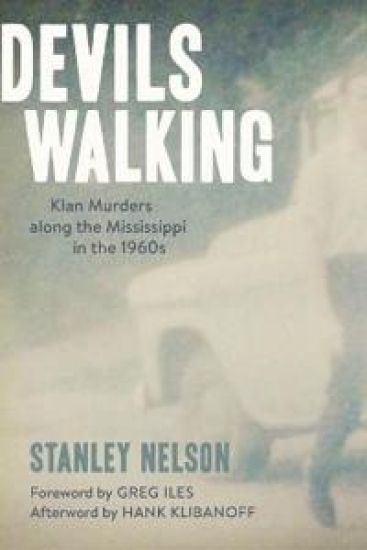
After midnight on December 10, 1964, in Ferriday, Louisiana, African American Frank Morris awoke to the sound of breaking glass. Outside his home and shoe shop, standing behind the shattered window, Klansmen tossed a lit match inside the store, now doused in gasoline, and instantly set the building ablaze. A shotgun pointed to Morris's head blocked his escape from the flames. Four days later Morris died, though he managed in his last hours to describe his attackers to the FBI. Frank Morris's death was one of several Klan murders that terrorized residents of northeast Louisiana and Mississippi, as the perpetrators continued to elude prosecution during this brutal era in American history.In Devils Walking: Klan Murders along the Mississippi in the 1960s, Pulitzer Prize finalist and journalist Stanley Nelson details his investigation—alongside renewed FBI attention—into these cold cases, as he uncovers the names of the Klan's key members as well as systemized corruption and coordinated deception by those charged with protecting all citizens.Devils Walking recounts the little-known facts and haunting stories that came to light from Nelson's hundreds of interviews with both witnesses and suspects. His research points to the development of a particularly virulent local faction of the Klan who used terror and violence to stop integration and end the advancement of civil rights. Secretly led by the savage and cunning factory worker Red Glover, these Klansmen—a handpicked group that included local police officers and sheriff's deputies—discarded Klan robes for civilian clothes and formed the underground Silver Dollar Group, carrying a silver dollar as a sign of unity. Their eight known victims, mostly African American men, ranged in age from nineteen to sixty-seven and included one Klansman seeking redemption for his past actions.Following the 2007 FBI reopening of unsolved civil rights–era cases, Nelson's articles in the Concordia Sentinel prompted the first grand jury hearing for these crimes. By unmasking those responsible for these atrocities and giving a voice to the victims' families, Devils Walking demonstrates the importance of confronting and addressing the traumatic legacy of racism.
In the summer of 1965, several Ku Klux Klan members riding in a pickup truck shot two Black deputies on patrol in Washington Parish, Louisiana. Deputy Oneal Moore, the driver of the patrol car and father of four daughters, died instantly. His partner, Creed Rogers, survived and radioed in a description of the vehicle. Less than an hour later, police in Mississippi spotted the truck and arrested its driver, a decorated World War II veteran named Ernest Ray McElveen. They returned McElveen to Washington Parish, where he spent eleven days in jail before authorities released him. Afterward, the FBI sent its top inspector to Bogalusa, Louisiana, to participate in the murder inquiry—the only civil rights–era FBI investigation into the killing of a Black law enforcement officer by the KKK. Despite that assistance, lack of evidence and witnesses unwilling to come forward forced Louisiana prosecutors eventually to drop all charges against McElveen. The FBI continued its investigation but could not gather enough evidence to file charges, leaving the murder of Oneal Moore unsolved.Klan of Devils: The Murder of a Black Louisiana Deputy Sheriff is Stanley Nelson's investigation of this case, which the FBI probed from 1965 to 2016. Nelson describes the Klan's growth, and the emergence of Black activism in Bogalusa and Washington Parish, against the backdrop of political and social change in the 1950s and early 1960s. With the assistance of two retired FBI agents who worked the case, Nelson also explores the lives of the primary suspects, all of whom are now dead, and points to the Klansmen most likely responsible for the senseless and horrific attack.
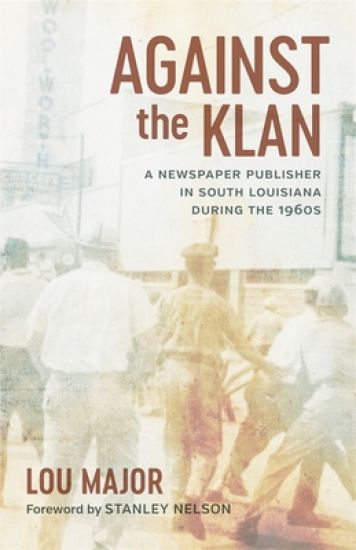
In 1964, less than one year into his tenure as publisher of the Bogalusa Daily News, New Orleans native Lou Major found himself guiding the newspaper through a turbulent period in the history of American civil rights. Bogalusa, Louisiana, became a flashpoint for clashes between African Americans advocating for equal treatment and white residents who resisted this change, a conflict that generated an upsurge in activity by the Ku Klux Klan. Local members of the KKK stepped up acts of terror and intimidation directed against residents and institutions they perceived as sympathetic to civil rights efforts. During this turmoil, the Daily News took a public stand against the Klan and its platform of hatred and white supremacy.Against the Klan, Major's memoir of those years, recounts his attempts to balance the good of the community, the health of the newspaper, and the safety of his family. He provides an in-depth look at the stance the Daily News took in response to the city's civil rights struggles, including the many fiery editorials he penned condemning the KKK's actions and urging peaceful relations in Bogalusa. Major's richly detailed personal account offers a ground-level view of the challenges local journalists faced when covering civil rights campaigns in the Deep South and of the role played by the press in exposing the nefarious activities of hate groups such as the Klan.
Devils Walking stands as an important milestone in the ongoing struggle to create justice from truth, and perhaps even reconciliation in a nation that must collectively move in this direction or face an uncertain future.""- David Ridgen, Canadian filmmaker and director of award-winning documentary Mississippi Cold CaseAfter midnight on December 10, 1964, in Ferriday, Louisiana, African American Frank Morris awoke to the sound of breaking glass. Outside his home and shoe shop, standing behind the shattered window, Klansmen tossed a lit match inside the store, now doused in gasoline, and instantly set the building ablaze. A shotgun pointed to Morris's head blocked his escape from the flames. Four days later Morris died, though he managed in his last hours to describe his attackers to the FBI. Frank Morris's death was one of several Klan murders that terrorized residents of northeast Louisiana and Mississippi, as the perpetrators continued to elude prosecution during this brutal era in American history.In Devils Walking: Klan Murders along the Mississippi in the 1960s, Pulitzer Prize finalist and journalist Stanley Nelson details his investigation- alongside renewed FBI attention- into these cold cases, as he uncovers the names of the Klan's key members as well as systemized corruption and coordinated deception by those charged with protecting all citizens.Devils Walking recounts the little-known facts and haunting stories that came to light from Nelson's hundreds of interviews with both witnesses and suspects. His research points to the development of a particularly virulent local faction of the Klan who used terror and violence to stop integration and end the advancement of civil rights. Secretly led by the savage and cunning factory worker Red Glover, these Klansmen- a handpicked group that included local police officers and sheriff's deputies- discarded Klan robes for civilian clothes and formed the underground Silver Dollar Group, carrying a silver dollar as a sign of unity. Their eight known victims, mostly African American men, ranged in age from nineteen to sixty-seven and included one Klansman seeking redemption for his past actions.Following the 2007 FBI reopening of unsolved civil rights- era cases, Nelson's articles in the Concordia Sentinel prompted the first grand jury hearing for these crimes. By unmasking those responsible for these atrocities and giving a voice to the victims' families, Devils Walking demonstrates the importance of confronting and addressing the traumatic legacy of racism.
Stanley Nelson likes to test the boundaries of Theatre of the Absurd and its associations with the surreal. It sometimes seems Laurel and Hardy have wandered onto an Ionesco landscape. In Mr. Optometrist, a woman on her lunch hour simply wants to have a loose screw on her eyeglasses tightened. The Optometrist is pompous, arrogant, seductive, bullying, manipulative. He quickly draws her into an unsettling phantasmagorical scenario of the cold war, local politics, oedipal references and impending menace. She resists and, at the same time, is irresistibly complicit. The Lady herself, who begins as a picture of innocence, become coquettish, flummoxed, menacing, always under a guise of naivet . Both seem to have a screw loose, and even the little screw becomes a sexual innuendo. An ever-present aura of camp, so pervasive to theatre of the sixties, provides a fluffy cushion for the mayhem.
Nelson explores the range of poetic form. He utilises a traditional sonnet format in one section and an open, non-linear format, in which he not only breaks up words, but separates syllables and letters in another. The poems expand across the page. This book offers a mix of visual and auditory imagery, creating an alternative universe.