Kirjojen hintavertailu. Mukana 12 390 323 kirjaa ja 12 kauppaa.

Kirjailija

Stanley Plumly

Kirjat ja teokset yhdessä paikassa: 13 kirjaa, julkaisuja vuosilta 2002-2025, suosituimpien joukossa The Darker Fall. Vertaile teosten hintoja ja tarkista saatavuus suomalaisista kirjakaupoista.

13 kirjaa

Kirjojen julkaisuhaarukka 2002-2025.

Collected Poems of Stanley Plumly

Collected Poems of Stanley Plumly

Stanley Plumly

WW NORTON CO
2025
sidottu
Born in 1939, Stanley Plumly wrote poems that explored the deep interiors of the human heart and mind against a wide backdrop of cultural and historical events. Profoundly personal yet socially astute, his work is both descriptively exact and allusive, engaging nature and art as well as family and friendship. Drawing on his existing work and including nine brilliant new poems, Collected Poems gathers the full range of Plumly’s talent as it charts the development of his enduring contribution to the American lyric. The volume stands as a tribute to Plumly’s artistic vision and will be welcomed by his many readers now and in the generations to come. Stanley Plumley’s Posthumous Keats was praised as: “[A] tour de force…"—Joyce Carol Oates, Times Literary Supplement “[A] remarkable book… The Guardian "Plumly’s luminous biography."—The Independent
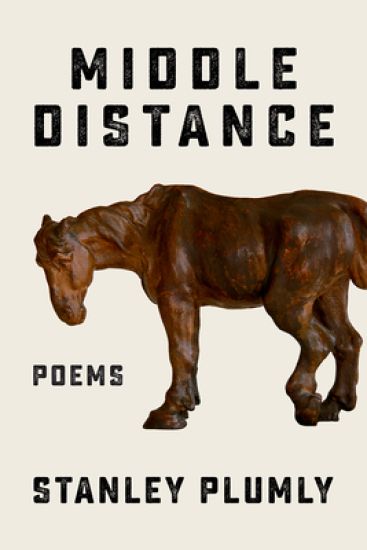
Middle Distance

Middle Distance

Stanley Plumly

WW NORTON CO
2022
nidottu
After a diagnosis of cancer, acclaimed poet Stanley Plumly found himself in the middle distance—looking back at his childhood and a rich lifetime of family and friends, while gazing into a future shaped by the press of mortality. In Middle Distance, his final collection, he pushes onward into new territory with extended hybrid forms and revelatory prose pieces. The result is the moving culmination of a long career, a work of fearless, transcendent poems that face down the impending eternal voyage. Plumly populates this collection with tender depictions of poets, family, and friends—the relationships that sustained him throughout his life—as well as unflinching self-portraits. In “White Rhino,” for instance, he adopts the voice of the “last of [his] kind,” using the rare creature as a canvas to depict the dying, aging poet himself. In “Night Pastorals,” he writes vividly and movingly about being on his deathbed, with fragmentary impressions of the other side. In profound lyric narratives, Plumly reaches out to a past that feels closer than ever, returning to the Ohio of his childhood and the shadows of a country at war. Blending documentary and memoir with his signature Keatsian lyricism, Middle Distance contemplates at every turn the horizons of Plumly’s life.
Middle Distance

Middle Distance

Stanley Plumly

WW Norton Co
2020
sidottu
After a diagnosis of cancer, acclaimed poet Stanley Plumly found himself in the middle distance—looking back at his childhood and a rich lifetime of family and friends, while gazing into a future shaped by the press of mortality. In Middle Distance, his final collection, he pushes onward into new territory with extended hybrid forms and revelatory prose pieces. The result is the moving culmination of a long career, a work of fearless, transcendent poems that face down the impending eternal voyage. Plumly populates this collection with tender depictions of poets, family, and friends—the relationships that sustained him throughout his life—as well as unflinching self-portraits. In “White Rhino,” for instance, he adopts the voice of the “last of [his] kind,” using the rare creature as a canvas to depict the dying, aging poet himself. In “Night Pastorals,” he writes vividly and movingly about being on his deathbed, with fragmentary impressions of the other side. In profound lyric narratives, Plumly reaches out to a past that feels closer than ever, returning to the Ohio of his childhood and the shadows of a country at war. Blending documentary and memoir with his signature Keatsian lyricism, Middle Distance contemplates at every turn the horizons of Plumly’s life.
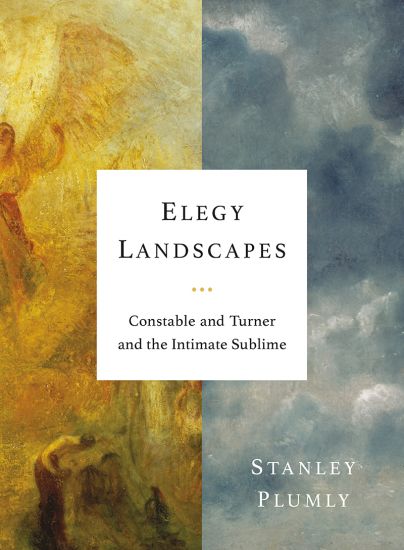
Elegy Landscapes

Elegy Landscapes

Stanley Plumly

WW Norton Co
2018
sidottu
Stanley Plumly explores immortality in art through the work of two impressive landscape artists: John Constable and J.M.W. Turner. Seeking the transcendent aesthetic awe of the sublime and reeling from personal tragedy, these painters portrayed the terrible beauty of the natural world from an intimate, close-up perspective. Plumly studies the paintings against the pull of the artists’ lives, probing how each finds the sublime in different, though connected, worlds. At once a meditation on the difficulties in achieving truly immortal works of art and an exploration of the relationship between artist and artwork, Elegy Landscapes takes a wide-angled look at the philosophy of the sublime.
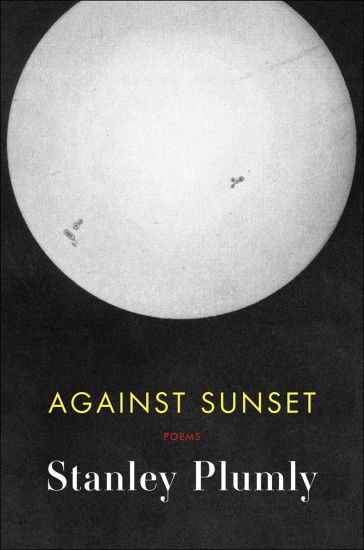
Against Sunset

Against Sunset

Stanley Plumly

WW Norton Co
2016
sidottu
Whether addressing the deaths of friends and other poets or celebrating the closing of the day and the autumn of the seasons, Against Sunset reveals Stanley Plumly at his most personal and intimate. As much an homage to the rich tradition of the Romantics as it is a meditation on memory itself, these poems live at the edges of disappearances. From “Against Sunset” The horizon, halfway disappeared between above and below— night falls too or does it also rise out of the death-glitter of water? And if night is the long straight path of the full moon pouring down on the face of the deep, what makes us wish we could walk there, like a flat skipped stone?
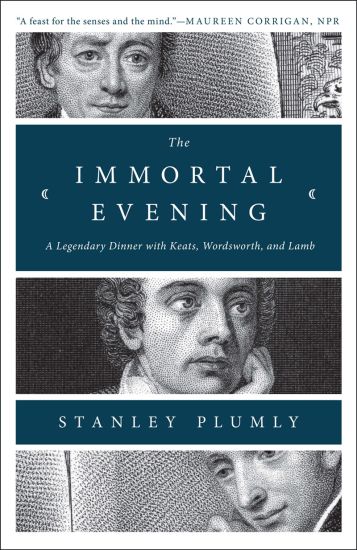
The Immortal Evening

The Immortal Evening

Stanley Plumly

WW Norton Co
2016
nidottu
On 28 December 1817, Benjamin Robert Haydon hosted what he refers to in his diaries and autobiography as the "immortal dinner". He wanted to introduce his young friend John Keats to the great William Wordsworth and to celebrate his progress on his most important historical painting so far, Christ’s Entry into Jerusalem, in which Keats, Wordsworth and Charles Lamb, also a guest at the party, appear. After thoughtful and entertaining discussions of poetry and art and their relation to Enlightenment science, the party evolves into a lively, raucous evening. This event will prove to be a highlight in the lives of these immortals. A beautiful and profound work of extraordinary brilliance, The Immortal Evening takes this dinner as a lens through which to understand the lives and work of these men and to contemplate the immortality of genius.
Orphan Hours

Orphan Hours

Stanley Plumly

WW Norton Co
2013
nidottu
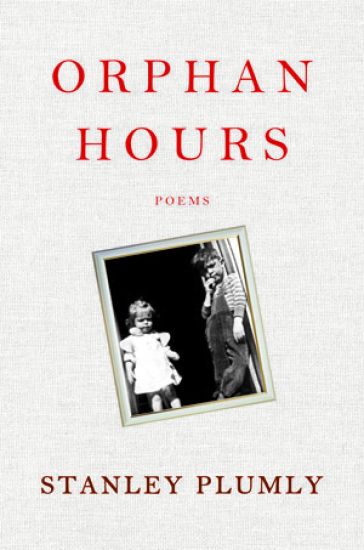
Orphan Hours is a book of reconciliation, of coming to terms with time in its most personal and memorable manifestations, and of learning the wisdom of what cannot be changed. The urgency of the elegy has been absorbed by an acceptance of the detail, texture, and small moments that constitute and enrich mortality. from “Lapsed Meadow" I remember, in Ohio, fields of wastes of nature, lost pasture, fallow clearings, buckwheat and fireweed and broken sparrow nests, especially in the summer, in the fading hilltop sun, when you could lose yourself by simply lying down. Who will find you, who will call you home now, at dusk, with the dry tips of the goldenrod confused with a little wind, filling in what’s left of the light.
Orphan Hours

Orphan Hours

Stanley Plumly

WW Norton Co
2013
sidottu
Orphan Hours is a book of reconciliation, of coming to terms with time in its most personal and memorable manifestations, and of learning the wisdom of what cannot be changed. The urgency of the elegy has been absorbed by an acceptance of the detail, texture, and small moments that constitute and enrich mortality. from “Lapsed Meadow" I remember, in Ohio, fields of wastes of nature, lost pasture, fallow clearings, buckwheat and fireweed and broken sparrow nests, especially in the summer, in the fading hilltop sun, when you could lose yourself by simply lying down. Who will find you, who will call you home now, at dusk, with the dry tips of the goldenrod confused with a little wind, filling in what’s left of the light.
Posthumous Keats

Posthumous Keats

Stanley Plumly

WW Norton Co
2010
nidottu
John Keats’s famous epitaph—"Here lies One Whose Name was writ in Water”—helped cement his reputation as the archetype of the genius cut off before his time. In this close narrative study, Stanley Plumly meditates on the chances for poetic immortality, an idea that finds its purest expression in Keats. Incisive in its observations and beautifully written, Posthumous Keats is an ode to an unsuspecting young poet—a man who, against the odds of his culture and critics, managed to achieve the unthinkable: the elevation of the lyric poem to sublime and tragic status.
Old Heart

Old Heart

Stanley Plumly

WW Norton Co
2009
nidottu
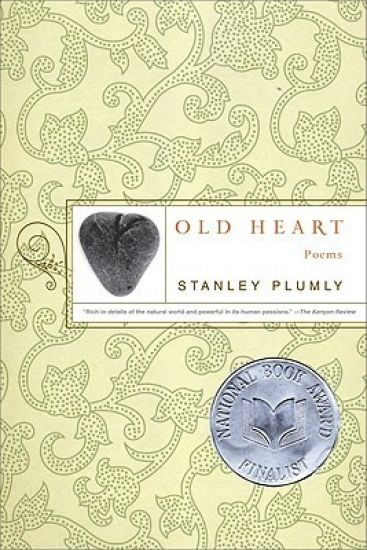
In Old Heart, Stanley Plumly confronts and celebrates mortality in all its rich variety—in the detailed natural world at hand, in the immediacy of loss, and in his own personal encounters. Archetypal, sometimes even allegorical, the material and spiritual levels in these poems speak in one voice and seek the common vision of the empathic imagination. This is Plumly's finest book of poetry—a sustained meditation on "old memory, old worry, old matter from the softest tissue deep."
Mission Work

Mission Work

Aaron Baker; Stanley Plumly

HOUGHTON MIFFLIN
2008
nidottu
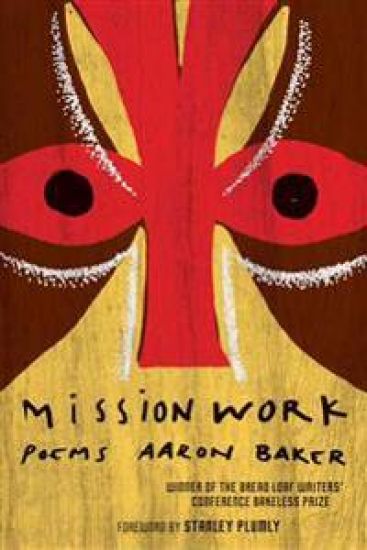
In this prize-winning collection, a debut poet evokes his childhood as the son of missionaries in Papua New Guinea. Mission Work is an arresting collection of poems based on Aaron Baker's experiences as a child of missionaries living among the Kuman people in the remote Chimbu Highlands of Papua New Guinea. Rich with Christian and Kuman myths and stories, the poems explore Western and tribal ways of looking at the world -- an interface of vastly different cultures and notions of spirituality, illuminated by the poet's own struggles as he comes of age in this unique environment. The images conjured in Mission Work are viscerally stirring: native people slaughter pigs for a Chimbu wedding ceremony; a papery flight of cicadas cuts through a cloud forest; hands sting as they beat a drum made of dried snakeskin. Quieter moments are shot through with the unfamiliar as well. In "Bird of Paradise," a father angles his son's head toward the canopy of the jungle so the boy can catch sight of an elusive bird. Stanley Plumly, this year's guest judge, writes, "How rare to find precision and immersion so alive in the same poetry. Aaron Baker's pressure on his language not only intensifies and elevates his memories of Papuan 'mission work, ' it transforms it back into something very like his original childhood experience. Throughout this remarkably written and felt first book, the reader, like the author himself, 'can't tell if this is white or black magic, ' Christian, tribal, or both at once."
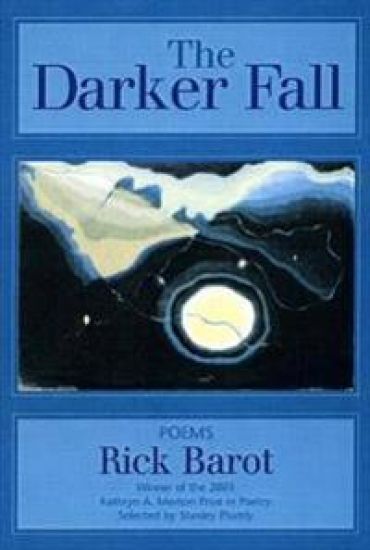
The Darker Fall

The Darker Fall

Rick Barot; Stanley Plumly

Sarabande Books, Incorporated
2002
pokkari
Winner of the 2001 Kathryn A. Morton Prize in Poetry. "Barot’s mature linguistic skills really come down to a metaphorical and musical intelligence that refuses to value one element over another, that will not let the language or the longing take over."—From the Foreword by Stanley Plumly "This is a book of lyric wonders: wit that turns dark, darkness that blazes up again in music and story."—Eavan Boland Rick Barot is currently Jones Lecturer in Poetry at Stanford University. He was born in the Philippines and grew up in the San Francisco Bay Area. He attended Wesleyan University, the Writers’ Workshop at the University of Iowa, and Stanford, where he was a Wallace E. Stegner Fellow in Poetry.
The Darker Fall

The Darker Fall

Rick Barot; Stanley Plumly

Sarabande Books, Incorporated
2002
sidottu
Winner of the 2001 Kathryn A. Morton Prize in Poetry. "Barot’s mature linguistic skills really come down to a metaphorical and musical intelligence that refuses to value one element over another, that will not let the language or the longing take over."—From the Foreword by Stanley Plumly "This is a book of lyric wonders: wit that turns dark, darkness that blazes up again in music and story."—Eavan Boland Rick Barot is currently Jones Lecturer in Poetry at Stanford University. He was born in the Philippines and grew up in the San Francisco Bay Area. He attended Wesleyan University, the Writers’ Workshop at the University of Iowa, and Stanford, where he was a Wallace E. Stegner Fellow in Poetry.