Kirjailija
Stanley Rothman
Kirjat ja teokset yhdessä paikassa: 13 kirjaa, julkaisuja vuosilta 1994-2024, suosituimpien joukossa The End of the Experiment. Vertaile teosten hintoja ja tarkista saatavuus suomalaisista kirjakaupoista.
13 kirjaa
Kirjojen julkaisuhaarukka 1994-2024.
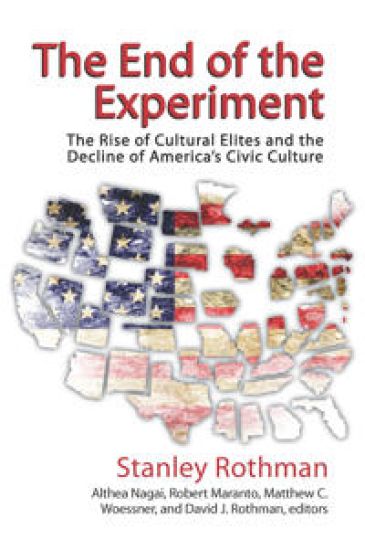
The End of the Experiment ties together Stanley Rothman's theory of post-industrialism and his four decades of research on American politics and society. Rothman discusses the rise and fall of the New Left, the sixties' impact on America's cultural elites, and the emergence of new post-industrial humanistic values.The first part of this book explains how cultural shifts in post-industrial society increased the influence of intellectuals and redefined America's core values. The second part examines how the shift in American social and cultural values led to a crisis of confidence in the American experiment. And in a final section, Rothman's contemporaries provide insight into his work, reflecting on his continued influence and his devotion to traditional liberalism.Rothman presents a quantitative study of personality differences between traditional American elites and new cultural elites. Rothman argues that the experiment of America—as a new nation rooted in democracy, morality, and civic virtue—is being destroyed by a disaffected intellectual class opposed to traditional values.
American motion pictures still dominate the world market with an impact that is difficult to measure. Their role in American culture has been a powerful one since the 1930s and is a hallmark of our culture today. Though much has been written about the film industry, there has been very little systematic attention paid to the ideology of its creativ
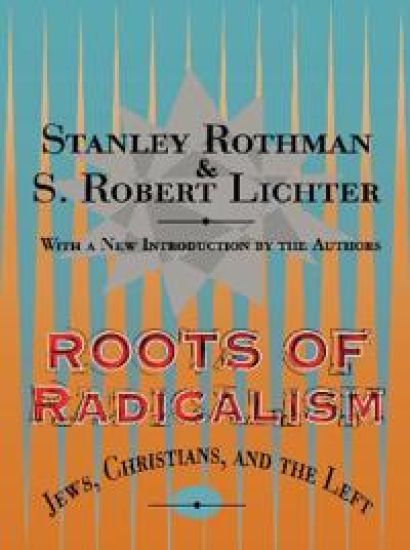
When Roots of Radicalism first appeared. Nathan Glazer noted "this is a major work on the relationship between radical politics and psychological development." He went on to predict "no one will be able to write about the left and radicalism without taking it into account." Now finally available in a paperback edition, with a new introduction, the reader can evaluate just how prescient the authors are in their review of the student radical movement. Replete with interviews of radical activists, their provocative book paints a disturbing picture.The book raises critical questions about much previous social science research and ultimately about the reason an entire generation of Americans was so infatuated with the radical mystique. Robert A. Nisbet called the book "an extraordinarily skilled fusion of historical and psychological approaches to one of the most explosive decades in American social history." Robert E. Lane added "it will be prudent to read Rothman and Lichter along with our well worn copies of Keniston and Fromm." Writing in Political Psychology, Dan E. Thomas argued "the [book] is arguably the most important and definitely the most provocative book in the field of personality and politics to have appeared in the past several years." Recently, in Forbes. Peter Brimelow referred to Roots of Radicalism as "Rothman's main achievement as a political scientist...his definitive study of the 1960s New Left."In the new introduction, the authors review the initial reception of Roots of Radicalism and its subsequent treatment. They also review the major literature on the causes, course, and consequences of the student movement of the 1960s which has appeared since the publication of the book. Finally, they update their own analysis.
The End of the Experiment ties together Stanley Rothman's theory of post-industrialism and his four decades of research on American politics and society. Rothman discusses the rise and fall of the New Left, the sixties' impact on America's cultural elites, and the emergence of new post-industrial humanistic values.The first part of this book explains how cultural shifts in post-industrial society increased the influence of intellectuals and redefined America's core values. The second part examines how the shift in American social and cultural values led to a crisis of confidence in the American experiment. And in a final section, Rothman's contemporaries provide insight into his work, reflecting on his continued influence and his devotion to traditional liberalism.Rothman presents a quantitative study of personality differences between traditional American elites and new cultural elites. Rothman argues that the experiment of America—as a new nation rooted in democracy, morality, and civic virtue—is being destroyed by a disaffected intellectual class opposed to traditional values.
As Derek Jeter strolls toward the plate, the announcer tosses out a smattering of statistics - from hitting streaks to batting averages. But what do the numbers mean? And how can America's favorite pastime be a model for learning about statistics? "Sandlot Stats" is an innovative textbook that explains the mathematical underpinnings of baseball so that students can understand the world of statistics and probability. Carefully illustrated and filled with exercises and examples, this book teaches the fundamentals of probability and statistics through the feats of baseball legends such as Hank Aaron, Joe DiMaggio, and Ted Williams - and more recent players such as Barry Bonds, Albert Pujols, and Alex Rodriguez. Exercises require only pen-and-paper or Microsoft Excel to perform the analyses. "Sandlot Stats" covers all the bases, including: descriptive and inferential statistics; linear regression and correlation; probability; sports betting; probability distribution functions; sampling distributions; hypothesis testing; confidence intervals; chi-square distribution. "Sandlot Stats" offers information covered in most introductory statistics books, yet is peppered with interesting facts from the history of baseball to enhance the interest of the student and make learning fun.
The Still Divided Academy
Stanley Rothman; April Kelly-Woessner; Matthew Woessner
Rowman Littlefield
2011
sidottu
The Still Divided Academy is a wonderful examination of the academic community that shows their inner workings by addressing a broad range of issues including: academic politics, tenure, perceived and real political imbalance, academic freedom, and diversity. Administrators, professors, and students have very different priorities, values, and expectations and therefore, often have conflicting opinions on these issues. Drawing on data collected in a specially commissioned public opinion survey as well as other recent research on higher education, Rothman, Kelly-Woessner, and Woessner, create an incredibly readable presentation of both the similarities and differences between those running our universities and those attending them. The authors manage to remain impressively neutral; instead they give us a fuller perspective of the people on our college campuses.
Is the American judiciary still the least dangerous branch, as Alexander Hamilton and legal scholar Alexander Bickel characterized it? Unlike legislatures or administrative agencies, courts do not make policy so much as direct and redirect policy as it is implemented. The judicial contribution to policymaking involves the infusion of constitutional rights into the realm of public policy, and as the government has grown, the courts have become more powerful from doing more and more of this. Powers and Rothman explore the impact of the federal courts, providing a brief account of the development of constitutional law and an overview of the judiciary's impact in six controversial areas of public policy.•Busing •Affirmative action •Prison reform •Mental health reform •Procedural reforms in law enforcement •Electoral redistricting In each of these areas, the authors review significant cases that bear on the particular policy, exploring the social science evidence to assess the impact of the courts on policies—and the consequences of that intervention. Powers and Rothman conclude that judicial intervention in public policy has often brought about undesirable consequences, sometimes even for the intended beneficiaries of government intervention.
Environmental Cancer—A Political Disease?
S. Robert Lichter; Stanley Rothman
Yale University Press
1999
pokkari
Media reports on environmental cancer are frequent and frightening. Public policy—and public spending—reflect widespread concern over the presence of carcinogens in our air and water and food. Yet how reliable is mass media information about environmental cancer? How accurate are the risk assessments that underlie our public policy decisions?In this provocative book, S. Robert Lichter and Stanley Rothman examine the controversies surrounding environmental cancer and place them in historical perspective. Then, drawing on surveys of cancer researchers and environmental activists, they reveal that there are sharp differences between the two groups` viewpoints on environmental cancer. Despite these differences, a further comparison—between the views of the two groups and the content of television and newspaper accounts over a two-decade period—shows that press reports most frequently cite the views of environmental activists as if they were the views of the scientific community. These findings cast doubt on the objectivity of the news media and environmental activists. And, the authors conclude, misplaced fears about the risks of environmental cancer have seriously distorted public policy and priorities.
Hollywood's America
Stephen P Powers; David J Rothman; Stanley Rothman
Westview Press Inc
1996
nidottu
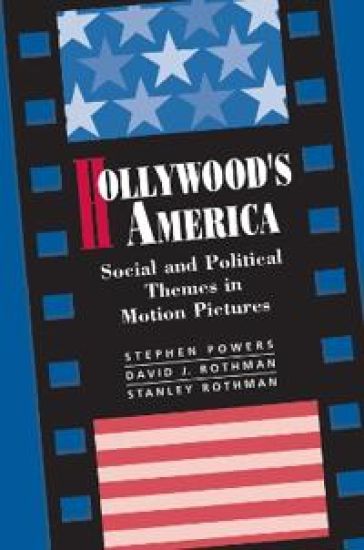
American motion pictures still dominate the world market with an impact that is difficult to measure. Their role in American culture has been a powerful one since the 1930s and is a hallmark of our culture today. Though much has been written about the film industry, there has been very little systematic attention paid to the ideology of its creative elite. How does the outlook of that elite impact on the portrayals of America that appear on the screen? How do their views interact with the demands of the market and the structure of the industry to determine the product that is seen by mass audiences?Hollywood's America is a marvelously rich and careful discussion of these questions. It combines a meticulous systematic content analysis of fifty years of top-grossing films with a history of the changing structure of the industry. To that mixture it adds an in-depth survey of Hollywood's creative elite, comparing them to other leadership groups. The result is a balanced discussion of unique breadth and depth on a subject of national importance.Placing the film industry in the context of American society as a whole, the authors point out that Hollywood's creative leadership impacts the larger society even as it is influenced by that society. The creators of films cannot remove themselves too far from the values of the audiences that they serve. However, the fact that films are made by a relatively small number of people, who, as the authors demonstrate, tend to share a common outlook, means that, over time, motion pictures have had an undeniable impact on the beliefs, lifestyles, and action of Americans.This study contributes to the debate over the role and influence of those who create and distribute the products of mass culture in the United States.The book also contains a devastating critique of the poststructuralist theories that currently dominate academic film criticism, demonstrating how they fail in their attempt to explain the political significance of motion pictures.
When Roots of Radicalism first appeared. Nathan Glazer noted "this is a major work on the relationship between radical politics and psychological development." He went on to predict "no one will be able to write about the left and radicalism without taking it into account." Now finally available in a paperback edition, with a new introduction, the reader can evaluate just how prescient the authors are in their review of the student radical movement. Replete with interviews of radical activists, their provocative book paints a disturbing picture.The book raises critical questions about much previous social science research and ultimately about the reason an entire generation of Americans was so infatuated with the radical mystique. Robert A. Nisbet called the book "an extraordinarily skilled fusion of historical and psychological approaches to one of the most explosive decades in American social history." Robert E. Lane added "it will be prudent to read Rothman and Lichter along with our well worn copies of Keniston and Fromm." Writing in Political Psychology, Dan E. Thomas argued "the [book] is arguably the most important and definitely the most provocative book in the field of personality and politics to have appeared in the past several years." Recently, in Forbes. Peter Brimelow referred to Roots of Radicalism as "Rothman's main achievement as a political scientist...his definitive study of the 1960s New Left."In the new introduction, the authors review the initial reception of Roots of Radicalism and its subsequent treatment. They also review the major literature on the causes, course, and consequences of the student movement of the 1960s which has appeared since the publication of the book. Finally, they update their own analysis.
A series of culture wars are being fought in America today; Lerner, Nagai, and Rothman contend that one key battleground is the nation's high school texts. The authors argue that today's textbook controversies, as exemplified in the proposed National Standards for the Study of United States and World History, reflect changes in American public philosophy and the education profession. Conventional wisdom among students of the curriculum is that the major threat to freedom of the schools comes from the religious right. While this may have been true at one time, Lerner, Nagai, and Rothman assert that the major thrust today involves the imposition on schools of the ideology of particular groups that seek to use education as a mechanism for changing society. They document the growing influence of these groups, and their supporters among educators, through an extensive quantitative content analysis of leading high school history texts over the past 40 years and a historical analysis of how this outlook and the willingness to impose it became part of educators' conventional wisdom.The authors document the growing influence of these groups, and their supporters among educators, in two ways. First, they present an extensive quantitative content analysis of leading high school history texts over the past 40 years, demonstrating in detail the feminist and multicultural perspectives that have come to dominate them. Second, they provide a historical analysis of how this outlook and the willingness to impose it became part of educators' conventional wisdom, tracing current policies back to the influence of the Progressive education movement led by John Dewey. This controversial book will be of exceptional interest to the general public as well as to researchers and students of education, public policy, and American intellectual history.
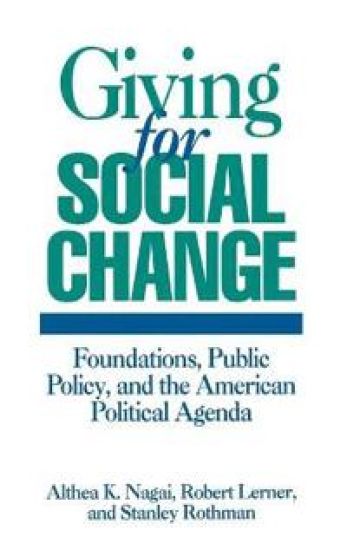
Giving for Social Change
Althea K. Nagai; Robert Lerner; Stanley Rothman
Praeger Publishers Inc
1994
sidottu
This study shows how philanthropic foundations and their leaders help shape the American political agenda. The authors' central argument is that foundation leaders are members of a key social and political elite in American society. Relying on a survey of such leaders and on an examination of foundation public policy grants, the authors demonstrate that members of the foundation elite are among the most polarized groups in American society.This study shows how philanthropic foundations and their leaders help shape the American political agenda. The authors' central argument is that foundation leaders are members of a key social and political elite in American society. Relying on a survey of such leaders and on an examination of foundation public policy grants, the authors demonstrate that members of the foundation elite are among the most polarized groups in American society.Contrary to popular belief, those who control foundations seek to make American more progressive. Public policy oriented foundations are largely liberal in outlook and make grants primarily to liberal individuals and organizations. The authors examine the dilemmas that the existence of such organizations create for democratic political theory. The discussion is placed in the context of a historical overview of the role of foundations in American society; it will be of great interest to public policy professionals, political scientists, and those who track the direction of the national agenda.