Kirjojen hintavertailu. Mukana 12 595 353 kirjaa ja 12 kauppaa.
Kirjailija
Stanton Peele
Kirjat ja teokset yhdessä paikassa: 6 kirjaa, julkaisuja vuosilta 1998-2019, suosituimpien joukossa Outgrowing Addiction. Vertaile teosten hintoja ja tarkista saatavuus suomalaisista kirjakaupoista.
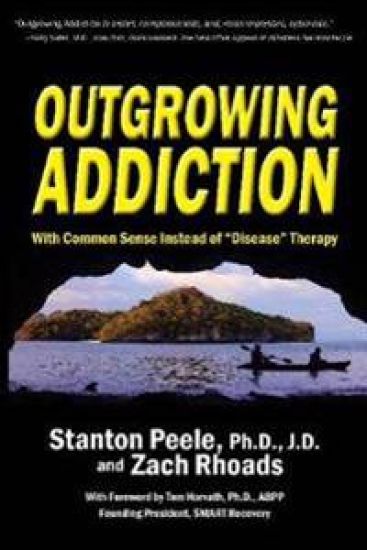
Drug orverdoses continue to rise at an alarming rate throughout the U.S., resulting in 76,000 deaths last year, according to the Centers for Disease Control and Prevention. The response, tragically, has been to charge full-speed ahead with "solutions" that have already failed. In this book, Stanton Peele, an addiction expert, and Zach Rhoads, a child behavior interventionist and counselor, show that defining addiction as a "disease" makes recovery much more difficult, and that twelve-step programs fail for most participants. But they don't just criticize. They provide a solid, research-and-experience-based alternative approach that has proven to be successful in overcoming the scourges of suicide, depression, addiction, and drug-related deaths. The authors show that maturing out of addiction and childhood behavioral problems is a normal process--unless people are sidetracked by the widespread and commonplace therapies that undercut natural growth and self-confidence. They present extensive research data about natural recovery and case studies of fully recovered adults and of children with various conditions, for a developmental model of addiction that has been proven to help those who are suffering. Much of the focus is on childhood addiction, but their conclusions and methods are helpful for people of all ages. Their work forms the basis for the Life Process Program, a worldwide online parenting and addiction coaching service.
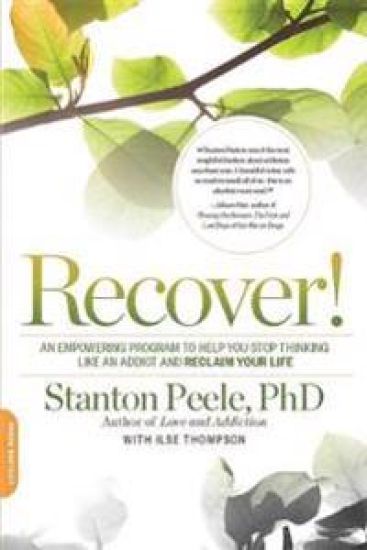
World-renowned addiction expert Stanton Peele's ground-breaking program is a self-directed process of making addiction obsolete. Using proven tools and strategies, you will learn how to replace paralyzing beliefs with positive options change how you respond to addictive urges lay out clear anti-addiction goals develop the skills to live fully and prevent relapse and much more."Stanton Peele has helped us understand the most tortuous aspects of addiction and recovery, without ever joining the parade of conventional experts...who happen to be marching the wrong way.",Marc Lewis, author of The Biology of Desire: Why Addiction is Not a Disease professor of neuroscience, Radbound University Nijmegen"Dr. Peele's writings and teachings have prompted me to look beyond the flashy headlines and the majority position as being overly simplistic and often wrong. Only in this way can we help drug users, render treatment more effective, and creative positive drug policies.",Carl Hart,Ph.D., Columbia University Departments of Psychology and Psychiatry, author of High Price "Stanton Peele is a true pioneer of addiction research and theory. His ideas offer hope to the many millions for whom current approaches are not effective or who simply prefer evidence-based alternatives.",Maia Szalavitz, author of Unbroken Chain neuroscientist journalist, Time Magazine
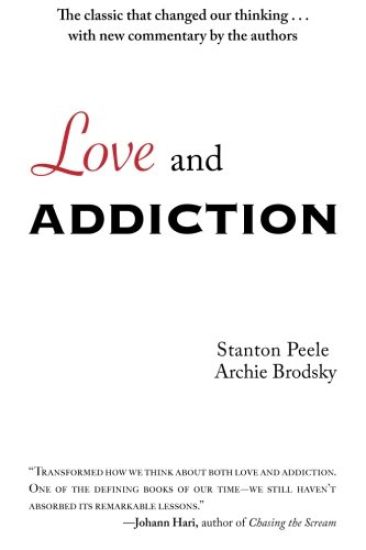
In Love and Addiction, published 40 years ago and sold as a mass-market paperback on love, Stanton Peele and Archie Brodsky laid out every major issue confronting the addiction field today. This pioneering classic, which was excerpted in Cosmopolitan and spawned the codependence movement, is the first-and still the definitive-book on addictive love. But it is much more than that; it is the book that explains why addiction is not what we think it is. Love and Addiction focuses on dependent love relationships to explore what both love and addiction really are-psychologically, socially, and culturally. Addiction is an overgrown, dependent, destructive relationship. Love is the opposite, a sharing, growth-inspiring one. The authors' analysis makes clear that an addiction is an experience that takes on meaning and power in light of a person's needs, desires, beliefs, expectations, and fears. By showing how addiction grows out of ordinary human experience, Peele and Brodsky offer a liberating understanding of all addictions-to alcohol, drugs, tobacco, food, gambling, shopping, electronic media, sex, or love. In 1975, Love and Addiction boldly proposed ideas whose truth is only now being recognized: Addiction is not limited to drugs, and drugs are not necessarily addictive.AA's 12 steps are not the last word in addiction treatment. On the contrary, practically oriented addiction treatments are more effective. The goal of addiction treatment and recovery is not abstinence to the exclusion of all else, but to build a life that rules out addiction. Love is the opposite of the self-protective constriction of addiction; it is the expansion of your spirit with another human being. Remarkably, all of these issues-the widespread application of the addiction diagnosis, the limited value of AA and its disease theory, the possibility that people can continue using but still eliminate addiction (harm reduction)-are as hotly debated today as when Peele and Brodsky first analyzed addiction forty years ago. Most remarkably of all, the answers Peele and Brodsky arrived at in Love and Addiction are only now being embraced by progressive thinkers in the field. "Destined to become a classic " Psychology Today proclaimed in 1975. Rereading Love and Addiction 35 years later, addiction researcher Rowdy Yates wrote that the book "still reads absolutely true as an understanding of addictive behavior."Reading today this clairvoyant analysis of the most challenging issues we face in the twenty-first century-the meaning of love and the cure for addiction-you will recognize both the current relevance and enduring value of Love and Addiction, now reissued with a new (2015) Authors' Preface, the Authors' Preface written for the 1991 paperback reissue, and a brief new introduction to each chapter. Otherwise, nothing has been changed in the original book.
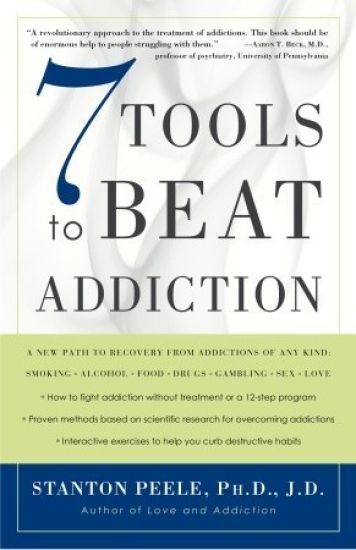
The author of Love and Addiction introduces his seven-step program to help addicts of all kinds--from substance abuse to gambling to nicotine addiction--enhance their self-esteem, develop self-empowerment, put meaning in their lives, and overcome addictive behavior--offering such tools as values, motivation, rewards, resources, support, maturity, and finding a higher purpose. Original. 20,000 first printing.
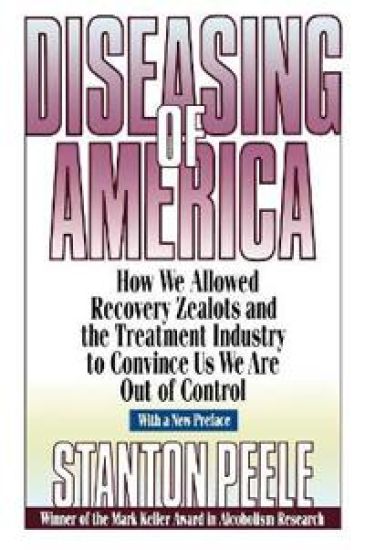
A Controversial Argument Against the Disease Theory of Addiction Diseasing of America is a powerful and controversial rebuttal to the "addiction as disease model" that many vested interests-including doctors, counselors, psychologists, treatment centers, and twelve-step programs that specialize in addiction treatment-don't want you to read."I found the arguments in Diseasing of America persuasive and carefully documented. While I find current addiction-treatment models helpful, I think it is critical to look at Stanton Peele's work to question our fundamental assumptions and adjust them on the basis of data."-Jennifer P. Schneider, author of Back From Betrayal and Sex, Lies, and Forgiveness, and member of the American Society of Addiction Medicine"A provocative review of the uses and abuses of the disease model in the past three decades. This important book has significantly added to my education and clinical understanding of addiction in my professional practice."-Richard R. Irons, M.D., The Menninger Clinic
A controversial and persuasive analysis of addiction A tour de force, a spectacular effort of research and understanding. This book gives us the courage to bypass disease notions to deal with intrapsychic, family system, and social and cultural dynamics in addiction.?David Cook, Counseling and Psychological Services, University of WisconsinThis compelling and controversial book challenges the widely accepted belief that alcohol and drug addiction have a genetic or biological basis. The so-called disease theory suggests that a substance or activity can cause the addict to lose control of his behavior. Stanton Peele demonstrates how this notion fails to make sense of scientific observations.Analyzing studies of drug and cigarette addiction, alcoholism, obesity, and other potential compulsions such as running and sex, Peele reveals the surprising frequency of self-cure as part of the evidence. The author finds that compulsive habits and depAndency are a way of coping that individuals can reverse as their life circumstances change. This brilliantly argued book is sure to provoke discussion and stimulate new approaches to treatment.