

Kirjailija
Stefan Hollos
Kirjat ja teokset yhdessä paikassa: 21 kirjaa, julkaisuja vuosilta 2008-2026, suosituimpien joukossa Random Walks in Electrical Networks. Vertaile teosten hintoja ja tarkista saatavuus suomalaisista kirjakaupoista.
21 kirjaa
Kirjojen julkaisuhaarukka 2008-2026.
Combinatorics Problems and Solutions
J Richard Hollos; Stefan Hollos
Abrazol Publishing
2024
pokkari
This book will help you learn combinatorics in the most effective way possible - through problem solving. It contains 263 combinatorics problems with detailed solutions. Combinatorics is the part of mathematics that involves counting. It is therefore an essential part of anyone's mathematical toolkit. The applications of combinatorics include probability, cryptography, error correcting, games, music and visual art. In this new edition we have expanded the introductory section by more than twice the original size, and the number of problems has grown by over 30%. There are new sections on the pigeon hole principle and integer partitions with accompanying problems. Many of the new problems are application oriented. There are also new combinatorial geometry problems. Someone with no prior exposure to combinatorics will find enough introductory material to quickly get a grasp of what combinatorics is all about and acquire the confidence to start tackling problems.
The Enigma of the Crookes Radiometer
J Richard Hollos; Stefan Hollos
Exstrom Laboratories LLC
2022
pokkari

This book should allow anyone with basic electronics skills to quickly design a passive Butterworth filter. All possible low pass and high pass filters up to tenth order, and all possible band pass and band stop filters up to eighth order are covered. Schematics and component values for these filters are given along with formulas for scaling the values to the particular frequency the filter must operate at. There is a design example for each of the filter types that shows how to scale the component values. A Spice simulation file for the design is given along with the frequency response. If you want band pass or band stop filters higher than eighth order the book explains how to use a low pass filter to construct them. So the information is there to construct filters up to twentieth order but we don't recommend trying to do that. The non ideal nature of the components makes it hard to get the expected extra performance. The website for this book is http: //www.abrazol.com/books/filter2/ where we will post related resources.

Nell is a language for describing two dimensional vector drawings. We have been using versions of the language for several years to create illustrations for books, webpages and various art projects. It can even be used as a tool for physics and math simulations and experiments.We created the language because of our frustration with how tedious and time consuming it can be to create complex vector drawings. Why sit in front of a screen for hours clicking and dragging with a mouse when you can spend a few minutes thinking about your drawing, solving a few geometry and trigonometry problems and then writing a simple program that will create the drawing for you? It's less tedious and a lot more fun, plus you get to sharpen your math and programming skills.The book comes with software that translates a drawing definition in the Nell language into an SVG file. The software is free and open source with a GPL license. It can be downloaded from the book's website at http: //www.abrazol.com/books/nell/

Coin Tossing: The Hydrogen Atom of Probability
J. Richard Hollos; Stefan Hollos
Abrazol Publishing
2019
nidottu

Creating Melodies is a companion to our book Creating Rhythms. The book will show you how to explore the infinite space of melodies.Like the rhythms book, it comes with software that you can download from the book's website. With the software you can generate countless new melodies and variations on old ones. Combine those melodies with rhythms from our rhythms book and you have an endless source of inspiration for new music.You can listen to the many example melodies in this book as MIDI and MP3 files on the book's website at http: //www.abrazol.com/books/melody1/We had a lot of fun writing this book. In fact it took us so long to write it because it was hard to tear ourselves away from creating so much interesting new music and write up the results. Now you can have fun with it too

Combinatorics II Problems and Solutions: Counting Patterns
J. Richard Hollos; Stefan Hollos
Abrazol Publishing
2016
nidottu
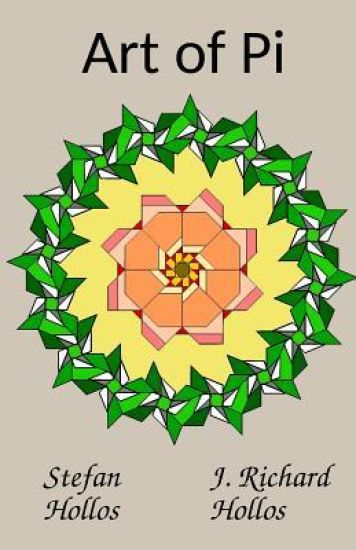
People have been interested in circles for a long time. One can imagine early humans attaching a cosmic significance to circles. After all, the two greatest objects in the sky, the sun and the moon, are circles. We know that by at least 2000 BC, humans had discovered an important universal property of all circles. If you measure a circle's perimeter (circumference) and divide by its width (diameter) you get a number that is the same for all circles. Today we call this number pi and its value is 3.14159265358979323844.... where the digits go on forever. This book is an exploration of beautiful and unique drawings that can be interpreted from the value of pi. The book contains 357 of these drawings. It is an art book meant to ignite your creativity and imagination. No mathematics is required. There are two appendices that contain a very short explanation of some of the mathematics behind pi and how the images are created, indexed by name. Details can be found in our book "Pattern Generation for Computational Art".
Information Theory: A Concise Introduction
J. Richard Hollos; Stefan Hollos
Abrazol Publishing
2015
nidottu

Recursive Digital Filters: A Concise Guide
J. Richard Hollos; Stefan Hollos
Abrazol Publishing
2014
nidottu
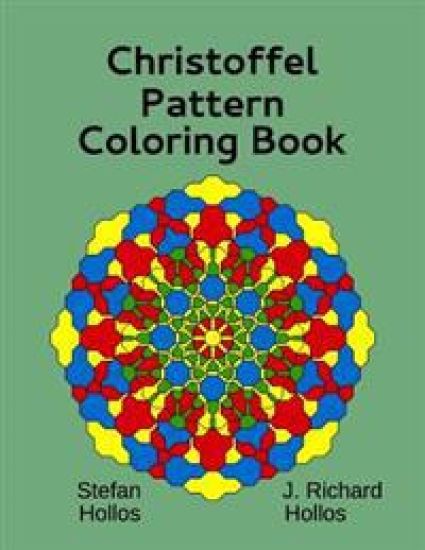
There are 50 unique patterns in this book, each on its own physical page. The authors have for many years been obsessed with finding patterns in nature and in mathematics. This is just a very small sample of some of the interesting patterns they have discovered. The patterns are named after the German mathematician Elwin Bruno Christoffel (1829-1900). He did not directly produce them, but they are related to some of his work. Details on how the patterns are created can be found in the book Pattern Generation for Computational Art.

This book is the result of a lifelong love of music and an obsession with patterns. The authors have for many years been exploring methods to find, create, describe and analyze patterns. They wrote this book to show how some of these methods can be used to generate rhythms. The methods can produce an almost endless variety of new rhythms along with popular traditional ones. For a lover of music what could be more wonderful than that? The study of patterns at anything beyond a superficial level does require some mathematics. Fortunately the mathematics can be kept at a very elementary level. Anyone comfortable with a little algebra should have no trouble understanding and using these rhythm generation methods. Only the last chapter on stochastic rhythms requires a bit more than elementary mathematics. Any reader who faints at the sight of an equation should probably not buy the book. The book has many example rhythms for which there are MIDI files that you can listen to on the book's website: abrazol.com/books/rhythm1/. There you can also find free software for generating rhythms, doing calculations, and creating MIDI files.
Pattern Generation for Computational Art
J. Richard Hollos; Stefan Hollos
Abrazol Publishing
2013
nidottu
This book shows how to turn computer generated number sequences into intricate visual patterns. The sequences are strings of the binary numbers 0 and 1 which are translated into drawing instructions to produce beautiful patterns. These patterns provide a glimpse of the hidden platonic world of mathematics. The book starts with Christoffel words and Sturmian sequences which are derived from the continued fraction expansion of rational and irrational numbers. How this is done is explained very clearly in the book and very little mathematical background is required from the reader. The book moves on to Automatic sequences such as the Thue-Morse and Rudin-Shapiro sequences which are various ways of calculating digital roots of the integers. The first part of the book ends with sequences generated by folding paper. Translating a sequence into drawing instructions is done using a finite automaton. This is a very general method for translating sequences that allows the same sequence to produce many different patterns. No prior experience with finite automata is necessary. All the background needed is explained in the book. The second part of the book is devoted to L-systems which is another way of producing a string of drawing instructions. Here the strings are produced by an iterative symbol substitution process. The images produced often have a self similar fractal structure. It is possible to create many images that resemble plants. The book shows how to use an automaton and context free grammars to systematically look at all L-systems of a particular type. All software used to create the sequences and images in the book are free for readers to download from the book's website at: http: //www.abrazol.com/books/patterngen/ The software consists of small programs written in the C programming language that can be run on all major operating systems. Inside the book are 327 images serving as inspiration for the kinds of images you can create. There are an infinite variety of images you can generate using the software that comes with this book, providing a computational image generation lab.

Finite Automata and Regular Expressions: Problems and Solutions
J. Richard Hollos; Stefan Hollos
Abrazol Publishing
2013
nidottu


Combinatorics Problems and Solutions
J. Richard Hollos; Stefan Hollos
Abrazol Publishing
2013
nidottu
There is a newer edition of this book, ISBN: 9781887187480 This book will help you learn combinatorics in the most effective way possible - through problem solving. It contains over 200 combinatorics problems with detailed solutions.Combinatorics is that part of mathematics that involves counting. It is therefore a fundamental part of math, and mastering it gives you wide reaching powers. The applications of combinatorics include: probability, cryptography, error correcting, games, music, and visual art. It can help you understand other parts of math from a more fundamental perspective.The book begins with the basics of what is needed to solve combinatorics problems, including: definitions, a guide (or classification system) for solving problems based on the twelvefold way, as well as an overview of combinatorics.The remainder of the book consists of problems and solutions. There are 2 separate groups of problems in this book. The first group consists of 82 problems, while the second group has another 124 problems (called exercises). Each group of problems begins with the easiest ones that anyone can solve and progresses to greater difficulty.This book is good preparation for more advanced combinatorics texts such as Lovasz's Combinatorial Problems and Exercises.

Have you ever wondered whether Bayesian analysis can be applied toward the stock market? We did, and set out to investigate.This book shows you how to find relationships between stocks or exchange traded funds (ETFs) using Bayesian analysis.A relationship that most traders are probably familiar with is linear correlation. This is sometimes used as the basis for pairs trading. But linear correlation is just one way that stocks or ETFs can be related.The analysis we present in this book can be used to exploit almost any kind of relationship that may exist between stocks or ETFs. The book will show how to calculate the probability of a stock or ETF ending the day up or down based on what other stocks or ETFs are doing.A probability is more useful than a simple up or down signal. It quantifies the certainty of a prediction and allows a trader to take a position consistent with a given level of risk.Any active trader should find the techniques presented in this book useful. We are only going to examine the relationships in one small group of ETFs as an example of what is possible but the same techniques will work for any set of stocks, ETFs, or even bonds.The tool we use to calculate the probability of a positive or negative return on a stock or ETF is called a Bayesian classifier. It is called a classifier because it calculates probabilities for only two discrete outcomes: positive or negative.The method we use to calculate these probabilities is called Bayes' Theorem.
Bet Smart: The Kelly System for Gambling and Investing
Stefan Hollos; Richard Hollos
Abrazol Publishing
2008
nidottu
In 1956, a physicist named John Kelly working at Bell Labs published a paper titled "A New Interpretation of Information Rate". In the paper he draws an analogy between the outcomes of a gambling game and the transmission of symbols over a communications channel. For a positive expectation game, Kelly showed that a betting system based on a fixed fraction of the bankroll can make the bankroll grow at an exponential rate in the long run. The exponential growth rate in this case is directly analogous to the rate of information transmission through a communications channel. This book examines the Kelly system in detail. Applications of the Kelly system in both gambling and investing are considered. Python code for calculating the Kelly fractions for both a single stock investment and an investment in two stocks simultaneously is included. Included is an introductory review chapter on the probability theory needed to analyze gambling systems in general.There is also a chapter on some of the more commonly used gambling systems such as the Martingale system. This book will be useful for anyone interested in a good mathematical introduction to gambling systems in general, and the Kelly system in particular.