Kirjojen hintavertailu. Mukana 12 390 323 kirjaa ja 12 kauppaa.

Kirjailija

Stefan Krause

Kirjat ja teokset yhdessä paikassa: 21 kirjaa, julkaisuja vuosilta 2004-2019, suosituimpien joukossa Über Ludwig Tiecks Leitprinzip in "Der getreue Eckart und der Tannenhäuser". Vertaile teosten hintoja ja tarkista saatavuus suomalaisista kirjakaupoista.

21 kirjaa

Kirjojen julkaisuhaarukka 2004-2019.

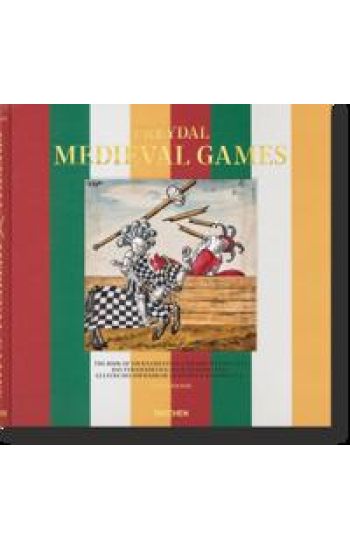
Freydal. Medieval Games. The Book of Tournaments of Emperor Maximilian I
Emperor Maximilian I (1459-1519) treated the spectacle of his tournaments, hastiludes, and mummeries as an art form unto itself. One of modern Europe’s most important sovereigns, he shaped the continent’s political map well into the 20th century, not least due to his keen awareness of the power of a good public display towards diplomacy and networking. From 1512 to 1515, Maximilian commissioned a massive, exquisitely detailed and illustrated manuscript of the 64 tournaments. The 255 elaborately gilt and silvered miniatures were more than just a collection of jousting scenes from the Habsburg court—from the grand melee and tilting at the lists to foot combat and closing ceremonies—they were an allegorical epic telling the story of an intrepid hero, a knight errant who is no other than Maximilian himself. In the guise of his literary alter ego “Freydal”, the Emperor jousted to prove his love for a noble lady. The story ends with the lady agreeing to marry him—she is no other than Mary of Burgundy, whom Maximilian wed in 1477 at Ghent.Produced under the direct supervision of Maximilian himself, Freydal is an invaluable record of late-medieval chivalry, one which introduces us to the jousts that the Emperor revived and even invented—such as the spectacular Rennen mit geschifften Tartschen, where shields would be catapulted into the sky and disintegrated into metal wedges. To this day, it remains the largest extant tournament book from the Late Middle Ages and the essential source on European courtly festivities of the early modern era. Much too fragile to be on permanent display, the miniatures are safely locked away in the vaults of the Kunsthistorisches Museum in Vienna. To commemorate the fifth centenary of Emperor Maximilian I’s death, TASCHEN reproduces the complete 255 miniatures in full-color photographs, making the unique manuscript accessible to all for the very first time. The astounding collection is introduced by Stefan Krause, director of the Kunsthistorisches Museum’s Imperial Armoury, who tells its fascinating story.
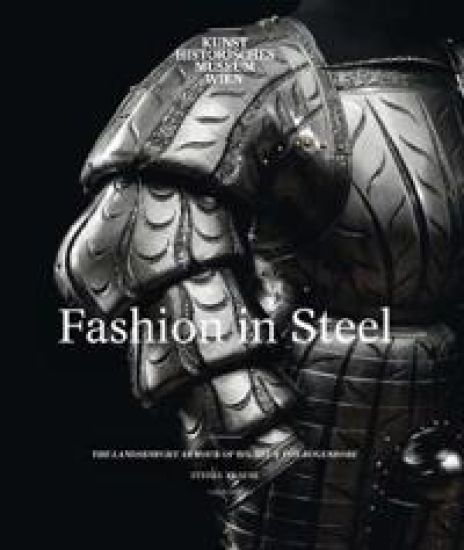
Fashion in Steel

Fashion in Steel

Stefan Krause

Yale University Press
2017
sidottu
A gloriously illustrated volume that looks at the remarkable armor of a key Habsburg commander and its relationship to contemporary Renaissance fashion This sumptuously illustrated book celebrates a curious masterpiece of German Renaissance art--the Landsknecht armor of Wilhelm von Rogendorf (1523). Recently conserved to its original glory, this magnificent suit of armor, made for a trusted courtier, diplomat, and commander of infantry units for the Habsburgs, deceives the eye: the steel sleeves drape in graceful folds, with cuts in the surface, suggesting the armor is made from cloth rather than metal. The author of this fascinating volume explores the question: why does the armor look this way? Stefan Krause delves back five centuries to the political, social, and cultural context in which von Rogendorf lived. Among other key venues in the Holy Roman Empire, this story takes the reader to the court of Emperor Charles V in Spain and to Augsburg, the leading center of armor making, where Rogendorf was introduced to the court armorer of Charles V, Kolman Helmschmid (1471-1532). Helmschmid was famous for his inventive and masterfully sculptured works, and this book elaborates on his unique contributions to the history of armor, and how and why von Rogendorf's suit was informed by contemporary fashion. Distributed for the Kunsthistorisches Museum Vienna
Die K nigwahl Von 1138

Die K nigwahl Von 1138

Stefan Krause

Grin Verlag Gmbh
2009
nidottu
Studienarbeit aus dem Jahr 2009 im Fachbereich Geschichte Europa - and. L nder - Mittelalter, Fr he Neuzeit, Note: 1,0, Friedrich-Schiller-Universit t Jena (Historisches Institut), Veranstaltung: Seminar, Sprache: Deutsch, Abstract: Anfang M rz 1138 w hlte eine "kleine Minderheit von F rsten" den gescheiterten Gegenk nig Konrad, Staufer und Bruder des schw bischen Herzogs Friedrich, zum zweiten Mal zum Rex Romanorum, womit der f r Pfingsten angesetzte 'offizielle' Wahltermin offenbar r cksichtslos bergangen wurde. Konrad profitierte dabei ma geblich von der Unterst tzung durch den Trierer Erzbischof Albero und den Kardinalbischof Dietwin, hinter denen Papst Innozenz II. vermutet werden kann, zumal beide Geistliche p pstliche Legaten waren. Ende des 19. Jahrhunderts wertete Bernhardi diese Vorg nge als "ungesetzliche ...] Handlung," R rig beklagte in der Mitte des folgenden Jahrhunderts die grunds tzliche Schw chung und Abwertung des K nigs in den "freien Wahlen" von 1125 und 1138 und zu Beginn des 21. Jahrhunderts sprach Haverkamp vorsichtig kritisch von der "rigorosen Ausnutzung der noch immer bestehenden Unklarheiten im Wahlverfahren" durch Konrad III. War Konrad also ein Thronr uber, der dem Schwiegersohn seines Vorg ngers, dem Welfen Heinrich, mit Hilfe einer intriganten Kirche die Macht gestohlen hat? Oder war seine Macht bernahme in Rahmen der Vorstellungen des 12. Jahrhunderts eine zwar ungew hnliche aber durch den Erfolg legitimierte Handlung? Diese Arbeit will der Frage nachgehen, wie es zu diesem scheinbar seltsamen Verlauf der Geschichte kam, der den einmal Gescheiterten doch noch auf den Thron brachte.