Kirjojen hintavertailu. Mukana 12 152 606 kirjaa ja 12 kauppaa.
Kirjailija
Stefan Timmermans
Kirjat ja teokset yhdessä paikassa: 11 kirjaa, julkaisuja vuosilta 1999-2026, suosituimpien joukossa The Gold Standard. Vertaile teosten hintoja ja tarkista saatavuus suomalaisista kirjakaupoista.
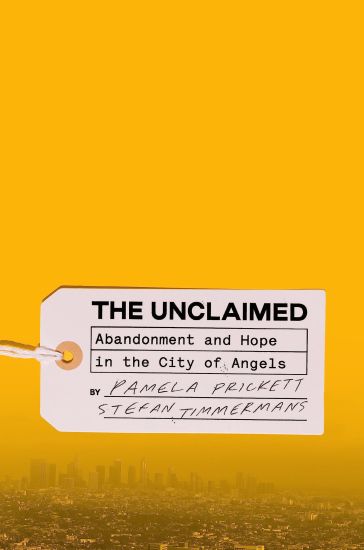
An intimate, deeply moving investigation of an underreported phenomenon--the rising number of unclaimed dead in America today--and what it says about the state of our society. For centuries, people who died destitute or alone were buried in potter's fields--a Dickensian end that even the most hard-pressed families tried to avoid. Today, more and more relatives are abandoning their dead, leaving it to local governments to dispose of the bodies. Up to 150,000 Americans now go unclaimed each year. Who are they? Why are they being forgotten? And what is the meaning of life if your death doesn't matter to others? In this extraordinary work of narrative nonfiction, eight years in the making, sociologists Pamela Prickett and Stefan Timmermans uncover a hidden social world. They follow four individuals in Los Angeles, tracing the twisting, poignant paths that put each at risk of going unclaimed, and introducing us to the scene investigators, notification officers, and crematorium workers who care for them when no one else will. The Unclaimed lays bare the difficult truth that anyone can be abandoned. It forces us to confront a variety of social ills, from the fracturing of families and the loneliness of cities to the toll of rising inequality. But it is also filled with unexpected moments of tenderness. In Boyle Heights, a Mexican American neighborhood not far from the glitter of Hollywood, hundreds of strangers come together each year to mourn the deaths of people they never knew. These ceremonies, springing up across the country, reaffirm our shared humanity and help mend our frayed social fabric. Beautifully crafted and profoundly empathetic, The Unclaimed urges us to expand our circle of caring--in death and in life.
From two experts in the field comes an accessible, how-to guide that will help researchers think more productively about the relation between theory and data at every stage of their work. In Data Analysis in Qualitative Research, Iddo Tavory and Stefan Timmermans provide a how-to guide filled with tricks of the trade for researchers who hope to take excellent qualitative data and transform it into powerful scholarship. In their previous book, Abductive Analysis: Theorizing Qualitative Research, Timmermans and Tavory offered a toolkit for innovative theorizing in the social sciences. In this companion, they go one step further to show how to uncover the surprising revelations that lie waiting in qualitative data—in sociology and beyond. In this book, they lay out a series of tools designed to help both novice and expert scholars see and understand their data in surprising ways. Timmermans and Tavory show researchers how to “stack the deck” of qualitative research in favor of locating surprising findings that may lead to theoretical breakthroughs, whether by engaging with theory, discussing research strategies, or walking the reader through the process of coding data. From beginning to end of a research project, Data Analysis in Qualitative Research helps social scientists pinpoint the most promising paths to take in their approach.
From two experts in the field comes an accessible, how-to guide that will help researchers think more productively about the relation between theory and data at every stage of their work. In Data Analysis in Qualitative Research, Iddo Tavory and Stefan Timmermans provide a how-to guide filled with tricks of the trade for researchers who hope to take excellent qualitative data and transform it into powerful scholarship. In their previous book, Abductive Analysis: Theorizing Qualitative Research, Timmermans and Tavory offered a toolkit for innovative theorizing in the social sciences. In this companion, they go one step further to show how to uncover the surprising revelations that lie waiting in qualitative data—in sociology and beyond. In this book, they lay out a series of tools designed to help both novice and expert scholars see and understand their data in surprising ways. Timmermans and Tavory show researchers how to “stack the deck” of qualitative research in favor of locating surprising findings that may lead to theoretical breakthroughs, whether by engaging with theory, discussing research strategies, or walking the reader through the process of coding data. From beginning to end of a research project, Data Analysis in Qualitative Research helps social scientists pinpoint the most promising paths to take in their approach.
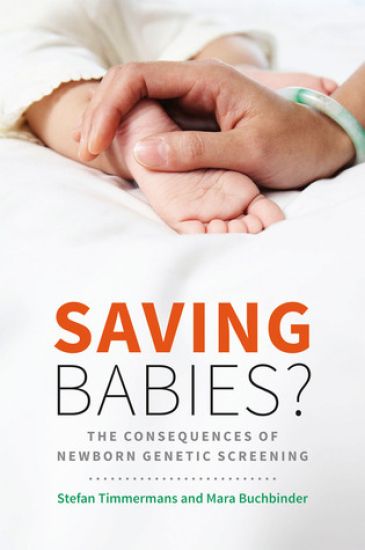
It has been close to six decades since Watson and Crick discovered the structure of DNA and more than ten years since the human genome was decoded. Today, through the collection and analysis of a small blood sample, every baby born in the United States is screened for more than fifty genetic disorders. Though the early detection of these abnormalities can potentially save lives, the test also has a high percentage of false positives-inaccurate results that can take a brutal emotional toll on parents before they are corrected. Now some doctors are questioning whether the benefits of these screenings outweigh the stress and pain they sometimes produce. In Saving Babies?, Stefan Timmermans and Mara Buchbinder evaluate the consequences and benefits of state-mandated newborn screening - and the larger policy questions they raise about the inherent inequalities in American medical care that limit the effectiveness of this potentially life - saving technology. Drawing on observations and interviews with families, doctors, and policy actors, Timmermans and Buchbinder have given us the first ethnographic study of how parents and geneticists resolve the many uncertainties in screening newborns. Ideal for scholars of medicine, public health, and public policy, this book is destined to become a classic in its field.
In Abductive Analysis, Iddo Tavory and Stefan Timmermans provide a new navigational map for constructing empirically based generalizations in qualitative research. They outline an accessible way to think about observations, methods, and theories that nurtures theory-formation without locking it into predefined conceptual boxes. The authors view research as continually moving back and forth between a set of observations and theoretical generalizations. To craft theory is to then pitch one's observations in relation to other potential cases, both within and without one's field. The book provides novel ways to approach the challenges that plague qualitative researchers across the social sciences-how to think about the relation between methods and theories, how to conceptualize causality, how to construct axes of variation, and how to leverage the researcher's community of inquiry. Abductive Analysis is a landmark work that shows how a pragmatist approach provides a more productive and fruitful way to conduct qualitative research.
It has been close to six decades since Watson and Crick discovered the structure of DNA and more than ten years since the human genome was decoded. Today, through the collection and analysis of a small blood sample, every baby born in the United States is screened for more than fifty genetic disorders. Though the early detection of these abnormalities can potentially save lives, the test also has a high percentage of false positives - inaccurate results that can take a brutal emotional toll on parents before they are corrected. Now some doctors are questioning whether the benefits of these screenings outweigh the stress and pain they sometimes produce. In "Saving Babies?" Stefan Timmermans and Mara Buchbinder evaluate the consequences and benefits of state-mandated newborn screening - and the larger policy questions they raise about the inherent inequalities in American medical care that limit the effectiveness of this potentially lifesaving technology. Drawing on observations and interviews with families, doctors, and policy actors, Timmermans and Buchbinder have given us the first ethnographic study of how parents and geneticists resolve the many uncertainties in screening newborns. Ideal for scholars of medicine, public health, and public policy, this book is destined to become a classic in its field.
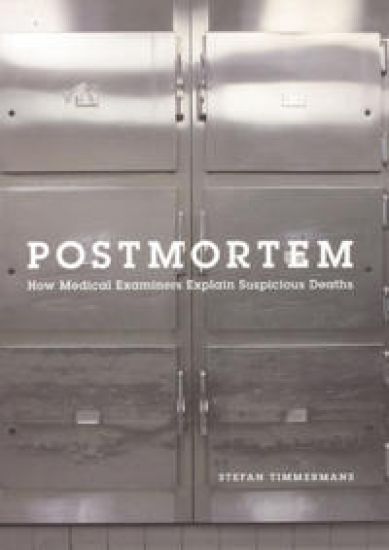
As elected coroners were replaced by medical examiners with scientific training, the American public became fascinated with their work. From the grisly investigations showcased on highly rated television shows such as "CSI" to best-selling mysteries that revolve around forensic science, medical examiners have never been so visible - or compelling. They, and they alone, solve the riddle of suspicious death and the existential questions that come with it. Why did someone die? Could it have been prevented? Should someone be held accountable? What are the implications of ruling a death a suicide, a homicide, or an accident? Can medical examiners unmask the perfect crime? "Postmortem" goes deep inside the world of medical examiners to uncover the intricate web of social, legal, and moral issues in which they operate. Stefan Timmermans spent years in a medical examiner's office following cases, interviewing examiners, and watching autopsies. While he relates fascinating cases here, he is also more broadly interested in the cultural authority and responsibilities that come with being a medical examiner. How medical examiners speak to the living on behalf of the dead is Timmermans' subject, revealed here in the day-to-day lives of the examiners themselves.
As elected coroners came to be replaced by medical examiners with scientific training, the American public became fascinated with their work. From the grisly investigations showcased on highly rated television shows like C.S.I. to the bestselling mysteries that revolve around forensic science, medical examiners have never been so visible - or compelling. They, and they alone, solve the riddle of suspicious death and the existential questions that come with it. Why did someone die? Could it have been prevented? Should someone be held accountable? What are the implications of ruling a death a suicide, a homicide, or an accident? Can medical examiners unmask the perfect crime? "Postmortem" goes deep inside the world of medical examiners to uncover the intricate web of pathological, social, legal, and moral issues in which they operate. Stefan Timmermans spent years in a medical examiner's office, following cases, interviewing examiners, and watching autopsies. While he relates fascinating cases here, he is also more broadly interested in the cultural authority and responsibilities that come with being a medical examiner. Although these professionals attempt to remain objective, medical examiners are nonetheless responsible for evaluating subtle human intentions. Consequently, they may end - or start - criminal investigations, issue public health alerts, and even cause financial gain or harm to survivors. How medical examiners speak to the living on behalf of the dead is Timmermans's subject, revealed here in the day-to-day lives of the examiners themselves.
Sudden Death and the Myth of CPR is for anyone who has taken a CPR course or who believes the images from television dramas. It is also for families of victims and survivors of CPR. It will engage emergency personnel, others in the medical field, and anyone concerned with ethical issues of death and dying. Anyone who has ever taken a CPR course has wondered, \u0022What would happen if I actually had to use CPR?\u0022 In Western societies, the lifesaving power of resuscitation has the status of a revered cultural myth. It promises life in the face of sudden death, but the reality is that lives are rarely saved. Medical researchers estimate the survival rate for out-of-hospital CPR to be between 1 and 3 percent. Sudden Death and the Myth of CPR explores the history of this medical innovation and the promotion of its effectiveness. The overuse of resuscitation, Timmermans explains, defines people's experience with sudden death, something he learned firsthand by following the practice of lifesaving from street corner to emergency room. He argues that very few people are successfully resuscitated without brain damage despite the promotion of CPR's effectiveness through powerful media images. In vivid accounts of the day-to-day practices of cardiopulmonary resuscitation in one of the only studies o f sudden death, Timmermans records the astonishingly frank comments of emergency personnel. Doctors, nurses, social workers, and paramedics express emotions from cynicism about going through the futile motions to genuine concern for victims' family members. If a person who was supposed to keep on living dies at the end of a resuscitative attempt, how socially meaningful is the dying? Timmermans asks tough questions and addresses the controversial ethical issues about the appropriateness of interfering with life and death. He suggests policy reform and the restoration of dignity to sudden death.