Kirjojen hintavertailu. Mukana 12 390 323 kirjaa ja 12 kauppaa.

Kirjailija

Stefanie Markovits

Kirjat ja teokset yhdessä paikassa: 2 kirjaa, julkaisuja vuosilta 2017-2025, suosituimpien joukossa The Victorian Verse-Novel. Vertaile teosten hintoja ja tarkista saatavuus suomalaisista kirjakaupoista.

2 kirjaa

Kirjojen julkaisuhaarukka 2017-2025.

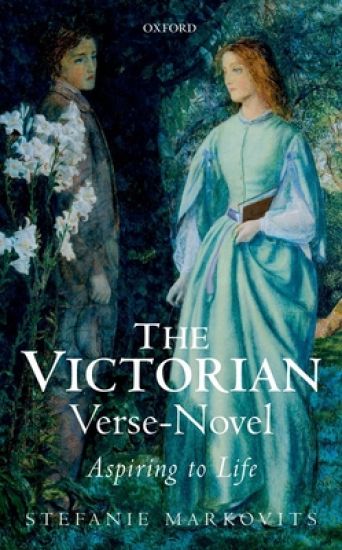
The Victorian Verse-Novel

The Victorian Verse-Novel

Stefanie Markovits

Oxford University Press
2017
sidottu
The Victorian Verse-Novel: Aspiring to Life considers the rise of a hybrid generic form, the verse-novel, in the second half of the nineteenth century. Such poems combined epic length with novelistic plots in the attempt to capture not a heroic past but the quotidian present. Victorian verse-novels also tended to be rough-mixed, their narrative sections interspersed with shorter, lyrical verses in varied measures. In flouting the rules of contemporary genre theory, which saw poetry as the purview of the eternal and ideal and relegated the everyday to the domain of novelistic prose, verse-novels proved well suited to upsetting other hierarchies, as well, including those of gender and class. The genre's radical energies often emerge from the competition between lyric and narrative drives, between the desire for transcendence and the quest to find meaning in what happens next; the unusual marriage plots that structure such poems prove crucibles of these rival forces. Generic tensions also yield complex attitudes towards time and space: the book's first half considers the temporality of love, while its second looks at generic geography through the engagement of novels in verse with Europe and the form's transatlantic travels. Both well-known verse-novels (Elizabeth Barrett Browning's Aurora Leigh, Arthur Hugh Clough's Amours de Voyage, Coventry Patmore's The Angel in the House) and lesser-known examples are read closely alongside a few nearly related works (Tennyson's Idylls of the King, Robert Browning's The Ring and the Book). An Afterword traces the verse-novel's substantial influence on the modernist novel.
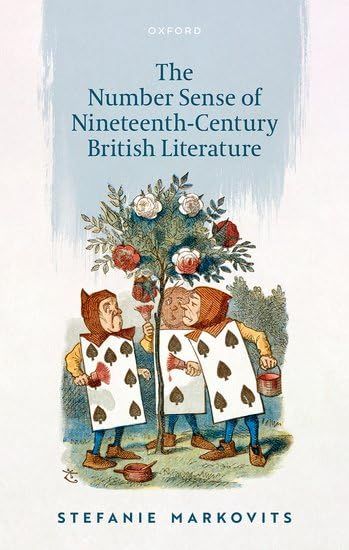
The Number Sense of Nineteenth-Century British Literature

The Number Sense of Nineteenth-Century British Literature

Stefanie Markovits

Oxford University Press
2025
sidottu
The Number Sense of Nineteenth-Century British Literature considers how the avalanche of printed numbers characterizing the period affected its literature. It looks at the influence of a variety of cultural and historical movements, such as the rise of statistics and of democratic Liberalism and concurrent developments in mathematics. This book takes as its starting point and focus the presence of actual numbers--ordinal and cardinal, Arabic, Roman, and spelled out in words--within the century's literary texts. It is through the deployment of such figures that texts display their number sense; similarly, readers develop the faculty of number sense by paying careful attention to their presence. And contemplation of a text's use of numbers, while frequently pointing to specific historical contexts, also enables more fundamental recognitions about how literature makes meaning. The Number Sense asks what kinds of work, intellectual and ethical, literature's numerical figures perform. Why are some writers especially prone to include numbers? What affordances do they wield in various literary environments and against the backdrop of the numbery nineteenth century? When do textual numbers really count and when do they ask us to keep count? How do they stage contests between the one and the many, individuals and collectives? How do they relate to formal aspects of works, like plot and character, narrative, and lyric Lingering over literary measures illuminates the way numbers help shape texts into the recognizable forms we call genres. To that end, the book considers the works of poets, like Tennyson, Wordsworth, and Byron, and of novelists working in a broad range of genres, including Jane Austen, George Gissing, Charles Dickens, Anthony Trollope, Lewis Carroll, Bram Stoker, Wilkie Collins, and Thomas Hardy. The numbers embedded in their fictions and verse can serve both as valves, releasing cultural pressures, and as fulcrums, places where pressures coincide to create new forms of literary agency.