Kirjojen hintavertailu. Mukana 12 595 353 kirjaa ja 12 kauppaa.

Kirjailija

Stefano Bottoni

Kirjat ja teokset yhdessä paikassa: 6 kirjaa, julkaisuja vuosilta 2017-2026, suosituimpien joukossa La Democrazia Dei Populisti Tra Europa E Americhe. Vertaile teosten hintoja ja tarkista saatavuus suomalaisista kirjakaupoista.

6 kirjaa

Kirjojen julkaisuhaarukka 2017-2026.

The Orbán Enigma

The Orbán Enigma

Stefano Bottoni

C HURST CO PUBLISHERS LTD
2026
nidottu
Exposes the inner workings of Orbán’s Hungary and assesses how his style of politics has affected states and electorates worldwide. How did a simple boy from the Hungarian countryside end up leading political life in his country for decades? How, as Prime Minister of a small Central European state, did he become one of the most influential illiberal rulers in the world? How and why did Hungary turn into a neo-authoritarian laboratory? And what geopolitical game is Viktor Orbán playing between continental alliances and global powers? This book is a political biography of Orbán, but also offers first-hand historical analysis of Hungary post-1989. What started as an imperfect, albeit fully-fledged, democracy has been replaced by a new constitutional system. Orbán’s Hungary is a constantly radicalising electoral autocracy, with two intertwined role models: Putin’s Russia and Trump’s new America. The Orbán Enigma explains how Hungarian democratic backsliding has become a hot-button issue for the Western political community; and charts how, over the course of fifteen years, the Orbán regime has ushered in illiberal rule while maintaining Hungary’s global connections via the EU and NATO. Stefano Bottoni’s timely study reminds us that democracy dies if it loses its spirit and civic commitment.
Stalin's Legacy in Romania

Stalin's Legacy in Romania

Stefano Bottoni

Lexington Books
2018
sidottu
This study explores the little-known history of the Hungarian Autonomous Region (HAR), a Soviet-style territorial autonomy that was granted in Romania on Stalin’s personal advice to the Hungarian Székely community in the summer of 1952. Since 1945, a complex mechanism of ethnic balance and power-sharing helped the Romanian Communist Party (RCP) to strengthen—with Soviet assistance—its political legitimacy among different national and social groups. The communist national policy followed an integrative approach toward most minority communities, with the relevant exception of Germans, who were declared collectively responsible for the German occupation and were denied political and even civil rights until 1948. The Hungarians of Transylvania were provided with full civil, political, cultural, and linguistic rights to encourage political integration. The ideological premises of the Hungarian Autonomous Region followed the Bolshevik pattern of territorial autonomy elaborated by Lenin and Stalin in the early 1920s. The Hungarians of Székely Land would become a “titular nationality” provided with extensive cultural rights. Yet, on the other hand, the Romanian central power used the region as an instrument of political and social integration for the Hungarian minority into the communist state. The management of ethnic conflicts increased the ability of the PCR to control the territory and, at the same time, provided the ruling party with a useful precedent for the far larger “nationalization” of the Romanian communist regime which, starting from the late 1950s, resulted in “ethnicized” communism, an aim achieved without making use of pre-war nationalist discourse. After the Hungarian revolution of 1956, repression affected a great number of Hungarian individuals accused of nationalism and irredentism. In 1960 the HAR also suffered territorial reshaping, its Hungarian-born political leadership being replaced by ethnic Romanian cadres. The decisive shift from a class dictatorship toward an ethnicized totalitarian regime was the product of the Gheorghiu-Dej era and, as such, it represented the logical outcome of a long-standing ideological fouling of Romanian communism and more traditional state-building ideologies.
Long Awaited West

Long Awaited West

Stefano Bottoni

Indiana University Press
2017
pokkari
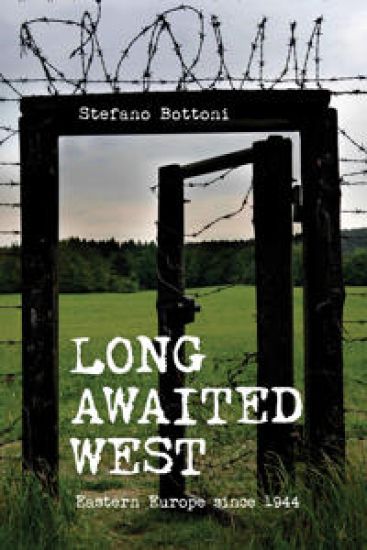
What is Eastern Europe and why is it so culturally and politically separate from the rest of Europe? In Long Awaited West, Stefano Bottoni considers what binds these countries together in an increasingly globalized world. Focusing on economic and social policies, Bottoni explores how Eastern Europe developed and, more importantly, why it remains so distant from the rest of the continent. He argues that this distance arises in part from psychological divides which have only deepened since the global economic crisis of 2008, and provides new insight into Eastern Europe's significance as it finds itself located - both politically and geographically - between a distracted European Union and Russia's increased aggressions.
Long Awaited West

Long Awaited West

Stefano Bottoni

Indiana University Press
2017
sidottu
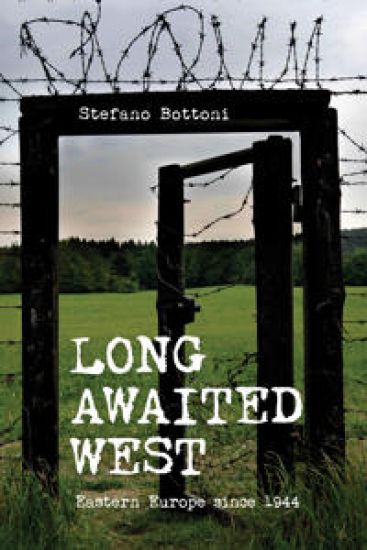
What is Eastern Europe and why is it so culturally and politically separate from the rest of Europe? In Long Awaited West, Stefano Bottoni considers what binds these countries together in an increasingly globalized world. Focusing on economic and social policies, Bottoni explores how Eastern Europe developed and, more importantly, why it remains so distant from the rest of the continent. He argues that this distance arises in part from psychological divides which have only deepened since the global economic crisis of 2008, and provides new insight into Eastern Europe's significance as it finds itself located - both politically and geographically - between a distracted European Union and Russia's increased aggressions.